






Aerial view of a gray outdoor air conditioning condenser unit mounted on a concrete pad next to a house with vinyl siding.

AC Maintenance in Columbus, GA

Tell us about the job

Takes about a minute. No obligation.

Tune-up, service, or cleaningCentral ACMuscogee County, GA
Step 1 of 2

What ZIP code is the job in?

A dirty coil or a weak capacitor makes the unit work harder to put out the same cooling. That extra draw shows up on the meter every month the system runs. Electricity in Muscogee County averaged 15.82 cents per kilowatt-hour in 2025, and this unit runs most of the year. A system that's been checked and cleaned isn't fighting itself to do the job. Skip the upkeep and you're paying that higher rate for strain the unit didn't need to carry.

5 months
May through September, your air conditioner is on duty
90°F
the average summer afternoon it cools against
14 hail events
in ten years, and hail bends the fins on outdoor coils
51 wind events
in ten years, and wind drives debris into outdoor units
Isometric line illustration of a cutaway house showing interior rooms with ductwork, an air handler and furnace, connected by lines to an outdoor condenser unit on the ground outside.
Your air conditioner works hardest from June through September.

NOAA nClimDiv, 1991–2020 normals

May is when cooling starts in Muscogee County.

An AC tune-up belongs in April, before the system takes on five months of work.

Five months of 90 degree afternoons is a lot to ask of one machine

Cooling runs May through September
Summer afternoons average 90°F
Climate zone 3A

Muscogee County saw 74 severe weather events between 2015 and 2024, and 51 of those were damaging wind. An outdoor unit sits outside through all of it, exposed to whatever gets thrown at it. Wind drives debris into the coil and the fan. Hail has hit the county 14 times in that same stretch, and a dented cabinet or bent fins can throw off airflow without you ever seeing it happen. Statewide, 31% of Georgia households lost power for a day or more in 2024. A tune-up is also when a contractor can check for damage you wouldn't spot from the kitchen window, before the unit has to carry a full summer.

A tune-up now keeps the strain off your bill all summer

A unit running clean pulls less power to do the same job, and this one runs most of the year. Getting it checked before summer is the one month that cost doesn't carry.

Find a contractor
A man in a dark cap, dark shirt and brown pants, seen from behind, walks up porch steps toward an orange front door while carrying a brown canvas tool bag.
A gray cylindrical air conditioning condenser unit mounted on a concrete pad next to a light-colored vinyl-sided house exterior.

Five months of this weather starts in May

Get the work done before May and a contractor is looking at a unit that has been sitting idle. Wait until the season is underway and they are looking at one that has already put in weeks of 90 degree afternoons, with whatever was wearing on it pushed further along. A worn part under load fails differently than the same part at rest. Catch a weak capacitor or a coil losing its grip on heat while the unit is still idle, and it gets caught on the bench, not on the afternoon you need the system most.

Airflow in, heat out

A dirty filter chokes off airflow before it ever reaches the coil. The blower has to push harder to move the same amount of air, and the evaporator coil behind that filter starts picking up dust too. A coil caked in dust can't pull heat out of the air the way a clean one does, so the system runs longer to reach the same temperature on the thermostat.

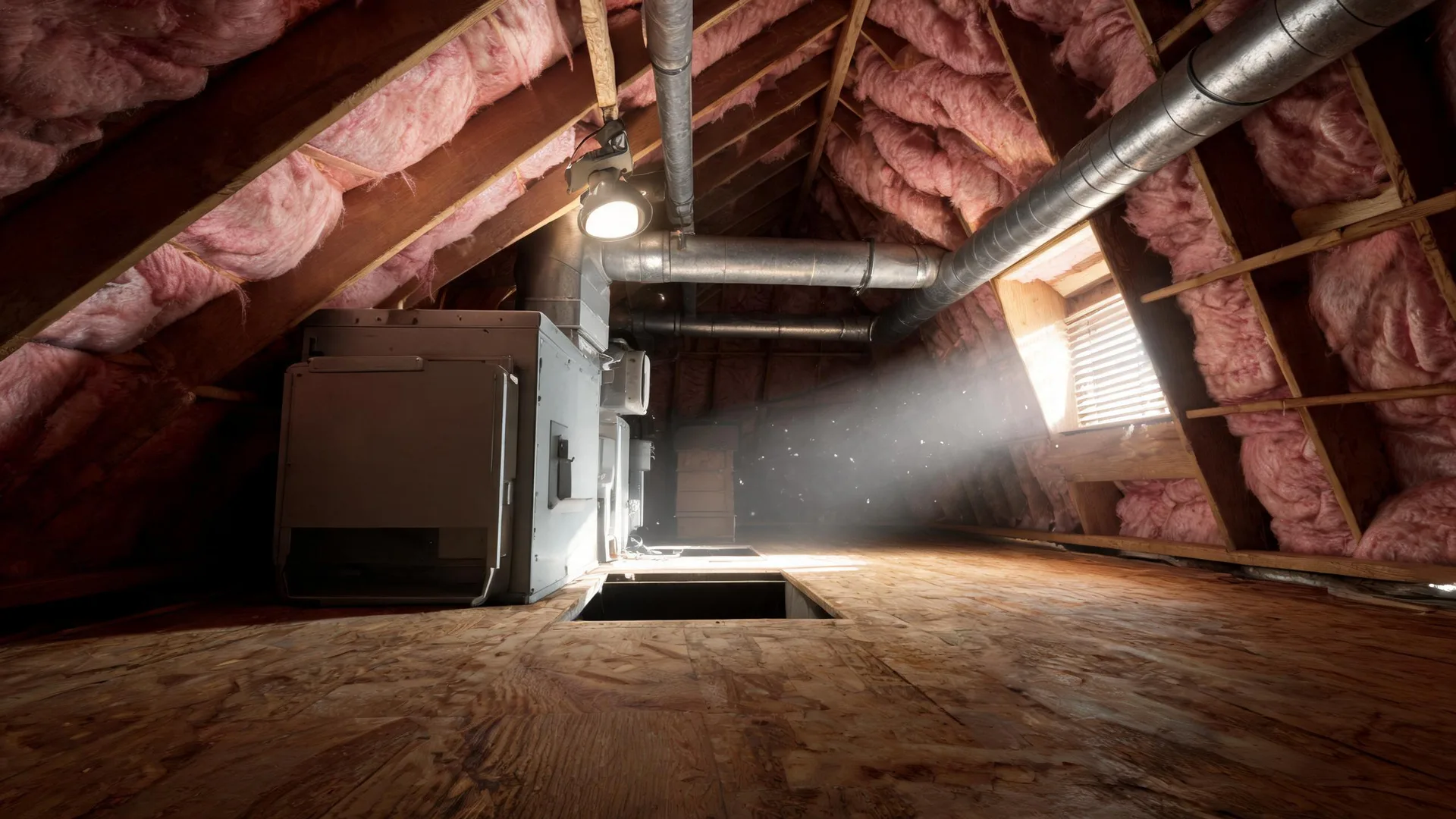
Where the water has to go

Every AC pulls moisture out of the air as it cools, and that water has to leave through the condensate drain. Algae and dirt build up in that line over time and narrow it until it clogs. A clogged drain backs water up into the pan under the coil, and once that pan overflows the water goes wherever gravity takes it, usually onto the floor or the ceiling below.

An overhead view of a residential air conditioning condenser unit mounted on a concrete pad next to a house with vinyl siding.

Book your AC tune-up in April, before homes here start needing cooling in May.

  1. Jan
  2. Feb
  3. Mar
  4. Apr
  5. May
  6. Jun
  7. Jul
  8. Aug
  9. Sep
  10. Oct
  11. Nov
  12. Dec

A tune-up checks the refrigerant charge, cleans the coils, tests the capacitor and tightens the electrical connections.

A real tune-up starts outside, at the condenser. A contractor cuts power to the unit before touching anything, then checks the capacitor, since a weak one makes the compressor work to start up every cycle. The contactor gets checked too, because pitted contacts run hot and eventually stick. Refrigerant charge gets checked against what the system calls for. Too little and the coil can't pull heat out of the air the way it should. Too much and the compressor takes on strain it wasn't built to carry. Indoors, the coil and blower wheel get inspected for dust buildup, and the condensate line gets checked for the algae and sludge that narrow it over time. None of this is guesswork. Every reading gets compared against what the manufacturer specifies for that unit, and whatever falls outside that range is what gets flagged.