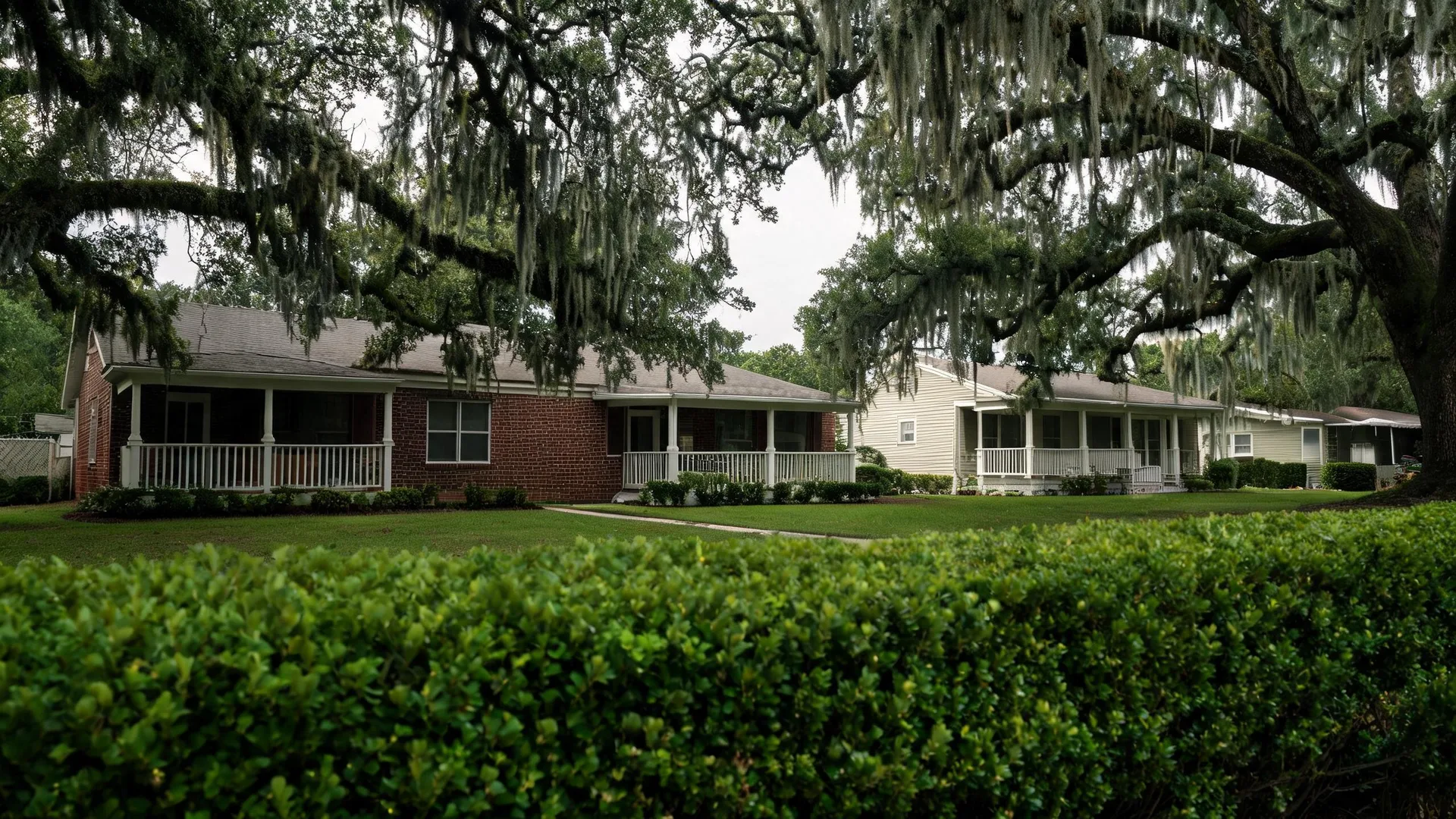






A row of single-story houses with covered porches, the nearest clad in red brick, seen behind a trimmed hedge and lawn beneath large moss-draped oak branches.

AC Repair in Albany, GA

Tell us about the job

Takes about a minute. No obligation.

RepairCentral ACDougherty County, GA
Step 1 of 2

What ZIP code is the job in?

Dougherty County saw 125 severe weather events between 2015 and 2024. Most of that was wind, 105 events, with 11 hail events and a couple of tornadoes mixed in. An outdoor AC unit sits outside through all of it, exposed to whatever blows through. Wind-driven debris can bend the fins on the coil or crack the fan blade, and hail dents the cabinet and the coil underneath it. The unit might still run after that kind of hit. It's worth having someone look anyway, because damage to the coil or the fan doesn't always show up as a problem right away.

6 months
May through October, your air conditioner is on duty
91°F
the average summer afternoon it cools against
11 hail events
in ten years, and hail bends the fins on outdoor coils
105 wind events
in ten years, and wind drives debris into outdoor units
Isometric illustration of a cutaway single-story house showing attic ductwork, an indoor air handler, interior rooms with furniture, and an outdoor condenser unit connected by lines, on a white background.
Your air conditioner works hardest from May through September.

NOAA nClimDiv, 1991–2020 normals

Albany summers push this AC hard, with afternoon highs averaging 91°F and a dew point near 70°F.

Six months of that kind of heat and humidity wears on a compressor, so a problem now is usually the machine catching up with the season.

Power here runs 14.42 cents a kilowatt-hour, and a struggling AC burns more of it

Power here costs 14.42 cents per kilowatt-hour
Climate zone 2A
Cooling runs May through October
Weak spots fail when May heat arrivesCooling runs May through October here, and April is when a worn part gets found the hard way.

Six months of running from May through October doesn't leave this machine much time to rest. Whatever's going wrong now has probably been building for a while under that kind of load. A contractor can tell you if it's a quick fix, like a dirty coil or a weak capacitor, or something further along that's worth doing right the first time. Either way, running it longer while it struggles usually just adds strain to whatever part is already failing.

If the outdoor unit took a hit, get it checked now

If hail or wind has hit the unit this year, get it looked at before deciding it's fine. A bent fin or a cracked fan blade doesn't always show up as a problem right away, and running it in that shape adds strain to a part that's already weakened.

Find a contractor
An outdoor residential air conditioning condenser unit mounted on a concrete pad, surrounded by gravel with a blue sky in the background.

What actually wears out

A compressor fails most often because something upstream of it went wrong first. Low refrigerant from a slow leak makes it run hotter than it should, cycle after cycle, until the windings give out. A dirty condenser coil holds heat in instead of letting it go, so the compressor works harder to do the same job. Weak airflow from a clogged filter or a failing blower does the same thing from the other direction. None of that happens in one afternoon. It happens over a season of running, which is why the compressor is usually the last thing to go and the most expensive. Capacitors and fan motors fail on their own timeline, worn down by heat and just running for hours on end, and those are the parts worth catching early, before the strain backs up into the compressor itself.

What the thermostat can't fix

If the house won't get to the set temperature, or it gets there and the unit keeps running anyway, that's not a thermostat problem. It points to low refrigerant, a coil that can't shed heat, or a compressor already struggling. Short cycling, where the unit shuts off and restarts every few minutes, points the same way.

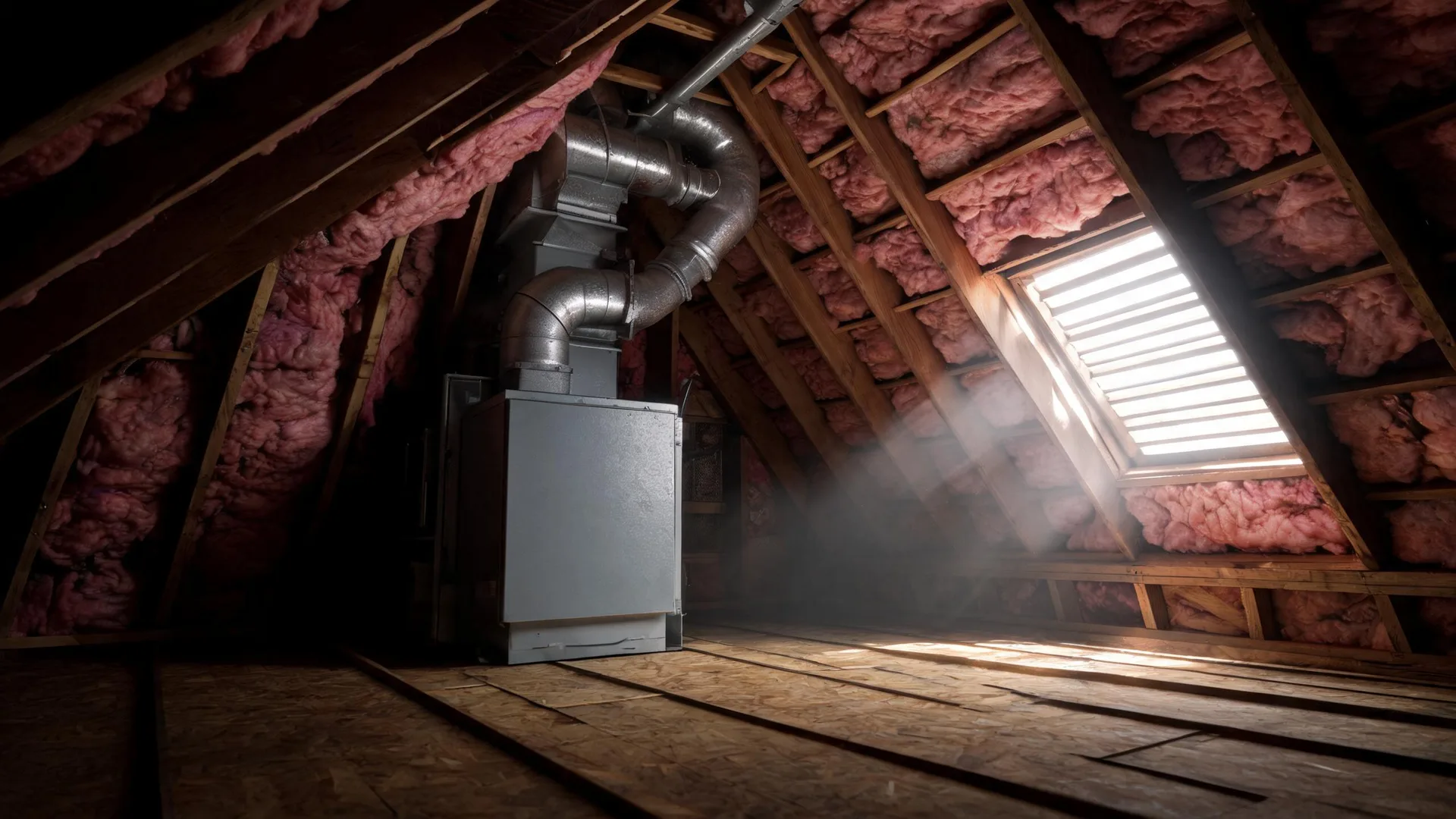
Sound and smell say more than a gauge

A grinding or screeching noise from the outdoor unit usually means a motor bearing is worn or a fan blade is hitting something it shouldn't. A musty smell from the vents means moisture is sitting somewhere it shouldn't, often in the ductwork or on a coil that isn't draining right. A burning smell means stop running it and get it looked at before anything else.

Overhead view of a gray outdoor AC condenser unit on a concrete pad beside a mulched garden bed and a house with vinyl siding.

A new air conditioner would cut about $70 a year off cooling for a typical Dougherty County home.

  • A new one at the federal minimum, 14.3 SEER2$500 a year
  • An older air conditioner$570 a year

Estimates for a typical Dougherty County home, compared with an older unit built to the previous federal minimum, from EIA household energy data, Georgia fuel prices and NOAA climate normals. Your home will differ.

Repair makes sense when a part like a capacitor or contactor has failed.

Replacement makes sense when the compressor has failed or the system uses R-22 refrigerant, which is no longer made.

A unit that's low on refrigerant or fighting a dirty coil draws more power to do the same job, and that difference shows up on the bill every month it keeps running that way. Letting it limp along through the rest of summer costs more than the repair does. A short cycling unit is the clearest version of this, switching on and off every few minutes and drawing a surge of power each time it restarts. The fix is usually straightforward if it's caught now, whether that's a capacitor, a coil cleaning, or a refrigerant leak. Waiting just means paying the higher bill for longer before the repair happens anyway.