One filter, checked monthly
A dirty filter is the most common reason a unit runs nonstop in Georgia's humidity without cooling the house down. Check it before anything else.
 Match me with a pro
Tell a local repair pro what your air conditioner is doing.
Your air conditioner picked a bad time to act up, and in Georgia it always feels that way. Before you pick up the phone, there are a few things worth checking yourself. The thermostat setting, the breaker, the air filter. Sometimes that's the whole problem. But if the unit still isn't cooling, or it's running nonstop without catching up, that's a job for someone licensed to open it up.
That's usually where the second round of work starts, the kind that has nothing to do with the AC itself. Searching for a contractor near you, calling two or three, telling each one the same story about the noise it's making or the warm air coming through the vents, then waiting on quotes to compare. It eats an afternoon you don't have, especially in July.
This page skips that part. Tell it what's going on with your system, and it matches you with a contractor who handles repairs like yours in your area. That contractor reaches out to you directly. No list of names to sort through, no explaining the problem five times over.
What you get from that first call is specific to your situation, the system you have, the way it's failing, where you live in Georgia. Not a generic quote pulled from an average. A contractor who already knows the basics before they ring you back, because you've laid it out once, here.
The checks below cover what you can look at on your own first. If they don't solve it, the button on this page is the faster way to the next step, a licensed contractor who knows what a Georgia summer does to a struggling system, already lined up to call.
Start with the thermostat. Make sure it's set to cool and set a few degrees below room temperature, since a setting bumped by accident is more common than people expect. Check the breaker box next, since a tripped breaker will shut the whole system down with no warning at all. Then pull the air filter and hold it up to a light. If you can't see through it, air isn't moving through your system the way it should, and the unit works harder for less cooling. In Georgia, a system fighting a dirty filter through a muggy summer runs longer and still falls behind. Look outside too. The outdoor unit needs clear space around it, so leaves, mulch or a fence built too close can choke it off. If the thermostat is set right, the breaker's fine, the filter is clean, and the outdoor unit still isn't cooling the house, the problem is inside the system itself, and that's worth a closer look from someone who can diagnose it properly.




A dirty filter is the most common reason a unit runs nonstop in Georgia's humidity without cooling the house down. Check it before anything else.
The condenser outside has to pull in air. Leaves, pollen, or anything stacked against it can keep the system from cooling right.
Low refrigerant lets warm air blow where cold air should.
A clogged coil keeps outside heat from leaving the house.
A failed capacitor stops the outdoor fan or compressor from starting.
A frozen evaporator coil cuts airflow until it fully thaws.


Explain the job once and skip repeating it on every call.
Say what's going on with your air conditioner, and a pro who works on them reaches out.
No charge to send it. You decide if you hire them.

A unit that can't keep up doesn't just mean a warmer living room. It means the air inside holds onto moisture, so rooms feel damp even when the thermostat says you're close to your setting. Wood floors and trim take on that humidity too, and it's harder on anyone in the house with allergies or asthma. The longer a struggling compressor or a weak capacitor runs trying to catch up, the more strain it puts on parts that are already failing, which is how a simple fix turns into a bigger one.
If you've gone through the checks above and the system still isn't cooling right, the next step isn't more guessing. It's getting someone who can look at the refrigerant level, the coil, the capacitor, and tell you which one it actually is. You won't need to search through reviews or call a handful of companies to find someone available this week. You get matched with a contractor who handles the kind of system and problem you have, and they'll reach out to set up a time.


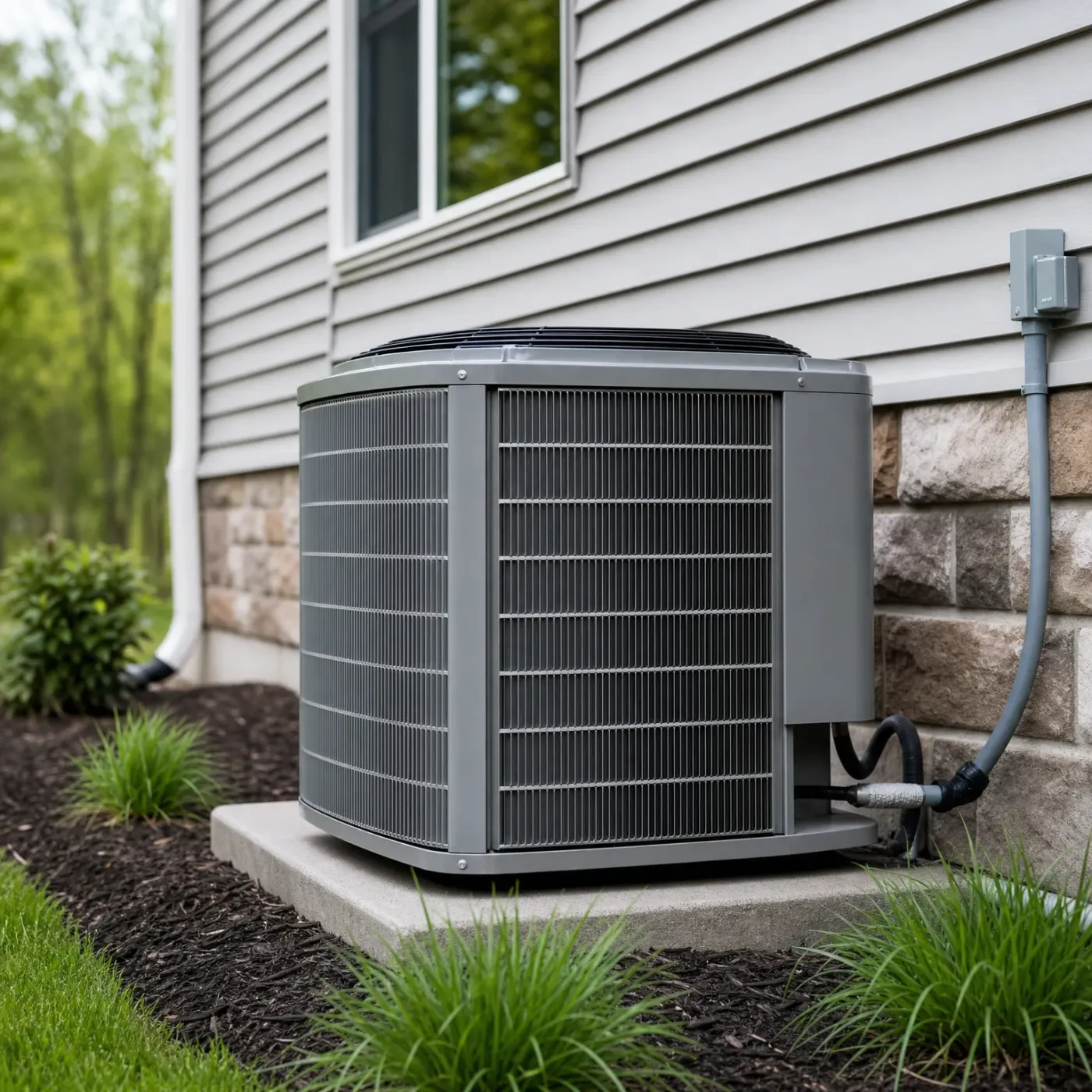
This is what a working condenser looks like: clean fins, clear space around the cabinet, lines running straight into the wall. Air moves through it the way it was built to. If yours looks like this and still isn't cooling, the problem is likely inside, not out here.

Dirt packed into the fins and years of weather on the casing choke off airflow before the refrigerant ever gets a chance to do its job. A unit in this shape works harder for less cooling, and in Georgia's humidity that shows up fast as a house that won't dry out.
You've probably noticed the air inside feels heavier than it should, even with the unit running most of the day. Maybe there's a musty smell in the hallway, or the bathroom mirror stays fogged longer than it used to. You might hear the outdoor unit cycling on and off more than it used to, or notice ice on the copper line running into the wall. None of these happen on their own. A system working harder than it should to cool a Georgia summer will run longer, cost more to run, and still leave the house feeling sticky. Left long enough, that extra moisture can start showing up as warped trim or a musty closet.

The grass is cut back, the mulch isn't piled against the sides, and the shrub nearby is trimmed so nothing blocks the fins. Air passes through the coil freely, which is what lets the unit dump heat from the house outside.

The fins and cage are covered in buildup, and the coil underneath can't shed heat the way it needs to. The unit may still run, but it works harder for less cooling, and the conduit and disconnect box nearby are worth a glance too if something looks off.


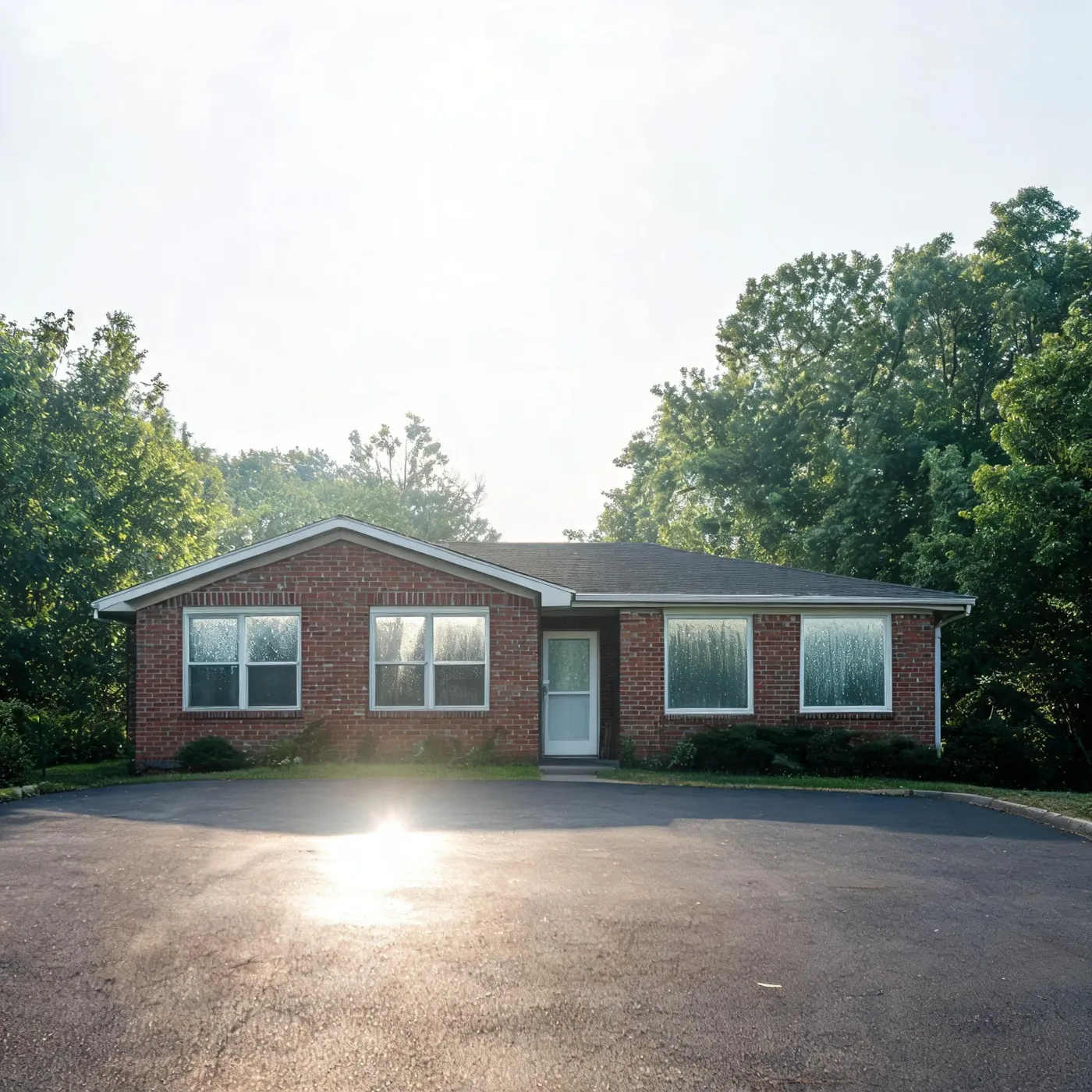
A summer dew point averaging 68°F, per NOAA data for Georgia, means the air is heavy enough that your skin feels damp before you've done anything. Your air conditioner has to pull that moisture out along with cooling the air, and when something's off, the moisture work falls behind first. You'll notice it before the temperature even climbs: the house feels sticky, the thermostat says you're close to your setting, but the room doesn't feel like it. If that's what's happening, the problem might not be the cooling at all. It might be a system that's lost its ability to wring the water out of the air it moves.
NASA POWER T2MDEW county cells weighted by homes


Georgia households paid 14.74 cents per kilowatt-hour in 2025, right around the national average. That's good news in one sense: a struggling AC that runs nonstop isn't punished by a steep local rate the way it would be elsewhere. But a unit stuck running all day from a bad capacitor or low refrigerant still adds up on the bill, even at a typical price.
EIA-861 2025 statewide residential average
You started with the thermostat, the breaker, and the filter, because those are the things worth ruling out before anyone comes to the house. If the air is still warm after that, the problem has moved past what you can see or reach. Low refrigerant, a bad capacitor, a dirty coil, a frozen evaporator all look the same from where you're standing: a unit that runs and runs without doing what it's supposed to do, while Georgia's humidity sits in the house right along with the heat.
That's where a contractor earns the call. Not because the checks were wasted, but because you've already done the part you can do, and what's left needs tools and training you don't have. The alternative is the part nobody wants to spend their evening on: searching for someone local, calling two or three companies, explaining the same symptoms each time, then sitting with quotes that are hard to compare because no two contractors described the problem the same way.
Getting matched skips that. You give the details once, the thermostat setting, the breaker, what the filter looked like, whether the outdoor unit was clear, and that goes to a contractor suited to the job instead of into a stack of calls you have to manage yourself. You still have a system that needs fixing. You just don't have to spend half a day finding someone qualified to fix it.

The right pro for this job