Running a normal cycle
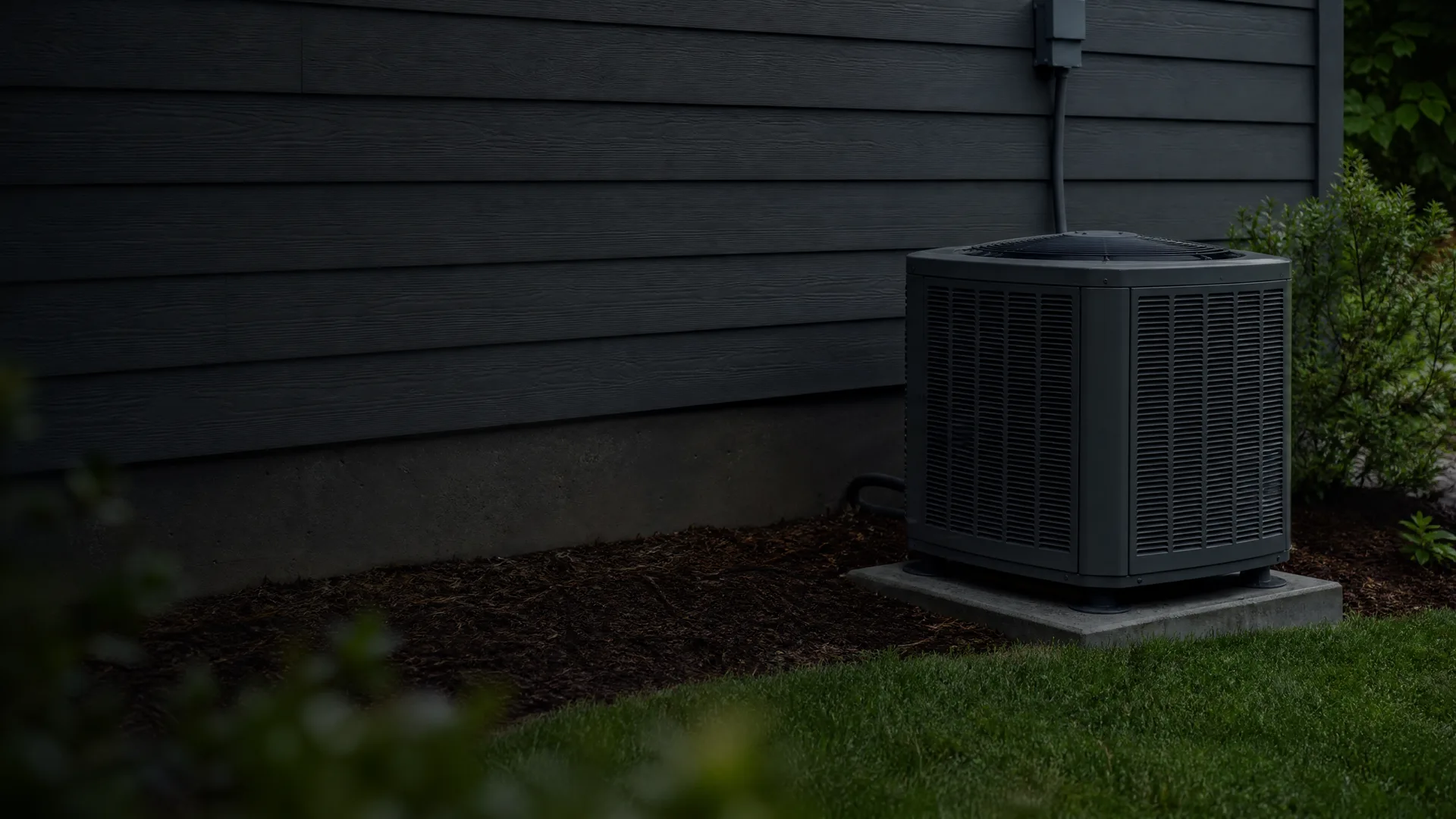
This condenser sits clean beside the house, mulch and shrub trimmed back from the cabinet. Air moves through the fins without resistance, so the unit runs until the house reaches the set temperature, then shuts off on its own.
 Answer a few questions
 instead of calling shop after shop.
Your AC kicks on, runs for a few minutes, then shuts off. A little while later it starts again. In Georgia's heat, with the system working hard from April through October, that short-cycling wears on the compressor and it will struggle to keep up on the hot, humid days when you need it most.
A few things cause this. A dirty air filter can choke airflow until the system overheats and shuts down early. A low refrigerant charge can trip the same safety switch. A thermostat in the wrong spot, or one that's failing, can read the room wrong and cycle the unit too often. Sometimes it's a unit that was sized wrong for the house to begin with. Each of these needs someone to actually look at the system to tell which one it is.
That's the part that usually eats your afternoon. Searching for AC companies near you, calling two or three, describing the same on-off pattern each time, then waiting on quotes to compare before you even know who's showing up. Georgia summers don't leave much room for that kind of delay.
Here, that search is already done. You're matched with one licensed contractor who works on home AC systems in your area, the kind who's already seen this exact complaint play out in houses like yours this season and knows which of these causes tends to show up first. No list of companies calling you back at once, no retelling the problem over and over. Just the one contractor, local, ready to look at your system and tell you straight what's making it cycle the way it is.
Below, you'll find what typically causes this and what it takes to fix it. When you're ready, the contractor is a click away.
An air conditioner that shuts off after a few minutes and starts again soon after is short-cycling, and it usually means the system is struggling to finish a full cooling cycle. A dirty air filter or a coil caked with dirt can choke airflow until the unit overheats and cuts out early. A low refrigerant charge does the same thing, and so can a thermostat that is misreading the room or mounted somewhere it picks up heat from a sunny window or a lamp. An oversized system cools the air fast without pulling the humidity down, so it shuts off, the room feels muggy again quickly, and it kicks back on. In Georgia, with the compressor working hard for months on end, short-cycling adds wear that catches up with it. Left alone, it tends to mean higher bills, a house that never quite feels right, and a compressor that fails sooner than it should.






A system short-cycling through a Georgia summer doesn't fix itself, and the longer it runs that way, the harder the compressor works every time it kicks on. Figuring out whether it's the filter, the coil, the thermostat placement, or a refrigerant charge that's off takes someone who can look at the unit, not guess over the phone. That usually means searching around for someone licensed to work on your system, calling a few, walking each one through the same thing your AC is doing, then weighing quotes that don't really compare to each other. Submitting this instead puts the job in front of one licensed contractor local to your area, someone who sees this kind of short-cycling every summer here and knows what tends to cause it in homes like yours. No explaining it five times, no juggling calls back. Just one contractor who already knows Georgia summers put this kind of strain on a system, looking at what's actually happening with yours.

This condenser sits clean beside the house, mulch and shrub trimmed back from the cabinet. Air moves through the fins without resistance, so the unit runs until the house reaches the set temperature, then shuts off on its own.

This unit's grille and fins are caked thick enough to block airflow. The coil can't shed heat fast enough, so the compressor shuts down early and restarts minutes later, over and over, all afternoon.
What makes the AC shut off and turn back on so fast?
A thermostat reads the air right around it and tells the compressor to cycle based on that reading. If cold air from a nearby vent blows across the thermostat, it reads the room as cooler than it actually is and shuts the system off early. The rest of the house hasn't caught up, so the temperature climbs back past the setpoint fast and the thermostat calls for cooling again. The same thing happens if the thermostat sits in direct sun or near a lamp and reads warmer than the house really is, except then the unit runs longer than it needs to before shutting off. Either way, the compressor is cycling off the thermostat's reading, not the house's actual temperature.


At 14.74 cents per kilowatt-hour, every short cycle your AC runs still pulls full power to start the compressor without finishing the job of cooling the house. Short-cycling for a summer means paying for a lot of starts that never get you to a comfortable house.
EIA-861 2025 statewide residential average



An AC that shuts off a few minutes after starting and kicks back on soon after is telling you it can't finish a cooling cycle. The reason might be a dirty filter, a coil losing its ability to shed heat, a thermostat reading the wrong spot in the house, or a refrigerant charge that's off. Each one needs a different fix, and the only way to know which applies to your system is to have someone look at it.
Instead of searching through contractors, calling a few, explaining the same thing on each call, and sorting through quotes that don't match up, you get matched with one licensed contractor local to Georgia. Someone who works on AC systems all summer here knows what usually causes short-cycling in this heat and what to check first. You explain it once, to the person who'll actually do the work.

Only one pro gets your request, so you hear from one company.