Why your AC keeps tripping the breaker in Georgia

RepairCentral ACGeorgia
Step 1 of 2

What ZIP code is the job in?

Why does my AC keep tripping the breaker?

Your AC trips the breaker once, maybe twice, and now you're resetting it every evening before it happens again. In a Georgia summer that means the house starts warming up fast, and you're left wondering if it's safe to keep flipping that switch or if something inside the unit is about to fail outright.

Usually a failing part is drawing more current than the breaker allows

Most of the time the compressor or the fan motor is pulling more amps than it should, and the breaker is doing its job by shutting off before that turns into a bigger problem. A dirty condenser coil, a weak capacitor, or a motor that's starting to seize all make the compressor work harder to do the same job, and that extra strain shows up as extra current. With Georgia summers pushing the system for months at a stretch, that strain adds up faster here than it would somewhere the AC only runs a few weeks a year. A breaker that trips once might be a fluke. One that trips repeatedly means a part inside the unit needs a look before it fails for good.

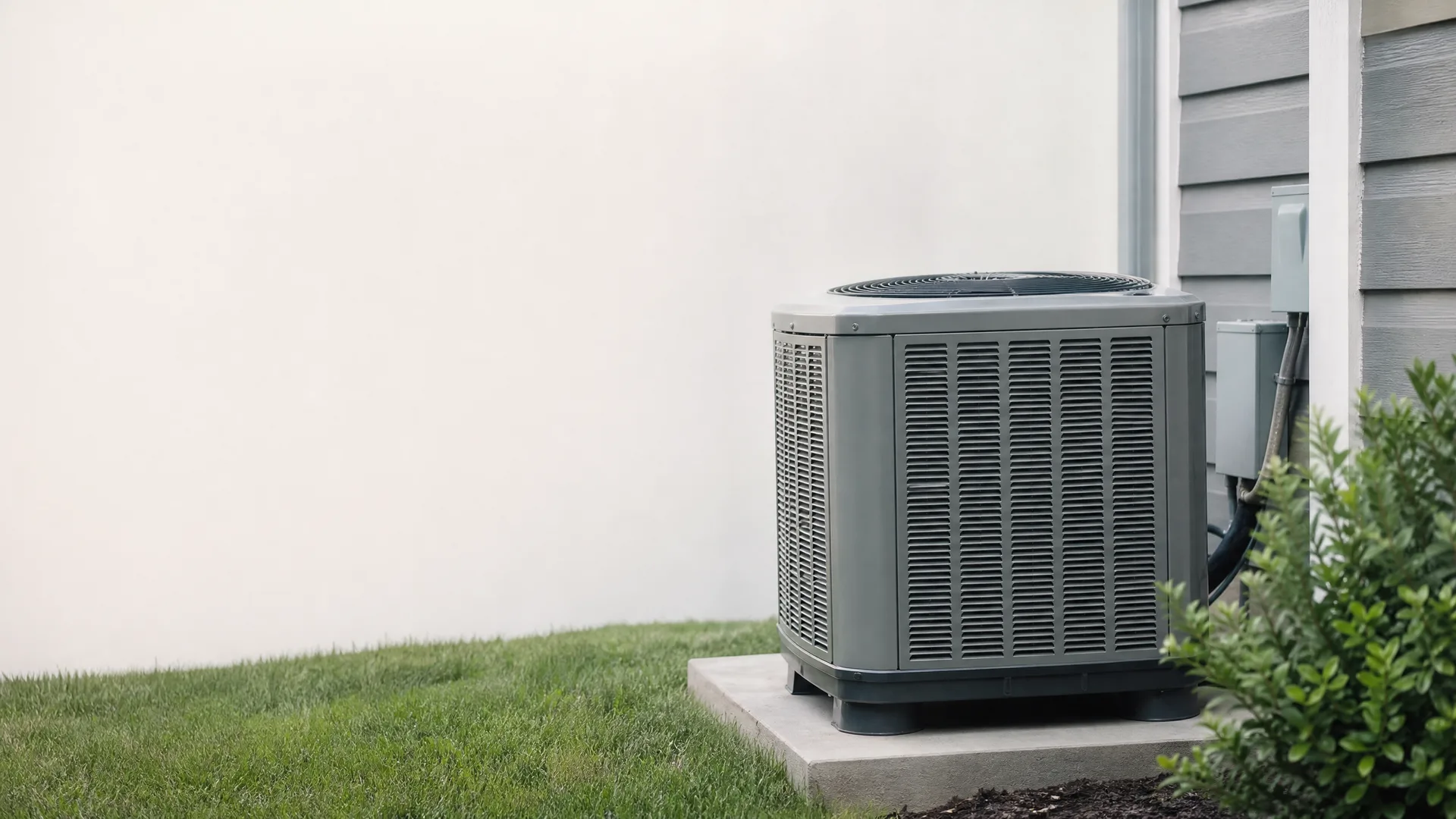
A gray outdoor air conditioning condenser unit on a concrete pad beside a house with horizontal gray siding, with a wall-mounted electrical disconnect box and insulated refrigerant lines, and blue hydrangeas in a mulched bed to the left.

Running the way it should

A unit like this draws steady power and the breaker never notices it. The fan turns, the compressor hums, and the disconnect box beside it stays closed up and quiet. Nothing here is asking the panel for more than it can give.

A gray outdoor air conditioner condenser unit on a concrete pad beside a house with beige horizontal siding, with an electrical disconnect box and insulated refrigerant lines on the wall and dry leaves on the ground.

Pulling too hard

Rust on the shroud and dirt packed into the fins make the compressor work harder to move the same air. That extra strain shows up as extra amperage, and the breaker trips to stop it before something inside the unit burns out.

Is this happening every time you turn the AC on

Notice when it trips. Right at startup, a few minutes in, or only on the hottest afternoons when the unit's been running for hours. You might hear a hum or a click from the outdoor unit right before the breaker goes, or smell something faintly burnt near the panel or the disconnect box. The reset might hold for an hour, or it might not hold at all. Each time it trips, the compressor takes another hard hit, and in a Georgia summer a compressor that keeps getting cut off mid-cycle wears out faster than one that runs clean. Left alone, a breaker that trips from a real short can become a fire risk, not just an inconvenience.

A gray outdoor air conditioner condenser unit on a concrete pad beside a house corner with lap siding and a stucco wall, surrounded by mown green grass.

What a compressor draws at startup

A compressor pulls several times its normal running current for about a second when it first kicks on. A breaker sized right for the unit handles that every time without issue. If the breaker trips right at startup and not later, that surge is usually where the trouble sits, often in the start capacitor or the contactor that feeds power to the compressor.

An outdoor air conditioning condenser unit on a concrete pad beside a house with light stucco and lap siding, with mown grass to the left and a green shrub to the right.

Why a hot afternoon changes things

A compressor working against a 95 degree afternoon pulls more current than it does at 10 in the morning. A breaker that only trips hours into a hot stretch is reacting to heat built up in the compressor windings or the breaker itself, not to a single bad part. That pattern points a contractor toward the compressor and the wiring feeding it rather than the capacitor.

Is It the Breaker or the AC

A breaker problem

  • The breaker trips but the panel, the wire and the outlet it feeds show no scorch marks or odd smell.
  • Resetting it once gets you through the evening, but it trips again the next day at roughly the same point in the run.
  • A breaker that's simply old or weak can trip under a load it used to handle fine, with nothing wrong in the unit itself.
  • Swapping that one breaker for a new one of the same rating sometimes ends it, if the breaker itself had worn out.
  • This is the cheaper problem to have, and the one a contractor checks first before opening up the AC.

An AC problem

  • The compressor, a capacitor, or the wiring inside the unit is pulling more current than the breaker was ever meant to carry.
  • Replacing the breaker here buys you a few more days before it trips again, because the real draw never changed.
  • A failing capacitor makes the compressor work harder to start, and that extra pull is what the breaker is reacting to.
  • Loose or burnt wiring inside the disconnect box can short against the panel and trip it with no pattern you can predict.
  • This runs past a quick fix, since it means something inside the unit needs to be tested, not just reset.
A smiling bearded man in a dark green henley shirt sits on a blue-gray couch in a living room, with a bowl of popcorn in the foreground and a houseplant and window behind him.
A smiling man in a dark sweatshirt reclines on a gray sofa in a living room, with a wooden bowl of popcorn on a table in the foreground and a dining area, shelving, and pendant lamp behind him.
A smiling man in a navy long-sleeve shirt reclines on a sofa in a living room, with a bowl of popcorn on a wooden coffee table and framed pictures on the wall behind him.
A smiling man in a dark green long-sleeved shirt sits on a gray sofa in a living room, with a bowl of popcorn in the foreground and windows and a potted plant behind him.
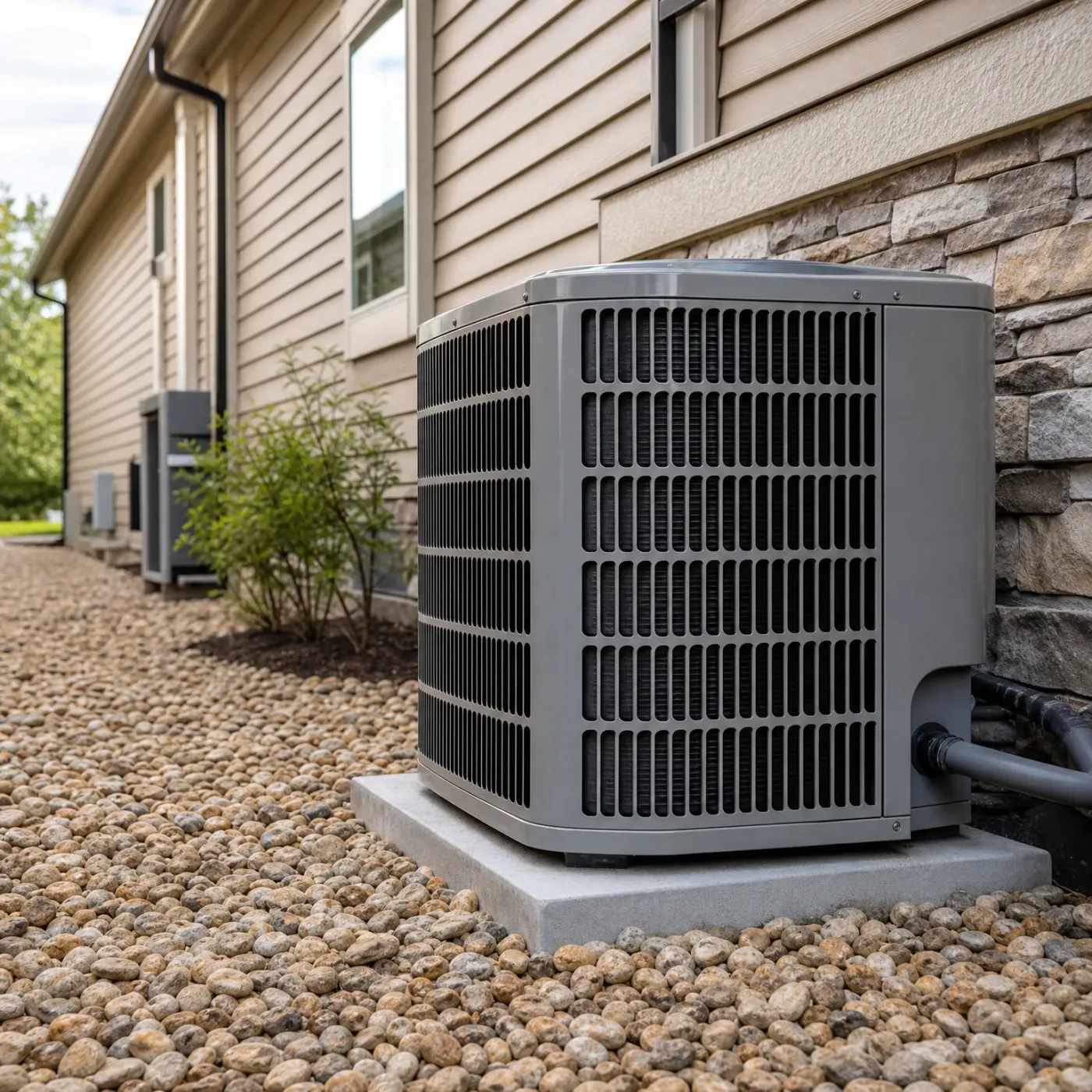
A gray outdoor air conditioner condenser unit on a concrete pad beside a house with vinyl siding and stone veneer, surrounded by gravel, with a second smaller unit and a shrub farther along the wall.

Hand off the search today

Fill out one short form instead of calling around.

Send the request today and stop worrying about who to call.

Answer a few questions

There's no charge for the request.

A wooden table with a closed laptop, a ceramic mug of dark coffee, and a glass vase of eucalyptus stems beside a window, with a dark green kitchen cabinet, wooden counter, potted herb, cutting boards and bowl blurred in the background.

What happens inside the unit when it trips

A breaker trips because something downstream is pulling more current than the wire feeding it can handle. In an AC that usually traces back to the compressor. A compressor with a failing start capacitor or windings going bad will draw more current than it should the whole time it runs, not just at startup. The breaker reads that as a problem and opens the circuit to keep the wire from heating up. A dirty condenser coil or a fan motor that's seizing up does something similar, making the compressor work harder than it was built to.

None of that is something you fix by resetting the breaker and hoping. A licensed contractor can put a meter on the unit and see what it's actually drawing compared to what the nameplate says it should pull. Finding that contractor is usually the slow part, calling a few numbers from a search, explaining what the unit's been doing, waiting on callbacks, then doing it again with the next name on the list. Sending the form here skips that part. You explain it once and someone qualified takes it from there.

A living room corner with a beige upholstered armchair holding navy and striped cushions, a small round wooden side table with a carved bowl and a potted green plant, a framed landscape picture on a pale wall, built-in shelving, and a curtained window.
  1. The compressor draws a hard surge of current the moment it starts

  2. A weak capacitor or tight bearing makes that surge run long

  3. The extra current heats the breaker past its rated limit

  4. The breaker's internal strip bends and trips the switch

A woman with dark hair in a bun sits on a beige sofa under a knit blanket with her eyes closed and an open book in front of her, with a lit lamp and houseplant in the background.
A smiling bearded man in a dark sweater sits at a dinner table with lit candles, a glass of red wine, and bowls of food, in a dimly lit room with a lamp and houseplant behind him.

What's making the compressor pull too hard

  • A dirty outdoor coil forces the compressor to work harder and pull more current than the breaker allows.
  • Low refrigerant charge makes the compressor run longer and hotter to reach the set temperature.
  • A failing run capacitor lets the compressor motor draw high current the whole time it runs, not just at startup.
  • A seized or dragging fan motor adds extra load that shows up as current the breaker has to absorb.
  • A breaker that's aged past its rated life trips at a lower current than it used to, even from a unit pulling what it always has.
  • Loose wiring at the disconnect or the unit itself can create resistance that shows up to the breaker as excess draw.

Most of what trips a breaker on a Georgia AC comes down to the compressor working harder than it should. A dirty outdoor coil is the most common cause, since a unit sitting outside all summer collects dirt, grass clippings, and pollen on the coil fins. Once that coil is caked, the system can't shed heat the way it needs to, so the compressor draws more current trying to keep up. Low refrigerant does something similar from the inside. With less refrigerant to move heat, the compressor runs longer and hotter on every cycle, and that extended high draw is what pushes a breaker past its limit.

A failing run capacitor changes the picture in a different way. Instead of a quick draw at startup, the motor pulls high current the entire time it's running, which adds up fast over a long afternoon. A dragging fan motor does the same thing from another angle, adding mechanical resistance that shows up to the breaker as extra electrical load.

Sometimes the breaker itself is the weak link. Breakers lose some of their rated capacity as they age, so one that held up fine for years can start tripping at a current draw the unit has always pulled. Loose wiring at the disconnect box or inside the unit can also generate resistance and heat that reads to the breaker as excess draw, even when the compressor itself is fine.

Power costs 14.74 cents per kilowatt-hour statewide

At 14.74 cents per kilowatt-hour, a straining compressor costs you more with every minute it runs trying to push past whatever's making it pull extra current. A unit that trips the breaker isn't just inconvenient, it's working harder and burning more power each time it almost gets there.

EIA-861 2025 statewide residential average

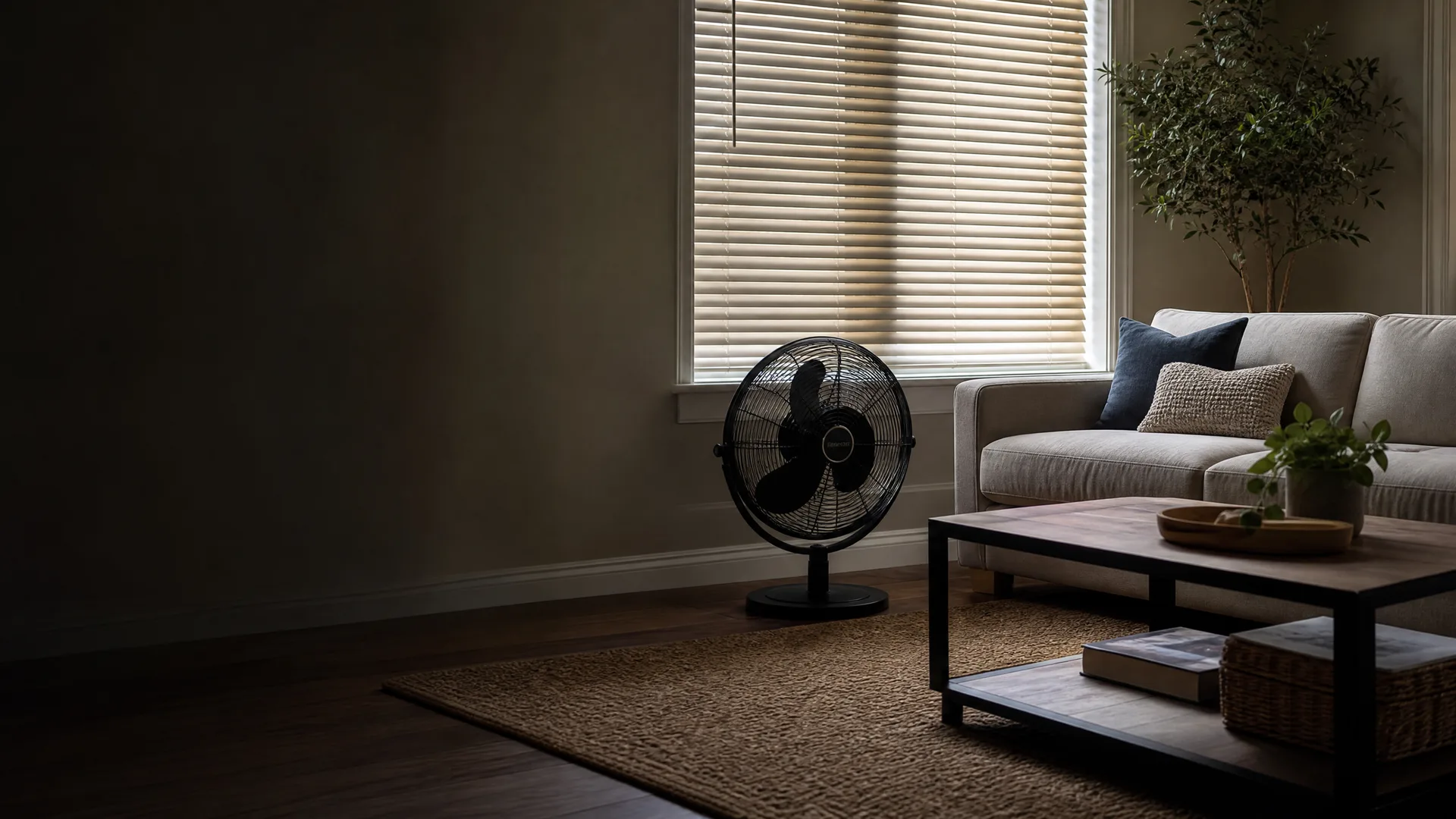
A dimly lit living room with a black table fan on the wood floor near a window with closed blinds, beside a light-colored sofa with cushions, a wooden coffee table, a woven rug, and a potted tree.

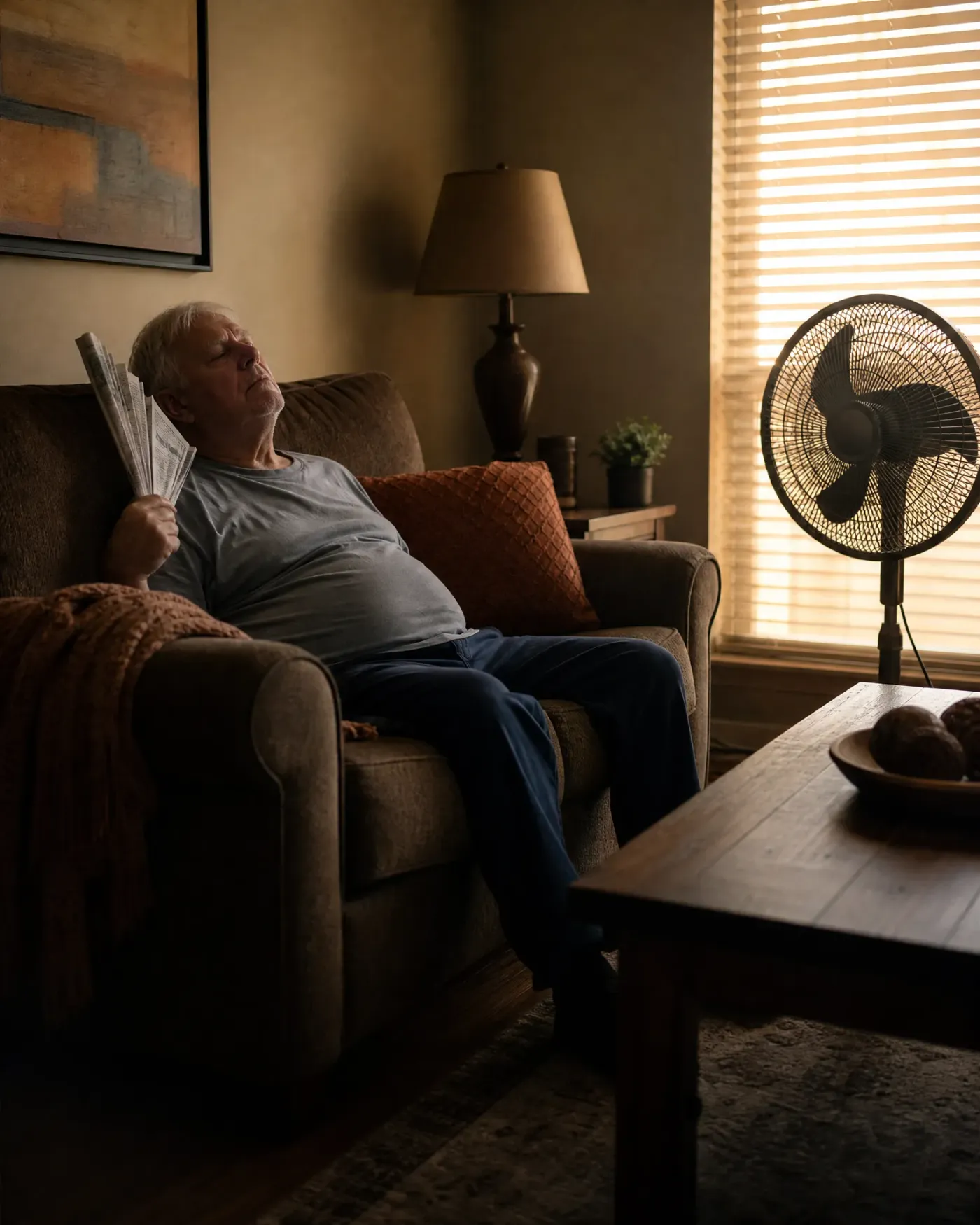
It's a little after three and the blinds are drawn against the sun, the kind of July afternoon where the light outside is almost white. You've got the floor fan going next to the couch, aimed at where you're sitting, because twenty minutes ago the AC clicked off again and the breaker's down in the panel waiting on you. The house hasn't caught up to the heat yet, but you can feel it starting, that thickness in the air that wasn't there at lunch. You keep glancing at the thermostat like it might fix itself. The fan just moves the warm air around. Somewhere behind the drawn blinds the outdoor unit sits quiet, and you're doing the math on how long you can wait before you go reset it again.

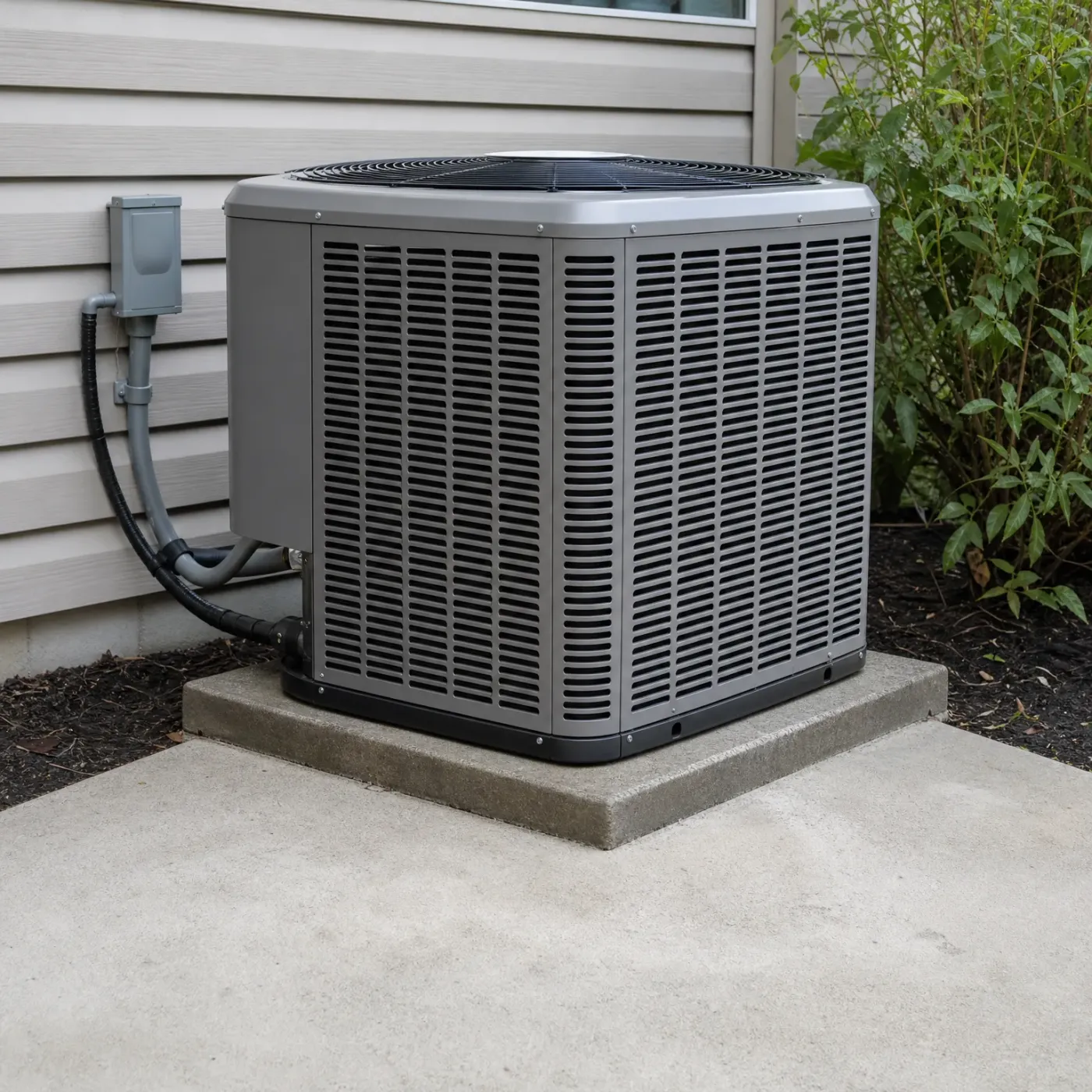
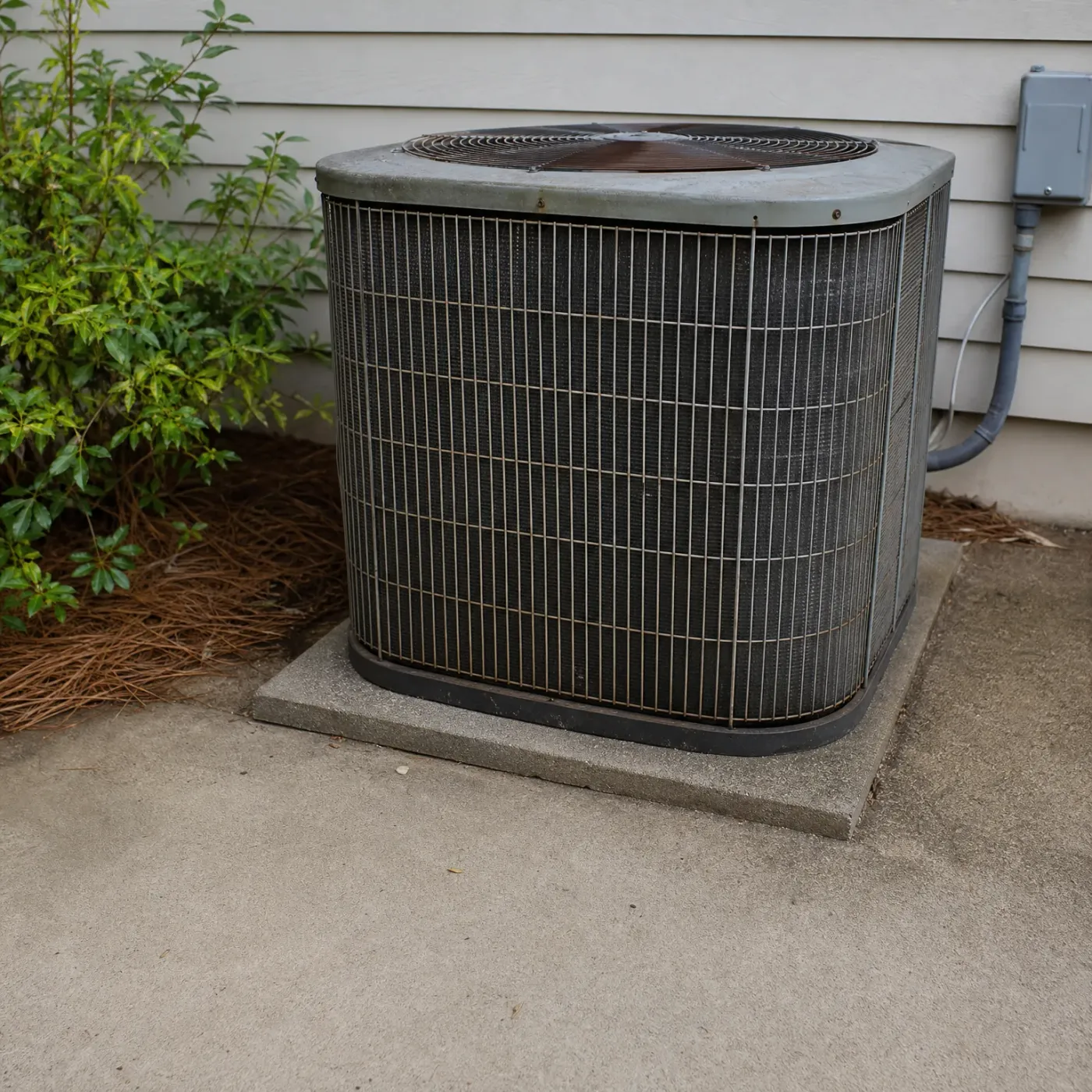
A gray outdoor air conditioner condenser unit on a concrete pad beside a house with light vinyl siding, with an electrical disconnect box and conduit on the wall and a leafy shrub with dark mulch to the right.
The grille is clean, the pad is clear, and the unit pulls the same steady current every time it cycles on.
An outdoor air conditioner condenser unit on a concrete pad beside a house with horizontal lap siding, with a gray electrical disconnect box and conduit on the wall and a green shrub over pine-needle mulch at left.
A dirty, weathered grille like this restricts airflow across the coil, and the compressor pulls harder to make up for it.
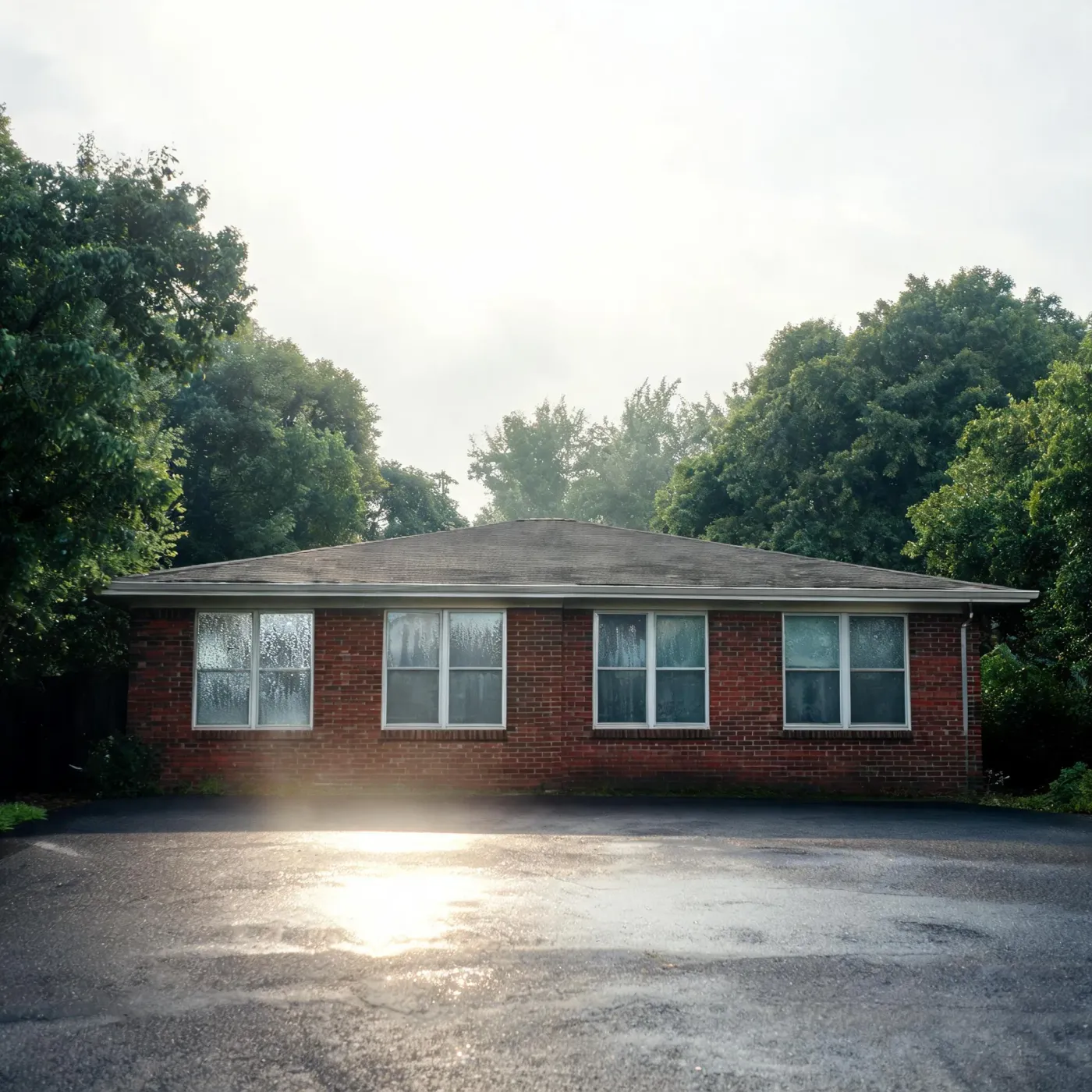
A single-story red brick building with a low hipped shingle roof and large windows, fronted by an empty asphalt parking lot with sun glare, surrounded by leafy green trees under a bright hazy sky.

Summer air here holds a dew point around 68°F, averaged across June, July and August by NOAA. That's heavy, damp air, and it means the coil outside is pulling heat out of air that's already thick with moisture. The compressor has to run longer to get the house down to temperature, and longer runs mean more heat building up inside the motor windings. A compressor already struggling with a weak capacitor or a dirty coil doesn't get any breaks in air like this. It just keeps drawing hard, keeps heating up, and sooner or later that's the breaker tripping again at the same point in the afternoon.

NASA POWER T2MDEW county cells weighted by homes

A breaker that trips once and resets fine might just need watching. A breaker that trips at the same point in the run, afternoon after afternoon, is telling you something in the compressor is drawing more than it should, and it won't fix itself. That's a repair, not a habit to work around. You could spend the next few evenings searching for someone licensed to look at it, calling around to see who answers, explaining the same thing about when it trips and what you've noticed each time you get someone new on the phone, then sitting with a stack of quotes trying to tell which one actually means something. Or you could send this and let that part be done. You'll still need the repair. But you won't be the one tracking down who's going to do it, and that's the part that's been eating your evenings along with the heat.

A house with dark standing-seam metal roofs, gabled dormers and a stone chimney, surrounded by trees with hanging moss, with cloud-covered mountains in the background.

Hand off the air conditioner problem

Describe it once

You only hire the pro if you want to.

A unit that trips the breaker every afternoon won't sort itself out by evening. Sending the request means you're not the one calling around town trying to find someone free this week, explaining the same problem twice, or weighing quotes against each other while the house sits warm.