













AC keeps tripping the breaker in Canton, GA

Once you send the form, finding a pro is off your list.

Send my request

A breaker that trips every time your AC kicks on usually means the unit is pulling more current than it should, and something is making it work harder than it was built to. The most common cause is the compressor, the part that pumps refrigerant through the outdoor unit. A compressor with a failing start capacitor or a worn motor draws a surge of power trying to start, and that surge trips the breaker before the unit ever gets running. A dirty condenser coil or a low refrigerant charge can do the same thing, because the compressor has to work harder to move heat out of the house. Sometimes the problem isn't the AC at all. A breaker that's old or has weakened over years of summer use can trip at a lower load than it used to. With Cherokee County summers running long and hot, an AC that trips its breaker won't keep up, and the strain that caused it the first time will likely cause it again until something gets fixed.

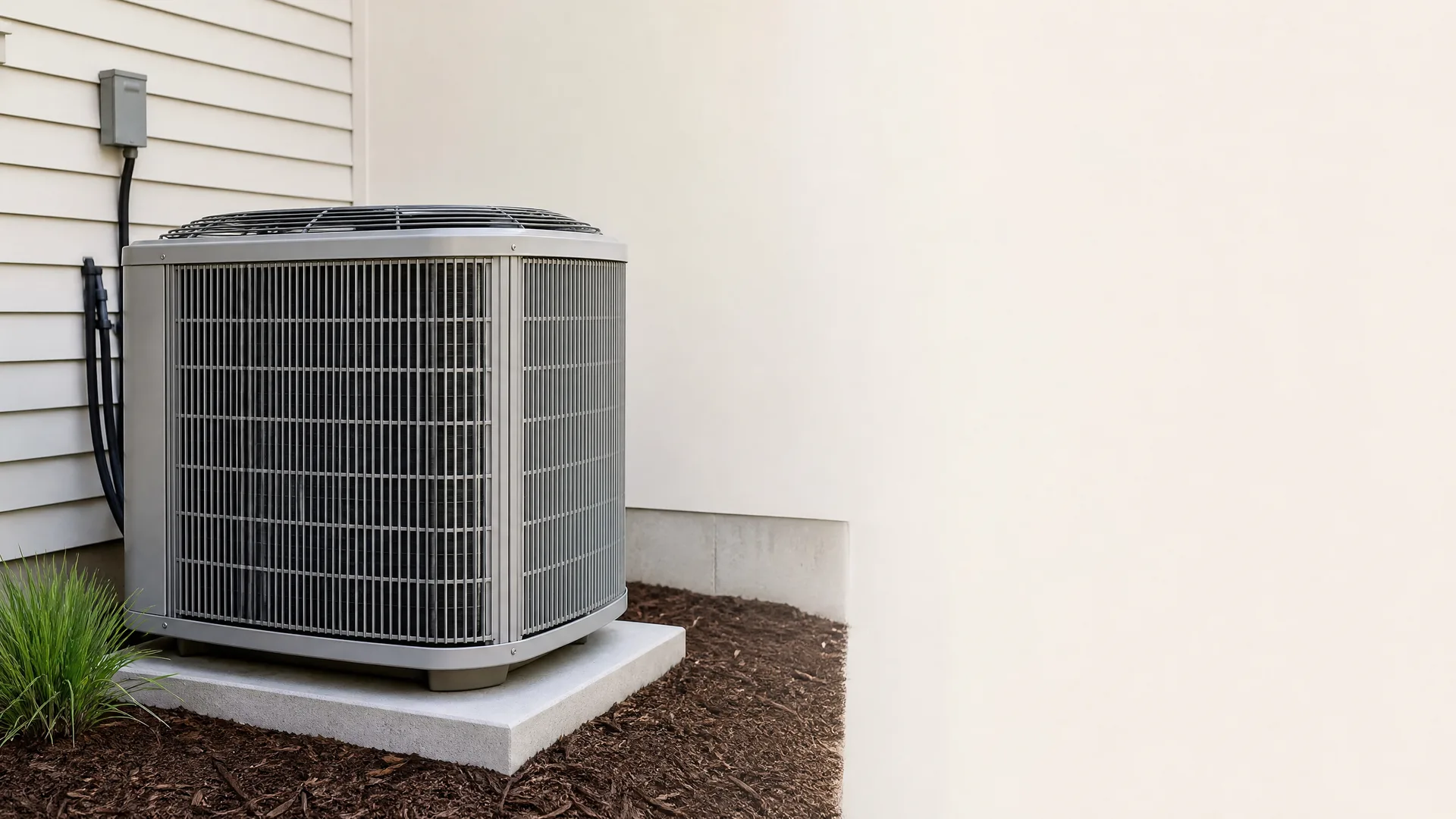
An outdoor air conditioner condenser unit on a concrete pad beside a house with horizontal lap siding and a light stucco wall, surrounded by dark mulch and an ornamental grass.

What a tripping breaker protects

A breaker is built to open before the wire behind it heats up past what it can take. When the compressor draws too much current, the breaker trips to stop that heat from building in the wall. It is doing its job. Resetting it without finding why the draw is high just asks the wire to carry that current again, and it will trip again, usually sooner the second time.

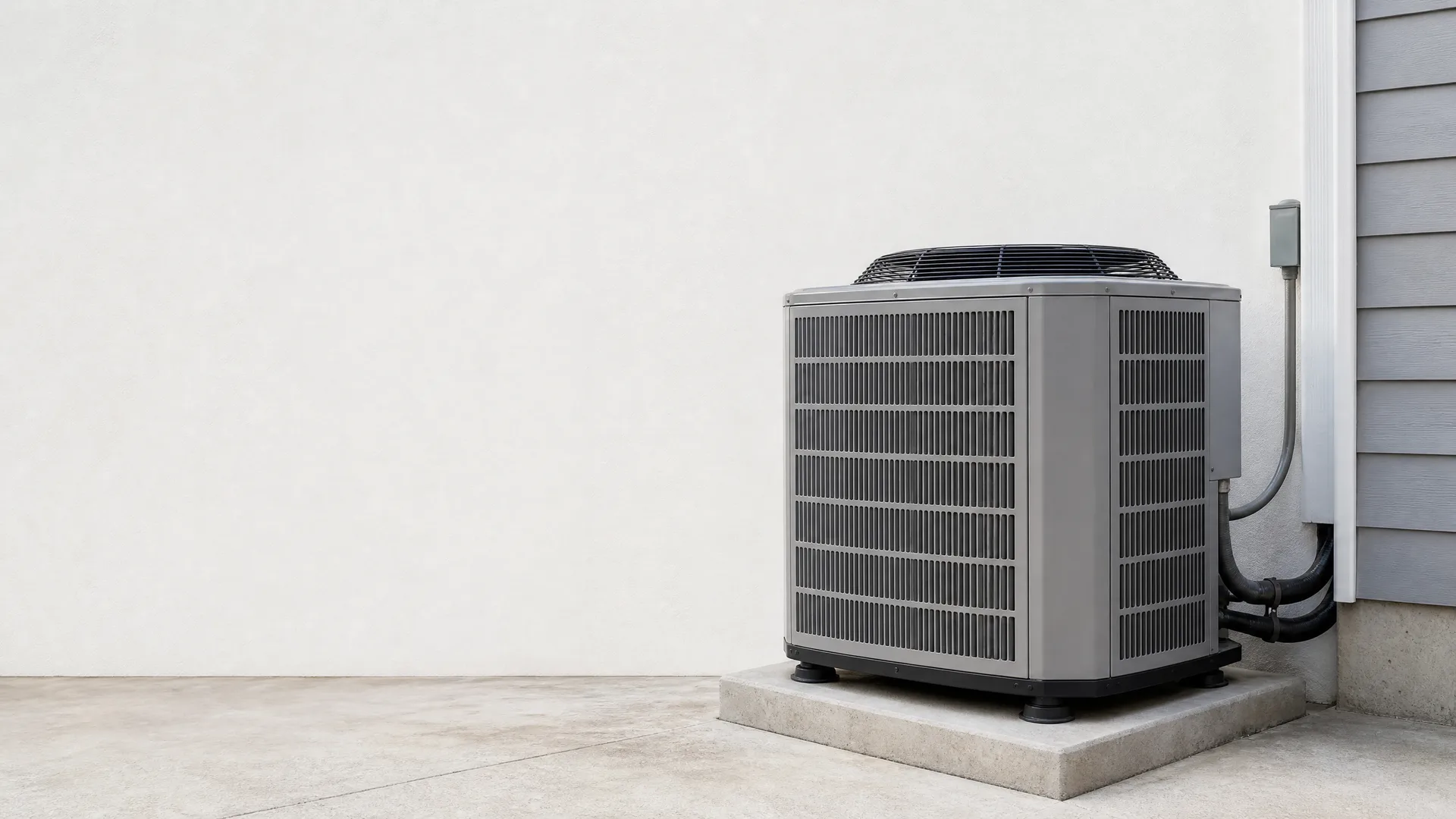
An outdoor air conditioning condenser unit on a concrete pad beside a light stucco wall, with a disconnect box and refrigerant lines running to adjacent lap siding.

Why it often happens on restart

Compressors pull their heaviest current for a moment at startup, far more than they draw once running. A capacitor is what gets the motor through that moment without overloading the circuit. When the capacitor weakens, the motor strains longer to reach speed, and the extra draw during that stretch is what the breaker is reacting to. That is why the trip often comes right as the unit kicks on, not after it has been running a while.

A closed silver laptop and a light ceramic mug of dark coffee on a wooden table, with a wooden chair, kitchen counter with sink, pendant lamp, potted plant, and a window showing a sunset sky in the background.

What this means for your house this summer

A breaker that keeps tripping means your AC shuts down, and in a Canton summer that doesn't take long to matter. The house holds heat fast once the air stops moving, and resetting the breaker over and over just asks the same worn part to pull the same hard current again. Each trip is the panel doing its job, but it is also a sign the compressor or the wiring behind it is under more strain than it should be.

Left alone, a resetting breaker tends to trip sooner each time, not later. You could be looking at a failed compressor instead of a repairable one, and a breaker or wire that's taken real heat damage. Rather than calling around Cherokee County for someone who can look at it this week, explaining the tripping and the resets again to each one, you can send the details once and let a licensed contractor get back to you with what it will take to stop it for good.

A wooden table holding a stone vase with a bare branch, two stacked books and a small dark bowl, beside a window with green foliage outside and a sofa in the dim background.
A smiling man in a dark green sweater sits at a wooden table with a light gray mug in a kitchen with white tile backsplash, pendant lights, and an adjoining living room visible.
A smiling man in a dark gray sweater stands indoors looking to the side, with a kitchen counter holding a ceramic mug and open wooden shelves behind him and a living area in the background.
A smiling man in a dark blue button-up shirt stands at a white kitchen island, with open shelving, a gas range, a potted plant and a window in the background.
A smiling man with dark wavy hair and a beard, wearing a dark green knit sweater, sits in an open-plan living room and kitchen with a brown sofa, large windows, and a counter holding a mug and a wooden bowl.
A gray outdoor air conditioner condenser unit on a concrete pad beside a house with horizontal siding and a stucco foundation, with a disconnect box and conduit on the wall, decorative gravel, mulch, and a shrub nearby.
A clean unit draws steady, even current, and a breaker that holds means the compressor isn't fighting for power.
An outdoor air conditioning condenser unit on a concrete pad beside a house with horizontal lap siding, with an electrical disconnect box and conduit on the wall, mulch and a green shrub to the right, and a concrete walkway in the foreground.
Dirt packed into the coil grilles blocks airflow, makes the compressor work harder, and that's when the breaker starts tripping.

Every time your compressor starts, it draws a hard spike of current for about a second before it settles into its normal running draw. A start capacitor is what carries it through that spike. When the capacitor weakens, the compressor pulls high current for longer than it should, and that extra second or two is often what sends the breaker. A coil packed with dirt does something similar from a different angle. It forces the compressor to push against higher pressure, so the amps it draws stay high the whole time it runs, not just at startup. Low refrigerant charge works the same way, keeping the compressor running longer than it was built for to satisfy the thermostat. A short in the compressor windings is a different problem entirely, and it shows itself differently. Reset the breaker and it trips again fast, sometimes within seconds. And sometimes the compressor is drawing exactly what it should, and the breaker itself is just old and trips at a lower load than it used to.

What's actually tripping the breaker

  • A compressor pulls a hard jolt of current for about a second on startup, and a start capacitor is what carries it through that jolt.
  • When that capacitor weakens, the compressor draws high current for longer than a second, and that's often enough to trip the breaker.
  • A dirty condenser coil forces the compressor to work against higher pressure, which raises the amps it pulls the whole time it runs.
  • A breaker can also trip from a short in the compressor windings, and in that case resetting it will not hold for long.
  • Low refrigerant charge makes the compressor run longer to satisfy the thermostat, which adds heat and current draw it wasn't built to handle.
  • A breaker that's simply worn out can trip at a lower load than it used to, even when the compressor is pulling normal current.
An outdoor air conditioner condenser unit on a concrete pad beside a house with light horizontal vinyl siding, surrounded by bare dirt, gravel and dry leaves, with refrigerant lines and conduit running along the wall.
Before you get your air conditioner repair
A gray outdoor air conditioner condenser unit on a concrete pad beside a house with horizontal lap siding, with a flowering shrub at left and a disconnect box with conduit on the wall at right.
After you get your air conditioner repair

Reset it once and watch what happens next. If it holds and the AC runs, fine. If it trips again within a minute or two, stop resetting it.

Flipping it back on again and again doesn't fix what's pulling the extra current, it just gives the compressor more chances to draw power it shouldn't and more heat to the wire behind that breaker.

A bearded man in a navy t-shirt sits on a beige sofa, laughing while looking toward a laptop screen visible in the lower foreground, with a houseplant, shelves, and a framed picture behind him.
A bearded man in a plaid flannel shirt over a gray tee looks out a frosted multi-pane window with snow outside, a steaming dark mug on the sill beside him and shelves of dishware behind.

Finding a pro stops being your job

You've probably reset that breaker two or three times already, hoping the next try sticks. A compressor that's drawing too much current isn't going to fix itself by being switched back on. Finding someone who can get out to a house in Canton, look at the unit, and actually diagnose what's pulling that current usually means a string of calls, waiting on callbacks, and explaining the same thing to each one before you even get a quote. Send the request here instead and that part stops being yours to do. It goes to one contractor, not a pile of them competing for your attention, and you're not the one chasing anybody down. Your house is already holding heat with the AC off this long. The sooner someone's looking at that compressor instead of you flipping a switch on it, the sooner it stays on.

A single-story red brick ranch house with white-framed windows, a white side door, and a shallow gray roof, fronted by a large empty asphalt driveway and surrounded by green deciduous trees under a bright overcast sky.

Cherokee County summers carry a dew point around 67°F, the number that tells you how heavy the air sits rather than just how hot it reads. That's thick air for a compressor to push through, since the unit has to run longer stretches to pull that much moisture out before it ever gets to cooling the house down. Longer run time means more hours drawing current, and a compressor already struggling to start pulls harder for more of the day. If yours is tripping the breaker, this is the stretch of year it shows up most, because the unit barely gets a break between cycles. Source: NOAA climate normals for Cherokee County.

NASA POWER T2MDEW

Keep Resetting It, or Get It Fixed

Reset and watch

  • Flip the breaker back and see if the AC runs through a full cycle without tripping again.
  • If it holds for ten or fifteen minutes, the problem may be intermittent, but it hasn't gone away on its own.
  • If it trips again within a minute or two, the compressor is still pulling too much current and resetting again won't change that.
  • Each reset sends another hard jolt of current through a compressor that's already struggling, which can wear the windings faster.
  • You still don't know whether it's a weak capacitor, a dirty coil, or something failing inside the compressor itself.
  • The house keeps losing cooling time every time it trips, and a Canton summer afternoon doesn't give you much room for that.

Get it looked at

  • A contractor can check the capacitor, the coil, and the compressor's current draw to find what's actually pulling too much power.
  • Once the real cause is found, it can be fixed instead of guessed at, so the breaker stops tripping for good.
  • You skip the work of searching for a licensed contractor in Cherokee County and calling around to see who can come out.
  • You only explain the problem once, instead of repeating it to every company you call for a quote.
  • The AC runs the way it's supposed to, without you standing at the breaker panel resetting it every hour.
  • You stop wondering whether the next reset is the one that finally holds or the one that does more damage.
A gray outdoor air conditioner condenser unit on a concrete pad beside a house with dark horizontal siding and a stone base, surrounded by gravel, with a flowering shrub at left and a concrete walkway in front.

Running clean

This is what a healthy unit looks like outside your house. The pad is clear, the fins are open, and the disconnect box sits untouched beside it. Air moves through the coil the way it was designed to, so the compressor draws what it's supposed to and the breaker stays closed.

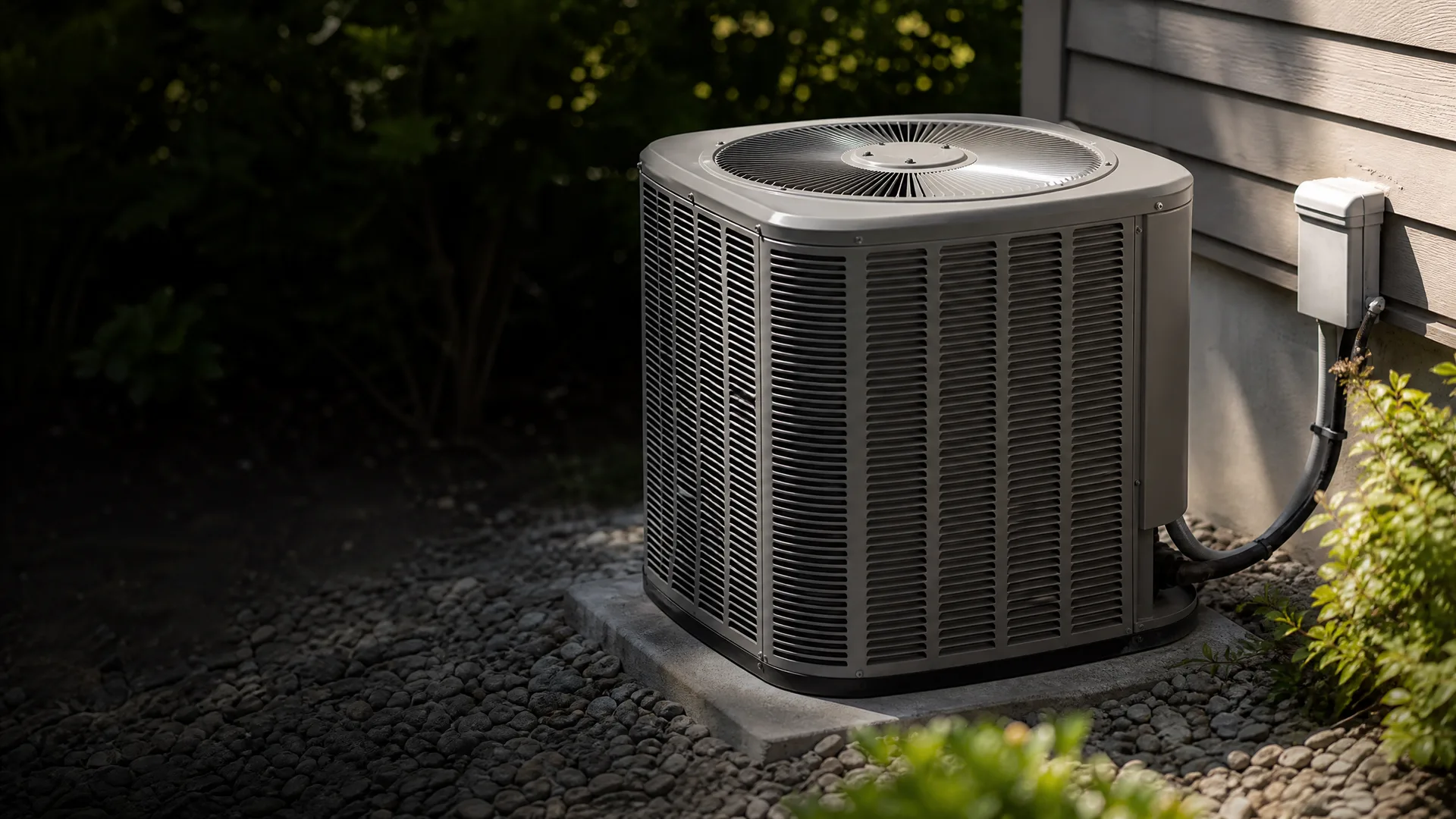
An outdoor air conditioner condenser unit sits on a concrete pad beside a stucco wall, with refrigerant lines and conduit running to the wall and a shrub to the left.

Working against itself

Grime like this cakes over the fins and blocks the airflow the compressor depends on. The lines still run into the wall, the unit still turns on, but it's pulling harder to do the same job. That extra draw is often what's tripping your breaker.

Cooling runs May through September

Five months of that load on your compressor adds up, and a breaker that's starting to trip in May or June only gets more insistent by August. Catching it now, before the hottest stretch, is easier than catching it mid-July with the house already hot.

NOAA nClimDiv 1991-2020

Where this leaves your AC

  • A breaker that trips on AC startup means the compressor is drawing more current than the wire was built to carry.
  • A weak start capacitor or a dirty coil are the two most common reasons that draw climbs past what the breaker allows.
  • Resetting the breaker without finding the cause just repeats the same hard jolt of current on every restart.
  • A Canton summer gives a tripping AC little room to wait, since the house heats up fast once it shuts down.
  • Finding a contractor, explaining the problem, and comparing quotes is its own chore on top of the heat.
  • The unit still needs someone to look at it, but you no longer have to be the one tracking that down.

A breaker that trips every time the AC starts is telling you the compressor is pulling more current than the wire can carry. Most of the time that comes down to a weak start capacitor that can't carry the compressor through its first second of startup, or a coil so packed with dirt that the compressor has to fight for airflow it isn't getting. Either way, the breaker is doing exactly what it was built to do. It opens before the wire behind it heats up past what it can take, and resetting it without fixing what's underneath just sets up the same hard jolt of current for the next try.

None of that waits well in a Canton summer. The house holds heat fast once the air stops moving, and a unit that trips in May only has to work harder by August. So the part that matters now is getting someone out to look at the capacitor and the coil, not how many times the breaker has been flipped back on.

That part is usually its own job: finding a contractor who does this work, explaining what the unit's been doing, then sorting through quotes to see who's worth calling back. Once the form here is sent, that search isn't yours to run anymore. The unit still needs a licensed hand on it, but you're not the one tracking down who that is.

An outdoor air conditioner condenser unit on a concrete pad surrounded by gravel, next to a house wall with horizontal siding, an electrical disconnect box, and conduit, with shrubs nearby.

Let someone else find the pro

RepairCentral ACCherokee County, GA
Step 1 of 2

What ZIP code is the job in?