Why your AC won't turn on in Georgia

RepairCentral ACGeorgia
Step 1 of 2

What ZIP code is the job in?

Why won't my AC turn on in Georgia?

It's hot, the house is getting muggy, and your air conditioner won't even start up. No hum, no click, nothing at the thermostat or at the unit outside. Before you start guessing at parts, it helps to know what actually stops an AC from turning on at all, since the cause is usually one of a short list of things.

Most often it's the thermostat, a tripped breaker, or a safety switch

A thermostat with dead batteries or a wrong setting won't call for cooling at all, so check that first. If the thermostat looks fine, the next place to look is the breaker panel. Georgia summers push air conditioners hard for months at a stretch, and a breaker that trips once can trip again if something inside the unit is drawing too much power. Outdoor units also have a safety switch at the condensate line that shuts the system down if the drain pan fills up, which happens more in a climate this humid. If the switch is tripped, the system won't start until the drain is clear. A qualified technician can test each of these quickly and tell you which one is the actual cause.

A gray-haired man in a dark knit sweater sits on a light gray sofa in a living room, looking toward a sunlit window, with houseplants, a lamp, and framed art in the background.
A bearded man with graying hair in a dark green sweater sits on a sofa in a living room, looking off to the side, with a sliding glass door and a dim kitchen doorway behind him.
A gray-haired man in a dark green sweatshirt sits on a sofa in a living room, looking toward a bright window, with a houseplant, lamp, fireplace and framed art behind him.
A gray-haired man in a dark long-sleeve shirt sits on a gray sofa in a living room, looking toward a sunlit window with sheer curtains.

Where the Power Stops

  • A thermostat set to cool but with a dead or wrong battery won't send power to the outdoor unit at all.
  • The outdoor disconnect, a pull-out block near the condenser, can work loose or trip and cut power before it reaches the compressor.
  • A tripped breaker is common after a storm, since Georgia's summer thunderstorms cause the brief surges that knock one out.
  • Inside, a float switch on the condensate pan shuts the whole system down if the drain line has backed up.
  • The contactor, a small relay that switches power to the outdoor unit, can stick or burn out from the heavy cycling summer heat demands.
  • A capacitor that's weakened can leave the compressor and fan with just enough power to hum but not enough to start.

When an AC won't start, the cause is almost always something that cuts power before it reaches the compressor, not the compressor itself. Start at the thermostat. If the display is blank or dim, dead batteries are the reason, and no signal ever reaches the outdoor unit. From there, power runs to the breaker panel, then out to a disconnect box mounted near the condenser outside. That disconnect holds a pull-out block, and summer humidity and yard work around the unit can work it loose enough to break the circuit without anyone noticing. Georgia's summer storms are hard on this system too. A nearby lightning strike or a quick voltage spike can trip a breaker even when nothing else in the house seems affected, and that breaker won't reset itself.

Inside, there's a second shutoff built in on purpose. A float switch sits in the condensate pan under the indoor unit, and if the drain line is clogged and water backs up, that switch cuts power to stop an overflow. It's doing its job, but it leaves you with a system that looks dead.

If power is reaching the outdoor unit and it still won't start, the contactor or the capacitor is usually why. The contactor switches power to the compressor and fan, and years of cycling on and off through Georgia summers wear its contacts down until they stick or stop closing. A weak capacitor can leave just enough charge for a hum with no start.

A gray outdoor air conditioning condenser unit on a concrete pad beside a house with horizontal lap siding, with a wall-mounted disconnect box and conduit, and shrubs to the left.
This condenser sits clean on its pad with power running steady to it, no hesitation when the thermostat calls for cool.
An outdoor air conditioning condenser unit on a concrete pad beside a house with horizontal siding and a concrete foundation, with dry brown leaves on the ground to either side.
Leaves packed around the base and a layer of grime on the coil are often there well before the unit ever stops turning on.
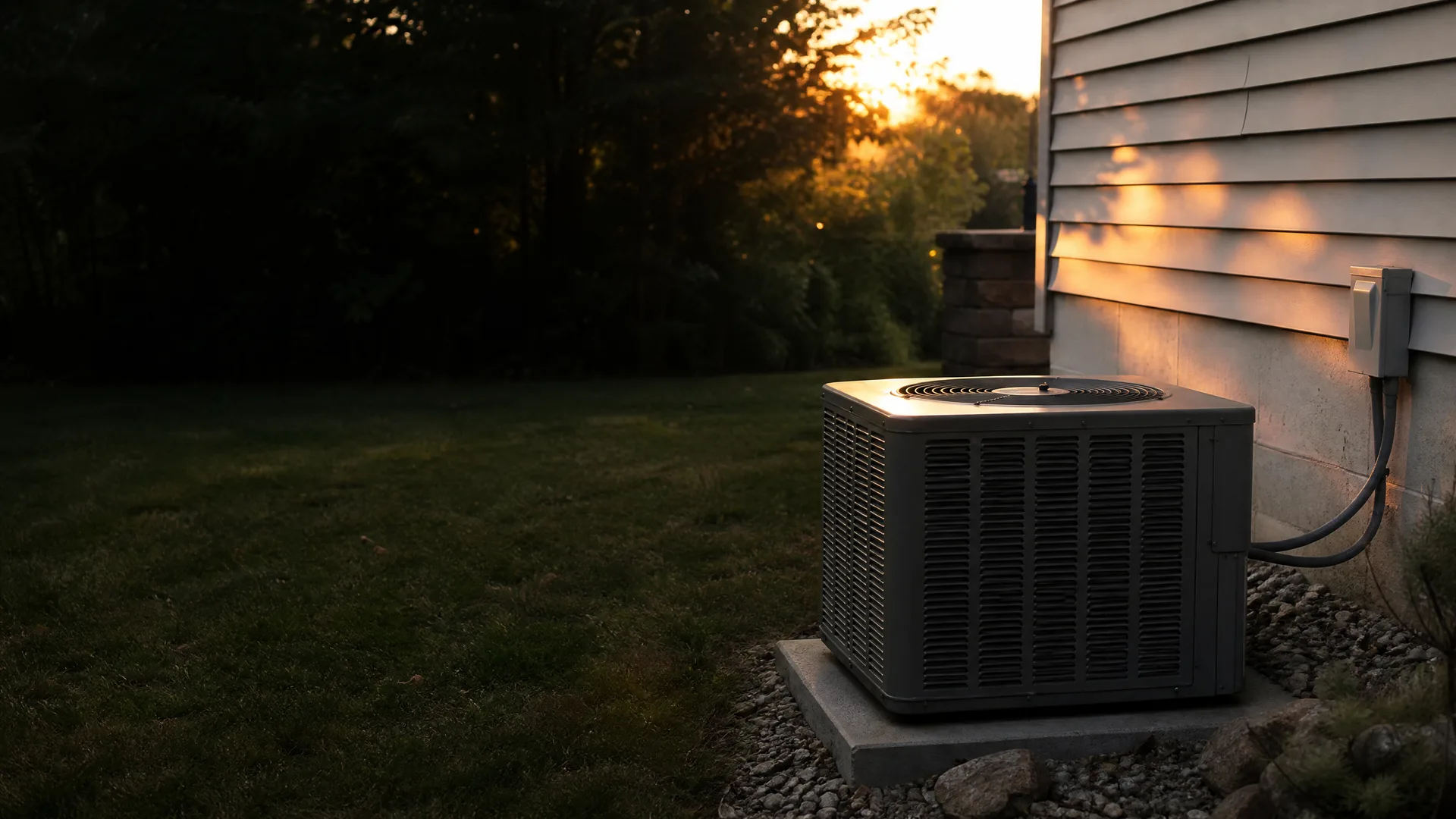
An outdoor air conditioning condenser unit on a concrete pad beside a house with horizontal lap siding, with a gravel bed, refrigerant lines and an exterior electrical disconnect box on the wall, and a lawn and trees at sunset in the background.

You're out on the patio around seven, the light going gold over the fence line, and the air still thick with the day's heat. The thermostat inside reads three degrees above where you set it. You walk over to the condenser and the fan isn't spinning. No hum coming off it, no rattle, nothing. You crouch down and look at the blades, still, like it never got the signal. Somewhere behind you a neighbor's unit is running fine, that low steady drone carrying across the yard. Yours just sits there on its pad, quiet, while the house keeps climbing past what you set it to.


What does it mean if your AC won't even try to start

You set the thermostat down to 72 and walk away expecting the house to catch up. An hour later it hasn't moved. No hum from outside, no click from the closet where the air handler sits, nothing. Maybe the indoor fan runs but the air coming out isn't cold. Maybe the outdoor unit buzzes for a second and stops. In a Georgia summer that gap shows up fast, the house climbing a degree an hour once the sun's been on it all day. Left alone, a unit that won't start usually isn't fixing itself by morning, and a house that sits hot and shut up through a July afternoon can start growing mildew in the places air doesn't reach.

An outdoor air conditioner condenser unit on a concrete pad beside a house with beige horizontal siding and a stone-veneer base, with refrigerant lines running to a gray wall-mounted electrical box, surrounded by dark mulch, a flowering shrub and an evergreen on the left.

Running the way it should

This condenser sits level on its pad, fan turning the moment the thermostat calls for cool. The disconnect box stays seated and dry, the breaker holds, and the unit cycles on without a pause. Nothing around the base blocks the airflow it needs.

An outdoor air conditioning condenser unit on a concrete pad beside a house with light vinyl siding, an electrical disconnect box and conduit on the wall, bare shrubs and mulch to the right, and a concrete walkway in the foreground.

Won't start at all

The fan sits still even with the thermostat calling for cool. No hum, no click, no sign the compressor is getting power. The disconnect nearby or the breaker feeding it is worth checking before anyone opens up the unit itself. A licensed contractor who works on these year-round can trace it to the actual cause.

An outdoor air conditioner condenser unit on a concrete pad beside a house with light horizontal lap siding, with an electrical disconnect box and conduit on the wall behind it.
Before you get your air conditioner repair
An outdoor air conditioning condenser unit on a concrete pad beside a house with white horizontal lap siding, with an electrical disconnect box and insulated refrigerant line on the wall and a shrub over mulch to the right.
After you get your air conditioner repair

Get your air conditioner to the right pro

Only one pro gets your request, so you hear from one company.

There's no charge for the request.

A gray outdoor air conditioner condenser unit on a concrete pad beside a house with white horizontal siding and a brick foundation, with a wall-mounted disconnect box and conduit, and a green shrub with mulch at left.

What a working unit looks like

This condenser sits on a clean pad against the siding, the grille clear and the disconnect box seated tight on the wall. Power runs from the box down to the unit with nothing loose or corroded in between. When the thermostat calls for cool, it starts.

An outdoor air conditioning condenser unit on a concrete pad beside a house with white horizontal vinyl siding, with a gray electrical disconnect box and refrigerant lines on the wall behind it.

What trouble looks like first

Grime has built up across the top cover and through the wire grille, the kind that collects over a season or more without a cleaning. Dirt like this makes the unit work harder before it ever stops turning on, and it's often sitting right next to a disconnect box worth checking too.

A woman with shoulder-length blonde-grey hair in a light knit cardigan sits in a grey upholstered armchair, looking toward a window, with a bookshelf and a small potted plant behind her.
A woman and a child with closed eyes sit wrapped together in a cream knitted blanket on a couch, with a lit lamp and shelves blurred in the background.

What the compressor needs to start

A compressor pulls a hard jolt of current the moment it starts, more than it draws once it's running. If the capacitor that stores and releases that jolt has weakened, the motor gets power but not enough push to turn over, so it hums or does nothing at all. A contactor with pitted or worn contacts can fail the same way, letting power reach it inconsistently or not reach it at all. Both are small parts, and both sit right next to each other inside the outdoor unit, which is why a tech checks them early rather than assuming the compressor itself is bad.

Why a breaker trips more than once

A breaker that trips once might be a fluke. One that trips again after you reset it is telling you something is pulling more current than it should, and that usually traces back to the compressor or the fan motor straining to start or run. Running it on a repeatedly tripping breaker risks damage to whichever motor is drawing the overload. A licensed tech can test the amp draw on each component with the power on, which isn't something to do yourself, and find which part is actually causing the trip before anything gets replaced.

Power costs 14.74 cents per kilowatt-hour statewide

At 14.74 cents per kilowatt-hour, running your air conditioner here isn't cheap when it's working right, and it costs you nothing when it's dead at the condenser. That's reason enough to get a technician to find the actual fault instead of swapping parts that don't need it.

EIA-861 2025 statewide residential average

  1. Thermostat calls for cool and sends a signal to the outdoor unit

  2. Power reaches the condenser through the disconnect and breaker

  3. The capacitor sends a jolt of current to start the compressor motor

  4. The compressor and fan motor turn and the system begins cooling

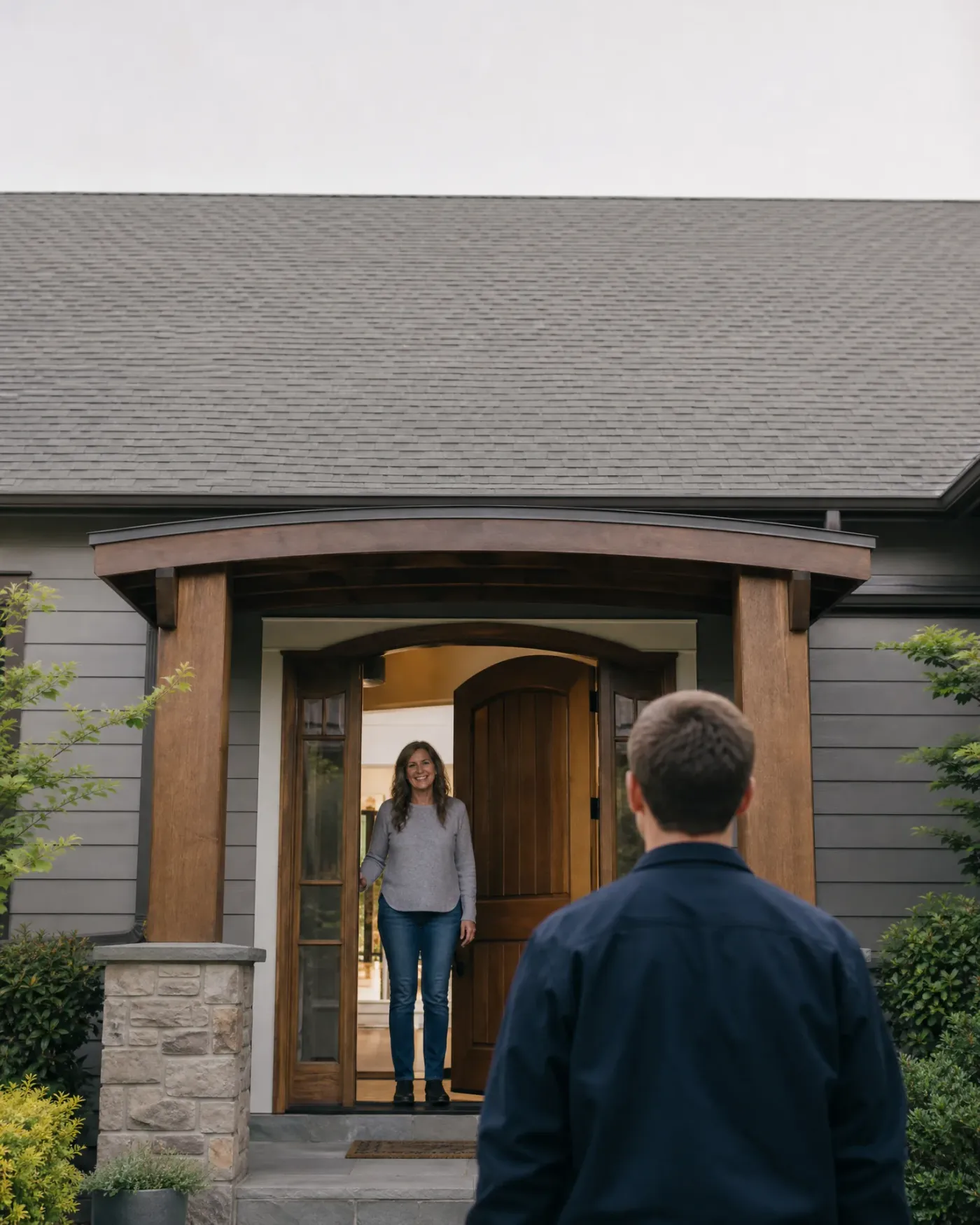
A woman stands in the open front doorway of a gray house with wood porch posts and a shingled roof, facing a man in a dark jacket seen from behind in the foreground.

What a dead AC costs you in a Georgia summer

A house that stops cooling in Georgia doesn't stay comfortable long. Humidity climbs fast once the air stops moving, and a house that feels warm at noon feels wet and heavy by evening. Wood floors can cup, paper curls, and anyone in the house who's sensitive to heat has no relief until the unit runs again. None of that is reason to panic. It's reason to find out what actually stopped the unit instead of waiting another day to see if it fixes itself.

The fault could be as small as a battery or as serious as a failed compressor, and you can't tell which from the thermostat. What you can do is get a contractor out who works on these systems in this heat every summer and has seen most of what causes a unit to go silent. When you request service here, you're matched with one licensed contractor local to you, not a handful competing for your callback, and they reach out to look at your specific unit.

A dark ceramic mug on a round wooden table beside a light grey sofa with a woven cushion and knit throw, with a window, potted plant, floor lamp and wooden cabinet blurred in the background.
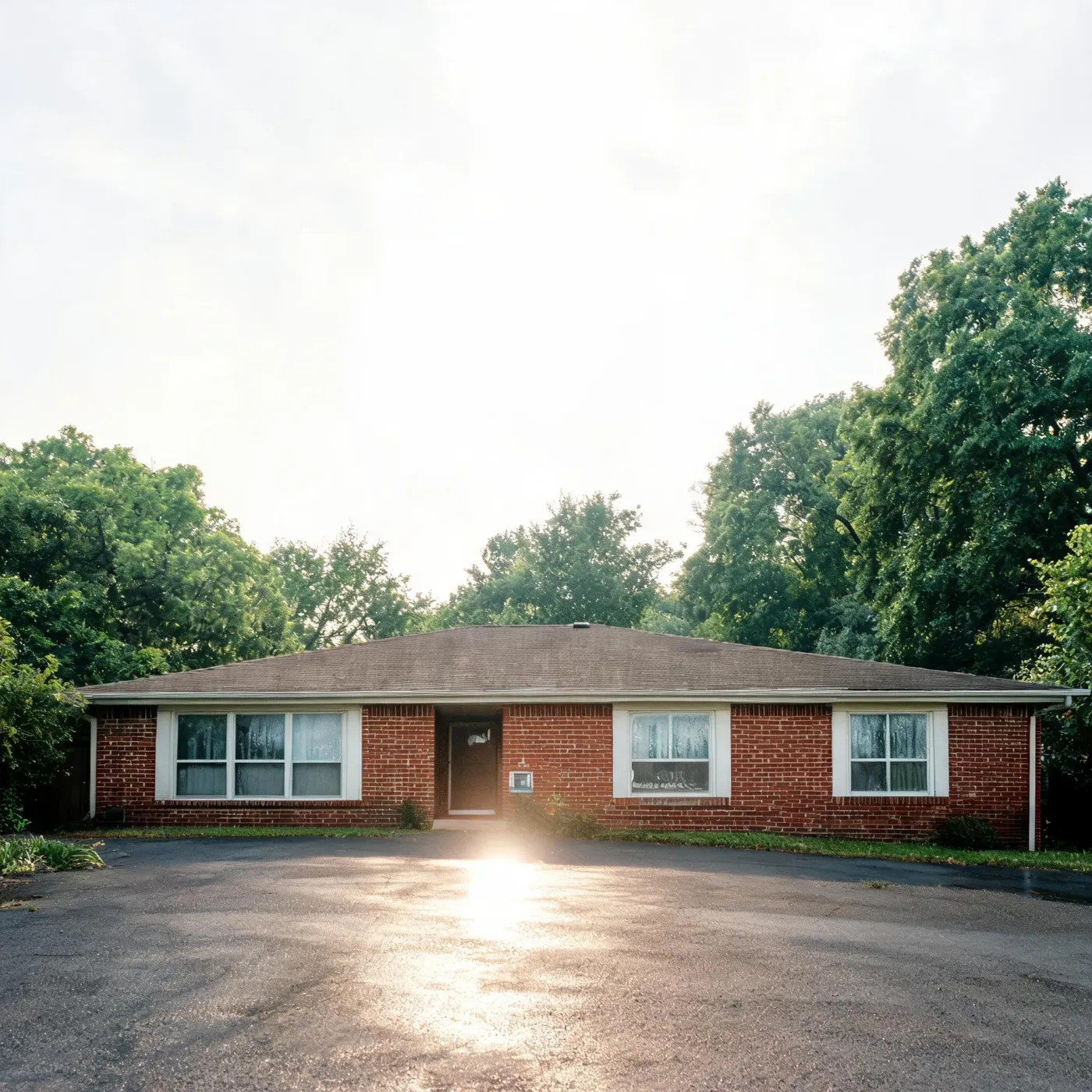
A single-story red brick ranch house with a low hipped shingle roof, white-trimmed windows and a central dark door, fronted by a large asphalt parking area with sun glare, surrounded by leafy green trees under a bright hazy sky.

Summer air here averages a 68°F dew point across June, July and August, according to NOAA climate data. That's the kind of heavy, wet air where sweat doesn't dry and a house warms up fast once the cooling stops. It's also harder on the unit itself. A compressor working against that much moisture in the air runs longer to pull the same heat out, and it starts under a bigger load each time the thermostat calls for cool. That load is exactly what strains a weak capacitor or a failing start component. When the air is this thick, a unit that's already borderline often won't start at all.

NASA POWER T2MDEW county cells weighted by homes

An AC that won't turn on almost always comes down to power not reaching the compressor, whether that's a dead thermostat battery, a tripped disconnect, a bad breaker, or a capacitor too weak to start the motor. None of that is a guess you want to make twice while the house sits at 85 degrees. A licensed contractor working in your area sees these condensers every summer, knows which of these parts fails first on units like yours, and can check the disconnect and the capacitor before replacing anything. You'll be matched with one contractor local to you, not a handful of companies competing for the job, so the person who calls you back is the person who shows up and already has an idea what they're looking for.

A dark standing-seam metal roof and stone gable end with a capped chimney in the foreground, with trees draped in hanging moss and misty mountain ridges under a cloudy sky behind.

The right pro for this job

Find a local pro

You only hire the pro if you want to.

A dead AC in July doesn't fix itself by waiting. Getting a local contractor who works on these units all summer to look at it means the right part gets found and replaced once, not guessed at twice while the house sits hot.