How to keep your AC running in a Georgia heat wave
Send the form and the air conditioner tune-up stops being something to remember.
A Georgia heat wave doesn't give your air conditioner a break. It runs morning to night trying to keep up, and the strain shows up as warm air from the vents, a unit that won't shut off, or a system that quits in the middle of the afternoon when you need it most.
Most of this comes down to maintenance that keeps the system able to handle the load. A dirty coil, a low charge, a clogged filter, any of these make the unit work harder in weather that already asks a lot of it. Catching that before the worst of the heat matters more here than almost anywhere else, since electric heat and cooling both run off the same bill and a struggling AC during a heat wave can push that number up fast.
Finding someone to look at the system usually means the part nobody wants to deal with. Searching for contractors near you, calling a few, explaining what the unit is doing to each one, waiting on callbacks, then comparing quotes before you even get someone out to the house. In the middle of a heat wave, with the house getting warmer, that process is its own kind of exhausting.
Send the form on this page and that work stops being yours to do. You won't need to track down names or sort through quotes. A licensed contractor in your area gets your information and takes it from there, and the job of finding help is no longer something you're carrying around while the temperature climbs.
What's left is getting your AC the attention it needs before the next stretch of heat. The button below starts that.
When the heat sits in the high 90s with the humidity on top of it, your air conditioner has to run close to nonstop to hold the temperature steady, and that long runtime is what turns a small weak spot into a breakdown. A dirty filter that was fine in April now chokes airflow when the unit can least afford it. A low refrigerant charge that masked itself for months shows up as ice on the line or warm air from the vents. A capacitor that was already weak gives out trying to start the compressor for the twentieth time that day. None of this is random timing. The heat wave does not break your system, it finds the part that was already close to failing and finishes the job. The homes that come through a stretch like this without a breakdown are usually the ones where someone looked at the unit before the heat arrived, not during it. If yours hasn't had that look yet this year, the next few days of high heat are when it matters most.
Your outdoor unit's whole job is to dump heat from inside your house into the air outside. When that outside air is already near 95 degrees, there's a lot less difference between the two, so the system has to work harder and longer to move the same amount of heat. That extra runtime is where small problems turn into failures. A refrigerant charge that was slightly low back in March can let the coil ice over once the compressor is running for hours at a stretch. The condenser fan motor is pulling air through the outdoor coil the entire time, and a motor that was already wearing out tends to quit on the hottest day, not a mild one. A capacitor losing strength makes the compressor start harder each cycle, and a heat wave means more cycles. If you feel warm air from the vents while the unit is still running, the compressor itself may have stopped, even with the fan going. Ice on the copper line outside points to an airflow or refrigerant problem, not a system working as it should.
What's Actually Happening Inside the Unit
Your outdoor unit sheds heat into the outside air, and when that air is already near 95 degrees it has far less room to dump heat into.
A refrigerant charge that was a little low in March can leave the coil icing over once the compressor has to run for hours without stopping.
The condenser fan motor pulls air through the outdoor coil constantly during a heat wave, and a motor on its way out usually fails on the hottest days, not the mild ones.
A capacitor that's weakening gives the compressor a harder start each cycle, and more cycles under heat stress is what finally pushes it past the point of starting at all.
Warm air blowing from the vents while the unit stays on can mean the compressor has stopped working even though the fan keeps spinning.
Ice on the copper line running to the outdoor unit usually means airflow or refrigerant trouble, not a sign the system is working harder to cool.
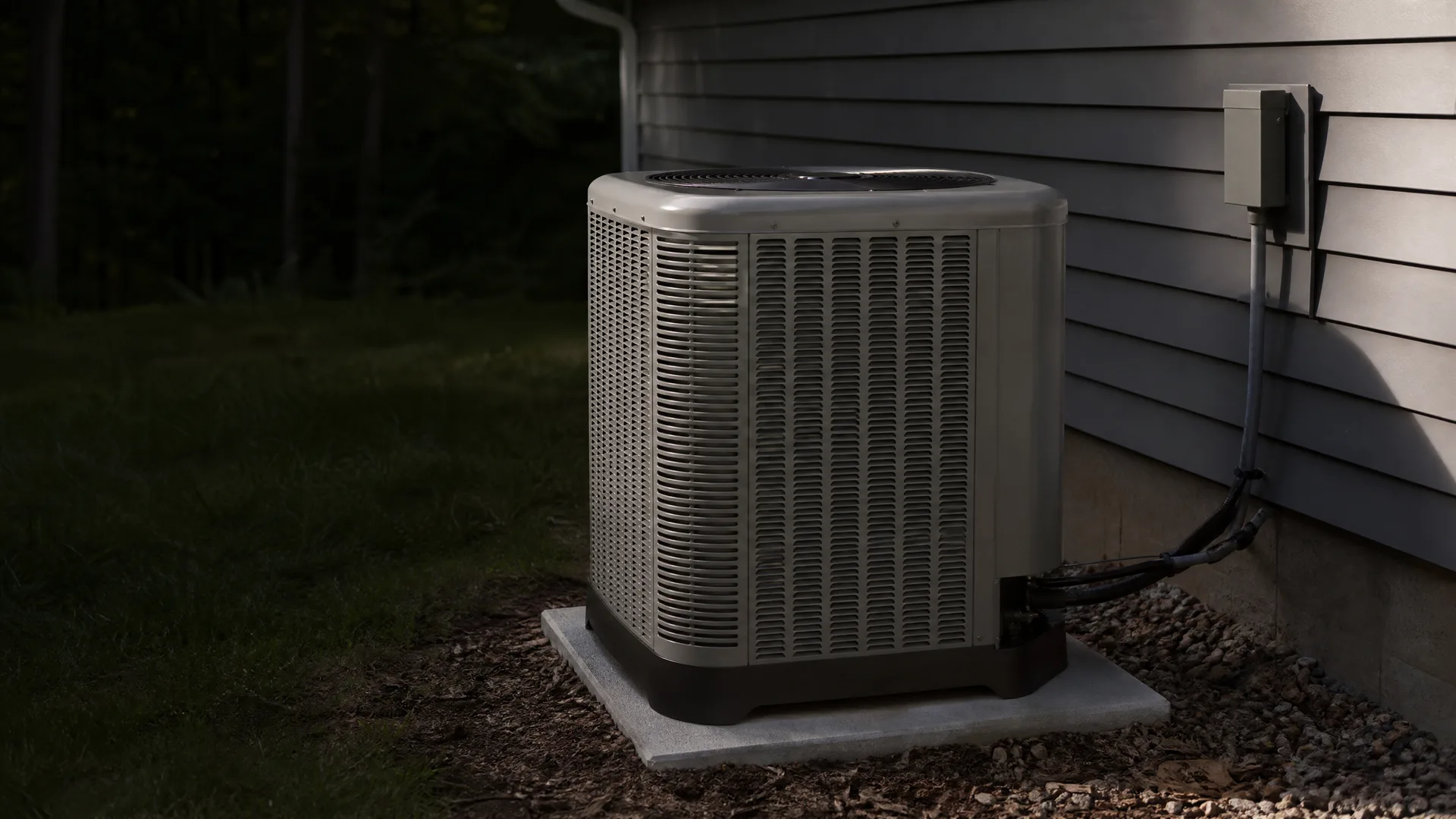
A clean coil like this one can shed heat the way it's supposed to, even with the compressor running most of the day.
Coil guards packed with dust and yard debris trap heat against the unit, and the compressor can't keep up on the hottest afternoons.
Is your AC keeping up or just barely holding on
You've probably already noticed the house doesn't cool back down the way it used to once the sun's been up for a few hours. Maybe the thermostat says 74 and the air coming out of the vent doesn't feel like it. Maybe the unit outside is running when you leave for work and still running when you get home, with no break in between. A musty smell near the vents, water pooling by the indoor unit, or a breaker that trips in the afternoon heat are all worth paying attention to. Left alone through a stretch of 95-degree days, a small issue like this is what turns into a system that stops cooling altogether, usually on the day you need it most.
Across June, July and August, the average dew point in Georgia sits at 68°F, according to NOAA climate data. That's the number that makes the air feel thick even before the heat index climbs. Your air conditioner isn't just cooling that air, it's wringing the moisture out of it, and that extra load falls on the same system already working to hold your house at 74. On a dry 95-degree day the unit can keep pace. Add that kind of moisture and you'll notice the house feels clammy even when the thermostat says it's cooled down, a sign the system is running long but not keeping up. Once you send the form, you're done hunting for someone to look at it.
By the time your AC is struggling through a Georgia heat wave, you're not just dealing with a hot house. You're also stuck figuring out who to call, whether they can even fit you in this week, and whether the price they quote is fair. That's its own job on top of a job you already have. A maintenance visit now, before the next 95 degree day, catches the weak capacitor or the low refrigerant charge or the dirty coil before it becomes a system that quits on you at three in the afternoon. Send the request and you're done with the part that eats your afternoon, the searching, the calling around, the explaining what's wrong to three different people. One contractor who works on Georgia homes gets your request and takes it from there. Your job is just living in a house that stays cool while the heat outside keeps doing what it does.
What a once-a-year check catches
A maintenance visit checks the refrigerant charge, cleans the coil, and tightens the electrical connections that work loose from months of the compressor cycling on and off. It also catches a capacitor that's starting to weaken, one of the most common reasons a unit stops cooling on a hot afternoon. None of that shows up by looking at the thermostat. The system can still be blowing cold air while the charge is low or a connection is heating up, and by the time you notice, the compressor has usually already been working harder than it needed to for weeks.
What a heat wave does instead
Skip that check and the same small issues get found by the heat wave itself, usually on the day you need the system most. A low charge turns into a frozen coil once the compressor runs for hours straight. A loose connection turns into a tripped breaker. A weak capacitor just gives out. Georgia summers don't leave much room for a system that's already behind to catch up, so the problem that would've been a quick fix in May turns into a no-cool afternoon in July, with the house holding heat the whole time you're waiting on it.
Before you get your air conditioner maintenanceAfter you get your air conditioner maintenance
How your AC actually cools
The thermostat calls for cooling and the contactor closes, sending power to the compressor and the outdoor fan at the same time.
The compressor squeezes refrigerant gas until it's hot and under high pressure, then pushes it out to the outdoor coil.
The outdoor fan pulls air across that coil so the heat in the refrigerant moves into the outside air and the gas turns back into a liquid.
That liquid refrigerant travels inside to the indoor coil, where it expands and turns cold enough to pull heat and moisture out of the air blowing over it.
The indoor blower pushes that cooled, drier air through your ducts while a drain line carries away the moisture the coil pulled from the air.
Every part of that cycle depends on the one before it, so a problem with the compressor or the coil slows down the whole loop and the house stops catching up.
Your air conditioner is moving heat out of your house, not making cold air. It starts when the thermostat calls and the contactor sends power to the compressor and the outdoor fan together. The compressor squeezes refrigerant into a hot, high-pressure gas and sends it out to the coil in your outdoor unit. The fan out there pulls air across that coil so the heat can escape into the outside air, and by the time the refrigerant leaves the coil it has cooled back into a liquid. That liquid runs inside to the coil in your indoor unit, where it expands and turns cold. Air from your blower passes over that cold coil, and the coil pulls both heat and moisture out of it before the blower pushes it through your ducts. The water the coil collects runs off through a drain line, which is why you get drier air along with cooler air. Each step only works if the one before it worked. A compressor that's losing its squeeze means less heat gets carried outside. A coil caked with dirt, inside or out, can't transfer heat the way it needs to. A weak fan motor slows the whole exchange down. On a 95 degree afternoon none of these parts get a break, since the compressor is running close to the whole time, and a weak link that held up fine in milder weather is what gives out first.
Power costs 14.74 cents per kilowatt-hour statewide
At 14.74 cents per kilowatt-hour, every extra hour your AC runs during a heat wave lands on your bill right away. A unit working harder than it should, because of a dirty coil or low refrigerant, burns through more of those hours just to hold the house at 74.
EIA-861 2025 statewide residential average
Keeping your AC running through a Georgia heat wave comes down to maintenance
A system with a clean coil, a full refrigerant charge, and tight electrical connections can run close to nonstop through a stretch of 97 degree days and still hold the house at 74. The small weak spots, the dirty filter, the loose connection, the capacitor starting to wear, get caught before the long runtime turns them into a system that quits in the afternoon.
You already know you'd rather handle a small problem now than a dead AC during the next heat wave. The part that's usually in the way isn't the maintenance itself, it's finding someone to do it: searching for a contractor, calling around to see who can fit you in this week, explaining the same problem twice, then sorting through quotes to see who's being straight with you. Send the form and that part is done. Someone qualified gets matched to the job, and you go back to checking the weather instead of your phone.