AC can't keep up on hot days in Stonecrest, GA

A DeKalb County pro who repairs air conditioners gets your request.

Find an air conditioner pro

Why can't my AC keep up when it's really hot outside?

You notice it every August: the thermostat says 72 but the house feels closer to 78. The AC runs almost all day and still loses ground once the afternoon heat sets in. It's not your imagination, and it doesn't always mean something is broken. With DeKalb County summers running hot and sticky well into September, a system that's fine in May can start falling behind once the heat really settles in.

It's working against a bigger gap than it was built for

Every air conditioner is sized to cool a house a certain number of degrees below the outside temperature. When it's 95 outside, that gap is wider than it is on a mild day, and the system has to run longer to close it. If yours is low on refrigerant, has a dirty condenser coil outside, or a weak capacitor, it loses even more of its capacity right when it needs all of it. That's why a unit that keeps the house comfortable in April or October can lag behind in the stretch of hot, humid days DeKalb County gets most summers. Sometimes it's normal strain. Sometimes it's a sign the system needs a repair before the next heat wave finds the weak point for good.

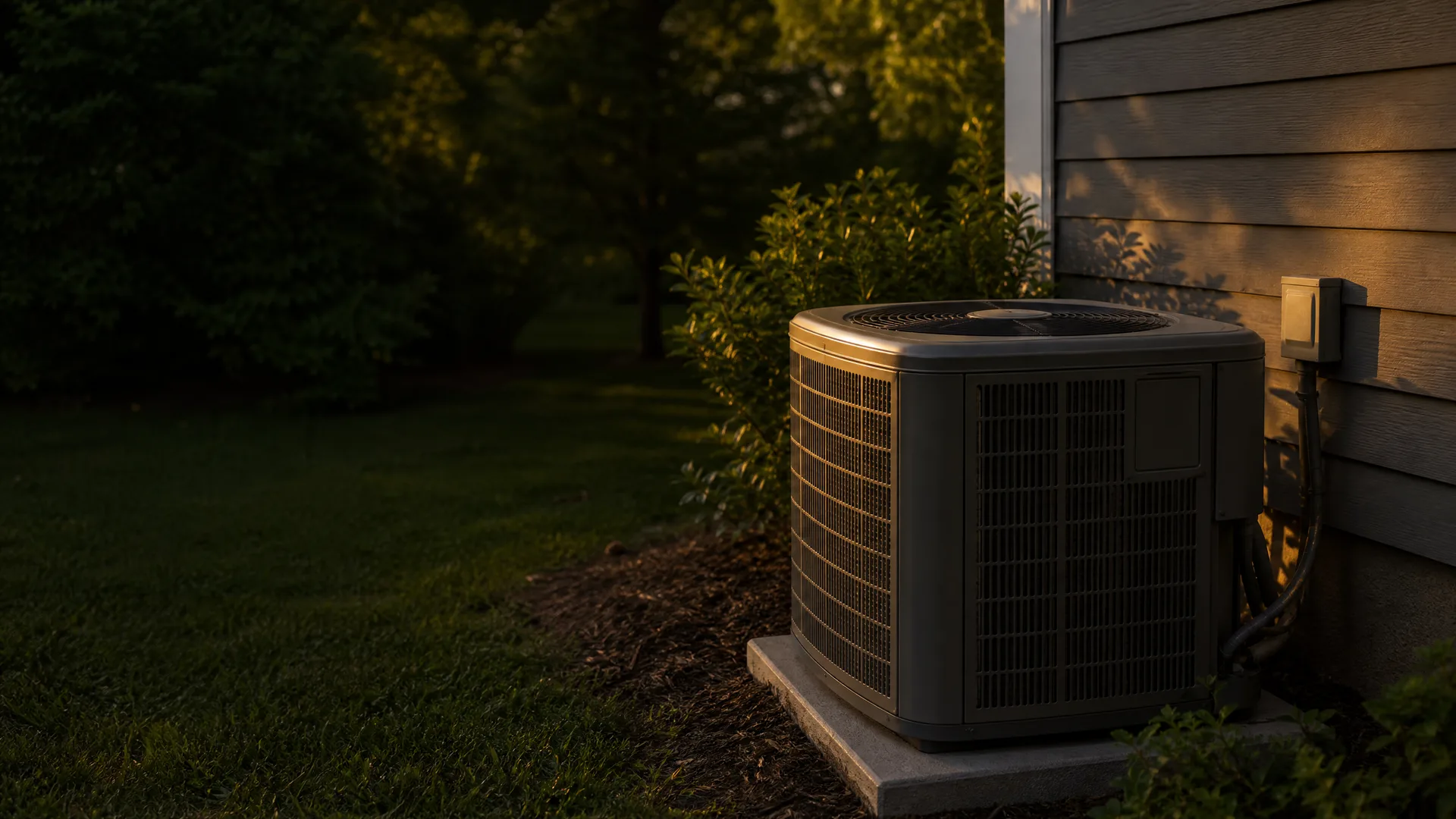
An outdoor air conditioner condenser unit on a concrete pad beside a house with horizontal lap siding, next to a mulch bed, shrubs and a lawn at dusk.

You're out back around seven, grass still warm underfoot, the sky going orange over the other yards in DeKalb County. You walk past the condenser and notice the fan isn't spinning. No hum, no rattle, nothing. You crouch down and feel for air coming off the top grille and there's none. The compressor might still be running inside the unit, but without that fan turning, the heat it's pulling from the house has nowhere to go. Inside, the vents are still pushing air, so nobody's noticed yet. It'll take an hour, maybe two, before the house starts climbing past where the thermostat is set and someone asks why it feels warm.
Is your house staying cool enough on the worst days?

By mid-afternoon the vents are blowing air that feels more lukewarm than cold. Upstairs rooms run warmer than the rest of the house. The AC cycles on, runs a long stretch, shuts off for a few minutes, then starts right back up, almost like it never caught up to begin with. You might hear it working harder than usual, or notice the air coming out just doesn't feel as strong as it used to. Some households just close the vents in rooms they're not using and wait it out until evening. Left alone on the hottest days, a system straining like this can ice over or shut itself down, and the people in the house are the ones who feel that first.

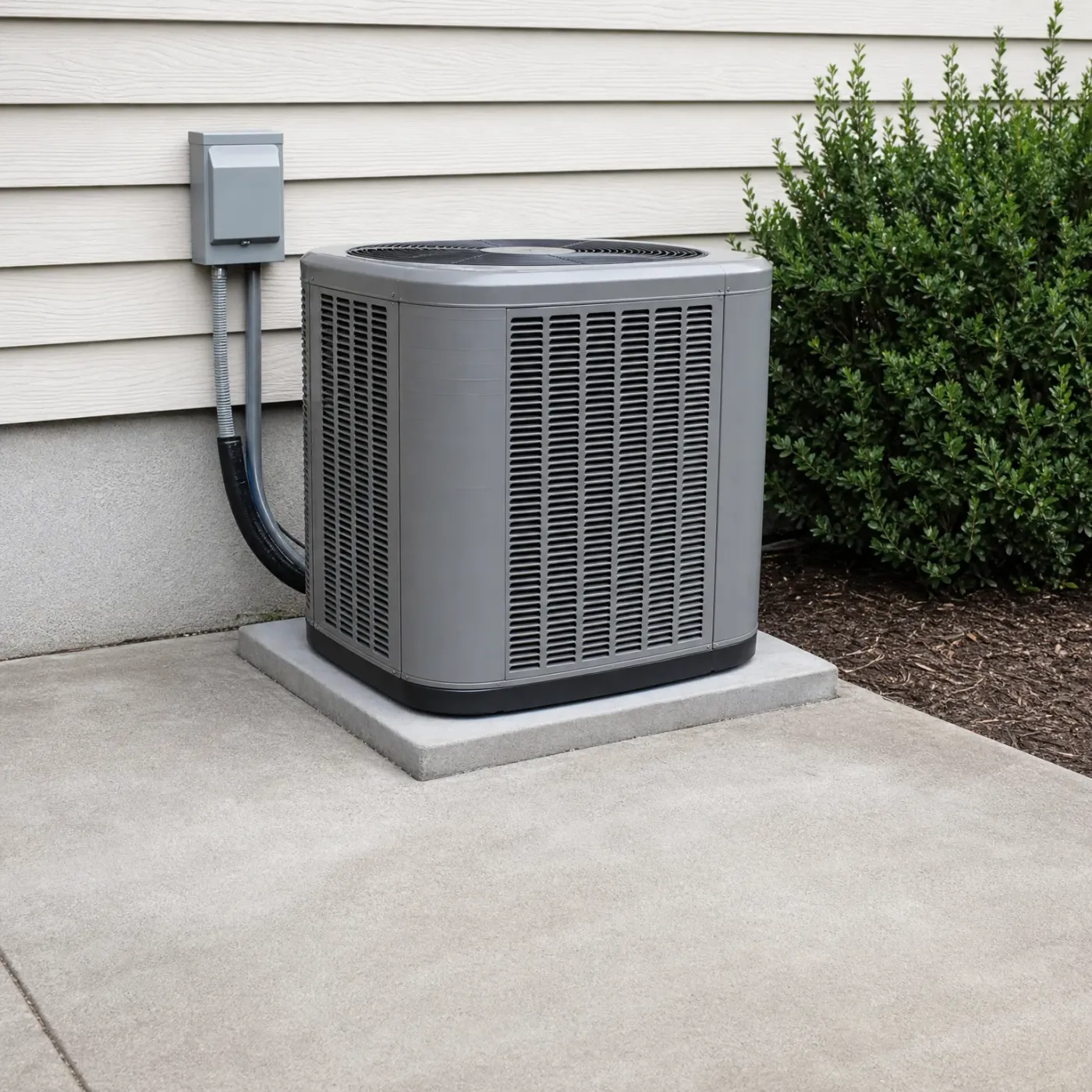
A gray outdoor air conditioning condenser unit on a concrete pad beside a house with horizontal lap siding, with a wall-mounted disconnect box and conduit to the left and a green shrub with mulch to the right.

A coil that can breathe

Air moves through the fins and over the coil, and the heat from inside the house actually leaves the refrigerant. The disconnect box and lines sit clean beside it. A unit like this can still struggle on a 95 degree day, but it's working the way it was built to.

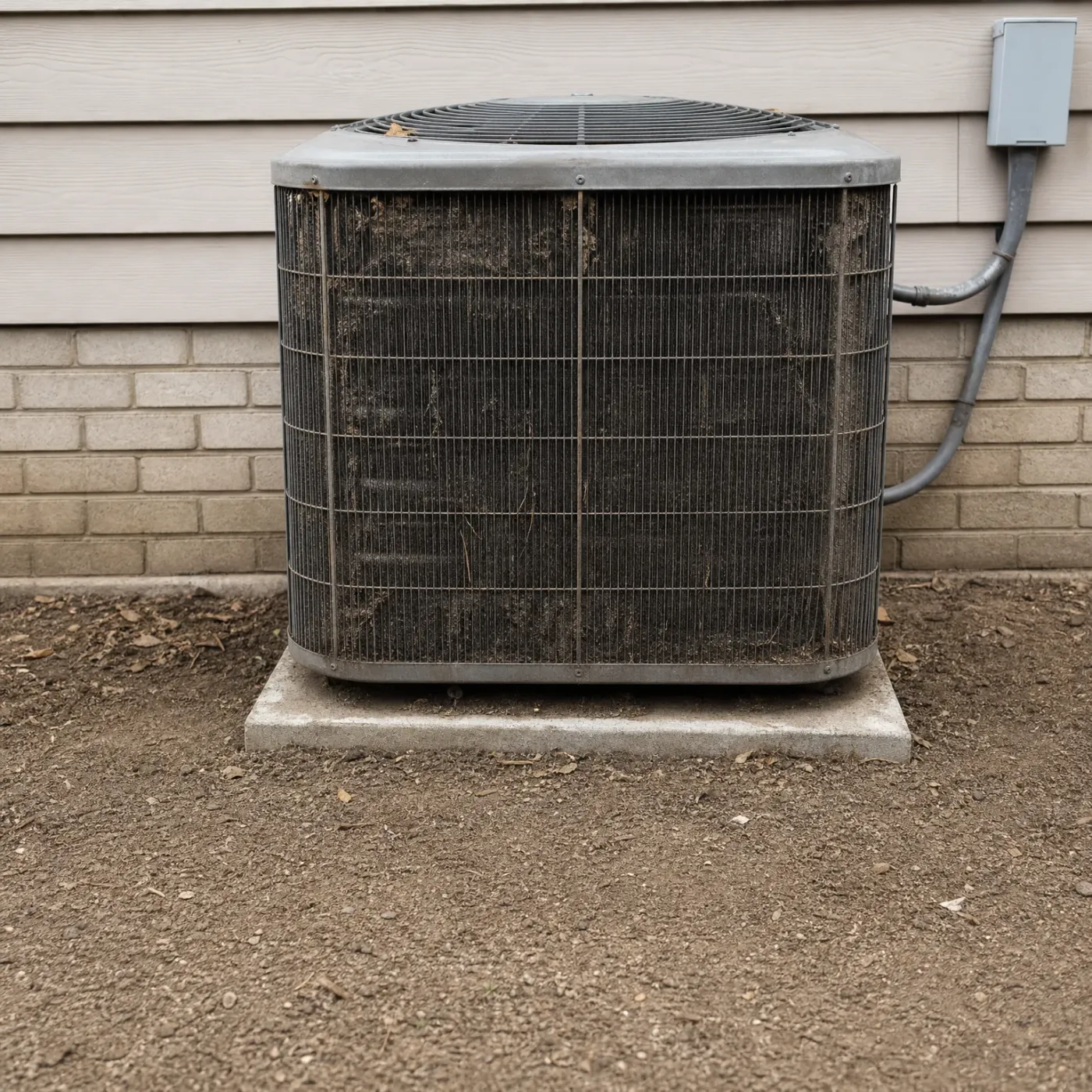
A dirty outdoor air conditioning condenser unit on a concrete pad beside a house wall with horizontal siding above a painted brick foundation, with a gray electrical disconnect box and conduit on the wall.

A coil packed with dirt

The fins on this one are gray with grime and the wire cage is caked. Air can't pass through packed dirt the way it passes through open fins, so the heat has nowhere to go. The compressor runs longer and the house still doesn't cool down.

Struggling or Not Keeping Up At All

Your AC struggles but keeps up

  • The house reaches 72 or 73 by early evening even if it took until 4 or 5 pm on the hottest days.
  • The system runs long stretches in the afternoon but the air coming out of the vents still feels cold.
  • Upstairs rooms lag behind the rest of the house by a couple degrees instead of five or more.
  • The outdoor unit cycles off at some point during the day rather than running from morning to night.
  • A tune-up, a cleaned coil, or a charge check brings it back to handling 95 degree days without falling behind.

Your AC can't keep up at all

  • The thermostat never gets below 76 or 78 no matter how long the system runs on a hot afternoon.
  • The outdoor fan has stopped turning, or the compressor won't kick on, and the house just keeps climbing.
  • Air from the vents feels room temperature or close to it instead of cold.
  • The system runs nonstop from midday through evening with no cycling off at all.
  • A repair that once solved this stops holding, and the unit falls behind again within days or weeks.
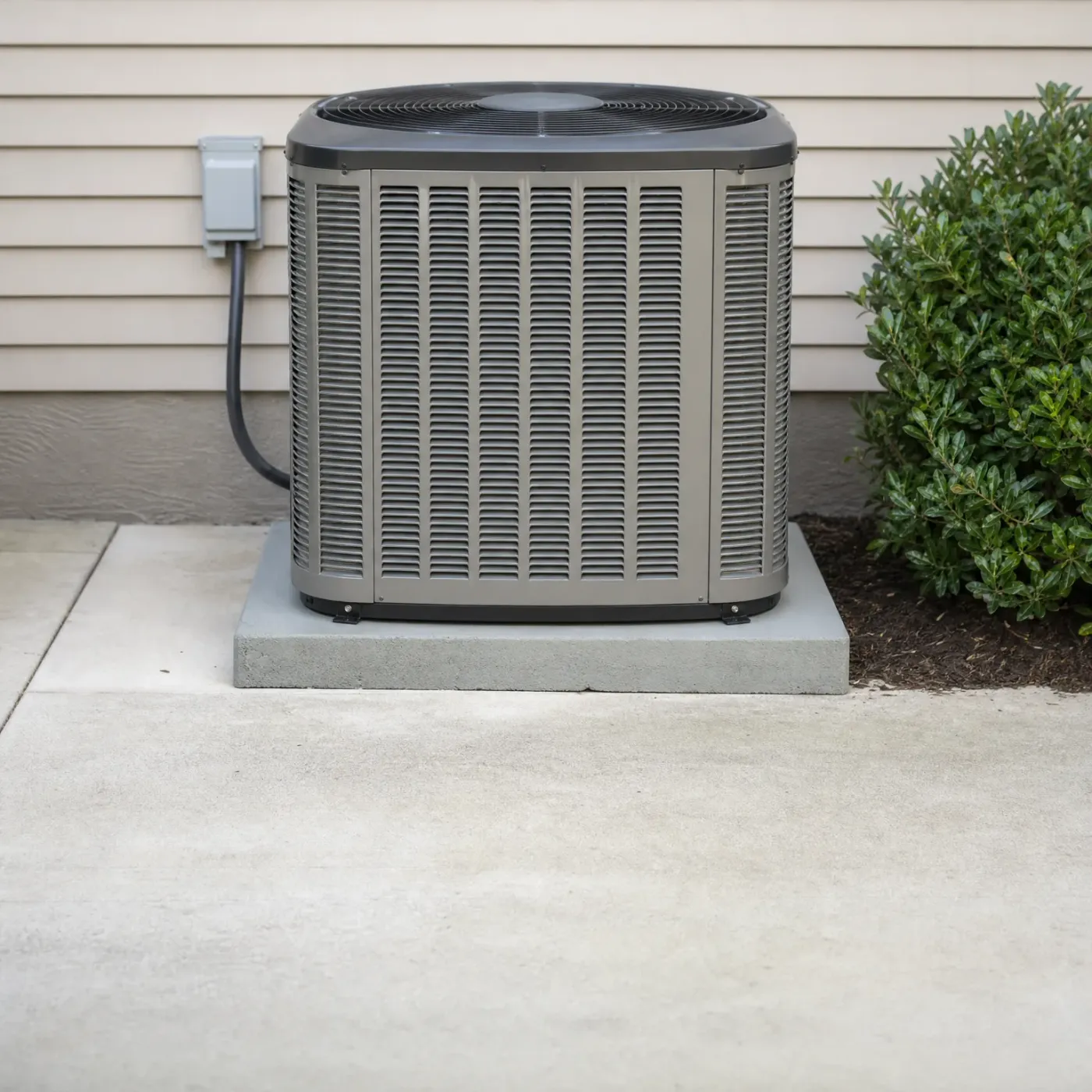
An outdoor air conditioning condenser unit on a concrete pad beside a house with horizontal lap siding, with an electrical disconnect box and conduit on the wall and a green shrub to the right.

Clean and clear

This condenser sits on its pad with nothing blocking it, the disconnect box and conduit mounted neat on the siding. The louvers are open, the fan free to pull air through the coil. A unit kept this way can still fall behind on the hottest DeKalb County afternoons, but it starts from a fair position.

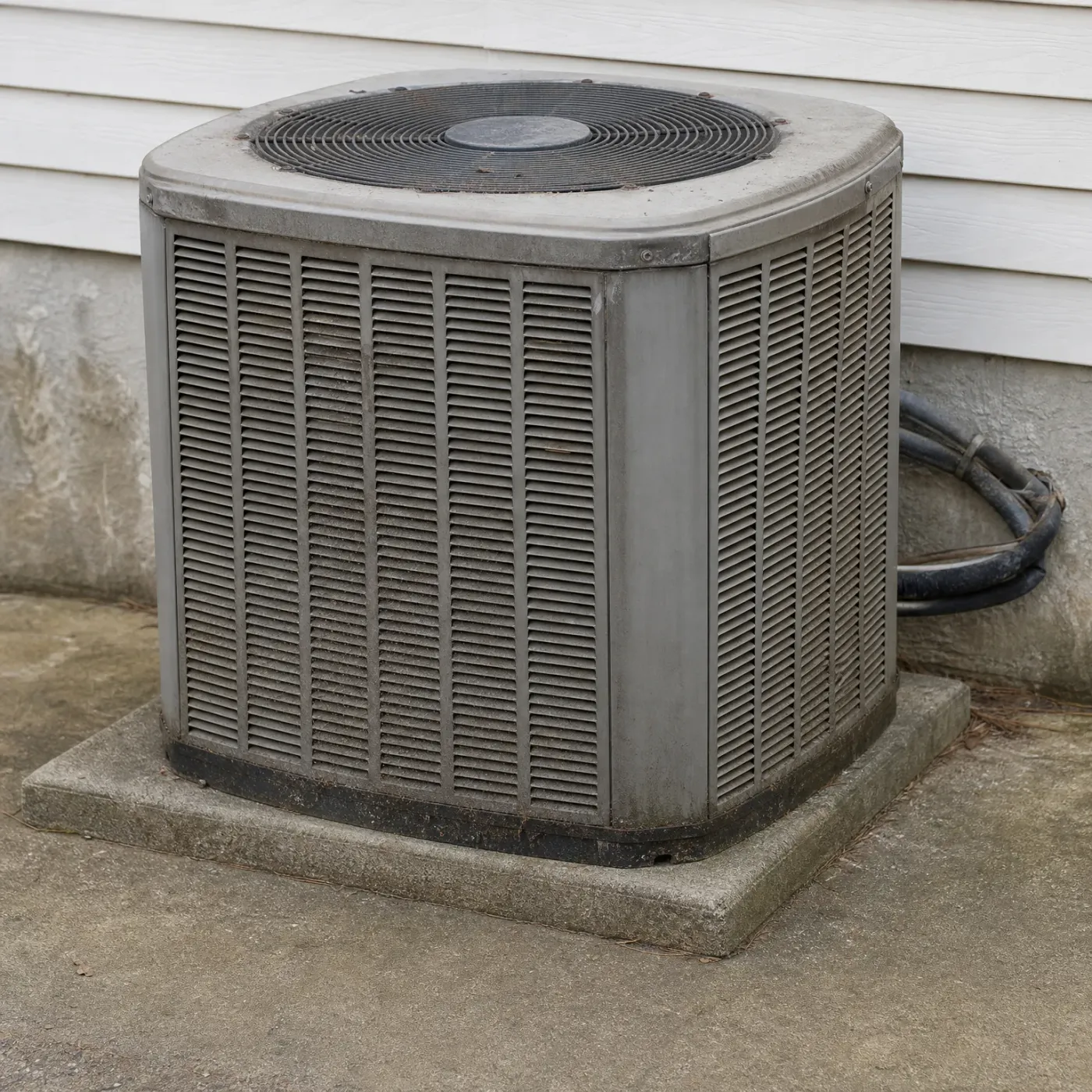
An outdoor air conditioner condenser unit on a concrete pad beside a house with horizontal siding and a lower concrete foundation wall, with coiled refrigerant lines at right.

Dirty and worn

Years of weather have left this one caked with dirt across the louvered panels and the fan grille on top. Air can't pass through a coil like that the way it needs to, so the unit works harder and still cools less. On a 95 degree day, this is the system that loses.

A woman with long brown hair in a cream knit sweater sits on a light sofa in a living room, looking toward a window with sunlight on her face.
A woman with long dark hair leans back against a gray sofa with her eyes closed, in a living room with a curtained window, a potted plant, and a dark screen in the background.
A woman with wavy blonde hair wearing a grey knit cardigan over a green top sits on a sofa in a living room, looking off to the side.
A woman in a gray sweater sits in a chair in a living room with a dark sofa, wooden coffee table with a potted plant, and a staircase behind her, looking toward a window.
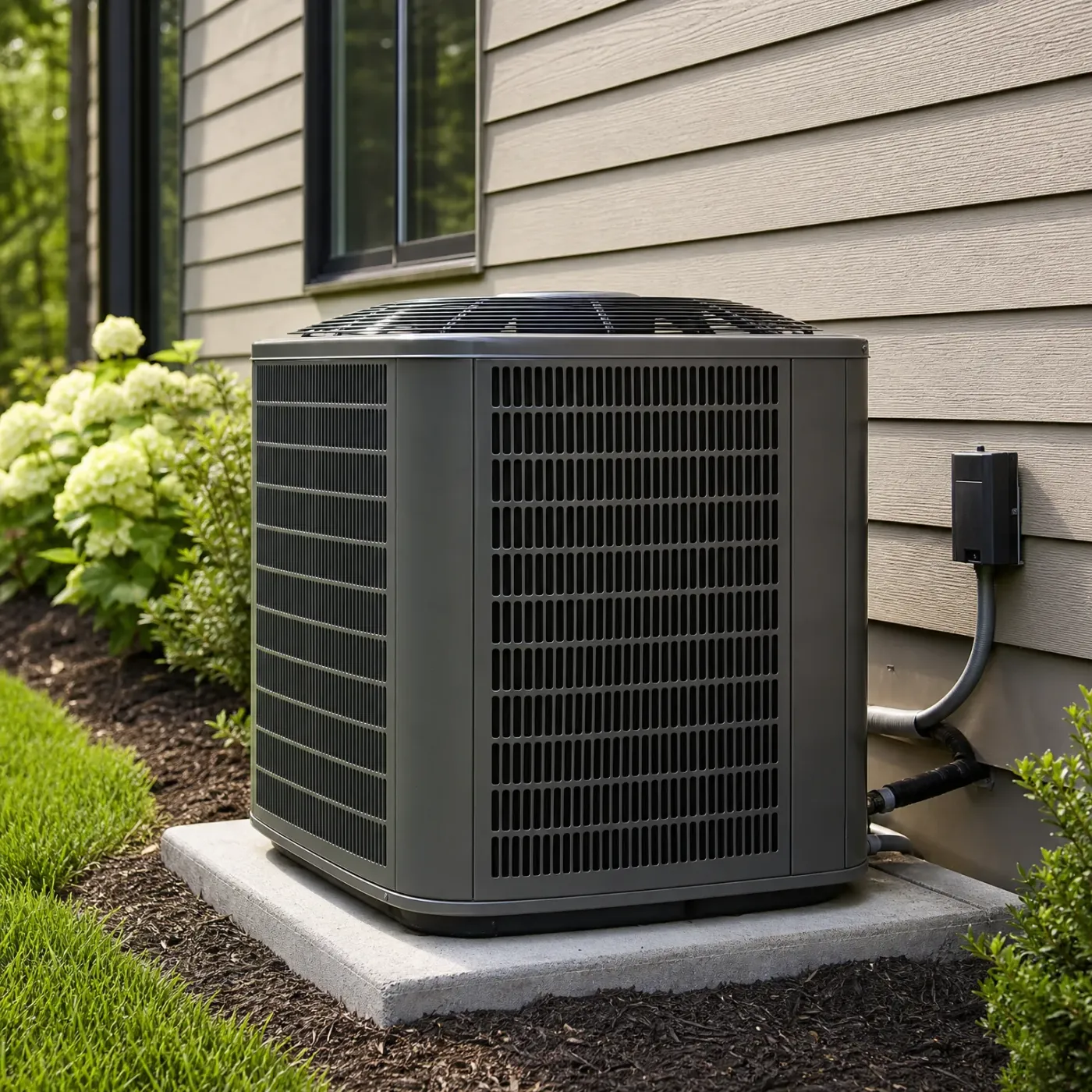
A gray outdoor air conditioner condenser unit sits on a concrete pad beside a house with horizontal lap siding, with a disconnect box and refrigerant lines on the wall and shrubs, hydrangeas, mulch and lawn nearby.

Get matched with an air conditioner pro in DeKalb County

Explain the air conditioner problem once instead of to every shop in DeKalb County.

Your request goes to a DeKalb County pro who takes air conditioner jobs.

Skip calling around

It costs nothing to send, and you don't have to hire anyone.

A gray outdoor air conditioning condenser unit on a concrete pad beside a house with horizontal lap siding, with a wall-mounted electrical disconnect box and refrigerant lines, shrubs, mulch and lawn around it.
A unit like this moves enough air through the coil to keep up most afternoons, even with the mulch beds and shrubs planted close by.
An outdoor air conditioner condenser unit on a concrete pad beside a house wall with stucco lower section, horizontal siding above, and a white downspout to the right.
Years of grime packed into the fins block airflow across the coil, and on a 95 degree day in Stonecrest that's often what has the house losing ground.

Why the system falls behind

  • A central AC is sized to handle a design day, usually somewhere in the mid 90s here, not every degree above that.
  • Past that point the compressor keeps running flat out but the house can lose ground anyway because the heat coming in outpaces what the coil can carry away.
  • The condenser outside has to dump that heat into the air around it, and the hotter that air gets the harder the job gets.
  • A system low on refrigerant or choked by a dirty coil has less capacity to begin with, so it falls behind sooner on a hot afternoon.
  • Running the blower longer doesn't add cooling capacity, it just moves the same cooled air around a house that's gaining heat faster than the system can remove it.
  • Afternoon humidity adds to the load because the coil has to pull moisture out of the air as well as cool it.

A central AC is built to a load calculation, matched to a design day somewhere in the mid 90s here in DeKalb County. That number isn't the ceiling on how hot it can get, just the point the sizing was based on. Past it, the compressor doesn't fail, it just runs flat out and the house still loses ground, because heat is coming in through the walls and windows faster than the coil can carry it away.

The condenser outside is where that heat actually leaves the house. It has to dump it into the outdoor air, and on a 95 or 98 degree afternoon that air is already hot, so the unit is pushing heat into a space that doesn't want to take it. Humidity adds another job on top of that. The coil has to wring moisture out of the air before it can cool it, and a muggy DeKalb County afternoon makes the coil do both at once.

A system that's already down on refrigerant or has a coil packed with dirt starts the afternoon with less capacity than it was built with, so it falls behind sooner than it should. Letting the blower run longer doesn't fix any of this. It just pushes the same cooled air around a house that's taking on heat faster than the system can pull it back out.

An outdoor air conditioning condenser unit on a concrete pad beside a house with light vinyl siding, with electrical conduit running to a wall-mounted disconnect box and a shrub in mulch to the right.
Before you get your air conditioner repair
A gray outdoor air conditioning condenser unit on a composite pad beside a house with horizontal lap siding, with a wall-mounted disconnect box, refrigerant lines, and a wooden fence and shrubs to the left.
After you get your air conditioner repair
  1. Heat moves from indoor air into the refrigerant at the coil.

  2. Refrigerant carries that heat out to the condenser outside.

  3. The compressor squeezes the refrigerant, raising its pressure and temperature.

  4. The outdoor fan pulls air across the coil to release the heat.

A man seen from behind raises his hand to wave at a woman standing in the open front doorway of a single-story house with gray shingle siding, white columns and a gabled porch entry.

What a losing afternoon costs you

You know the signs by now. The thermostat holds at 76 instead of 72, the kids are cranky, and everyone ends up in the one room where a floor fan helps. If someone in the house is older or has a hard time in the heat, those few degrees matter more than they sound like they should. A system that labors all afternoon in July and August is also one that tends to need attention more often, right when you need it least.

Figuring out why takes someone who can check the refrigerant charge, the airflow, and the condenser itself, not just a guess based on the thermostat reading. Instead of calling around DeKalb County trying to find someone with an opening this week, you can get matched with a contractor who handles this kind of call and have them reach out to you directly. That's one less thing to manage while you're also trying to keep the house livable.

A mug and a small round vase sit on a wooden windowsill beside sheer and heavier curtains, with blurred autumn trees seen through the rain-speckled window and a sofa with cushions and a throw in the foreground.
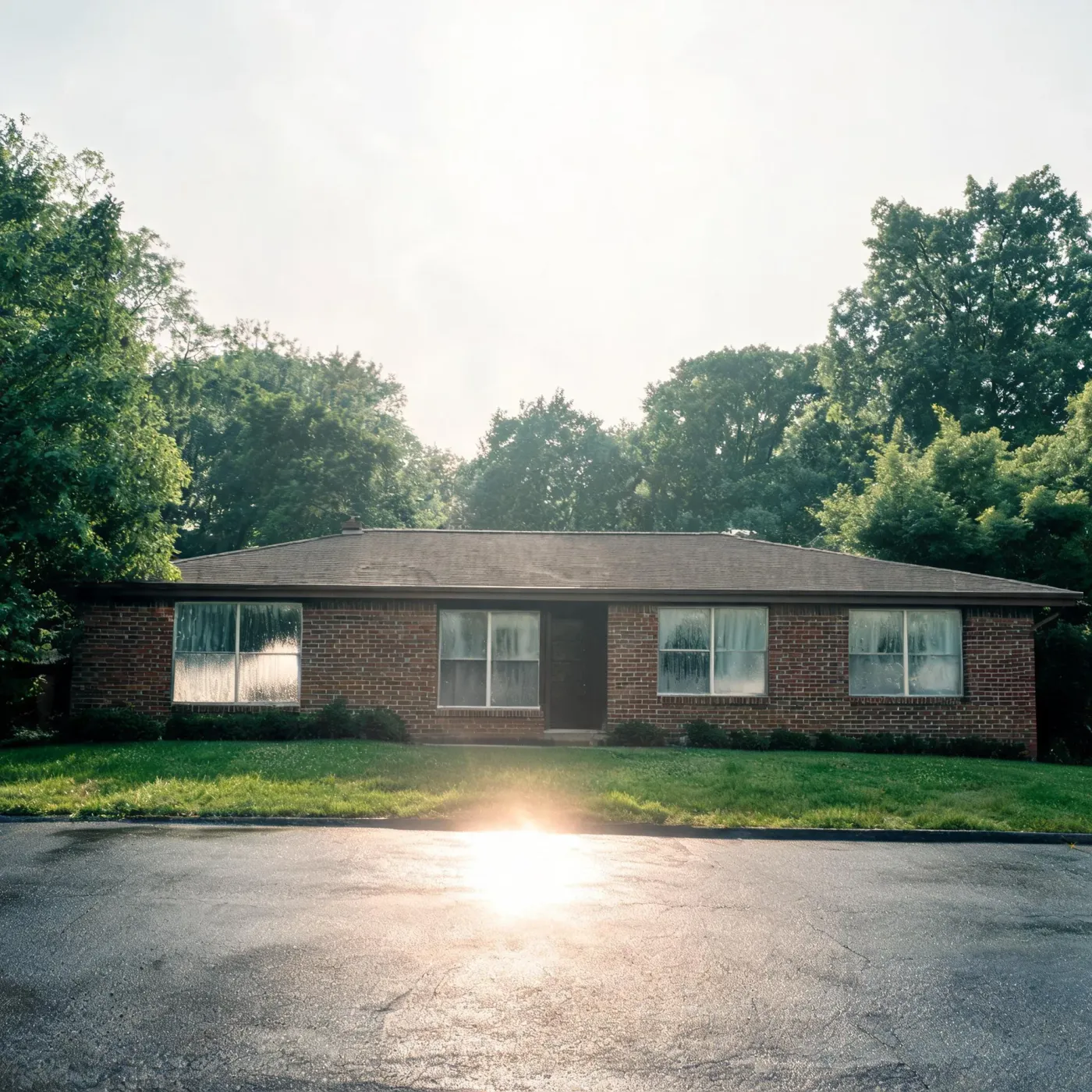
A single-story brick ranch house with a low shingled roof and curtained windows, fronted by a mown lawn and an asphalt driveway, with sun flare in the foreground and leafy trees behind.

The weather service puts the summer dew point here at 67°F across June, July and August. That's the number that matters more than the temperature on the thermostat. Past about 65, air holds onto so much moisture that sweat barely evaporates off your skin, and the same thing slows down what your AC can do. The coil inside is built to pull both heat and humidity out of the air, and when the air outside is this heavy, it has to work through more moisture on every cycle before the house even starts to feel cooler. That's part of why the house can feel damp and sticky even when the AC has been running for hours straight.

NASA POWER T2MDEW

An older woman with short gray hair in a cream knit sweater stands smiling and looking to the side behind a wooden counter holding a round loaf of bread, in a warmly lit kitchen with shelves and a window showing snowy trees at dusk.
A woman and a child wrapped in a knitted blanket on a couch indoors, with a lit table lamp and a potted plant in the background.

Cooling runs May through September

Five months is most of the year your AC carries real weight, not just the handful of worst afternoons. That long a stretch gives wear in the compressor and fan motor plenty of time to show up as the struggle you're feeling now.

NOAA nClimDiv 1991-2020

So that's what's behind it: a system that was sized for a design day, not for the stretch of afternoons that push past it, and whatever has built up in the coil, the fan or the refrigerant charge that keeps it from even hitting that mark. Either way the house runs warm into the evening and everyone in it feels it. You could start calling around, telling each contractor the same thing about the thermostat and the afternoon heat, waiting on callbacks, then sitting with a stack of quotes trying to tell which one actually fixes the problem instead of just guessing at it. Or you can skip that part. Answer a few questions about what your system is doing and you'll be matched with a contractor who works on homes in Stonecrest and the rest of DeKalb County, and they'll reach out to you directly. No more explaining the problem from scratch to the next person on the list.

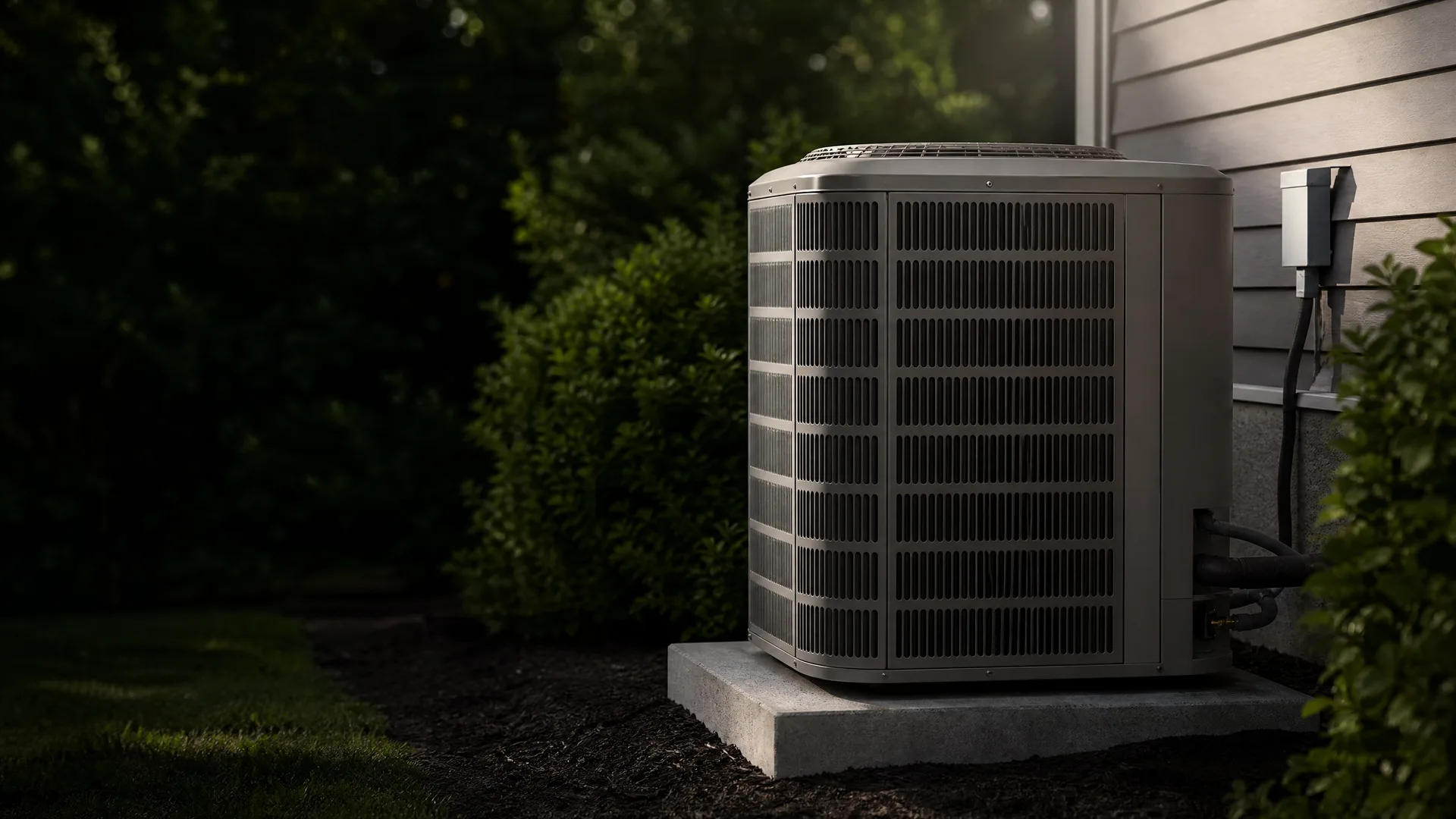
An outdoor air conditioning condenser unit on a concrete pad beside a house with horizontal lap siding, with an electrical disconnect box and refrigerant lines on the wall and shrubs and lawn nearby.

Find an air conditioner repair pro in DeKalb County

RepairCentral ACDeKalb County, GA
Step 1 of 2

What ZIP code is the job in?