




Two illuminated white colonial-style houses with wrap-around porches, flanked by oak trees draped in Spanish moss, photographed at night.

AC Repair in Athens, GA

Tell us about the job

Takes about a minute. No obligation.

RepairCentral ACClarke County, GA
Step 1 of 2

What ZIP code is the job in?

Cooling here starts in May, after sitting off all winter. That first real stretch of heat is when a weak part tends to show itself, a tired capacitor or a low charge that was fine under no load. Once it's running May through September, that same weak part is under strain for five months straight. Whatever shows up in those first few weeks is worth having looked at before the system has to lean on it all summer.

5 months
May through September, your air conditioner is on duty
88°F
the average summer afternoon it cools against
10 hail events
in ten years, and hail bends the fins on outdoor coils
48 wind events
in ten years, and wind drives debris into outdoor units
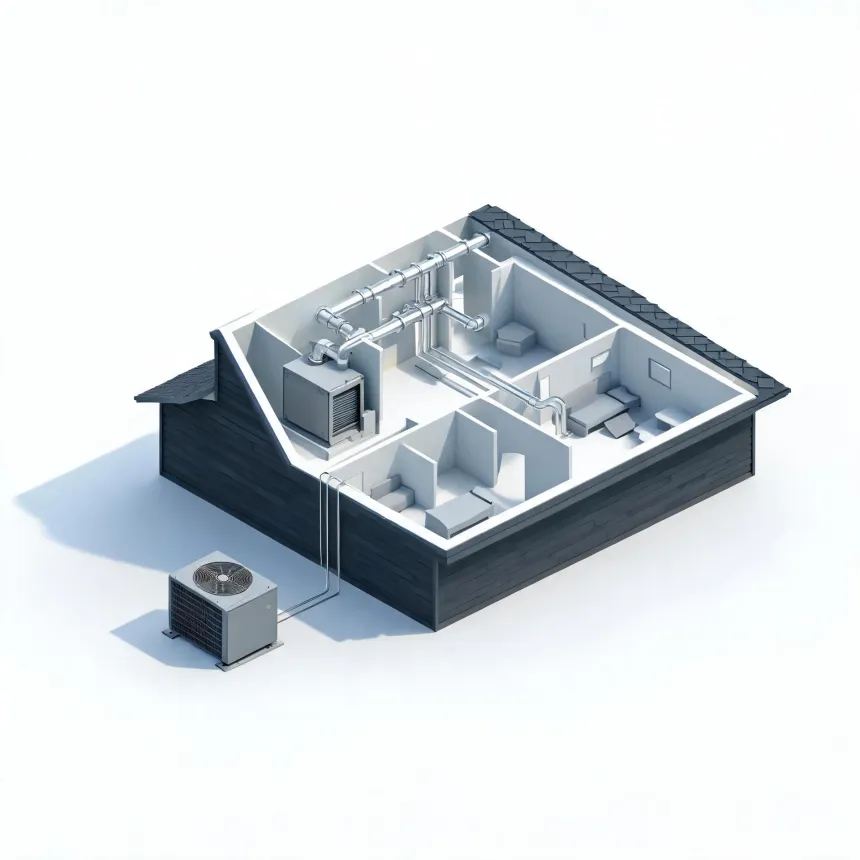
Isometric 3D cutaway render of a house with dark siding showing interior rooms, ductwork and an air handler, connected by lines to an outdoor condenser unit on a white background.
Your air conditioner works hardest from June through September.

NOAA nClimDiv, 1991–2020 normals

Check the thermostat batteries and the breaker before anything else.

A tripped breaker or a dead thermostat looks exactly like a dead system, and takes a minute to rule out.

Clarke County sees its share of storms, but none of that is what wears out an AC

61 severe weather events from 2015 to 2024
31% of homes statewide lost power a day or more in 2024
48 damaging wind events from 2015 to 2024

Half the homes in Clarke County were built in 1987 or later. If yours is one of them, the air conditioner acting up right now probably isn't worn out from age. Parts fail on young systems too, a capacitor, a contactor, a low charge from a slow leak. None of that means the unit is done. When a system still has years ahead of it, fixing the part that failed is almost always the better call than replacing the whole thing.

Get it looked at early

Problems tend to show up in the first weeks of the season, when the load hits a part that was already weak.

Find a contractor
An outdoor residential air conditioning condenser unit mounted on a concrete pad, surrounded by gravel with a blue sky in the background.

Years left on the clock

A unit from a newer build has already run a few summers without trouble. If this is the first time it's acted up, that points to the part that just failed, not the system behind it. Have it repaired and it should see many more summers before replacement is worth discussing.

Warm air from the vents

The air conditioner runs, the blower moves air, but the air coming out isn't cold. That points at the refrigerant side, a low charge from a leak or a compressor that isn't doing its job. It won't fix itself and running it this way for long can damage the compressor further.

Short cycling or won't stop running

A system that shuts off a few minutes after starting is usually tripping on a safety switch, often from a dirty coil or airflow that's blocked somewhere. One that runs constantly and never quite cools the house is losing the fight against a bigger problem, usually the charge or the compressor. Either way it's working harder than it should and that's the time to have it checked, not after it quits.

An outdoor central air conditioning unit mounted on a concrete pad beside a blue-sided house at sunset.

A new air conditioner would cut about $50 a year off cooling for a typical Clarke County home.

  • A new one at the federal minimum, 14.3 SEER2$350 a year
  • An older air conditioner$400 a year

Estimates for a typical Clarke County home, compared with an older unit built to the previous federal minimum, from EIA household energy data, Georgia fuel prices and NOAA climate normals. Your home will differ.

Repair makes sense when a part like a capacitor or contactor has failed.

Replacement makes sense when the compressor has failed or the system uses R-22 refrigerant, which is no longer made.

A diagnostic starts outside at the condenser and inside at the air handler, because the complaint by itself doesn't say which side is at fault. The tech checks the refrigerant pressures first, since a low charge or a bad compressor both show up there. Electrical gets tested next, the capacitor, the contactor, the wiring to the outdoor unit, with a meter rather than a guess. Airflow gets checked too, the filter, the coil, the blower, because warm air can mean nothing is wrong with the refrigerant side at all. Whatever's actually failing usually shows up in one of those checks, and that's what gets fixed, not everything at once.