







Overhead view of a gray residential air conditioning condenser unit mounted on a concrete pad beside a house with asphalt shingle roofing.

AC Repair in Brunswick, GA

Tell us about the job

Takes about a minute. No obligation.

RepairCentral ACGlynn County, GA
Step 1 of 2

What ZIP code is the job in?

Your AC runs about seven months a year here, April through October. Afternoon highs average 91°F through June, July and August, and the air carries a dew point around 74°F those same months, heavier than most of the country ever sees. That combination keeps the compressor and fan motor working long stretches most systems elsewhere never see. Glynn County has been hit by tropical storms and hurricanes 17 times between 2015 and 2024, and each one means a jolt from flooding, power loss or wind-blown debris. When something goes wrong here, it's often a system that's been working at its limit for months, not a fluke. Getting it looked at properly matters more than guessing at the fix.

7 months
April through October, your air conditioner is on duty
91°F
the average summer afternoon it cools against
2 hail events
in ten years, and hail bends the fins on outdoor coils
45 wind events
in ten years, and wind drives debris into outdoor units
Isometric cutaway illustration of a single-story house with a dark shingled roof, showing interior rooms with ductwork and an indoor air handler connected to an outdoor condenser unit beside the building.
Your air conditioner works hardest from May through September.

NOAA nClimDiv, 1991–2020 normals

Half the homes in Glynn County were built in 1988 or later.

A system in one of those houses still has working years ahead of it, which is reason enough to repair it.

Seven months of cooling means March is the month to catch a weak part before it fails

Cooling runs April through October
Climate zone 2A
Power here costs 15.85 cents per kilowatt-hour
A struggling AC runs up your bill here faster than most placesElectricity in Glynn County runs 15.85 cents per kilowatt-hour, and a system working this hard burns through it.

If your AC came with the house, that's a useful starting point, since half the homes in Glynn County date to 1988 or later. A system that age still has working years ahead of it. Mobile homes make up a smaller share of the county's housing, under one in ten, but the same logic holds there too: check when the unit went in before assuming the worst. A capacitor, a contactor, a fan motor, these are the parts that typically fail first, and they fail on their own schedule regardless of how old the system around them is. A tech can tell you in one visit which one you're dealing with, and whether it's worth fixing rather than replacing.

Get the real cause fixed, not just the symptom

A system that's been running hard all summer doesn't fix itself in the off months. If yours is struggling now, a tech can find the actual part behind it and get it done right the first time.

Find a contractor
A man in a dark sweatshirt and brown work pants, seen from behind, climbs porch steps toward an orange-red front door while carrying a canvas tool bag, with a potted shrub in a terracotta planter to the right.
A gray residential air conditioning condenser unit mounted on a concrete pad outdoors, surrounded by green grass under a partly cloudy blue sky.

What to check before you call anyone

Before anyone comes out, a few things are worth checking yourself. Look at the thermostat first. Make sure it's set to cool and set below room temperature, and swap the batteries if it has a blank or dim display. Next, check the breaker box. A tripped breaker will shut the whole system down, and it's worth resetting once. If it trips again right away, leave it off and mention that when you call. Go outside and look at the condenser. If leaves, pine straw or a fallen branch are packed against it, clear the area around it so air can move through. Don't hose it down or open the panel. Inside, check the air filter. If you can't see light through it, it's choked, and a dirty filter can make the whole system ice up or shut off on its own. Look at the vents around the house too. Furniture or rugs blocking a few of them forces the system to work against itself. Last, check for ice on the indoor coil or the copper line running outside. If you see any, turn the system off and leave it off. Running it with ice on the coil can damage the compressor, and that's a part worth protecting.

Warm air from the vents means the cycle isn't finishing what it started

Air that's cool at first and warms up partway through the day usually points to a refrigerant leak or a compressor losing strength. Short cycling, where the unit shuts off before the house reaches the set temperature, wears on the compressor every time it happens.

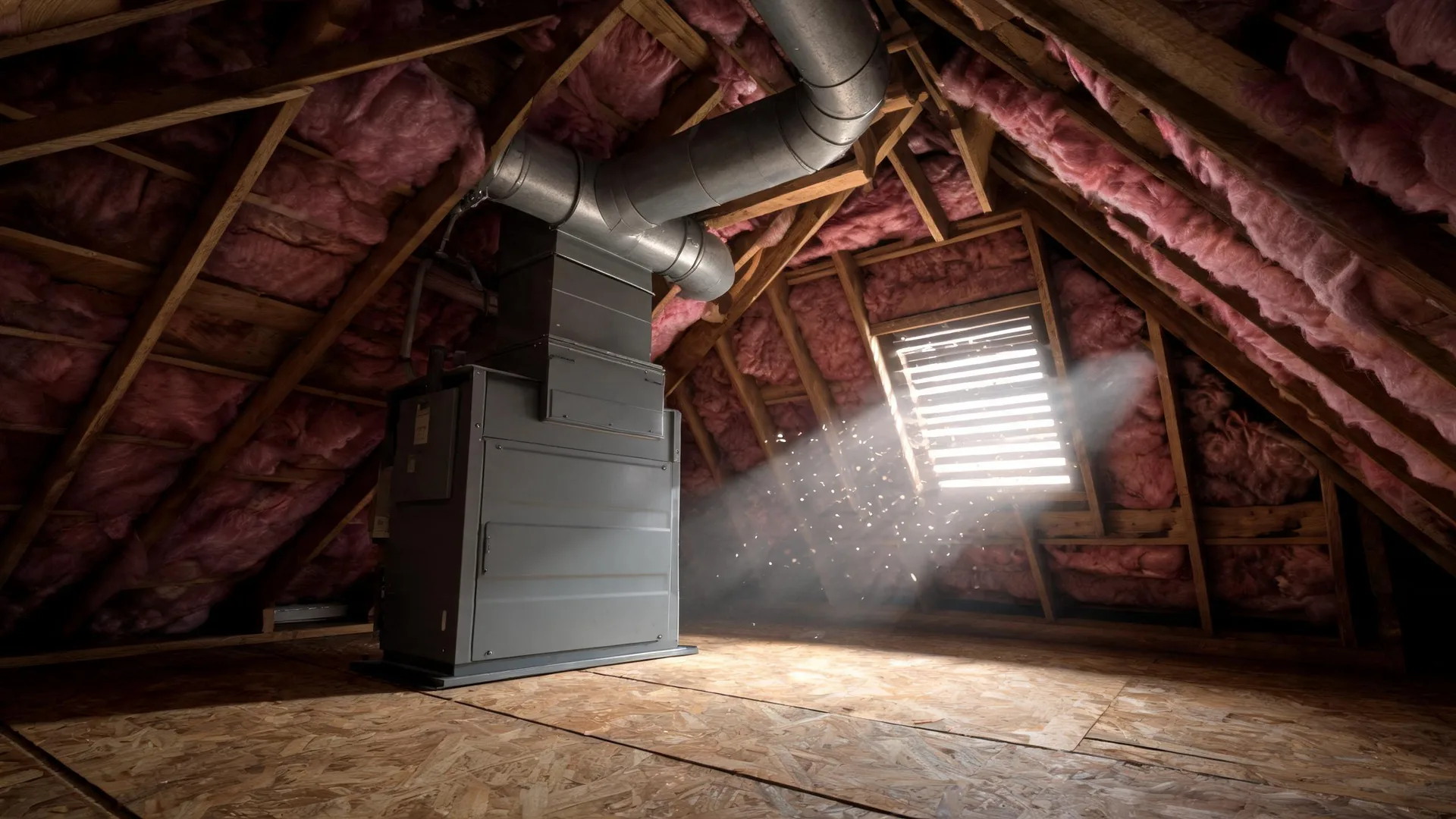
A noise that wasn't there before is the system telling on itself

A hum without the fan turning means the motor is trying and failing to start, often a bad capacitor. Grinding or squealing points to a motor bearing giving out. Either one gets worse the longer the system keeps running on it, so the noise is worth acting on before it quits altogether.

Overhead view of an outdoor AC condenser unit on a concrete pad next to a house with a dark shingle roof.

A new air conditioner would cut about $80 a year off cooling for a typical Glynn County home.

  • A new one at the federal minimum, 14.3 SEER2$540 a year
  • An older air conditioner$620 a year

Estimates for a typical Glynn County home, compared with an older unit built to the previous federal minimum, from EIA household energy data, Georgia fuel prices and NOAA climate normals. Your home will differ.

Repair makes sense when a part like a capacitor or contactor has failed.

Replacement makes sense when the compressor has failed or the system uses R-22 refrigerant, which is no longer made.

A weak capacitor or a tired fan motor doesn't get cheaper to run while it waits. It keeps pulling power at the same rate it always has, just to do less cooling than it should. That shows up on the bill before the system ever quits outright. Waiting it out usually costs more than the repair itself, since a part left to fail often takes the compressor down with it. If something's already off with your AC, getting the actual part replaced now is cheaper than letting it run that way through another stretch of hot weather.