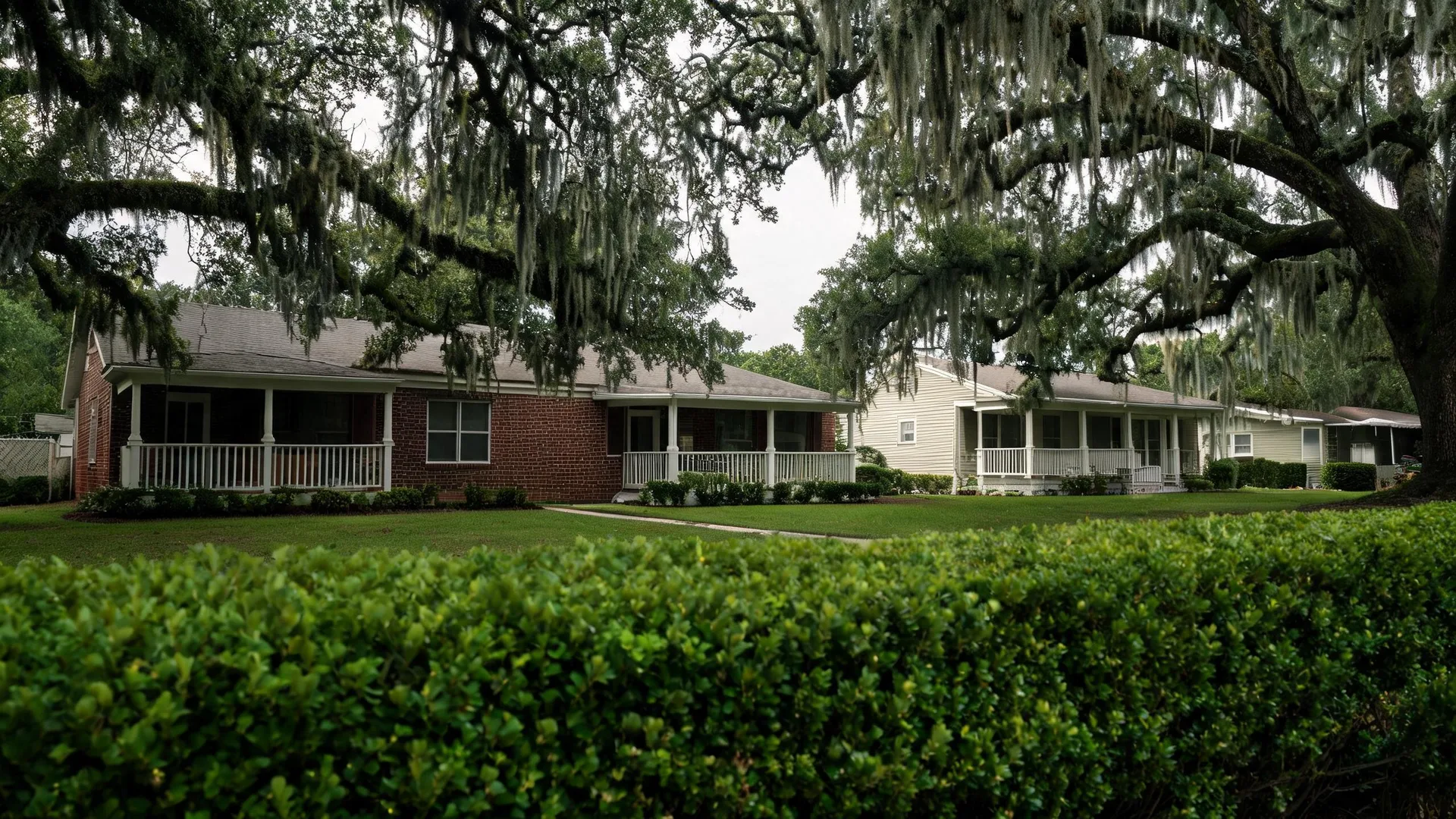
A row of single-story houses with covered porches, the nearest clad in red brick, seen behind a trimmed hedge and lawn beneath large moss-draped oak branches.

AC Repair in Cartersville, GA

Tell us about the job

Takes about a minute. No obligation.

RepairCentral ACBartow County, GA
Step 1 of 2

What ZIP code is the job in?

Bartow County gets hit

Bartow County logged 117 severe weather events between 2015 and 2024, including 90 damaging wind events, 12 hail events and 5 tornadoes. Four tropical storms or hurricanes passed through too. An outdoor AC unit sits outside through all of it.


Outages come with the storms

Almost a third of Georgia households went at least 24 hours without power in 2024. When the power drops in the middle of a Georgia summer, a system that was already struggling has that much more to recover from once it comes back on.

5 months
May through September, your air conditioner is on duty
88°F
the average summer afternoon it cools against
12 hail events
in ten years, and hail bends the fins on outdoor coils
90 wind events
in ten years, and wind drives debris into outdoor units
Isometric line illustration of a cutaway house showing interior rooms with furniture, ceiling ductwork, an indoor air handler, and an outdoor condenser unit connected by lines.
Your air conditioner works hardest from June through September.

NOAA nClimDiv, 1991–2020 normals

Cooling starts up here in May, after sitting idle all winter.

The first hot stretch finds whatever part was already weak.

At 14.68 cents a kilowatt-hour, a struggling AC runs up the bill every day you wait

Power here costs 14.68 cents per kilowatt-hour
Cooling runs May through September
Summer afternoons average 88°F

Five months of cooling here, and the afternoon high in June, July and August averages 88°F. That alone is work. Add a dew point averaging 67°F through those same months, higher than most of the country sees, and the unit is pulling moisture out of air that barely wants to give it up. That's the kind of load that finds a weak part fast. A capacitor on its way out or a low charge that was fine last July can give out under this year's heat and humidity. The right move is to have someone diagnose what's actually struggling rather than just top it off and hope it holds through September.

Had a storm come through? Get the unit checked before it costs you more

If hail or wind came through recently, have the outdoor unit looked at even if it's still cooling. Bent fins and debris inside the cabinet don't always stop a system right away, but they make it work harder than it should.

Find a contractor
An outdoor residential air conditioning condenser unit mounted on a concrete pad, surrounded by gravel with a blue sky in the background.

A newer house usually means a newer system

Half the homes in Bartow County were built in 1994 or later. If yours is one of them, the system you've got is more likely to be the original one than a replacement, and it's more likely to still have working life in it. That's worth knowing before you decide whether a repair is worth it. The exception is if the unit has already been swapped out once since the house was built, so the install date on the unit itself tells you more than the age of the house does. About 1 in 10 homes here is a mobile home, and those systems don't always follow the same timeline as a site-built house.

A struggling compressor doesn't fix itself

A compressor that's short on refrigerant or straining against a bad capacitor keeps drawing hard every time it cycles on. Each cycle adds heat and wear to a part that's already working outside where it should. Left alone, that strain usually ends with the compressor locking up for good, turning a repair into a full replacement.

A small leak or a weak part rarely stays small

A refrigerant leak gets worse as the line or coil it's leaking from keeps flexing under pressure and temperature swings. A failing contactor arcs a little more each time it closes. Running the system while these sit unfixed just gives them more cycles to fail completely, usually at the point where the system can least afford it.

An outdoor air conditioning condenser unit on a concrete pad next to the gray vinyl siding of a residential home.

A new air conditioner would cut about $50 a year off cooling for a typical Bartow County home.

  • A new one at the federal minimum, 14.3 SEER2$330 a year
  • An older air conditioner$380 a year

Estimates for a typical Bartow County home, compared with an older unit built to the previous federal minimum, from EIA household energy data, Georgia fuel prices and NOAA climate normals. Your home will differ.

Repair makes sense when a part like a capacitor or contactor has failed.

Replacement makes sense when the compressor has failed or the system uses R-22 refrigerant, which is no longer made.

Age is the first thing to weigh, and not just how old the unit is but what's actually gone wrong with it. A blown capacitor or a bad contactor is a small job on an old system or a new one. A compressor that's failing, or a coil leaking refrigerant, is a different question, because those jobs cost enough that they force the bigger one: is it worth it on a system this old, when something else may well go next year. There's no fixed cutoff where repair stops making sense. It comes down to what just broke, what else on the unit is original and starting to wear, and whether you'd be paying for this repair again in some other part before long. A tech who tells you to replace rather than repair should be able to point to what's failing and why it points that way, not just a general sense that the unit's had a long run.