




An outdoor air conditioning condenser unit positioned beside a blue-sided house at sunset.

AC Repair in Covington, GA

Tell us about the job

Takes about a minute. No obligation.

RepairCentral ACNewton County, GA
Step 1 of 2

What ZIP code is the job in?

Your AC in Covington runs about five months straight, May through September. Afternoon highs average 89°F across June, July and August, and the dew point averages 68°F those same months. That's heavier air than most of the country deals with, so the system isn't just cooling, it's pulling a lot of moisture out too. Both jobs fall on the same compressor and the same coil, running for months without a real break. That kind of steady load wears parts down faster than in a milder climate, and it's usually why something that worked fine last year is giving you trouble now.

5 months
May through September, your air conditioner is on duty
89°F
the average summer afternoon it cools against
6 hail events
in ten years, and hail bends the fins on outdoor coils
39 wind events
in ten years, and wind drives debris into outdoor units
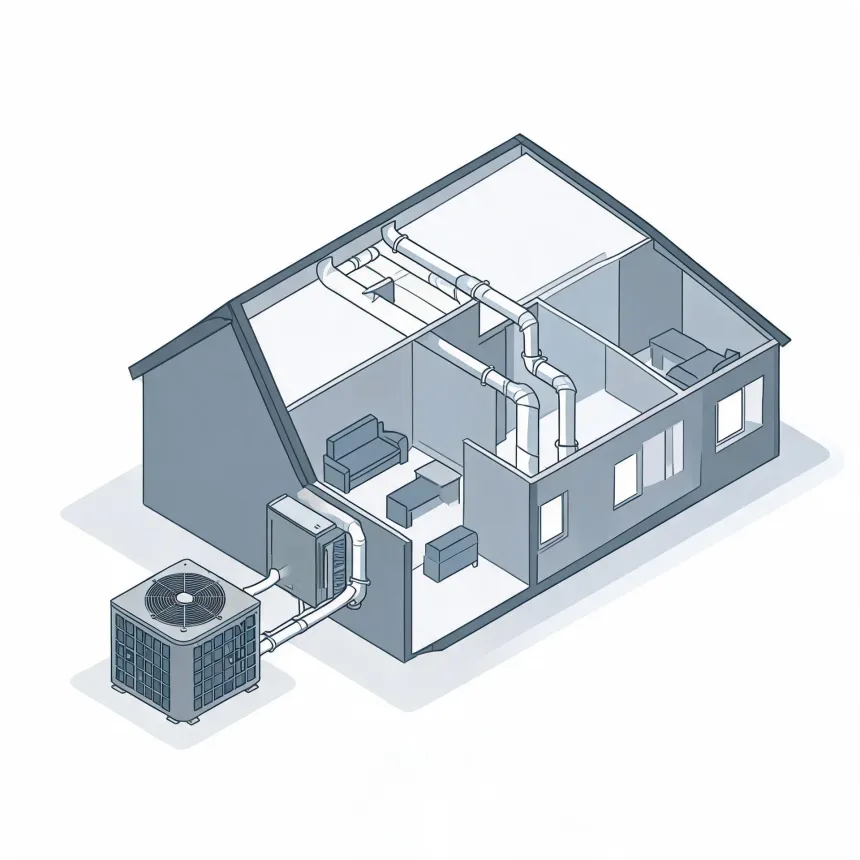
Isometric line illustration of a cutaway house showing interior rooms with ductwork, an indoor air handler, and an outdoor condenser unit connected by lines, on a white background.
Your air conditioner works hardest from June through September.

NOAA nClimDiv, 1991–2020 normals

Half the homes in Newton County were built in 1999 or later.

A system that came with a newer house still has working life in it, which makes repair the right first call.

Your AC starts its five-month stretch in May, right where last year's weak spot is waiting

Cooling runs May through September
Climate zone 3A
Power here costs 14.29 cents per kilowatt-hour

A broken AC doesn't just stop working, it keeps drawing power while it struggles, and here that adds up fast. Electricity in Newton County runs 14.29 cents per kilowatt-hour, and a system with a bad capacitor or a low charge works harder to do less, pulling more current the whole time it limps along. That cost shows up on next month's bill whether the problem gets fixed or not. Waiting doesn't save you anything if the unit keeps running rough in the meantime.

Find out what's actually failing before it takes something else with it

A system working this hard for five months straight doesn't fail for no reason. Whatever's going wrong has a cause, and that cause keeps acting on the unit until someone finds it. A proper diagnosis catches the actual part at fault instead of guessing, so the fix holds instead of coming back in August.

Find a contractor
A gray residential air conditioner condenser unit mounted on a concrete pad in an open grass field.

Years on the system, not months on the clock

If your AC has been running for years without much trouble, that fits. A system installed when the house was built still has time on it, and time left on a compressor is a reason to fix what's broken instead of replacing the whole unit. Get the actual part diagnosed. Most of the time in a newer system, that's exactly what it needs.

Capacitors weaken before they quit

The run capacitor holds a charge that gets the compressor and fan motor going and keeps them steady while they run. That capacitor degrades a little every time it cycles, and it doesn't always fail all at once. A weak one makes the compressor strain on startup, which is often the first sign something's wrong, long before the unit stops cooling altogether.

A low charge means a leak somewhere

Refrigerant doesn't get used up the way fuel does. If the charge is low, it's because it's leaking out through a joint, a coil, or a fitting that's worn or corroded. Topping it off without finding the leak just means the same problem comes back, and running the system low on charge for long stretches makes the compressor work harder than it's built for.

Aerial view of a square outdoor air conditioning condenser unit on a concrete pad beside a house wall with a sliding glass door.

A new air conditioner would cut about $50 a year off cooling for a typical Newton County home.

  • A new one at the federal minimum, 14.3 SEER2$360 a year
  • An older air conditioner$410 a year

Estimates for a typical Newton County home, compared with an older unit built to the previous federal minimum, from EIA household energy data, Georgia fuel prices and NOAA climate normals. Your home will differ.

Repair makes sense when a part like a capacitor or contactor has failed.

Replacement makes sense when the compressor has failed or the system uses R-22 refrigerant, which is no longer made.

A repair decision usually comes down to what broke and what else is close behind it. A capacitor, a contactor, a fan motor, these fail on their own and fixing one doesn't say anything bad about the rest of the system. The compressor is different. It sits at the center of everything, and when it's failing, the labor to replace it often costs more than the part itself, which tips the math toward a new unit instead. A system that's been maintained, with clean coils and good airflow over the years, holds up the way it's supposed to, and a newer system that's been looked after is exactly the kind worth fixing rather than replacing. The question worth asking is which part failed and whether that failure says anything about the rest of the system.