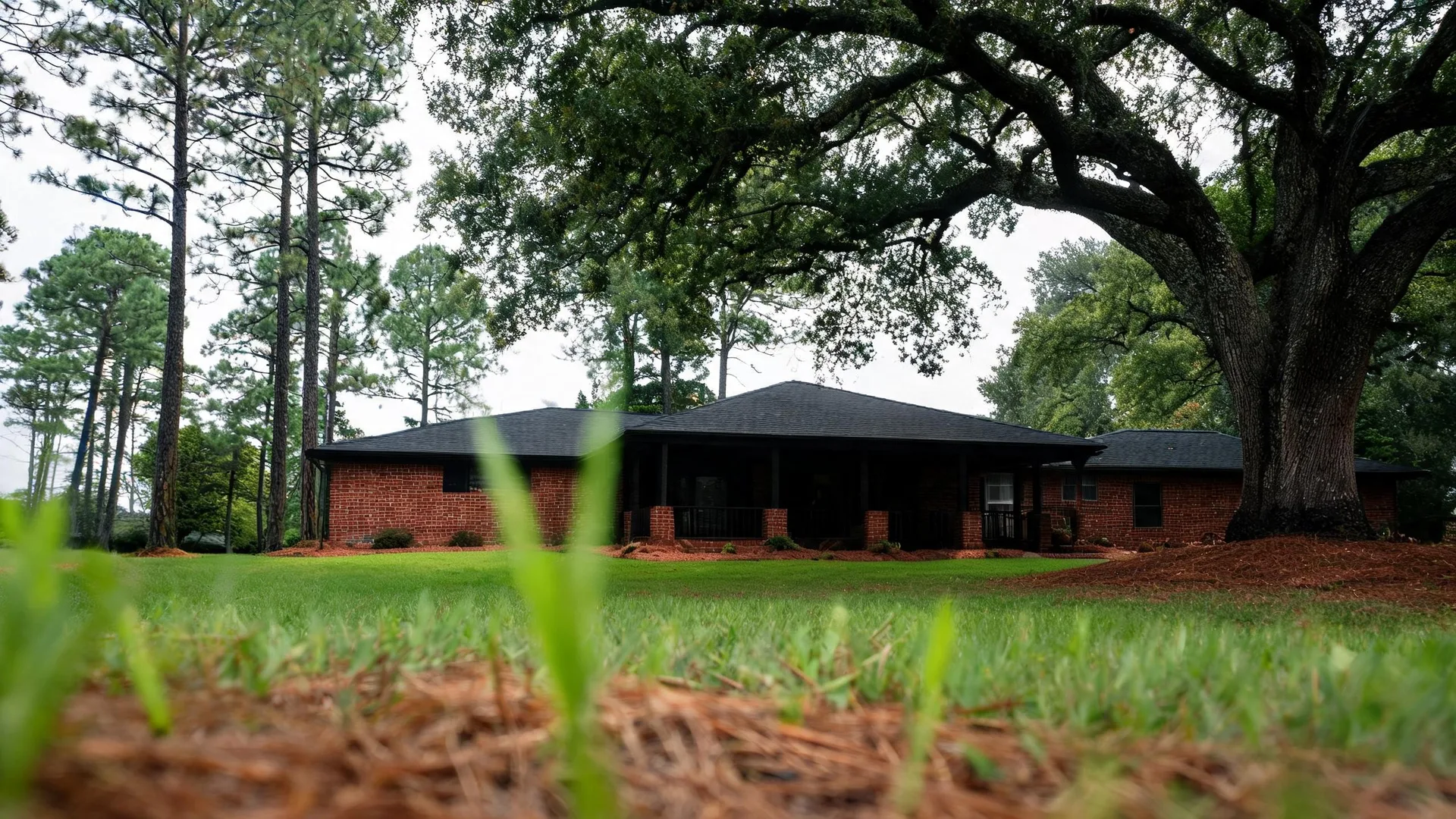






A single-story brick house with a dark hipped roof and covered porch, seen from a low angle across a lawn with blurred grass in the foreground, framed by pine trees and a large spreading oak on the right.

AC Repair in Cumming, GA

Tell us about the job

Takes about a minute. No obligation.

RepairCentral ACForsyth County, GA
Step 1 of 2

What ZIP code is the job in?

Forsyth County saw 76 severe weather events between 2015 and 2024. Most of that was wind, 48 events, with 14 hail events mixed in and a couple of tornadoes touching down. An outdoor AC unit sits outside through all of it, exposed to whatever comes through. Hail dents fins and bends the cabinet. Wind throws branches and debris into the coil. A unit can take a hit like that and still run, for a while, before it shows up as a refrigerant leak or a coil that can't move enough air. If a storm has come through and you haven't had the outdoor unit looked at since, it's worth having someone check it even if the system seems fine.

5 months
May through September, your air conditioner is on duty
86°F
the average summer afternoon it cools against
14 hail events
in ten years, and hail bends the fins on outdoor coils
48 wind events
in ten years, and wind drives debris into outdoor units
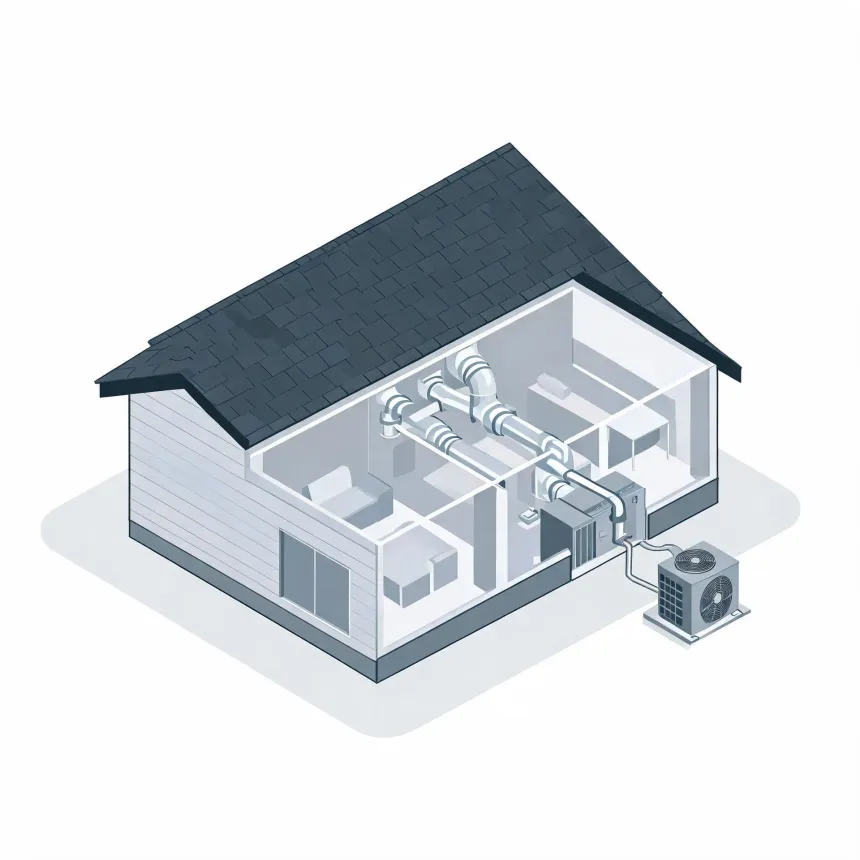
Isometric cutaway illustration of a house with a dark shingled roof, showing interior ductwork connected to an indoor air handler and an outdoor condenser unit beside the building.
Your air conditioner works hardest from June through August.

NOAA nClimDiv, 1991–2020 normals

A capacitor weakens slowly, then the compressor just won't start one afternoon.

If your AC hums but the fan won't turn, don't keep flipping it on and off, that strains the motor further.

Half the homes here were built in 2004 or later, so the system is probably worth fixing

Half the homes here were built by 2004
Cooling runs May through September
Summer afternoons average 86°F
Cumming AC Starts Working in MayHomes here run cooling about five months a year, and a weak part usually gives out in the first weeks of the season.

A system that came with a newer house usually hasn't logged enough hours to be worn out. If yours is the original unit, a repair is likely to buy real years, not just a few more months. That changes how you treat a strange noise or a weak compressor start. Get it looked at instead of waiting to see if it gets worse, since there's more life on the other side of the repair to protect. If you've already replaced the system once since the house was built, this may not apply, and it's worth knowing which case you're in before deciding anything.

Had a Storm Come Through? Get the Unit Checked

If a storm has come through this year, get the outdoor unit checked before you assume it's fine. A hit from hail or debris doesn't always show up right away.

Find a contractor
A man in a dark shirt and tan pants carries a waxed canvas tool bag up porch steps toward an orange front door, with a potted olive tree beside the entry.
An outdoor air conditioning condenser unit mounted on a concrete pad beside a house, with electrical conduit running to a wall-mounted disconnect box.

What to Check Before You Call

Before you call anyone, go outside and look at the unit. Check that nothing is pressed up against the side, branches, leaves, a fallen limb, anything blocking airflow into the coil. Pull debris off the top and clear a couple feet around the cabinet. Inside, check the air filter. A filter clogged with dust chokes airflow and can ice up the coil, and a frozen coil will make the system blow warm air or not cool at all. If you see ice on the refrigerant lines or the indoor coil, shut the system off and let it thaw completely before doing anything else, running it iced up can damage the compressor. Check the thermostat has fresh batteries if it uses them, and make sure it's actually set to cool and set below room temperature. Look at the breaker panel too. A tripped breaker will make the whole system look dead, and that's a two-second fix if that's all it is. None of this tells you what's actually wrong if the system still won't run right, but it rules out the simple things before you pay someone to find them for you.

Warm Air or Weak Airflow

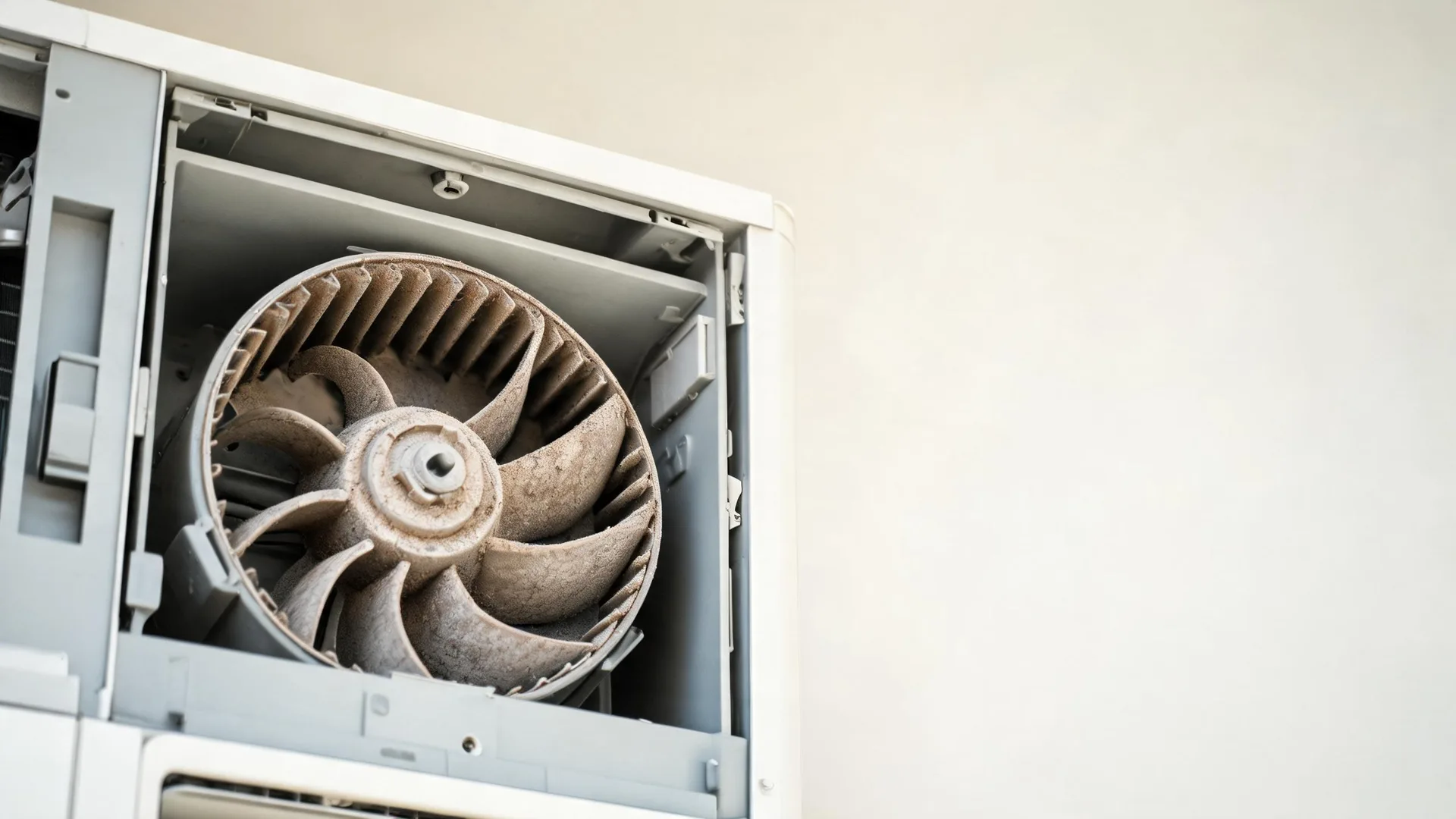
If the air coming out isn't as cold as it used to be, the charge is probably low or the coil is dirty. If the air is cold but weak, the blower wheel may be caked with dust or the duct is restricted somewhere. Either one gets worse on its own. It doesn't fix itself by running longer.

Short Cycling and Strange Noises

A system that shuts off a few minutes after it starts is tripping on something, often a dirty coil or a sensor reading wrong. A new noise, a bang at startup, a squeal, a rattle that wasn't there before, means a part is wearing loose or about to fail. Catching it at the noise stage is cheaper than catching it at the no-start stage.

Overhead view of an outdoor AC condenser unit on a concrete pad next to a house with a dark shingle roof.

A new air conditioner would cut about $40 a year off cooling for a typical Forsyth County home.

  • A new one at the federal minimum, 14.3 SEER2$290 a year
  • An older air conditioner$330 a year

Estimates for a typical Forsyth County home, compared with an older unit built to the previous federal minimum, from EIA household energy data, Georgia fuel prices and NOAA climate normals. Your home will differ.

Repair makes sense when a part like a capacitor or contactor has failed.

Replacement makes sense when the compressor has failed or the system uses R-22 refrigerant, which is no longer made.

Age isn't the only thing that decides whether a repair is worth it. A compressor failure on an old system is usually the end of the road, since a new compressor can cost close to what a new system costs. A failed capacitor or a bad fan motor is a different story, those are routine parts that get swapped without touching the compressor at all. So the real question is which part failed, not just how old the unit is. A system that's been maintained, filters changed, coils kept clean, tends to fail one part at a time instead of all at once, and that's what makes it worth fixing piece by piece. One that's been neglected tends to fail in ways that cascade, a dirty coil straining the compressor until the compressor goes too. Ask what broke before you ask whether it's worth fixing.