






Night view of illuminated white Southern-style houses with wraparound porches beneath Spanish moss-draped oak trees.

AC Repair in Dallas, GA

Tell us about the job

Takes about a minute. No obligation.

RepairCentral ACPaulding County, GA
Step 1 of 2

What ZIP code is the job in?

Paulding County saw 143 severe weather events between 2015 and 2024. Most of that was wind, 125 events, plus 7 hail events and a tornado. Any of that can damage an outdoor AC unit, from bent fins to a cracked fan blade to debris pulled into the cabinet. The unit can keep running afterward and still have damage that gets worse over time. If a storm has come through and your system still runs, that's not proof it came through fine.

5 months
May through September, your air conditioner is on duty
88°F
the average summer afternoon it cools against
7 hail events
in ten years, and hail bends the fins on outdoor coils
125 wind events
in ten years, and wind drives debris into outdoor units
Isometric line illustration of a cutaway house showing interior rooms, ceiling ductwork connected to an indoor air handler, and an outdoor condenser unit linked by refrigerant lines.
Your air conditioner works hardest from June through September.

NOAA nClimDiv, 1991–2020 normals

Your AC runs five months straight here, May through September, with afternoon highs averaging 88°F and a dew point near 67°F.

That kind of heat doesn't let the system rest, and whatever part was already weak gives out first.

Five months of cooling start in May, and trouble shows up fast

Cooling runs May through September
Climate zone 3A
Power here costs 13.77 cents per kilowatt-hour
Half the County Built Since 2002If your system came with the house, it's probably not the reason for the breakdown.

If your AC is acting up right now, don't wait on it to see if it clears up on its own. A system that's been running since May has had plenty of time to push a weak part past the point where it can recover. Get a contractor to look at it and find the actual cause before the part that's struggling takes something else down with it. A proper diagnosis now is what makes the fix hold for the rest of the summer.

If a storm hit your unit, don't wait for it to fail

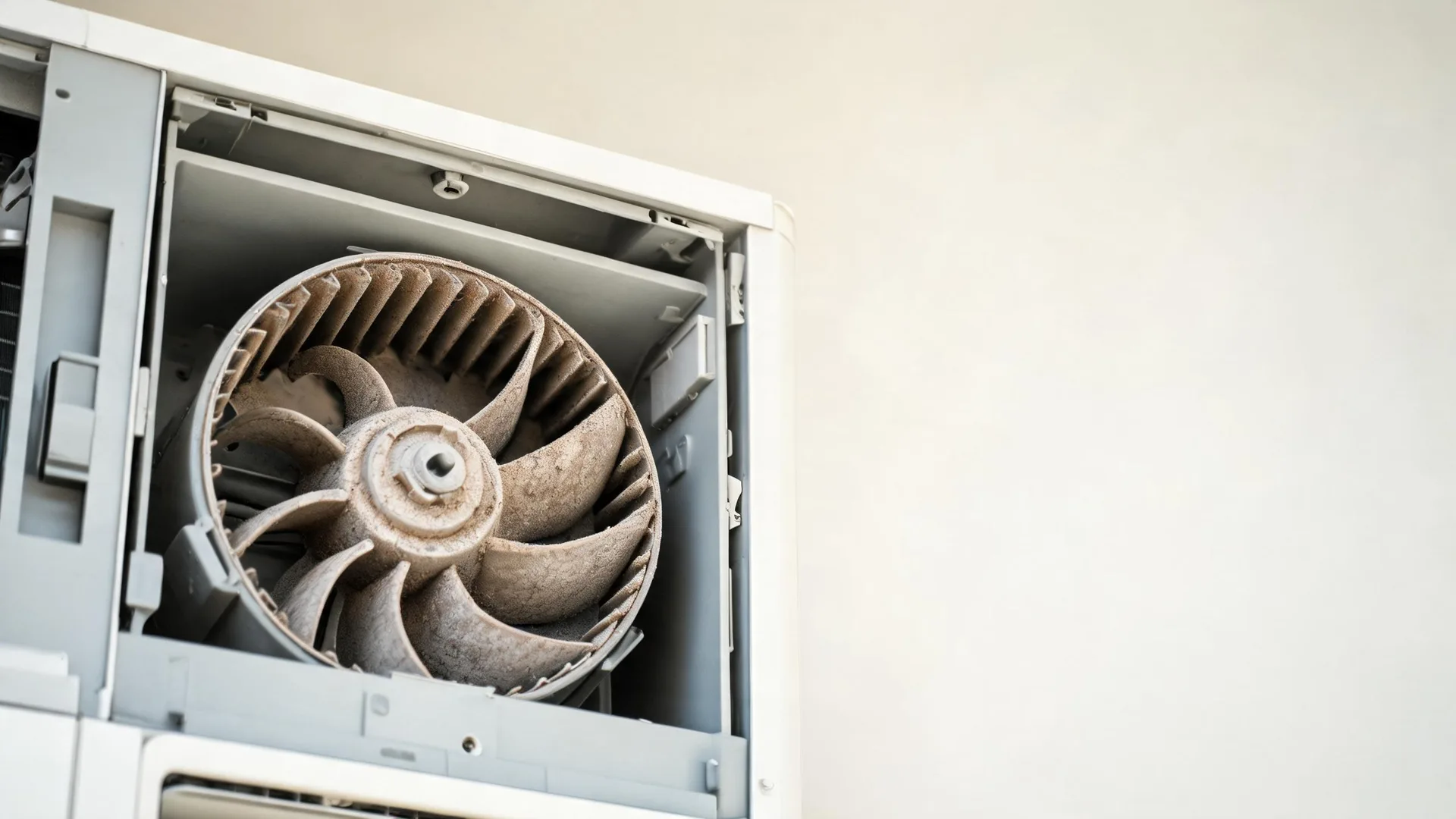
If wind or hail came through this year, get the outdoor unit looked at even if it's still cooling fine. Bent fins or a cracked fan blade don't always stop a system right away, and whatever got damaged only gets worse from here.

Find a contractor
A gray residential air conditioner condenser unit mounted on a concrete pad in an open grass field.

Worth Fixing, Not Replacing

That's the case for fixing what's actually wrong instead of guessing at a replacement. If your system came with the house, there's a good chance it still has years left in it, and a failed part now is just a failed part, not the start of the end. Get the actual cause fixed and let the rest of the system keep doing its job.

What the sound tells you

A grinding or screeching noise from the outdoor unit usually means the fan motor bearing is going. A hard metallic clatter can mean a fan blade is hitting something it shouldn't, sometimes from a bent panel, sometimes from debris. Warm air coming out of the vents when the thermostat is set to cool can point to a failed compressor or a refrigerant leak. None of these clear up by themselves, and the longer the unit runs in that condition, the more parts it tends to take down with it.

When to call and when to wait

If the system is blowing warm air, short cycling, or tripping its breaker, that's worth a call now rather than later. A tripped breaker especially is not something to just reset and ignore, since it usually means the compressor or a motor is pulling too much current. Water pooling near the indoor unit means a clogged condensate line or a cracked drain pan, and that can damage the surrounding area the longer it sits. Weak airflow alone is more often a dirty filter or a blocked return, something worth checking before assuming the worst.

Aerial view of a square outdoor air conditioning condenser unit on a concrete pad beside a house wall with a sliding glass door.

A new air conditioner would cut about $50 a year off cooling for a typical Paulding County home.

  • A new one at the federal minimum, 14.3 SEER2$320 a year
  • An older air conditioner$370 a year

Estimates for a typical Paulding County home, compared with an older unit built to the previous federal minimum, from EIA household energy data, Georgia fuel prices and NOAA climate normals. Your home will differ.

Repair makes sense when a part like a capacitor or contactor has failed.

Replacement makes sense when the compressor has failed or the system uses R-22 refrigerant, which is no longer made.

A diagnostic visit starts outside at the condenser, checking the capacitor, the contactor, and the refrigerant charge, then moves inside to the air handler or furnace coil. A tech will pull the panel and look at the wiring and connections before touching anything else, since a loose or burned connection explains a lot of symptoms that look like something bigger. Static pressure and airflow get checked too, because a system can have good refrigerant and a good compressor and still cool poorly if air isn't moving through the ducts the way it should. Amp draw on the compressor and fan motor tells a tech whether a part is working harder than it should, which often shows up before that part fails outright. The visit ends with the tech explaining what's actually wrong, not just what's broken, so the fix addresses the cause instead of the symptom that brought you to call in the first place.