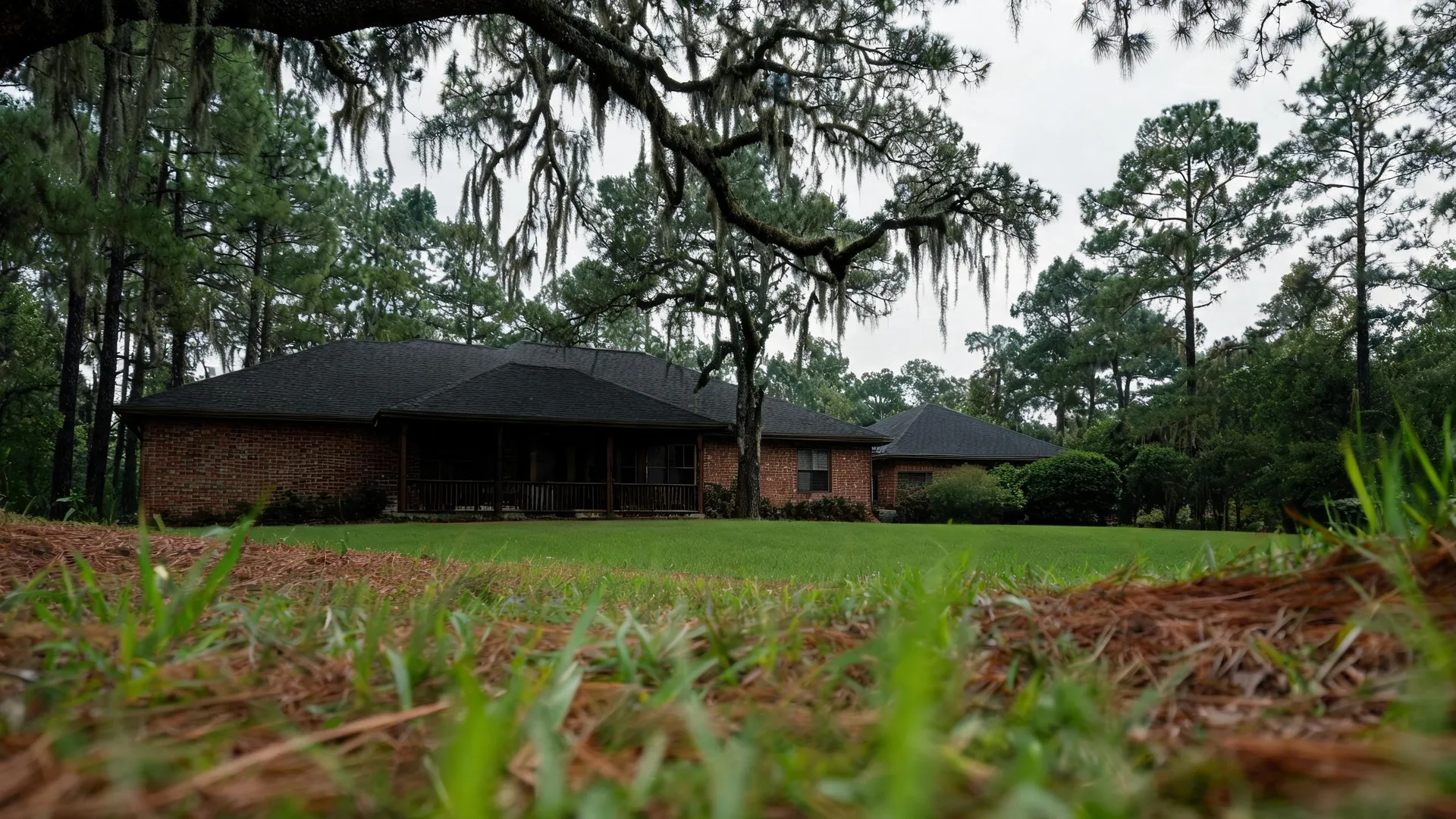
Low-angle view across a lawn and pine-needle mulch toward a single-story brick house with a dark hipped roof and covered porch, framed by pines and a moss-draped oak branch.

AC Repair in Grovetown, GA

Tell us about the job

Takes about a minute. No obligation.

RepairCentral ACColumbia County, GA
Step 1 of 2

What ZIP code is the job in?

A small fault spreads to parts that were fine

A refrigerant leak starves the compressor of the cool gas it needs to stay at a safe temperature, and running it low like that can burn the compressor out. A dirty coil makes the system work harder to move heat, and that extra strain lands on the compressor and the fan motor too. What starts as one failing part can end up taking others down with it.


Ice on the coil means shut it off

Once the coil ices over, airflow drops, and less airflow makes the ice build up more. It feeds itself. Running the system through that doesn't melt the ice. It pushes liquid refrigerant back toward the compressor, and the compressor isn't built to handle liquid. Shutting the system off and letting the coil thaw all the way is what stops that damage before anyone gets a look at it.

5 months
May through September, your air conditioner is on duty
90°F
the average summer afternoon it cools against
23 hail events
in ten years, and hail bends the fins on outdoor coils
92 wind events
in ten years, and wind drives debris into outdoor units
Isometric cutaway illustration of a house interior showing ducted air handling equipment, ceiling ducts, furniture in two rooms, and an outdoor condenser unit connected by lines outside the wall.
Your air conditioner works hardest from June through September.

NOAA nClimDiv, 1991–2020 normals

AC runs May through September here.

Get it looked at before May, so the first hot stretch doesn't find the weak part first.

Power here costs 14.08 cents a kilowatt-hour, and a struggling AC runs all summer

Power costs 14.08 cents a kWh statewide
Cooling runs May through September
Summer afternoons average 90°F
Built in 1999 or later, half the timeA newer system in a newer house is usually worth repairing.

Before anyone comes out, check the thermostat batteries and make sure it's set to cool, below room temperature. Go to the breaker box and look for a tripped breaker, both the one for the indoor unit and the one for the outdoor unit. Pull the filter and hold it up to a light. If you can't see light through it, swap it, because a clogged filter starves the coil of airflow and that's how coils ice over. Walk outside and look at the condenser. If the fan isn't spinning or you hear it humming without turning, don't keep running it, that's a motor or capacitor problem and it won't fix itself. Clear any leaves, grass clippings or mulch piled against the unit's sides so air can move through the fins.

Get it looked at early

Problems tend to show up in the first weeks of the season, when the load hits a part that was already weak.

Find a contractor
A gray residential air conditioner condenser unit mounted on a concrete pad in an open grass field.

Long runs find the weak part

A compressor that runs for hours every day wears on a schedule a part that cycles on and off a few times an hour doesn't. The bearings, the windings, the valves inside all see steady heat and steady load, day after day. That's normal wear, and a system built for it handles it fine for years. What it can't handle is running that same stretch under a bad condition. A unit low on refrigerant or fighting a dirty coil isn't just working harder, it's working harder for hours on end, and that's when a part that was already weak gives out. The longer the run time, the sooner a problem that would've stayed small announces itself.

A capacitor wears out before it quits

The capacitor gives the compressor and fan motor the jolt they need to start. It weakens slowly, so the system may start fine on a cool morning and fail to start once the afternoon load hits it. Catching it weak is a quick fix. A compressor that kept trying to start without one is a different job.

A dirty condenser runs hotter every year

The outdoor unit sheds heat through its coil and fins. Dirt, grass clippings and a season of pollen block that, so the system runs at higher pressure and temperature than it was built for. Nothing fails the first week. The compressor just runs hotter every summer until the day it doesn't start back up.

Overhead view of an air conditioning condenser unit on a concrete pad next to a house with asphalt shingle roofing and vinyl siding.

A new air conditioner would cut about $60 a year off cooling for a typical Columbia County home.

  • A new one at the federal minimum, 14.3 SEER2$410 a year
  • An older air conditioner$470 a year

Estimates for a typical Columbia County home, compared with an older unit built to the previous federal minimum, from EIA household energy data, Georgia fuel prices and NOAA climate normals. Your home will differ.

Repair makes sense when a part like a capacitor or contactor has failed.

Replacement makes sense when the compressor has failed or the system uses R-22 refrigerant, which is no longer made.

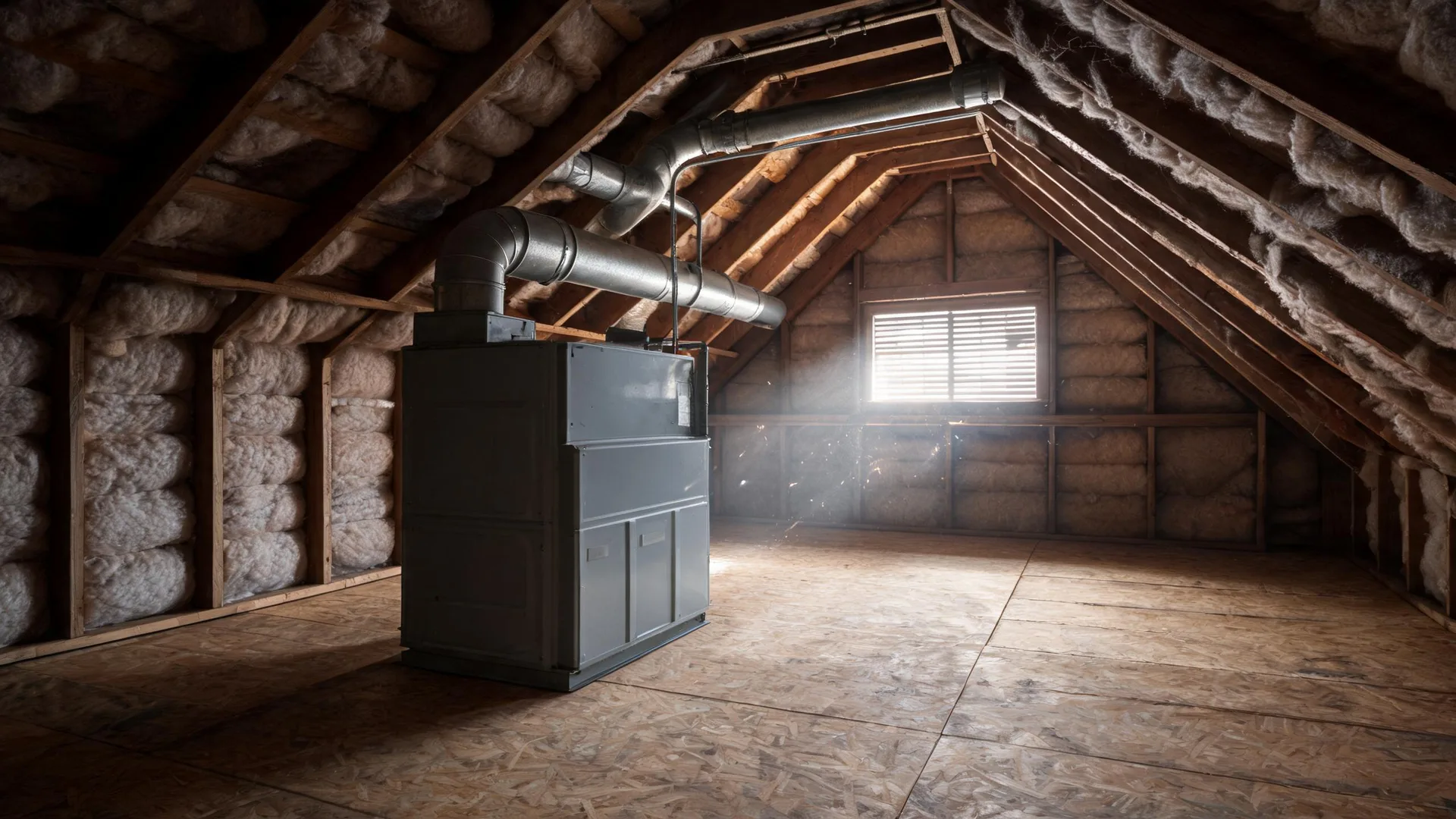
A diagnostic starts with gauges, not guesses. The tech connects them to the service ports and checks refrigerant pressure on both sides of the system, because that number points to a leak, a bad compressor or a failing metering device before anything gets taken apart. They'll check the capacitor's output against what it's rated for, since that's the part most likely to be weak without being dead yet. Amp readings on the compressor and fan motor show whether either one is pulling more than it should, which points to a motor on its way out. They'll pull the blower access panel and look at the coil itself for ice, dirt or corrosion. None of this is guesswork. The readings either match a healthy system or they point straight at the part that's failing.