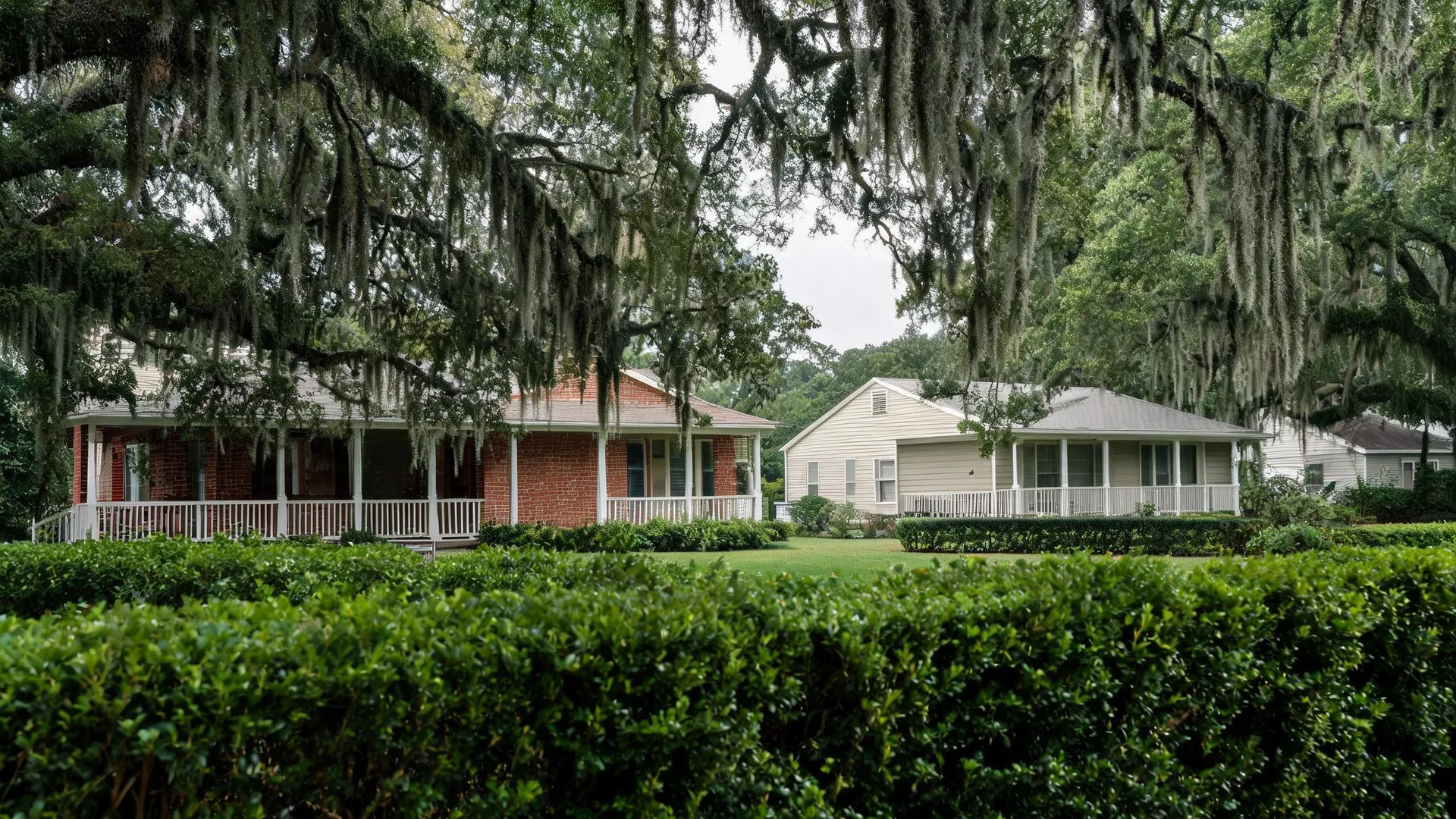






A single-story brick house with a white-columned wraparound porch and a neighboring light-colored siding house, seen across a lawn behind a trimmed hedge, under oak branches draped with Spanish moss.

AC Repair in Hinesville, GA

Tell us about the job

Takes about a minute. No obligation.

RepairCentral ACLiberty County, GA
Step 1 of 2

What ZIP code is the job in?

Liberty County saw 128 severe weather events between 2015 and 2024, and most of those were damaging wind. That outdoor unit sits outside year round, and wind-blown branches or debris can bend the fins or crack the fan blade without stopping the system right away. Hail has hit the county too, enough to dent a cabinet or knock the coil fins flat. If your AC took a hit from a storm and still seems to run fine, it's worth having someone look it over anyway. A bent fan blade or a dented coil can wear on the compressor long before the unit quits for good.

6 months
May through October, your air conditioner is on duty
91°F
the average summer afternoon it cools against
14 hail events
in ten years, and hail bends the fins on outdoor coils
99 wind events
in ten years, and wind drives debris into outdoor units
Isometric cutaway illustration of a house showing attic ductwork, an indoor air handler, and an outdoor condenser unit connected by lines.
Your air conditioner works hardest from May through September.

NOAA nClimDiv, 1991–2020 normals

Electricity in Georgia ran 14.08 cents per kilowatt-hour in 2024.

An AC unit that's struggling to cool still runs the compressor hard, and you pay for every hour of it.

Six months of 91 degree afternoons, and this is what your AC runs against

Cooling runs May through October
Summer afternoons average 91°F
Power costs 14.08 cents a kWh statewide

Half the homes in Liberty County were built in 1994 or later. If yours is one of them, the AC in it probably isn't that old either, especially if it's the original unit. A system still within its working life is almost always worth repairing rather than replacing. That holds even after storm damage like the wind and hail this county sees. A bent fan blade or a dented coil is a repair, not a reason to start over. The exception is a mobile home, and there are a fair number of those here. Units on mobile homes sometimes run smaller or differently matched equipment, so it's worth telling the contractor what kind of home you have when you call.

Fix it before May

April is the month before cooling starts here, and that first stretch of May heat is when a weak part tends to give out, right as the compressor starts working hard again. Get it looked at in April and it gets fixed before the load hits it, not after.

Find a contractor
A man in a dark long-sleeve shirt and tan work pants walks up concrete steps toward an orange front door, carrying a waxed canvas tool bag in his right hand, with a potted shrub beside the gray-sided house.
An outdoor air conditioning condenser unit mounted on a concrete pad surrounded by gravel, photographed against a partly cloudy blue sky.

Six months of this a year adds up fast

Six months of running against 91 degree afternoons wears on specific parts. The capacitor and the contactor take the brunt of it, since they're what kicks the compressor on each cycle, over and over, all summer. If your AC is struggling, a tech can check those first before assuming the compressor itself is the problem. A weak capacitor caught early is a small fix. Left alone, it can take the compressor down with it.

Warm air instead of cold

If the system runs but the air coming out isn't cold, that points to a refrigerant leak, a failing compressor, or a reversing issue somewhere in the line. It won't fix itself, and running it this way just adds hours onto a compressor that's already struggling.

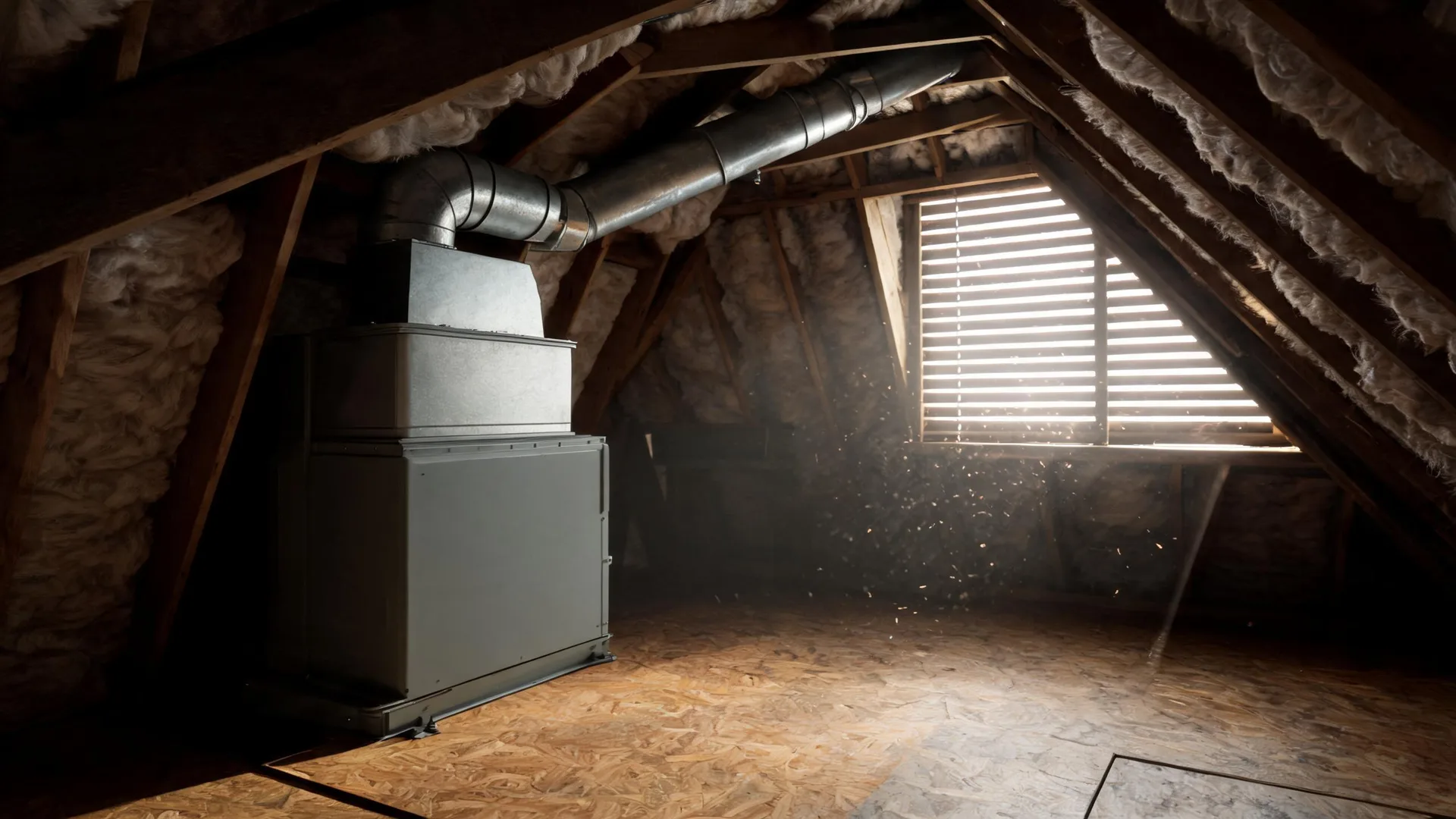
Short cycling

An AC that kicks on, runs a few minutes, then shuts off and starts again soon after isn't completing a normal cooling cycle. That pattern points to a thermostat problem, a dirty coil, or a failing part in the electrical side, and it puts extra wear on the compressor every time it restarts.

An outdoor air conditioning condenser unit positioned on a concrete pad next to a blue-sided house, surrounded by green shrubs and flowering hydrangeas at sunset.

A new air conditioner would cut about $80 a year off cooling for a typical Liberty County home.

  • A new one at the federal minimum, 14.3 SEER2$520 a year
  • An older air conditioner$600 a year

Estimates for a typical Liberty County home, compared with an older unit built to the previous federal minimum, from EIA household energy data, Georgia fuel prices and NOAA climate normals. Your home will differ.

Repair makes sense when a part like a capacitor or contactor has failed.

Replacement makes sense when the compressor has failed or the system uses R-22 refrigerant, which is no longer made.

A diagnostic call starts outside at the unit, not inside at the thermostat. A tech checks the capacitor and contactor first, since those take the most wear, then moves to refrigerant pressure and the coil. Gauges on the lines tell them whether the charge is right or whether there's a leak to find. If the air isn't cold, they're tracing that back to one of a few causes rather than guessing. They'll also check the fan blade and the fins for the kind of damage wind and hail leave behind, since a bent blade can throw the whole unit off balance without stopping it outright. By the time they're done, they can usually tell you exactly which part failed and whether it's worth replacing on its own or signals something bigger coming.