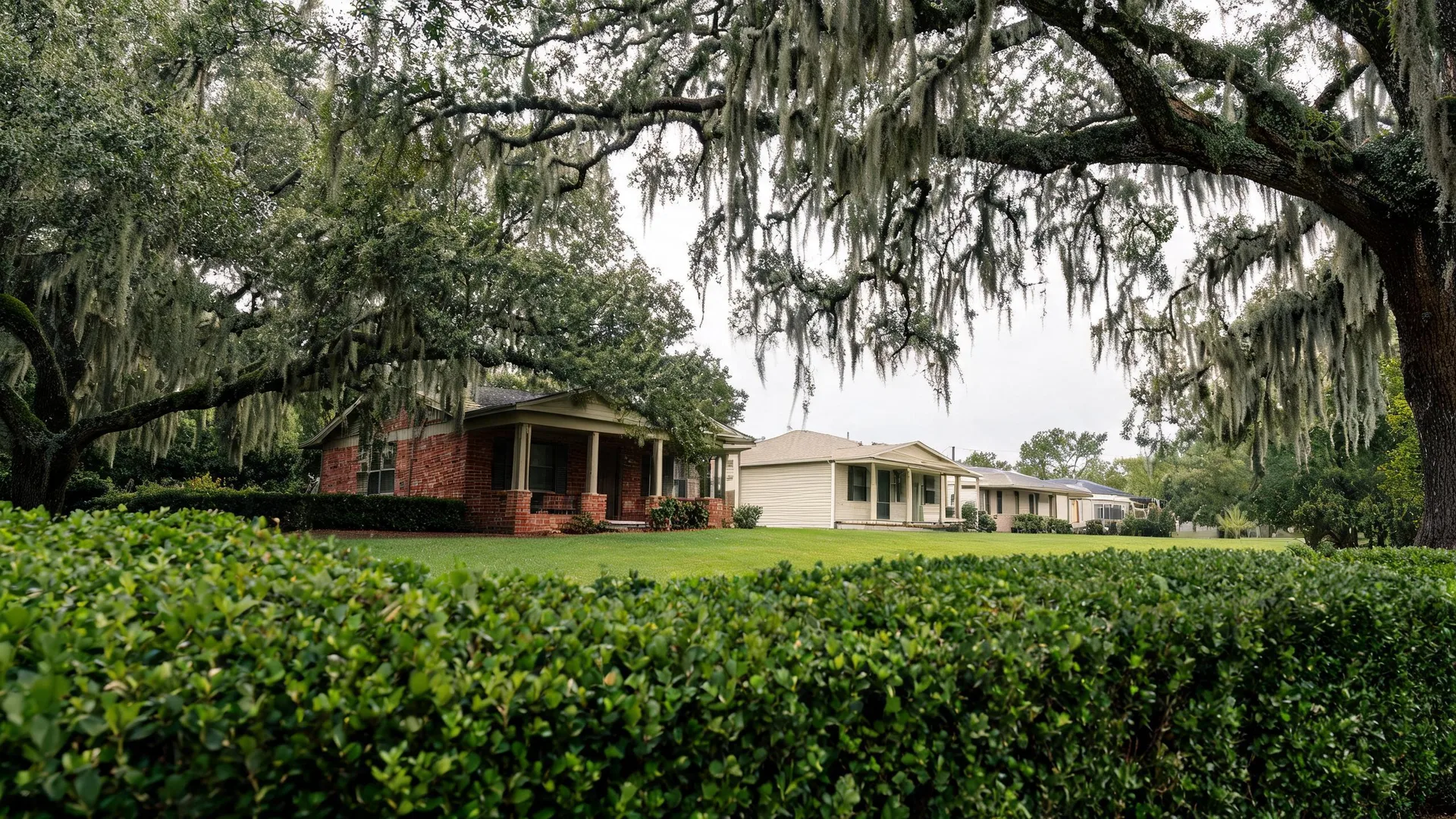







A single-story brick house with a covered porch sits on a mown lawn behind a long trimmed hedge, framed by large oak branches draped with hanging moss, with additional light-colored houses in the background under an overcast sky.

AC Repair in Kingsland, GA

Tell us about the job

Takes about a minute. No obligation.

RepairCentral ACCamden County, GA
Step 1 of 2

What ZIP code is the job in?

Your AC in Kingsland runs from April through October, seven months of the year. Through June, July and August it's working against afternoon highs that average 91°F, day after day. That's a long stretch of hard running with no real break for the system to rest or for small issues to surface on their own. A capacitor or contactor under that kind of load wears out sooner than the same part would somewhere milder. If your AC is acting up, there's a good chance it's simply tired from the season it just put in, but that's worth confirming rather than guessing.

7 months
April through October, your air conditioner is on duty
91°F
the average summer afternoon it cools against
15 hail events
in ten years, and hail bends the fins on outdoor coils
47 wind events
in ten years, and wind drives debris into outdoor units
Isometric cutaway illustration of a single-story house with a dark shingled roof, showing interior rooms with ductwork and an indoor air handler connected to an outdoor condenser unit beside the building.
Your air conditioner works hardest from May through September.

NOAA nClimDiv, 1991–2020 normals

Half the homes in Camden County were built in 1995 or later.

A unit that came with a newer house still has years of work left in it, so repair is usually the right first call.

March is when to get it checked, before April puts it to work

Cooling runs April through October
Summer afternoons average 91°F
11 tropical storms and hurricanes from 2015 to 2024
A broken AC costs more to run hereGeorgia households paid 14.08 cents per kilowatthour in 2024.

Camden County has logged 83 severe weather events between 2015 and 2024, and damaging wind was behind most of them. That matters for an outdoor AC unit sitting exposed on a pad or in a side yard. Hail and passing hurricanes add more chances for the coil fins or the fan blade to take a hit nobody noticed at the time. The unit can keep running after that kind of damage and still lose efficiency or fail sooner than it should. If a storm has come through recently, or you can't remember the last time anyone looked at the unit after one, it's worth having it checked even if it sounds fine.

Get it diagnosed properly

Your air conditioner works hard here, and that's usually what's behind the problem. Have it diagnosed properly so the fix lasts.

Find a contractor
A man in a dark sweatshirt and brown work pants, seen from behind, climbs porch steps toward an orange-red front door while carrying a canvas tool bag, with a potted shrub in a terracotta planter to the right.
A gray residential air conditioning condenser unit mounted on a concrete pad outdoors, surrounded by green grass under a partly cloudy blue sky.

A newer system is worth repairing

If your AC came with the house and the house is newer, don't let anyone talk you into replacing it on age alone. A system that still has years ahead of it just needs the actual problem found and fixed. Ask what part failed and why before you agree to anything bigger.

What you'll actually notice first

Warm air coming out of the vents when the thermostat says it should be cold. The system running longer than it used to, or cycling on and off instead of holding a steady stretch. A room that won't cool even though the rest of the house is fine. Water pooling near the indoor unit. A smell when it kicks on. Each of these points to something specific that failed, not that the whole system is done.

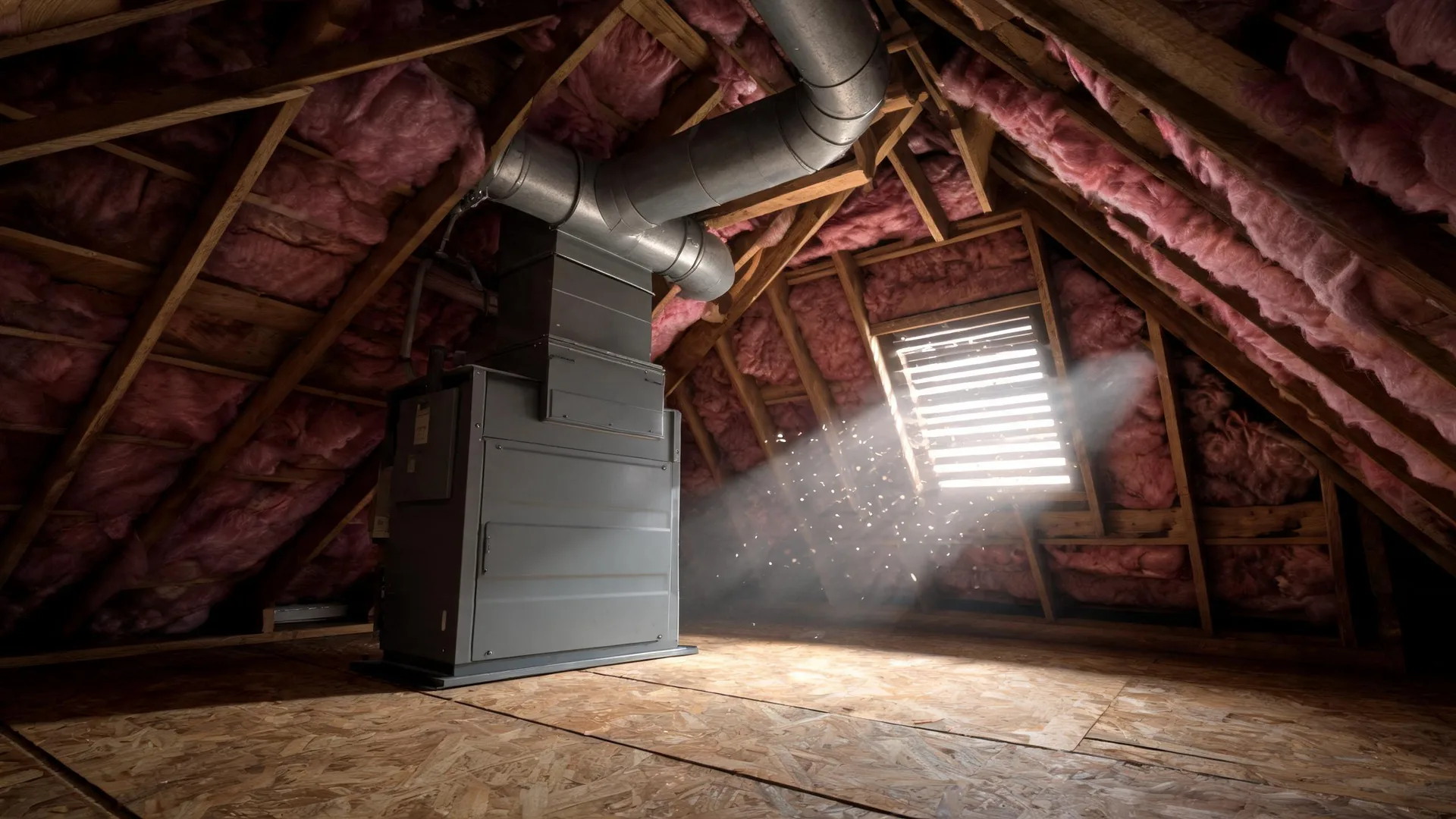
The sounds are trying to tell you something

A hum with no air moving usually points to the capacitor or the compressor. A hard click that repeats without the unit starting is often the contactor. Grinding or squealing points to the blower motor or fan bearings. Hissing can mean a refrigerant leak. None of these fix themselves, and running the unit while the sound continues lets a small part failure turn into a bigger one.

Overhead view of a gray residential air conditioning condenser unit mounted on a concrete pad beside a house with asphalt shingle roofing.

A new air conditioner would cut about $80 a year off cooling for a typical Camden County home.

  • A new one at the federal minimum, 14.3 SEER2$540 a year
  • An older air conditioner$620 a year

Estimates for a typical Camden County home, compared with an older unit built to the previous federal minimum, from EIA household energy data, Georgia fuel prices and NOAA climate normals. Your home will differ.

Repair makes sense when a part like a capacitor or contactor has failed.

Replacement makes sense when the compressor has failed or the system uses R-22 refrigerant, which is no longer made.

A diagnostic visit starts before any panel comes off. The tech asks what you noticed and when. Warm air that started last week points somewhere different than a sound that's been building for a month. Then come the readings. Pressures on the refrigerant lines, voltage at the capacitor, amp draw on the compressor and fan motor. Each number rules things in or out. Low pressure on one side points to a leak, not a failed part. Good pressure but a compressor that won't start points to the capacitor or the contactor instead. The condenser coil gets checked for airflow and for physical damage. Bent fins or a cracked fan blade show up fast once someone's looking. By the time the tech explains what's wrong, it should be one part, named, with a reason it failed.