Night view of illuminated white Southern-style houses with wraparound porches beneath Spanish moss-draped oak trees.

AC Repair in Mableton, GA

Tell us about the job

Takes about a minute. No obligation.

RepairCentral ACCobb County, GA
Step 1 of 2

What ZIP code is the job in?

Cobb County sees real storm damage

Cobb County recorded 105 severe weather events between 2015 and 2024, including 70 rounds of damaging wind and 22 hail events. Four tornadoes touched down in that same stretch, along with three tropical storms or hurricanes. An outdoor AC unit sits outside through all of it.

A unit that still runs can still be hurt

Hail dents fins and bends them shut, and wind-driven debris can nick the coil or the fan blade without stopping the unit from turning on. A condenser can keep running for months after a storm and lose efficiency the whole time, so a unit that took a hit is worth a look even if the air still comes out cold.

5 months
May through September, your air conditioner is on duty
88°F
the average summer afternoon it cools against
22 hail events
in ten years, and hail bends the fins on outdoor coils
70 wind events
in ten years, and wind drives debris into outdoor units
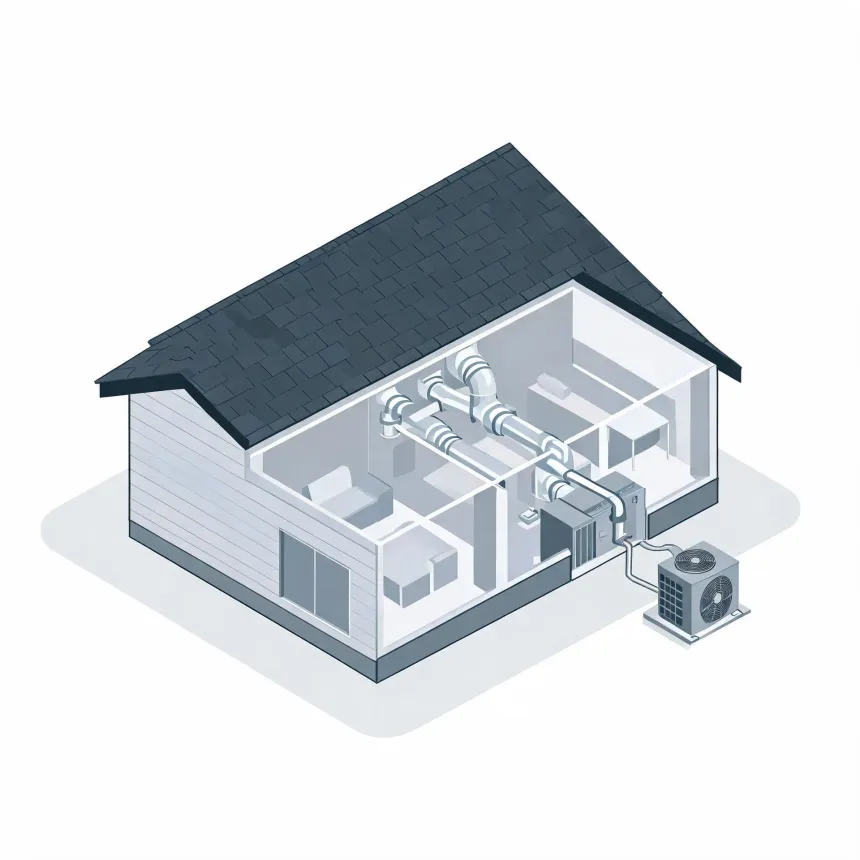
Isometric cutaway illustration of a house with a dark shingled roof, showing interior ductwork connected to an indoor air handler and an outdoor condenser unit beside the building.
Your air conditioner works hardest from June through September.

NOAA nClimDiv, 1991–2020 normals

Half the homes in Cobb County went up in 1990 or later.

A system that came with a newer house still has working life in it, and that's worth repairing.

May is when a weak AC shows what the winter left behind

Cooling runs May through September
Climate zone 3A
Power here costs 13.94 cents per kilowatt-hour

If your AC came with the house and the house went up in 1990 or later, get a repair quote before you think about replacing anything. A compressor or a condenser fan motor can be swapped out on a system that still has years ahead of it, and that's the more common fix anyway. Ask the technician for the age of the unit if you don't know it. A stamped date on the nameplate tells you more than a guess, and it tells the tech what parts to expect on the truck.

Had a storm come through? Get the unit looked at

If your outdoor unit has taken hail or wind damage this year, have it checked before you write it off or ignore it. A technician can look at the fins, the coil and the fan blade and tell you whether it's still working the way it should.

Find a contractor
A man in a cap, gray long-sleeve shirt and brown pants carries a worn canvas tote bag up porch steps toward an orange front door beside a potted olive tree.
A gray metal air conditioning condenser unit mounted on a concrete pad in a flat grassy field under a partly cloudy sky.

What actually wears out on a unit that runs all summer

A condenser runs by cycling on and off, and every cycle puts a small strain on the same handful of parts. The capacitor gives the compressor and fan motor the jolt they need to start, and it weakens a little each time until it can't do the job anymore. That shows up as a unit that hums but won't start, or a fan that needs a push to get going. The run capacitor and the start components fail more often than anything else in the system simply because they work every single cycle. Refrigerant lines fail differently. They don't wear out from use, they leak, usually at a joint or a coil, and a system low on charge makes the compressor work harder than it was built to. Run it low long enough and the compressor itself can overheat and fail, which is a far bigger repair than fixing the leak would have been. Dirty coils cause a quieter kind of damage. When the outdoor coil is caked with debris, the system can't shed heat properly, and the compressor runs hotter and longer than it should. None of these failures announce themselves well in advance. A capacitor can test weak for a while before it actually quits, and a slow leak can go unnoticed until the air stops feeling as cold as it used to. That's the case for having a system checked at the first sign something is off, rather than waiting for it to stop outright.

Check the obvious things first

Look at the thermostat before anything else. Make sure it's set to cool and set below room temperature, and check the batteries if it has a screen that's dim or blank. Then check the breaker box. A tripped breaker will shut the whole unit down, and it's worth resetting once. Go to the air handler or furnace closet and look for a float switch that's tripped from a full condensate pan, which will shut the system off on purpose to stop a overflow.

Know what you shouldn't touch

The filter is fair game. Pull it out and hold it up to a light; if you can't see through it, replace it. That alone can fix weak airflow or a unit that runs constantly without cooling well. Past that, leave the cabinet closed. Refrigerant lines, the capacitor and the compressor carry a charge or a pressure that isn't safe to work on without training, and opening the unit up yourself can turn a simple repair into a bigger one.

An outdoor air conditioning condenser unit positioned beside a blue-sided house at sunset.

A new air conditioner would cut about $50 a year off cooling for a typical Cobb County home.

  • A new one at the federal minimum, 14.3 SEER2$340 a year
  • An older air conditioner$390 a year

Estimates for a typical Cobb County home, compared with an older unit built to the previous federal minimum, from EIA household energy data, Georgia fuel prices and NOAA climate normals. Your home will differ.

Repair makes sense when a part like a capacitor or contactor has failed.

Replacement makes sense when the compressor has failed or the system uses R-22 refrigerant, which is no longer made.

A diagnostic visit starts outside at the condenser, with the power off and the panel open. The technician checks the capacitor first since it's the most common failure point, then looks at the contactor and the wiring for scorch marks or corrosion. Refrigerant pressure gets checked with gauges on the service ports, which shows whether the charge is right or whether there's a leak pulling it down. Inside, the technician checks the air handler or furnace, looking at the evaporator coil, the blower motor, and the condensate line and pan. A thermostat signal test confirms the system is calling for cooling the way it should and that the right components are responding. The technician should walk you through what they found before they start any repair, including what's worn, what's failing, and what it will take to fix it.