An outdoor air conditioning condenser unit mounted on a concrete pad next to a blue-sided residential house at sunset.

AC Repair in Monroe, GA

Tell us about the job

Takes about a minute. No obligation.

RepairCentral ACWalton County, GA
Step 1 of 2

What ZIP code is the job in?

Walton County sees real storm damage

Walton County logged 191 severe weather events between 2015 and 2024, with damaging wind alone hitting 176 times. Add in 4 hail events, 3 tornadoes, and 6 tropical storms or hurricanes in that same stretch, and the outdoor unit sitting next to your house has been exposed to a lot.

A unit that still runs can still be hurt

Hail dents the fins on a condenser and wind-blown debris can bend them or crack the fan blade. An air conditioner can keep running after that kind of hit, just working harder than it should. Across Georgia, 31% of households lost power for 24 hours or more in 2024, so an outage during the next storm is its own separate risk to plan for.

5 months
May through September, your air conditioner is on duty
89°F
the average summer afternoon it cools against
4 hail events
in ten years, and hail bends the fins on outdoor coils
176 wind events
in ten years, and wind drives debris into outdoor units
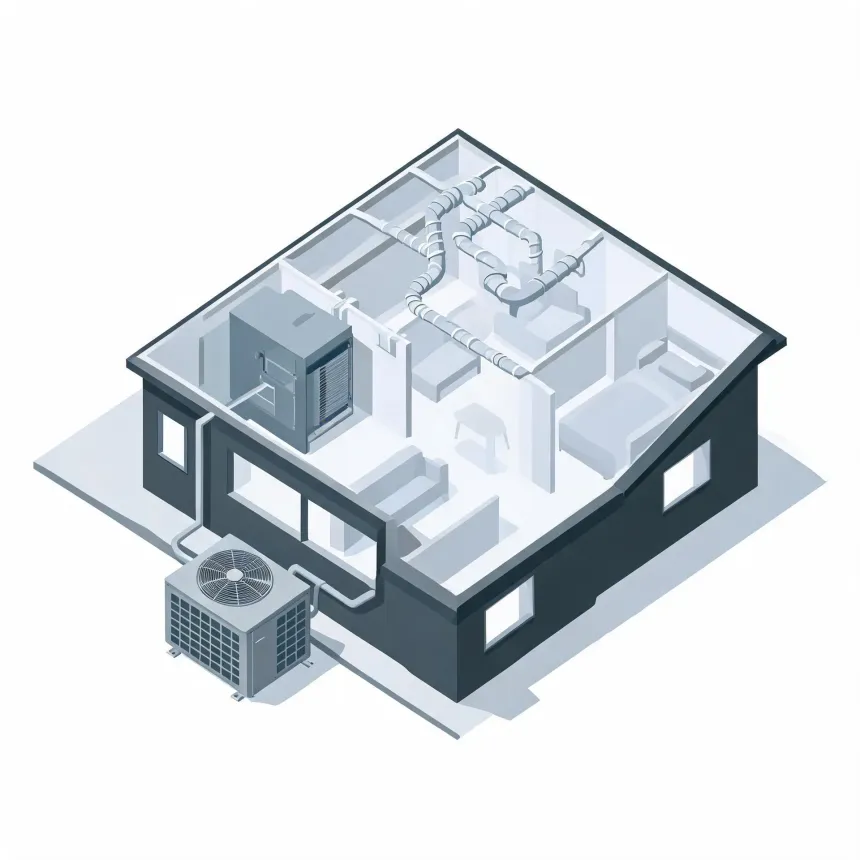
Isometric cutaway illustration of a small house showing interior rooms with furniture, ceiling ductwork and an air handler, plus an outdoor condenser unit connected by refrigerant lines beside the building.
Your air conditioner works hardest from June through September.

NOAA nClimDiv, 1991–2020 normals

Your AC runs five months straight here, with afternoon highs averaging 89°F in June, July and August.

That kind of stretch wears parts down faster, so a repair needs to find the real cause, not just quiet the symptom.

At 13.96 cents a kilowatt-hour, a struggling AC runs up your bill every day it's left alone

Power here costs 13.96 cents per kilowatt-hour
Climate zone 3A
Cooling runs May through September
May Is When Weak Parts Fail FirstCooling starts in May here, and whatever got left unfixed over winter shows up fast once the load hits it.

Half the homes in Walton County were built in 1997 or later. If yours is one of them, the system running now may not be original to the house, but it's had less time to wear out than older housing stock would suggest. That matters when something breaks. A compressor or a control board failing on a unit with plenty of working life left is usually worth fixing rather than replacing outright. A newer house doesn't guarantee a newer system, but it puts the odds in your favor.

If the outdoor unit took a hit, get it looked at now

If your condenser has been through hail or a bad wind storm, have it checked even if it's still cooling. Bent fins and a damaged fan blade don't always stop a unit right away, they just make it work harder until something gives. Worth finding out now, before the next storm adds to it.

Find a contractor
A man in a cap, dark shirt and tan work pants, seen from behind carrying a worn canvas tool bag, steps up onto a porch toward an orange front door beside a potted shrub.
An outdoor residential air conditioning condenser unit mounted on a concrete pad, surrounded by gravel with a blue sky in the background.

What The Clock Has Been Running On

This clip runs the unit through a full day, and most days it's working for all of it once summer sets in. A system installed when the house was built, or close to it, has had less time on the compressor than the age of the house might suggest. That's worth knowing before you decide whether a repair makes sense. Years of daily runtime wear down parts like the compressor and the fan motor, but a unit that's still within its working life is usually worth fixing when something breaks rather than replacing outright. Check the install date on the unit itself if you have it. It tells you more than the age of the house does.

What you can look at safely

Check the thermostat is set to cool and the setting is actually below room temperature. Look at the outdoor unit for leaves, grass clippings or a fallen branch pressed against the fins, and clear anything loose by hand. Check the breaker panel for a tripped switch. Pull the air filter and hold it up to light; if you can't see through it, swap it. None of that needs tools or taking anything apart.

What to leave alone

Don't open the outdoor unit's cabinet or touch anything inside it. Don't add refrigerant or try to straighten bent fins yourself, a fin comb in the wrong hands does more harm than the dent did. If the breaker trips again after you reset it once, stop and leave it off. A compressor that hums without starting, or a unit that trips its breaker right away, needs a tech before it runs again.

An outdoor central air conditioning unit mounted on a concrete pad beside a blue-sided house at sunset.

A new air conditioner would cut about $50 a year off cooling for a typical Walton County home.

  • A new one at the federal minimum, 14.3 SEER2$340 a year
  • An older air conditioner$390 a year

Estimates for a typical Walton County home, compared with an older unit built to the previous federal minimum, from EIA household energy data, Georgia fuel prices and NOAA climate normals. Your home will differ.

Repair makes sense when a part like a capacitor or contactor has failed.

Replacement makes sense when the compressor has failed or the system uses R-22 refrigerant, which is no longer made.

A diagnostic starts with the thermostat, checking that the call for cooling is actually reaching the outdoor unit. From there it's the electrical side: the capacitor, the contactor, the wiring at the disconnect box. A weak capacitor can let the compressor or fan motor struggle to start even when the unit sounds like it's trying. Next comes refrigerant, checked with gauges at the service valves, since a system low on charge will run long and cool poorly without ever shutting off on its own. The coil and the blower get a look too, because airflow problems show up as ice on the lines or warm air at the vents even when everything electrical checks out fine. A tech worth hiring walks you through what they found before touching anything, and tells you which part failed and why, not just that something needs replacing.