Six months of cooling every year
Air conditioners in Thomasville run from May through October. That is six straight months with no real break, and the compressor and fan motor log hours most machines in milder places never see.
Takes about a minute. No obligation.
Air conditioners in Thomasville run from May through October. That is six straight months with no real break, and the compressor and fan motor log hours most machines in milder places never see.
Summer afternoons here average 91°F. An AC working against that heat for hours at a stretch wears down parts like capacitors and contactors faster than normal, and a small fault turns into a breakdown sooner than you'd expect.

NOAA nClimDiv, 1991–2020 normals
May is when cooling starts here, and when a weak part gets found out.
Have it checked in April, before the first hot week decides it for you.



Thomas County logged 129 severe weather events between 2015 and 2024, most of it damaging wind. That matters most for the part of your AC sitting outside. The outdoor unit takes whatever blows across the yard, from pine limbs to construction grit, and wind doesn't have to be a named storm to bend a fan or dent a coil. Hail and tornadoes have hit here too. If your system came through one of those and still seems to run fine, it's worth having someone check the coil fins and fan blade anyway. A unit can keep cooling for a while with damage that's only getting worse underneath.
Half the homes in Thomas County were built in 1987 or later. If your system came with a newer house, it likely still has good years left in it. A weak capacitor or a tired contactor after a hard summer is usually a repair, not a reason to replace the whole unit.
Find a contractor
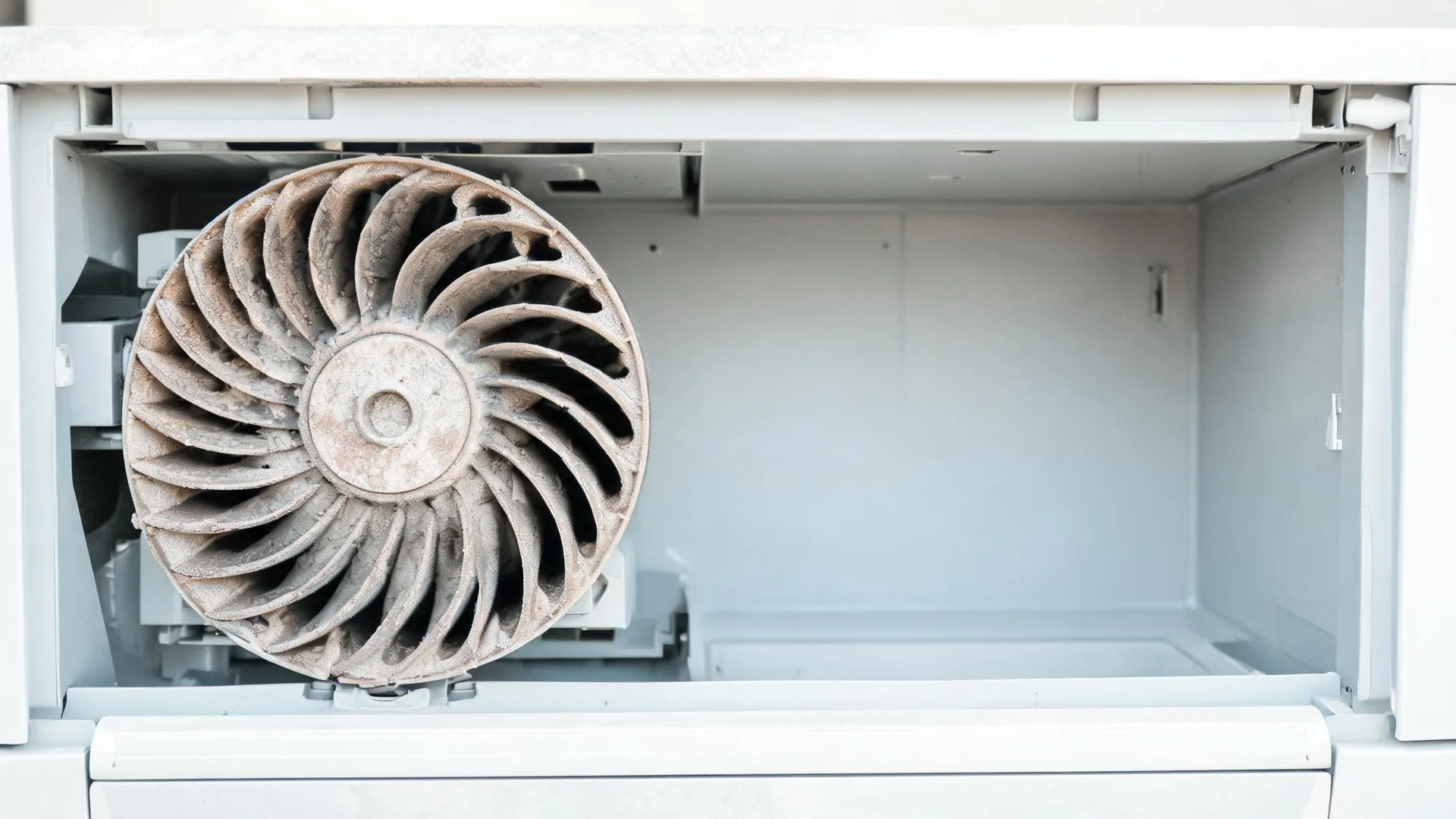
Six months is a long stretch to run flat out, and this is what that looks like day to day. Daytime, the compressor cycles against 91 degree heat for hours at a time. Overnight it gets a little relief, then starts again the next afternoon. That pattern of hard runs with only a partial break is what tires out a capacitor or contactor before its time. If something's off with your AC now, a proper diagnosis will catch which part gave out under the load, rather than a guess that leaves the real problem for next month.
Start at the outdoor unit. Clear leaves, grass clippings or anything pressed against the sides so air can pass through the coil. Check the breaker hasn't tripped, and if the thermostat runs on batteries, put in fresh ones. Inside, pull the air filter and hold it to the light. If you can't see through it, replace it. A clogged filter starves the system of airflow and can freeze the coil, which looks like a bigger problem than it is.
Ice on the refrigerant line or the indoor coil means the problem is already past the filter, and running the system longer just makes the coil or compressor work harder against it. Warm air from the vents, a hard clicking when the unit tries to start, or water pooling near the indoor unit point to a failed part, not dirt or a dead battery. That calls for gauges and a trained eye. Shut the system off until someone can look at it, so a small failure doesn't take the compressor down with it.
Estimates for a typical Thomas County home, compared with an older unit built to the previous federal minimum, from EIA household energy data, Georgia fuel prices and NOAA climate normals. Your home will differ.
Repair makes sense when a part like a capacitor or contactor has failed.
Replacement makes sense when the compressor has failed or the system uses R-22 refrigerant, which is no longer made.
Age isn't the only thing to weigh here. How the unit's been running matters just as much. A system that's kept its refrigerant charge and had the coils cleaned along the way will take a repair well. One that's been short on refrigerant for a while, or has a compressor straining to start, has usually got more wrong with it than the one part that just failed. Ask what's being replaced and why. A capacitor or contactor is a straightforward fix. A compressor or a coil leak is a bigger decision, because the parts cost more and the labor to get at them does too. If a system has needed a repair every summer for the past few years, that pattern tells you more than any single breakdown does.