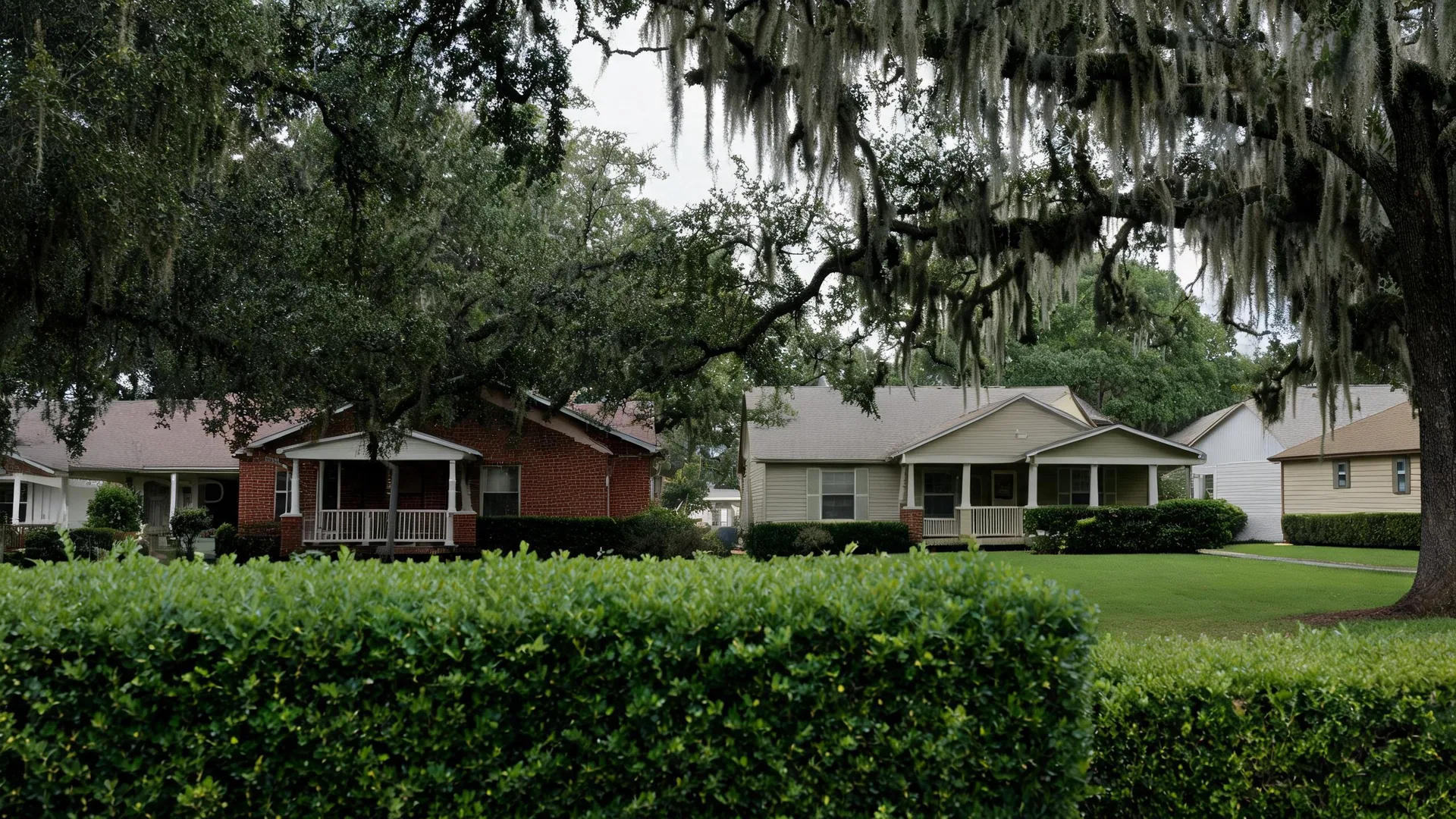





Single-story houses with covered porches, one brick and one light-colored siding, behind a trimmed hedge and lawn, beneath large oak trees draped with Spanish moss.

AC Repair in Winder, GA

Tell us about the job

Takes about a minute. No obligation.

RepairCentral ACBarrow County, GA
Step 1 of 2

What ZIP code is the job in?

A weak capacitor is one of the most common reasons an air conditioner won't start. It gives the compressor and fan motor the jolt they need to kick on, and once it wears out, the unit either hums without starting or shuts off on its own. A dirty condenser coil causes a different kind of trouble. It forces the system to run longer and harder to move the same heat, and that extra strain tends to wear out whatever part is already weakest. Low refrigerant always means a leak somewhere in the line, since a sealed system doesn't use refrigerant up on its own. Running low on charge for long stretches puts extra load on the compressor, and the compressor is the part you least want to lose. A fan motor can also seize up or burn out after years of spinning in the heat. None of these fix themselves, and the longer they're left, the more likely they are to take another part down with them.

5 months
May through September, your air conditioner is on duty
88°F
the average summer afternoon it cools against
6 hail events
in ten years, and hail bends the fins on outdoor coils
24 wind events
in ten years, and wind drives debris into outdoor units
Isometric cutaway illustration of a single-story house showing interior rooms with ductwork and an air handler, connected by refrigerant lines to an outdoor condenser unit on the left.
Your air conditioner works hardest from June through September.

NOAA nClimDiv, 1991–2020 normals

A diagnostic visit starts with gauges and a meter, not guesswork, checking the charge and testing the capacitor and contactor under power.

Finding the real cause before swapping parts is what keeps the same system from breaking down again a month later.

Half the homes here were built since 2001, so the system is often still within its working life

Half the homes here were built by 2001
Cooling runs May through September
Summer afternoons average 88°F

AC here runs from May through September, with afternoon highs averaging 88°F through June, July and August. That's a long stretch of work for any system, but it's nothing unusual for this part of Georgia. The heat isn't what breaks a unit. It's whatever part was already weak before summer started. A capacitor that's been fading for a year often picks the hottest week to finally quit, because that's when the system is cycling the most. The fix is the same one it would be anywhere. Find the part that failed and replace it.

The fix is the same one it would be anywhere else in Georgia

Electricity here runs 14.08 cents a kilowatt-hour, so a system that's low on charge or running long cycles on a weak capacitor is costing more to limp along than it would to fix. The problem is the usual one, and so is the fix. Get the part that failed replaced before it takes the compressor with it.

Find a contractor
An outdoor air conditioning condenser unit mounted on a concrete pad surrounded by gravel, photographed against a partly cloudy blue sky.

A newer system still breaks. It just breaks for a fixable reason.

If your system came with the house, there's a good chance it's one of the newer ones in the county. A unit that age isn't likely to be failing from wear across the board. More likely one part gave out, a capacitor or a contactor or something in the fan motor, while the rest of the system is fine. That's worth confirming before anyone talks about replacing the whole unit instead of just the part that quit.

A struggling system doesn't pace itself

An air conditioner with a weak part doesn't back off to protect itself. The compressor keeps pulling the same current, the fan motor keeps spinning, and whatever is already failing keeps getting asked to do full work. Left alone, a system runs itself the same way right up until the weak part gives out completely.

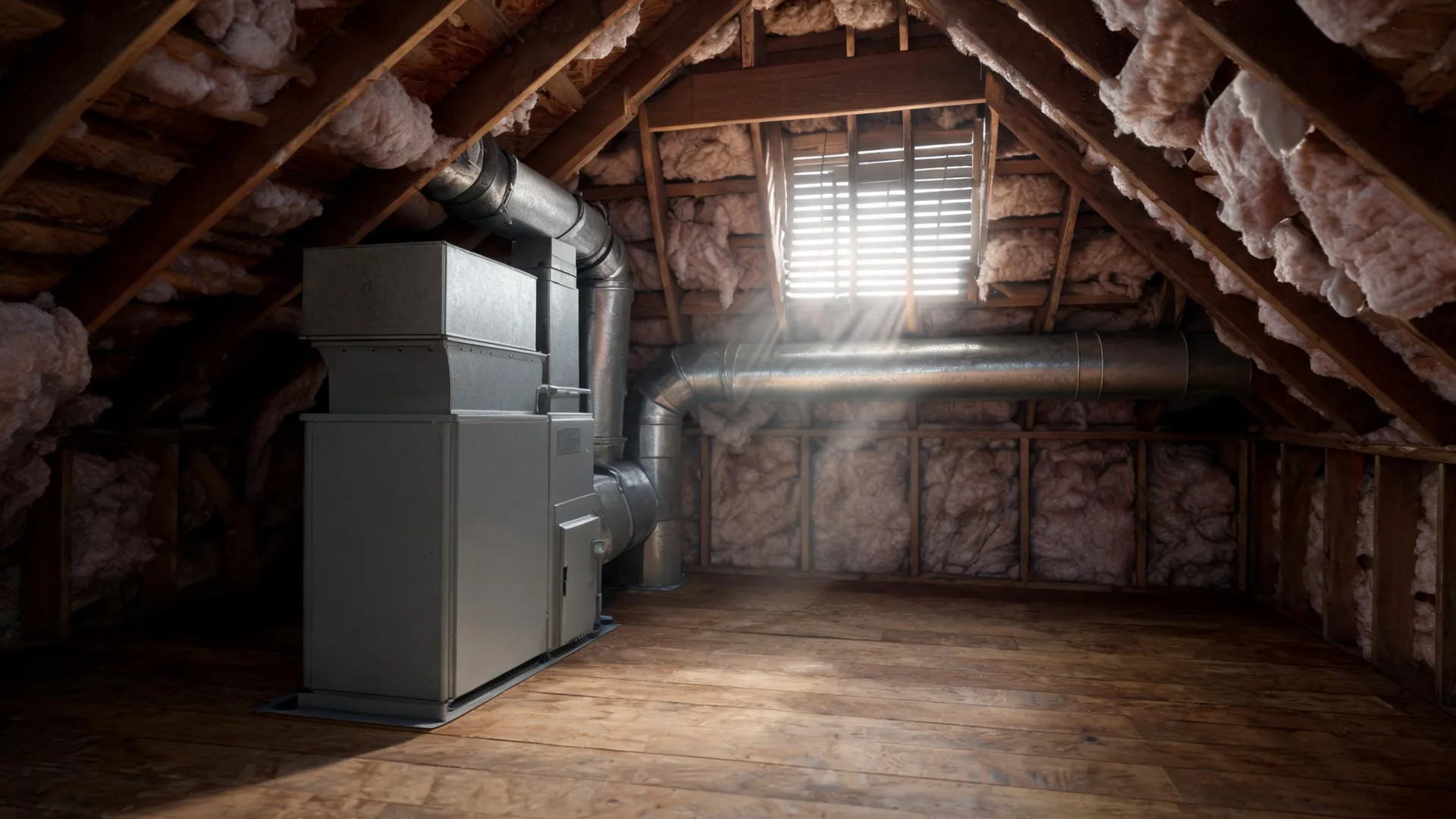
One bad part puts load on the next one

A system is built so each part only has to handle its own job. When one part is failing, the others pick up the slack to keep the air cold, and that's strain they weren't built for. A compressor that keeps running against low charge or a bad capacitor is the part most likely to go next, and it's the hardest one to lose since the whole system depends on it.

An outdoor air conditioning condenser unit positioned on a concrete pad next to a blue-sided house, surrounded by green shrubs and flowering hydrangeas at sunset.

A new air conditioner would cut about $50 a year off cooling for a typical Barrow County home.

  • A new one at the federal minimum, 14.3 SEER2$330 a year
  • An older air conditioner$380 a year

Estimates for a typical Barrow County home, compared with an older unit built to the previous federal minimum, from EIA household energy data, Georgia fuel prices and NOAA climate normals. Your home will differ.

Repair makes sense when a part like a capacitor or contactor has failed.

Replacement makes sense when the compressor has failed or the system uses R-22 refrigerant, which is no longer made.

Age is one way to judge a system. How it's been running is another, and it matters more. A unit that gets serviced and repaired when something small fails tends to keep going for a long time, because small problems get caught before they spread. A unit that runs through every warning sign, the short cycling, the weak airflow, the noise that wasn't there before, is the one that ends up needing a whole new system, because by the time it quits, it's taken other parts down with it. The question isn't really how old the unit is. It's whether what's wrong with it now is one part or several. One part is a repair. Several at once, especially on an older unit, is usually where someone has to decide if it's worth it. That's a judgment call for whoever is standing in front of it with gauges on, not something to guess at ahead of time.