Heat pump leaking water in Canton, GA

After this form, you can stop searching for a heat pump pro.

Let a pro reach out

Why is my heat pump leaking water?

You went out to check your heat pump, maybe in the yard or the utility closet, and found water pooling underneath it or dripping from the indoor unit. It's not something you expect from a system that's supposed to just run quietly in the background. Before you call anyone, you want to know if this is a quick fix, something to watch, or a sign the unit needs attention soon.

A clogged condensate drain line is the most common cause

Your heat pump pulls moisture out of the air every time it runs, and that water is supposed to drip into a pan and drain outside through a condensate line. Algae and dirt build up inside that line over time and block it, so the water backs up and spills out of the pan instead. A cracked or rusted drain pan does the same thing even with a clear line. With how muggy summers get around Canton, a heat pump run that long pulls a lot of moisture out of the air, which means more water moving through that drain line and more chances for it to back up. Left alone, it can soak the floor or ceiling below the unit, so it's worth checking as soon as you see it.

A woman in a gray sweatshirt with her hair pinned up sits in a living room looking off to the side, with a pale sectional sofa, cushions, a potted plant, framed wall art and a large window behind her.
A woman with long wavy brown hair in a gray top and dark cardigan stands near a window, looking to the side, with a living room, fireplace and round mirror blurred behind her.
A woman with curly dark hair in a grey long-sleeved top sits on a grey couch with patterned cushions, looking off to the side in a softly lit living room.
A woman in a gray knit sweater with her hair in a bun sits on a couch indoors, smiling and looking off to the side, with a dining area and framed picture blurred in the background.

Why does my heat pump run so much in Canton, GA?

  • Winter nights average 33°F

    Nights near freezing mean your heat pump runs defrost cycles often, and that's when condensation and drainage problems tend to show up.

  • Heat runs October through April

    Seven months of heating puts a lot of hours on the drain line and the pan underneath, time enough for a clog or a crack to turn into a leak.

  • Cooling runs May through September

    Five months of cooling means the indoor coil is pulling moisture out of the air for most of the warm season, all of it meant to leave through that same drain.

NOAA nClimDiv 1991-2020

How the Water Actually Gets There

  • Indoor water comes from the evaporator coil, where warm house air hits cold refrigerant and drips condensate into a pan below it.
  • A PVC drain line carries that water from the pan to the outside, usually sloped so gravity does the work.
  • Algae and dust build up inside that line over time and narrow it until water backs up into the pan and overflows.
  • Many systems have a float switch in the pan that should shut the unit off when water rises, so a puddle often means that switch failed or was never tripped.
  • Outdoor units drip during defrost in cold weather as frost on the coil melts, and that water is normal unless it's pooling against the foundation.
  • A coil caked in dust or pet hair can freeze unevenly, then dump more water than the pan or drain can handle when it thaws.

Your heat pump makes water as a normal part of cooling the house. Warm air moving across the cold evaporator coil drops its moisture right there, the same way a cold glass sweats on a humid day. That water falls into a pan under the coil and is supposed to leave through a PVC line that runs outside, usually angled so it drains on its own. Nothing about that process needs power or a pump in most setups, just a clear path downhill. The trouble starts when that path isn't clear. Algae, dust, and the slime that builds up in a damp PVC line will narrow it over months, sometimes years, until water can't move through fast enough. It backs up into the pan, and once the pan is full, it overflows onto the floor or the closet below it. Most pans have a float switch sitting right in them meant to cut the system off before that happens. If you're seeing a puddle, that switch either failed or never got wired to shut things down. Outside, a damp patch under the unit during cold mornings is usually just defrost water from frost melting off the coil, and that's expected. A coil fouled with dust or pet hair, though, can frost unevenly and release more water at once than the drain was built to carry.

Power here costs 13.88 cents per kilowatt-hour

At 13.88 cents per kilowatt-hour, running the blower or an auxiliary heat strip to fight a clogged drain line costs more than fixing the leak. A stuck float switch that shuts the system off protects your floors, but it also means no heat or cooling until someone clears that line.

EIA-861 2025

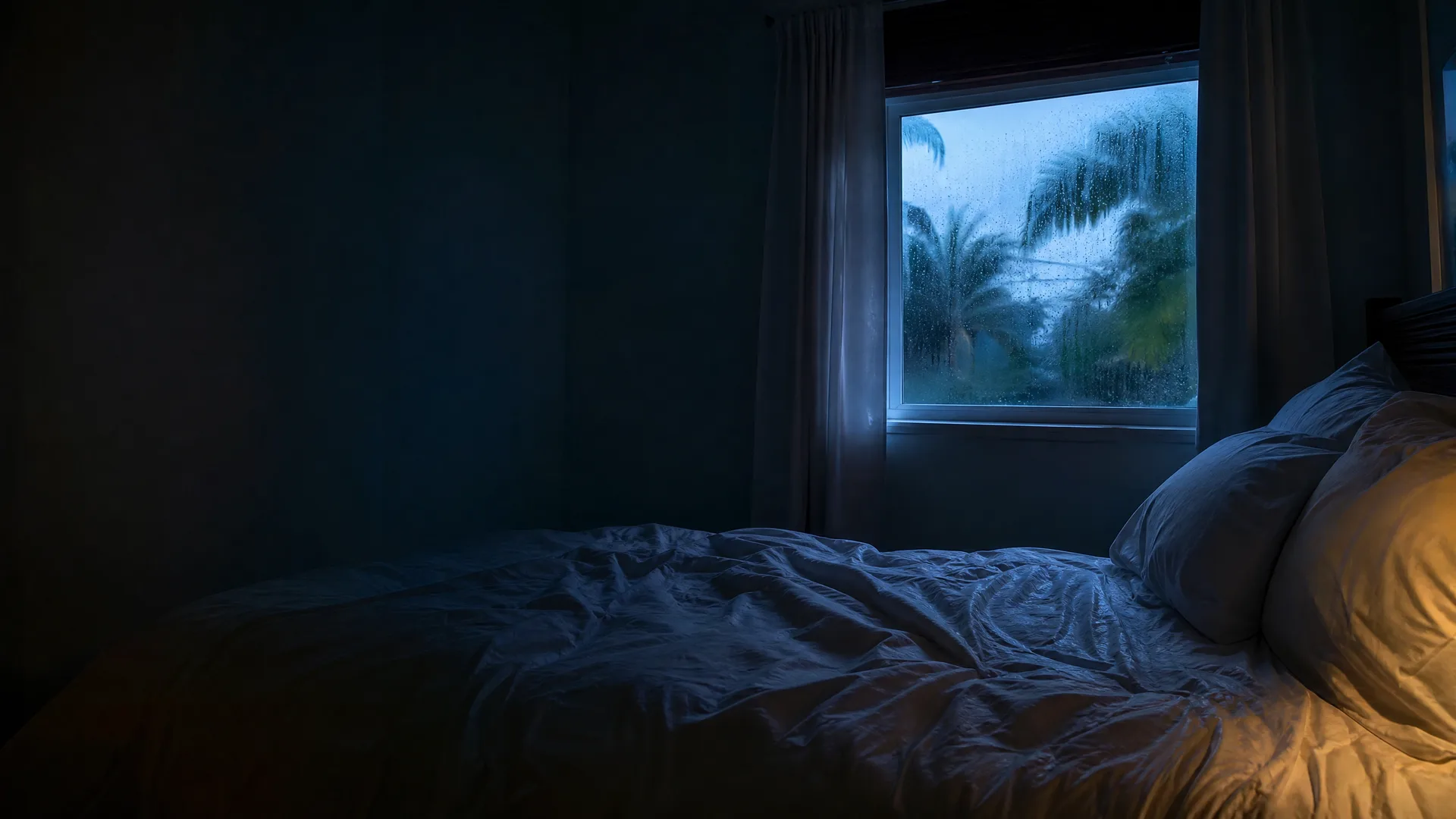
A dark bedroom with an unmade bed and pillows beside a curtained window showing rain-streaked glass and palm foliage outside.

You wake up a little after midnight because the sheets feel wrong, damp under your shoulder. The window's fogged at the edges from the heat outside pressing against the cool glass. You get up and feel along the carpet near the closet door where the air handler sits, and it's wet, soaked through almost to the hallway. The unit hums along like nothing's wrong. You stand there in the dark trying to remember if it did this last August, whether you dealt with it then or just let it dry out and hoped. The carpet squishes under your foot when you step back toward bed, and you know you won't get back to sleep until you've at least shut it off at the breaker.


One request and it's handed off

The pro who gets in touch is licensed in Georgia and works in Cherokee County.

It costs nothing to send, and you don't have to hire anyone.

A gray outdoor condenser unit on a concrete pad beside a white horizontal-siding house, with refrigerant lines and conduit running to a wall-mounted disconnect box, bare soil in front and a green shrub at left.

Running normally

This is what a healthy setup looks like. The pad sits level, the lines run clean into the disconnect, and nothing pools on the concrete. Condensate leaves through the drain line without you ever seeing it. If your unit looks like this, check again after the next cold snap, when defrost cycles run hardest.

An outdoor air conditioner condenser unit on a concrete pad beside a house with horizontal lap siding, with a shrub to the left, bare dirt in front, and conduit and a metal disconnect box on the wall.

Water pooling underneath

Water sitting on the pad or soaking the ground beside it means the drain line or pan isn't doing its job. Left alone, it can back up into the unit or trip the float switch and shut the system off. Standing water here is worth a look before it spreads to the siding or foundation.

What's that water doing on my floor or ceiling

If the indoor unit sits in a closet or attic, look for a damp spot on the carpet nearby, a stain spreading across the ceiling below it, or a musty smell that wasn't there before. A warped baseboard or soft drywall means the water's been sitting a while, not just today. Outside, you might just see a puddle under the unit on the pad, which is less of a problem than water finding its way inside your house. Left alone, water against drywall and subfloor leads to mold and rot, and that's a repair that costs a lot more than the drain line that caused it.

A gray outdoor condenser unit on a concrete pad beside a beige vinyl-sided house, with a wall-mounted disconnect box, flexible conduit, mulch bed, shrubs and a concrete walkway in front.

Running clean

The pad sits level and the lines run straight to the disconnect. No puddle on the concrete, no stain on the siding behind it. Condensate is leaving through the drain line the whole time, which is exactly why you never see it.

An outdoor air conditioning condenser unit on a concrete pad beside a house with horizontal siding above a brick foundation, with a flexible conduit running to a wall-mounted disconnect box.

Worth a look

Dust and grime built up like this on the cabinet usually means the same thing has been happening inside, where the coil and drain pan sit. A line that's been clogging slowly for months will eventually back up and show itself as water on your floor or ceiling.

Clear It Yourself or Call It In

Clear it yourself

  • Shutting off the system and setting a shop vac at the outdoor drain line's end can pull a soft clog of algae or dust loose.
  • Pouring a cup of distilled vinegar down the drain access point near the indoor unit can break up early algae growth before it blocks the line.
  • A float switch that's tripped from standing water will reset on its own once the pan drains and dries out.
  • Checking that the condensate pan isn't cracked or rusted through tells you whether this is a clog or a pan that needs replacing.
  • None of this tells you if the coil itself is frozen or if refrigerant charge is behind the water showing up in the first place.

Call a contractor

  • A contractor can run a line a shop vac can't reach, clearing a clog further down the drain where it bends or dips.
  • Diagnosing a low refrigerant charge or a frozen coil takes gauges and training a homeowner doesn't have on hand.
  • A local contractor who services heat pumps through Cherokee County's long humid summers has likely seen this exact drain line fail before.
  • Working with one contractor means one visit and one diagnosis, not several companies calling to bid on the same job.
  • If the float switch keeps tripping after you clear the line, that points to a slope problem or a cracked pan that needs a proper fix.
A gray outdoor condenser unit on a concrete pad beside a light-colored horizontal-siding house, with a disconnect box and refrigerant line on the wall, ornamental grasses and a shrub in mulch nearby, and a concrete patio in the foreground.
The pad is level and the line set runs clean to the disconnect box, nothing pooling on the concrete around it.
An outdoor air conditioning condenser unit on a concrete pad beside a house with horizontal lap siding, with a green shrub to the left and a wide concrete slab in the foreground.
Set against bare concrete with no slope to carry water away, a clogged line has nowhere to go but back toward the unit.
  1. Warm house air crosses the evaporator coil and leaves condensate behind.

  2. Condensate drips down into the drain pan under the coil.

  3. The drain line carries that water out through the PVC pipe.

  4. Algae or dust narrows the line and water backs up into the pan.

A heat pump leaking water almost always comes down to a drain line that's clogged or a pan that's cracked, and both are fixable without replacing anything. The water on your floor or your ceiling is the system telling you where to look, not a sign the unit is failing. A local contractor who services heat pumps all over Cherokee County every summer has seen this exact problem more times than most homeowners will in a lifetime, and knows which of the handful of causes is likely behind yours before even opening the panel. Once you request service, you're matched with one licensed contractor near Canton, not a handful of companies competing for your callback, so you're not stuck fielding calls while your floor stays wet. The leak won't fix itself, and the longer that drain stays clogged, the more likely the float switch trips and leaves you without heat or cooling. You know what you found when you checked the unit. Getting it looked at now is what stops a small puddle from becoming a bigger repair.

A gray outdoor heat pump unit mounted on a concrete pad beside a dark horizontal-slat clad house wall, with gravel ground and shrubs nearby.

Done looking for a heat pump pro

RepairHeat PumpCherokee County, GA
Step 1 of 2

What ZIP code is the job in?