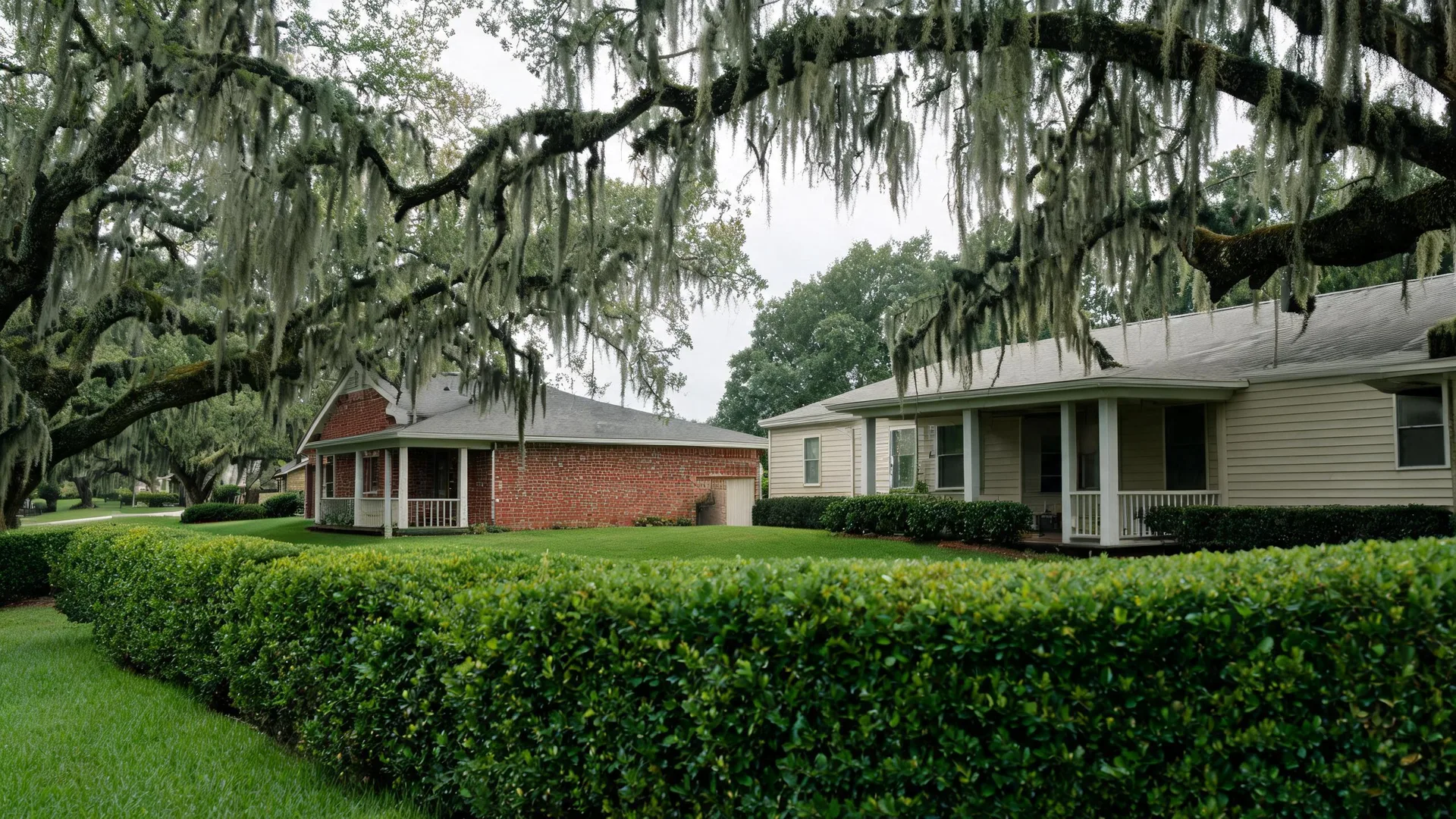






Two single-story houses, one brick with a covered porch and one with pale siding, seen across a mown lawn and a trimmed hedge, beneath large oak branches draped with Spanish moss.

Heat Pump Repair in Augusta, GA

Tell us about the job

Takes about a minute. No obligation.

RepairHeat PumpRichmond County, GA
Step 1 of 2

What ZIP code is the job in?

Most heat pump failures trace back to the reversing valve or the outdoor coil. The reversing valve is what lets the system switch between heating and cooling, and when it sticks, you get a unit stuck in one mode or blowing air that's the wrong temperature entirely. The outdoor coil takes a beating because it's exposed year round, and once it's caked with dirt or bent fins block the airflow, the system has to work harder to move heat in either direction. A failing capacitor is another common one. It's a small part that gives the compressor and fan motors the jolt they need to start, and when it weakens, you'll hear the unit hum and struggle instead of kicking on. Low refrigerant charge shows up too, usually from a slow leak rather than the system just running low on its own, since these are sealed systems that don't consume refrigerant. Any of these can leave you with weak heating, weak cooling, or a unit that runs constantly without catching up.

5 months
November through March, your system heats
5 months
May through September, it cools
37°F
the average winter night it heats against
91°F
the average summer afternoon it cools against
Isometric line illustration of a cutaway single-story house showing interior rooms, ceiling ductwork and an indoor air handler, connected by a line to an outdoor condenser unit on a pad beside the building.
Your system heats November through March and cools May through September.

NOAA nClimDiv, 1991–2020 normals

Heat here starts in November, and cooling starts in May.

The first cold snap and the first hot stretch are when a weak reversing valve or a low charge finally gets found out.

Half the homes in Richmond County date to 1980 or later, so a lot of heat pumps here are still well within their working life

Half the homes here were built by 1980
Power costs 14.08 cents a kWh statewide
Climate zone 3A

Get it looked at early

Problems tend to show up in the first weeks of the season, when the load hits a part that was already weak.

Find a contractor
A man in a gray long-sleeve shirt and work pants carries a canvas tool bag as he climbs porch steps toward an orange front door of a gray clapboard house, with a potted shrub to the right.
A dark gray heat pump unit mounted on a concrete pad next to a house with gray siding and a stone veneer wall.

What happens when someone comes out to look at it

A diagnostic starts outside at the unit, not with a toolbox. The tech checks what the system is doing right now. Which mode it's in, what the thermostat is asking for, whether the outdoor fan and compressor are actually running. From there it's gauges on the refrigerant lines to check the charge. A meter goes on the capacitor and on the reversing valve's coil to see if they're getting power and doing something with it. A stuck reversing valve often shows itself right there. The valve gets energized but the system keeps running in the wrong mode. Low charge shows up on the gauges as pressures that don't match what the system needs to do its job. If the coil is caked with dirt or the fins are bent flat in spots, that's usually visible before any tool comes out. The goal is to find which part stopped doing its job, not to replace parts until something works.

What you'll actually notice first

Air coming out lukewarm. A room that never quite gets comfortable no matter how long the system runs. The outdoor unit running nonstop without the house catching up. Sometimes there's a smell, a burning note or a musty one, when it kicks on. Sometimes it's a sound that wasn't there before, a hum that doesn't turn into a start, or a clicking that repeats. None of these tell you which part failed. They tell you something did.
Why waiting makes it worse

A heat pump that's struggling doesn't fail cleanly. A weak capacitor puts more strain on the compressor every time it tries and fails to start it. A low charge makes the compressor run hotter than it should for the work it's doing. The part that's already failing drags down the parts working alongside it, so the list of what needs fixing tends to grow the longer the system keeps running this way.

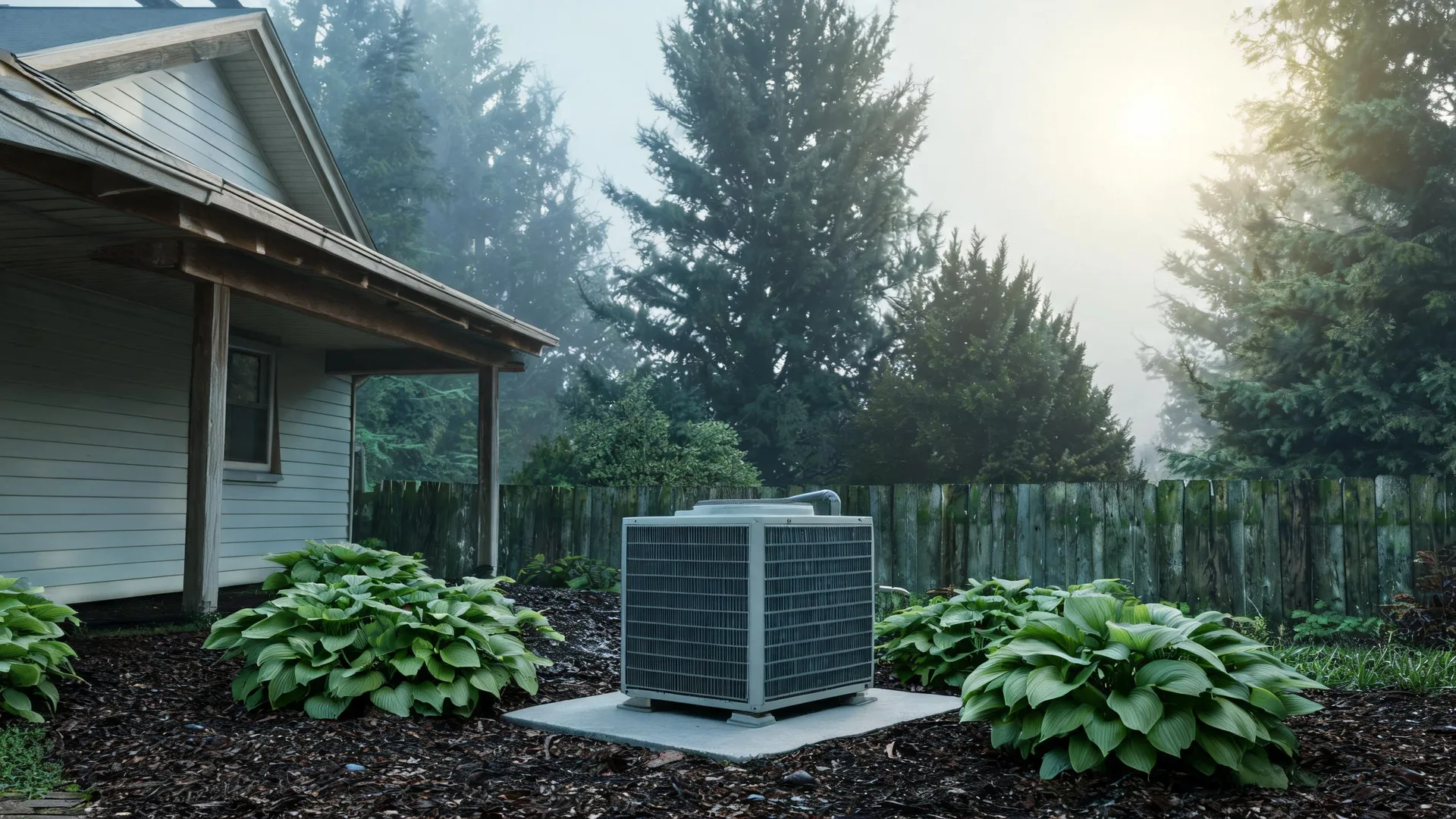
Before you call anyone, check the thermostat first. Make sure it's set to the mode you want and the temperature is actually past the room's current reading, since a thermostat set wrong looks exactly like a broken heat pump. Go outside and look at the unit itself. If the fan isn't spinning at all, check the breaker, heat pumps trip them like anything else does. While you're out there, look at the coil, the part with all the thin metal fins. If it's covered in leaves, grass clippings or a layer of dirt you can see from a few feet away, that alone can cause weak heating or cooling, and it's safe to rinse off gently with a hose. Inside, pull the air filter and hold it up to a light. If you can't see light through it, swap it, a clogged filter starves the whole system of airflow and mimics a lot of other problems. None of this fixes a bad capacitor or a stuck reversing valve, but it rules out the simple stuff first.

The part that failed matters more than how long the system has run. A capacitor or a reversing valve is a contained repair. Replacing it doesn't say anything about the compressor or the coil, so the rest of the system keeps going on its own merits. A compressor that's failing, or a coil that's corroded through rather than just dirty, is a different problem. Those aren't single-part fixes, and a system that needs one soon tends to need the other. Worth weighing too is how the unit has behaved leading up to this. One that's needed a different repair every season is wearing out broadly, even though each visit fixed what it was called for. One that's run clean and just hit a bad part is a different case, and fixing that part is usually the end of it.