Heat pump not heating in Newnan, GA

Get matched with someone who does this kind of work in Coweta County.

Get a local pro

A heat pump that runs but blows cool or room-temperature air is usually stuck in defrost or has lost its charge. Coweta County winters bring enough cold, damp days that frost builds up on the outdoor coil, and the system switches over to melt it off. That's normal for a few minutes at a time. If it never switches back, or the air stays cold long after it should have reheated, something is holding it in that cycle, or the reversing valve that sends it between heating and defrost is stuck. A low refrigerant charge causes the same complaint: the coil ices over for real, not just as part of a normal cycle, and the heat pump struggles to pull any warmth out of the winter air. Since most homes here heat with electric heat pumps, this isn't a backup system you can ignore until spring. It's the only thing standing between you and a cold house.

Why does a heat pump struggle so much with Newnan winters?

  • Winter nights average 35°F

    Nights averaging 35°F sit right in the range where frost forms easily on the outdoor coil, which is why defrost cycles run so often here.

  • Heat runs November through March

    Heat is doing the job about five months straight, November through March, so a unit that's struggling gets no real break to hide the problem.

  • Cooling runs May through September

    Those same five cold months are followed by five hot ones. A heat pump here works nearly year-round with barely any downtime between seasons.

NOAA nClimDiv 1991-2020

How a Heat Pump Heats

  • A reversing valve switches the heat pump between heating and cooling by redirecting refrigerant flow, and a stuck valve leaves it cooling when you need heat.
  • The outdoor unit has to pull heat from outside air even at 35°F, so a low refrigerant charge shows up as weak heat first, not a total breakdown.
  • Auxiliary or strip heat kicks in when the outdoor coil can't keep up, and a failed relay or breaker there leaves only cold air moving through the vents.
  • The thermostat has an O or B terminal wire dedicated to the reversing valve, and a loose or corroded connection there can trap the system in the wrong mode.
  • A dirty outdoor coil can't shed frost fast enough during defrost, so the unit runs longer cycles without ever catching back up to temperature.
  • The indoor air handler's blower can keep running even when the outdoor unit has faulted out, which is why air moves but never warms.

A heat pump doesn't make heat the way a furnace does. It moves heat from the outside air into your house, even when that air is cold, using refrigerant and a reversing valve to switch between heating and cooling modes. That valve is the part that decides which direction the system runs, and when it sticks, the unit keeps acting like it's in summer mode no matter what the thermostat says. The wire that controls it, usually marked O or B at the thermostat, is a common point of failure. A loose connection there sends no signal, and the valve stays put.

Refrigerant charge matters more in winter than people expect. The outdoor coil has to pull warmth out of 35-degree air, which is already a harder job than pulling heat out of summer air. A system low on charge can still run and still move air, just not enough to warm the house. A dirty outdoor coil makes the same problem worse, because it can't release the frost that builds up during defrost cycles, so the unit stays in defrost longer and heats less.

When the outdoor unit can't keep up on its own, auxiliary or strip heat is supposed to step in. If the relay or breaker feeding that backup heat has failed, the blower inside keeps pushing air through the vents, but none of it is warm.


A gray outdoor condenser unit on a concrete pad beside a beige vinyl-sided house, with a wall-mounted disconnect box, flexible conduit, mulch bed, shrubs and a concrete walkway in front.
A clean outdoor unit can still fail, but dirt and debris packed against the coil make it work harder to pull heat from cold air.
An outdoor air conditioner condenser unit on a gray composite pad beside a house with horizontal lap siding, with refrigerant lines and a conduit running to a wall-mounted disconnect box, and a shrub at left.
Caked-on grime and buildup around the coil block airflow, and a unit that can't breathe can't keep up when it's 35°F outside.

A heat pump that won't heat doesn't stay a small problem. Overnight lows near 35°F mean a house that loses real heat can drop into the 50s by morning, and that's hard on anyone living there, especially if there are young kids or older adults in the home. If the system leans on its backup electric strips to make up the difference, the bill shows it fast, since those strips use far more power than the pump itself. A coil that keeps icing over because defrost isn't working right puts stress on the compressor every time the system tries to restart, which can turn one repair into a bigger one. Pipes running along outside walls are also more exposed when the house isn't holding steady heat through a freeze. And a system that cycles on and off without ever warming the rooms is usually a sign the fault is getting worse, not working itself out. None of that is a reason to panic, but it is a reason not to wait out a cold snap on a pump that's only moving room-temperature air.

What a Cold House Costs You

  • A heat pump stuck on cool air during a cold snap can leave a Newnan home sitting in the 50s by morning.
  • Auxiliary heat strips can carry the load when the pump fails, but they push electric bills noticeably higher if left running for days.
  • A frozen outdoor coil that never defrosts properly can ice over completely, which strains the compressor every time it tries to start.
  • Pipes near exterior walls are more likely to see trouble if a home goes without real heat during a hard freeze.
  • A system cycling on and off without warming the house usually means the problem is getting worse, not fixing itself overnight.
  • Waiting out a cold week on a pump that only blows room-temperature air can mean sleeping in coats and blankets instead of a warm house.
A woman in a gray knit sweater sits by a window looking out at falling snow, with a dimly lit living room containing a sectional sofa, pillows, a lamp and houseplants behind her.
A woman in a cream knit turtleneck sweater stands by a window looking out at snow, with a lit fireplace, sofa and lamp in the room behind her.
A woman in a gray turtleneck sweater sits beside a large window looking out at snow-covered evergreen trees, in a dimly lit living room with a lit fireplace, lamps, couch and houseplant.
A woman in a cream cowl-neck sweater sits by a window with snow outside, in a dimly lit living room with a sofa, lit lamp, mirror, candles and a fireplace.

Get matched with a heat pump pro in Coweta County

A heat pump that won't heat doesn't wait for a convenient week, and in Newnan a bad night can drop a house into the 50s before morning. By the time you've noticed the air coming out cold, you're already choosing between calling a handful of companies, explaining the same problem each time, waiting on callbacks, and sitting with the cold while you sort through quotes. That's the part worth handing off. Submit the request here and it goes to one contractor who takes on jobs like this in Coweta County, so you're not spending the evening on the phone instead of figuring out why the house isn't warming up. Whether it's a stuck reversing valve, a low charge, or a coil too frozen to pull heat from outside air, the diagnosis is a visit away. What's in front of you right now is just getting that visit on the calendar without the runaround.

What a working cycle looks like

A heat pump kicks into defrost a few times during a cold night, running backward for several minutes while a fan or sensor tracks coil temperature. Air at the vents turns cool during that stretch, then warms back up once the coil clears and the system switches back to heating. The whole thing passes in well under fifteen minutes. If the air stays cool long after the outdoor unit should have switched back, or the unit never leaves defrost at all, that's the difference between a normal cycle and a stuck one.

What a stuck cycle costs you

A reversing valve that won't shift back leaves the system pulling heat out of the house instead of putting it in, even with the thermostat set to warm. Heat strips may kick on to cover the gap, and they'll do it around the clock if nothing resets the valve. Coweta County nights near freezing give that failure nowhere to hide. A house that should hold steady through the night instead loses ground hour by hour, and the thermostat setting stops matching what you feel at the vents.

A weathered outdoor condenser unit on a concrete pad beside a house with white horizontal vinyl siding, with refrigerant lines and conduit running to a wall-mounted electrical box.
Before you get your heat pump repair
A gray outdoor condenser unit on a concrete pad beside a house with horizontal lap siding, a conduit and disconnect box on the wall, a shrub with white flowers at right and evergreen foliage at left.
After you get your heat pump repair

Before you get your heat pump repair

Right now the choice is between living with cold air and finding someone to look at it. You're checking the thermostat settings again, resetting the breaker, waiting to see if the next cycle comes out warm. If it doesn't, you're searching for contractors, calling a few, explaining what the system is doing to each one, then waiting to see who can actually come out and what they'll charge. Some of that explaining happens twice, because the first person who answers isn't the one who shows up. Meanwhile the house is holding at whatever temperature it was when the pump stopped keeping up, and on a cold Newnan night that number keeps dropping. None of this fixes the reversing valve or the low charge or whatever is actually wrong. It just takes up the hours before someone qualified gets a look at the unit.

After you get your heat pump repair

Once you're matched with a contractor, the searching and the repeat explaining are done. You describe the problem once, to someone who already knows you're in Coweta County and what that means for the system. They reach out, get a look at the unit, and tell you what they find. You're not sorting through quotes from companies you've never worked with or trying to figure out who actually answers the phone on a cold weekend. The outcome still depends on what's wrong, whether it's a stuck valve, a frozen coil, a low charge, and that takes whatever time it takes. But the part that was eating your evening, the calling around and re-explaining, is off your plate.

Power here costs 14.12 cents per kilowatt-hour

At 14.12 cents per kilowatt-hour, heat isn't cheap to begin with, and auxiliary strips running in place of the pump will show up fast on your bill. A repair that gets the pump itself working again is what keeps that number from climbing through a cold week.

EIA-861 2025

A beige outdoor air conditioning condenser unit on a concrete pad beside a house with horizontal vinyl siding, with refrigerant lines and a disconnect box on the wall, surrounded by dark mulch and a green shrub at left.

The outdoor unit as it should look

The coil and grille stay clear, with open space around the cabinet so air moves through it freely. A unit set up like this can pull heat from cold air without straining, even on a 35°F night.

An outdoor air conditioning condenser unit on a concrete pad beside a house with light horizontal siding and a concrete block foundation, with bare soil and small green plants around it.

The outdoor unit losing ground

Dust and grime have packed into the fins and wire grille, and the coil underneath can't breathe. A unit fighting through buildup like this will struggle to keep up once a Newnan cold snap sets in.

Why does your house feel colder than it should?

You've probably noticed the air at the vents isn't warm, just moving. Maybe the thermostat says 70 but the rooms feel more like 64. You might hear the outdoor unit running longer than usual, or notice it cycling on and off more than it used to. Some homes pick up a faint burning smell if the heat strips are carrying the load instead of the pump. Left alone through a string of cold nights, the house settles into the 50s by morning and stays there, and the heat strips running in its place push the electric bill up fast. None of that fixes what's actually wrong with the unit outside.

A bearded man in a red and blue plaid shirt stands indoors looking out a frosted window at snow-covered foliage, with a steaming brown mug on the sill and wooden shelves behind him.
A man in a dark blue t-shirt sits on a grey couch laughing while looking down toward an open laptop in the foreground, with a blurred kitchen and potted plant behind him.
A woman stands in the open doorway of a white stucco house holding the dark door, facing a man in a black cap and shirt seen from behind in the blurred foreground, with a potted flowering plant beside the entry.

Cold air from the vents means something specific is wrong

A heat pump that won't heat in Newnan almost always comes down to one of a few things: a reversing valve stuck in the wrong position, a refrigerant charge too low to pull heat from cold air, or an outdoor coil so dirty or iced over it can't do its job. Each one has a different fix, and guessing which one you have from inside the house isn't something you can do by resetting the thermostat or flipping the breaker again.

What you need next is someone who can look at the outdoor unit, check the charge, and tell you which of those it is. Getting matched with a contractor who handles this in Coweta County means you stop calling around and explaining the same problem to every company in the phone book. One call, one visit, and you know what's actually wrong before the next cold night gets here.

Living room interior with a light sofa holding a dark green cushion and a brown knit throw, a tall leafy plant by a black-framed window, a wooden coffee table with a round tray, and wooden shelves holding vases and books.
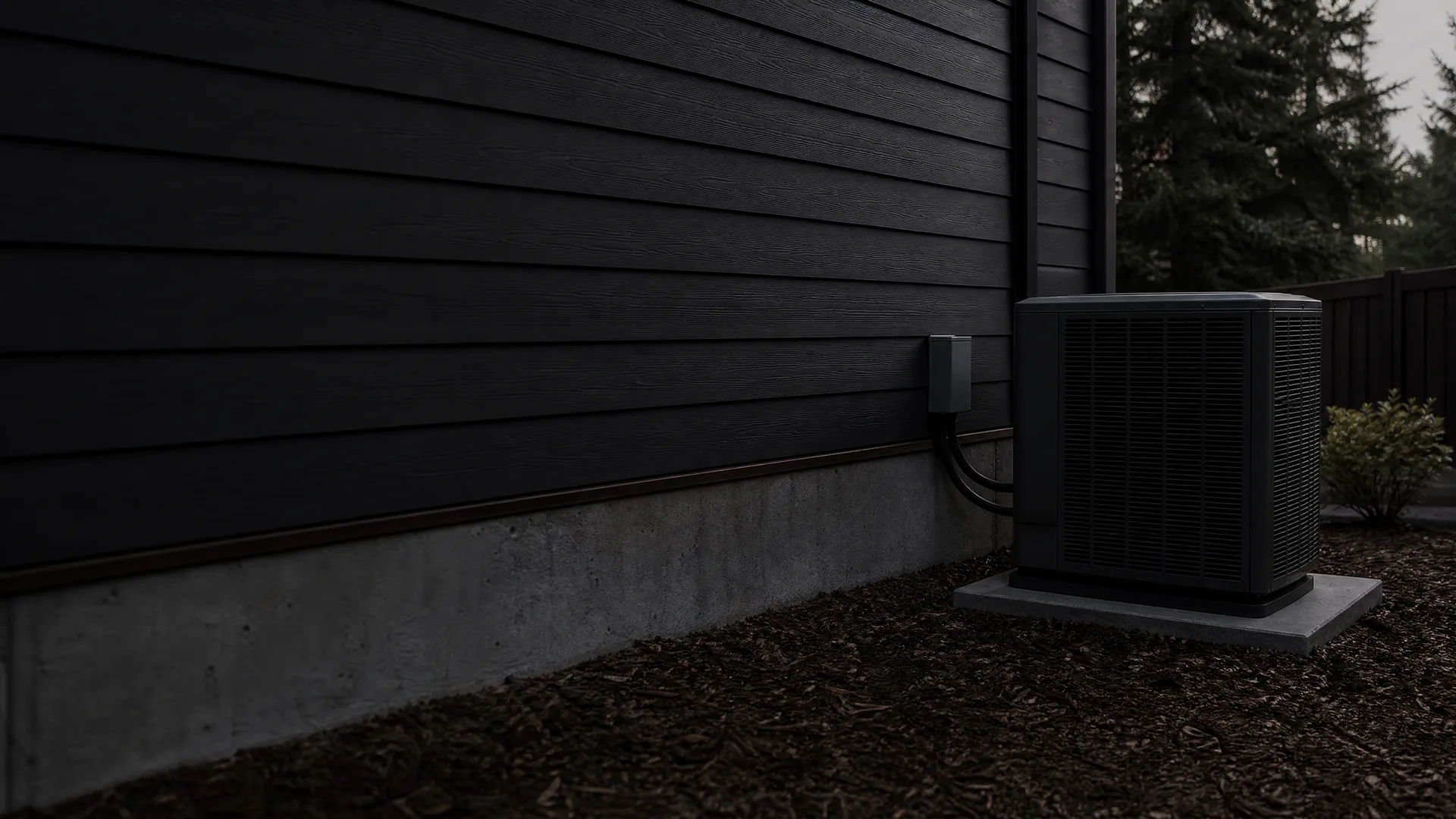
An outdoor heat pump condenser unit on a concrete pad beside a dark horizontal-siding house, connected by conduit to a wall-mounted disconnect box, with mulch ground cover, a fence, and evergreen trees behind.

A local pro for your heat pump repair

Answer a few questions instead of calling shop after shop.

RepairHeat PumpCoweta County, GA
Step 1 of 2

What ZIP code is the job in?