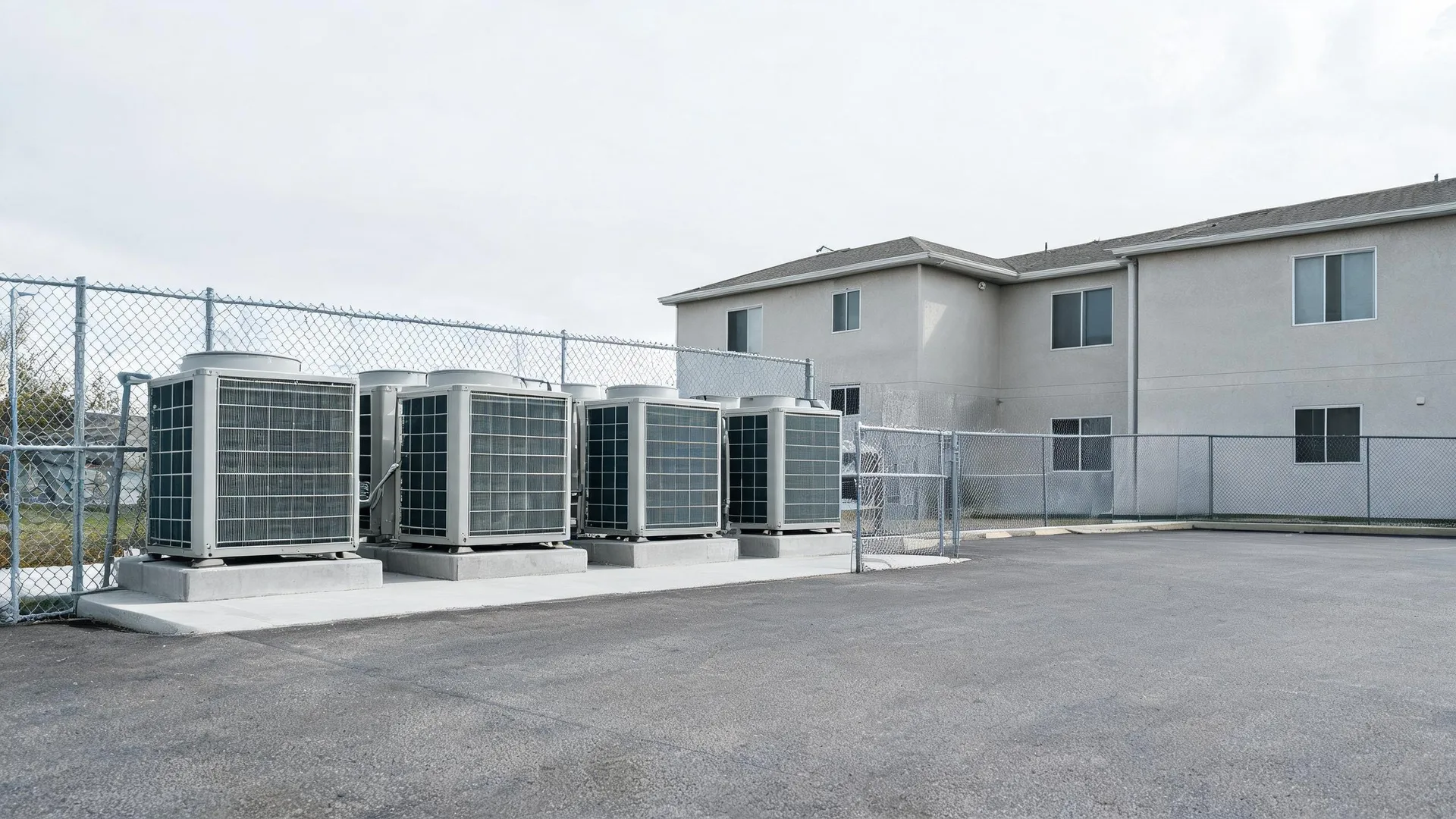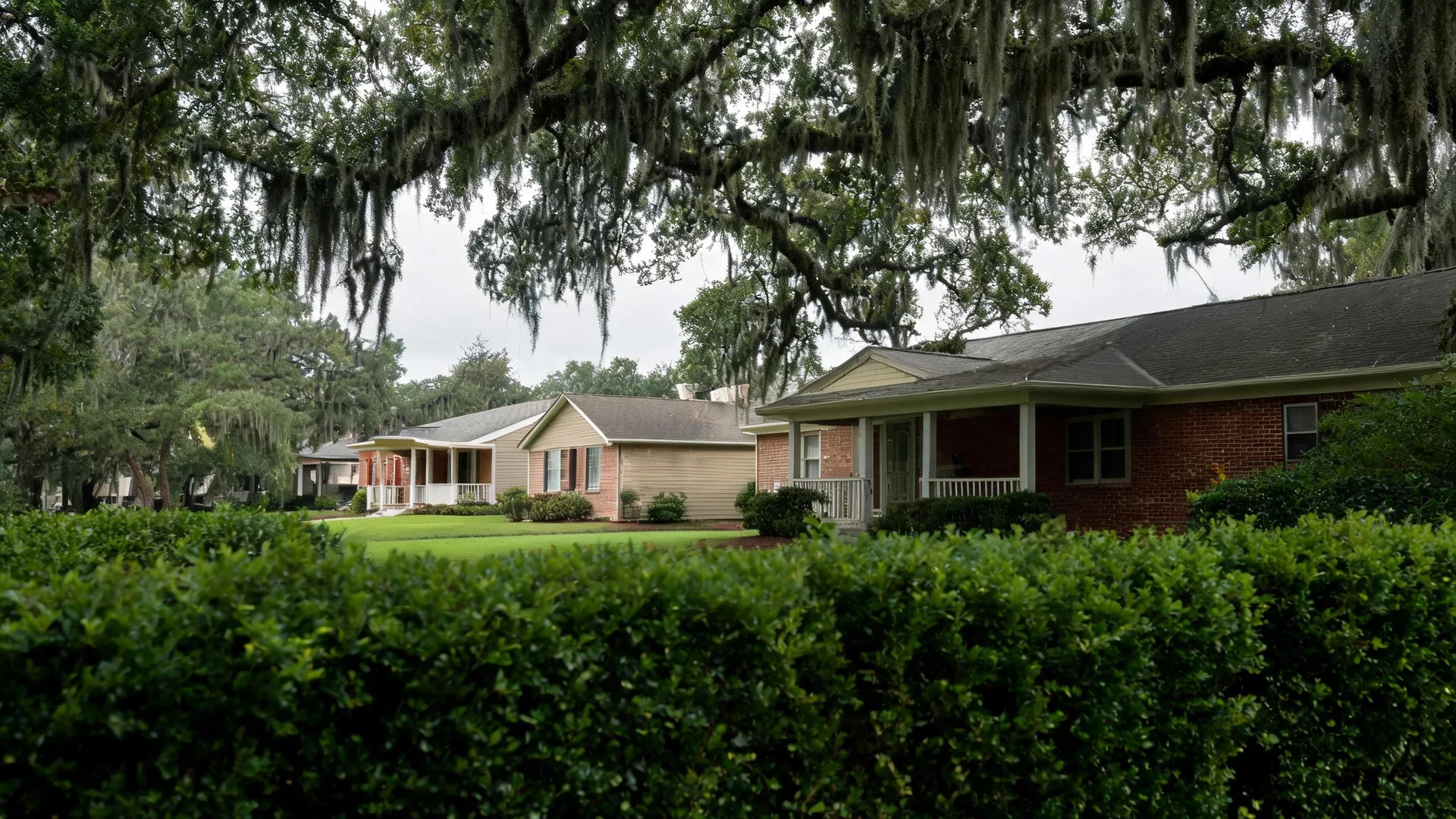
Single-story brick and siding houses with covered porches behind a trimmed hedge and lawn, framed by large oak branches draped with hanging moss under an overcast sky.

Heat Pump Repair in Brunswick, GA

Tell us about the job

Takes about a minute. No obligation.

RepairHeat PumpGlynn County, GA
Step 1 of 2

What ZIP code is the job in?

Check the thermostat and the breaker first

Set the thermostat a few degrees past the room temperature, in heat or cool, and listen for the outdoor unit to start. If nothing happens anywhere in the house, check the breaker panel for a tripped switch before assuming the heat pump has failed. A breaker that trips again right after resetting points to an electrical problem a contractor needs to find.


A dirty filter can look like a bigger problem

A clogged filter starves the system of airflow, and a heat pump that can't move air will ice up outside or blow air that never feels warm. Pull the filter and hold it up to light. If you can't see through it, swap it before calling anyone. A fresh filter rules out one of the most common causes on its own.

5 months
November through March, your system heats
7 months
April through October, it cools
43°F
the average winter night it heats against
91°F
the average summer afternoon it cools against
Isometric grey-toned illustration of a cutaway house showing interior rooms, ceiling ductwork and an air handler, connected by lines to an outdoor condenser unit beside the building.
Your system heats November through March and cools April through October.

NOAA nClimDiv, 1991–2020 normals

Heat pumps in Glynn County switch over to heat in November.

A unit that was already struggling in October often fails in the first cold week instead of making it through.

Half the homes in Glynn County were built in 1988 or later

Half the homes here were built by 1988
Power costs 14.08 cents a kWh statewide
Climate zone 2A

If your heat pump came in with the house, parts have had less time to wear. That changes what a repair call is worth. A capacitor, a contactor, a defrost board, these fail from age and from cycling on and off, not from the house being old, so a newer system is usually worth fixing rather than replacing outright. Tell the contractor the year the system was installed if you know it, or whether it came with the house. That one detail changes what they check first and whether they even raise replacement as an option.

Get it looked at early

Problems tend to show up in the first weeks of the season, when the load hits a part that was already weak.

Find a contractor
A gray air-source heat pump mounted on a concrete pad next to a house with gray vinyl siding, surrounded by gravel and flanked by green shrubs and white hydrangea flowers.

It fails where it cycles, not where it sits

A heat pump works year round, so the parts that fail are the ones that move. The reversing valve shifts the system between heat and cool, and a valve that's stuck or leaking lets refrigerant go the wrong way. The defrost board cycles the outdoor unit through melt cycles all winter, and when it fails the coil ices over until the system can't pull in air. The contactor and capacitor switch the compressor and fans on with every single cycle, and that switching wears the contacts down and weakens the capacitor until the motor won't start. None of this is about the unit being old. It's about how many times it's switched on, switched modes, and defrosted since it was installed.

A weak start wears out the compressor

When the contacts on a contactor burn or a capacitor weakens, the compressor struggles to start instead of starting clean. Every hard start heats the windings more than a normal one. Keep running the system through that and the compressor can fail completely, instead of the smaller part that caused it.

Ice doesn't stay where it starts

A reversing valve or defrost board problem usually begins with a little frost on the outdoor coil. Left alone, that frost builds into ice that blocks airflow across the coil entirely. Once the coil can't pull in air, the system can't heat or defrost itself, and the compressor can end up flooding with liquid refrigerant it was never built to handle.

Most calls start with one of a few complaints. The system runs but the air never feels warm, the outdoor unit is caked in ice, or it short cycles, kicking on and off instead of running a full cycle. Warm air that isn't warm enough usually traces back to the reversing valve not fully switching into heat mode. Ice that doesn't melt off between cycles points to the defrost board. Short cycling is often the contactor or capacitor giving out, and it's worth a call before the compressor takes the damage instead. A system that's gone quiet, no hum from outside, no air moving inside, has usually lost power to the unit rather than failed outright.

A repair is worth doing when the part that failed is small and the rest of the system started clean before it quit. A contactor, a capacitor, a defrost board, these can be replaced on their own without touching anything else. Replacement gets worth considering when the compressor itself is the thing failing, since that's the one part that isn't cheap or simple to swap out, and a compressor that failed because of a smaller part that went unfixed is a different conversation than one that just wore out. Age matters less than what's actually broken. A system can run for years on original parts and then need one replaced, and that doesn't mean the rest of it is going.