






An outdoor heat pump unit mounted on a concrete pad in front of a two-story suburban house.

Heat Pump Repair in Calhoun, GA

Tell us about the job

Takes about a minute. No obligation.

RepairHeat PumpGordon County, GA
Step 1 of 2

What ZIP code is the job in?

Half the homes in Gordon County were built in 1987 or later. If yours is one of them, there's a good chance your heat pump is still within its working life, maybe even the original system the house came with. That matters when something breaks. A repair on a system that still has years ahead of it is worth doing. Replacing it outright usually isn't, not when the house itself tells you the equipment is likely newer than the trouble it's having.

7 months
October through April, your system heats
5 months
May through September, it cools
33°F
the average winter night it heats against
89°F
the average summer afternoon it cools against
Isometric line illustration of a cutaway house showing interior rooms with furniture, ceiling ductwork, and an outdoor condenser unit connected by lines along the exterior wall.
Your system heats October through April and cools May through September.

NOAA nClimDiv, 1991–2020 normals

A heat pump fails most often at the reversing valve, the contactor or the capacitor, not at the whole unit.

If the trouble is one part, not the system itself, fixing it is usually the right call.

Zone 3A, no hard freezes to fight: this heat pump isn't working as hard as you'd think

Power here costs 14.33 cents per kilowatt-hour
Climate zone 3A
Cooling runs May through September
The first cold snap finds the weak partHeat here starts in October. Whatever was already struggling tends to give out once the system runs every day.

A technician starts outside at the outdoor unit, checking the compressor and the reversing valve before touching anything inside. They'll check refrigerant pressures with gauges, since too little or too much points straight at a leak or a bad charge from the start. Inside, they check the air handler, looking at the coil for ice or dirt and testing the capacitor and contactor that tell the compressor when to run. A heat pump that blows cold air when it should blow warm often means the reversing valve is stuck, not that the whole system is failing. They'll also run the thermostat through its paces, calling for heat and then cooling, to see if the signal is reaching the outdoor unit at all. By the end, the diagnosis usually points to one part, and that part decides what happens next.

Worth fixing, not replacing

Get the part fixed and keep the system running. A heat pump that still has years ahead of it is worth repairing, and a technician on site can tell you within one visit whether this is a quick fix or something bigger.

Find a contractor
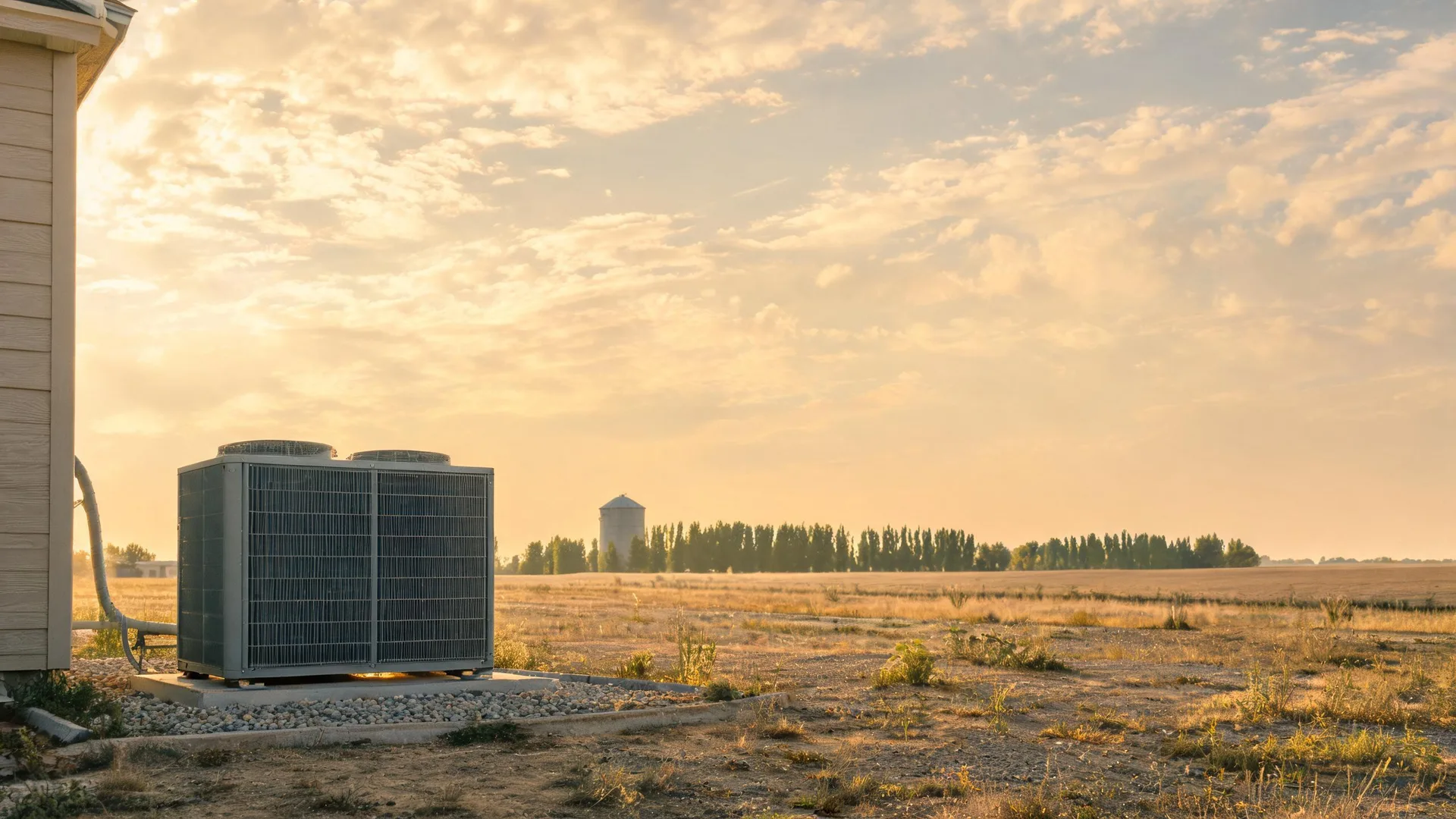
A gray heat pump condenser unit mounted on a concrete pad against the gray lap-siding exterior wall of a house.

An easier run than most climates ask for

Zone 3A means a long run of cooling months and a short, mild winter, no stretch of hard freezes to push the system. Day into night, that's what the clip beside this is showing. The compressor isn't working against subzero air here, and that keeps the long-term strain lower than it would be further north. None of that rules out a part giving out once the system is running daily, which is usually when a weak one shows itself. It just means the unit behind it has had an easier run overall, so a repair is more likely to be worth it than a replacement.

A small fault asks the rest of the system to cover for it

When the reversing valve sticks or a capacitor weakens, the compressor still tries to do its job. It draws harder to make up the difference. Run it that way for weeks and the compressor takes the wear that the failing part should have absorbed. What started as a cheap fix can end as a compressor replacement.
Ice on the coil doesn't melt itself

A heat pump that's low on refrigerant or short on airflow will frost the outdoor coil. Left running, that frost thickens into solid ice, and ice blocks the airflow the unit needs to defrost itself. The system ends up fighting its own coil instead of heating the house, and the compressor can flood with liquid refrigerant it was never built to handle.

Most heat pump trouble announces itself before the system quits outright. Short cycling is one of the first signs, where the unit kicks on, runs a few minutes, and shuts off again instead of finishing a normal cycle. Warm air coming out of the vents on a cold morning, or cool air that never quite reaches the room, usually means the system is running but not doing its job right. A hissing or bubbling sound near the outdoor unit can mean refrigerant escaping from a line, and that's not a problem that fixes itself. Ice building up on the outdoor coil when the unit should be heating is another sign something inside isn't cycling the way it should. If the system runs constantly and the house still doesn't feel right, or the outdoor fan isn't turning at all, those are reasons to get it looked at rather than wait and see.

Age is only half the question. A heat pump also tells you where it stands by how it fails. One part giving out while the rest of the system runs fine is a sign of ordinary wear, the kind every unit sees over the years. It's a different story when a repair comes back a second time for the same symptom, or when one fix leads straight to another nearby part failing too. That pattern usually means something upstream, like a chronic refrigerant leak or a compressor losing strength, is driving the smaller failures rather than the other way around. A technician can tell the difference by what they find when they open the unit up, not by guessing from the symptom alone. Ask what failed and why, not just what it will take to fix it this time.