






Two illuminated white Southern-style houses with wraparound porches and staircases, framed by a Spanish moss-draped tree on a quiet street at night.

Heat Pump Repair in Covington, GA

Tell us about the job

Takes about a minute. No obligation.

RepairHeat PumpNewton County, GA
Step 1 of 2

What ZIP code is the job in?

Summers here run muggy, with the dew point averaging 68°F in June, July and August. That's enough to make the air feel heavy, but it's nothing close to the edge of what a heat pump is built to handle. Winters are cold enough that the system has to work in both directions, pulling heat in and pushing it out depending on the month. None of that is unusual wear for this machine. If yours is short cycling, blowing air that isn't warm enough, or running without keeping up, the cause is likely something a tech sees all the time: a low refrigerant charge, a failing capacitor, a reversing valve stuck in one position. The job is finding which one it actually is, not guessing.

5 months
November through March, your system heats
5 months
May through September, it cools
35°F
the average winter night it heats against
89°F
the average summer afternoon it cools against
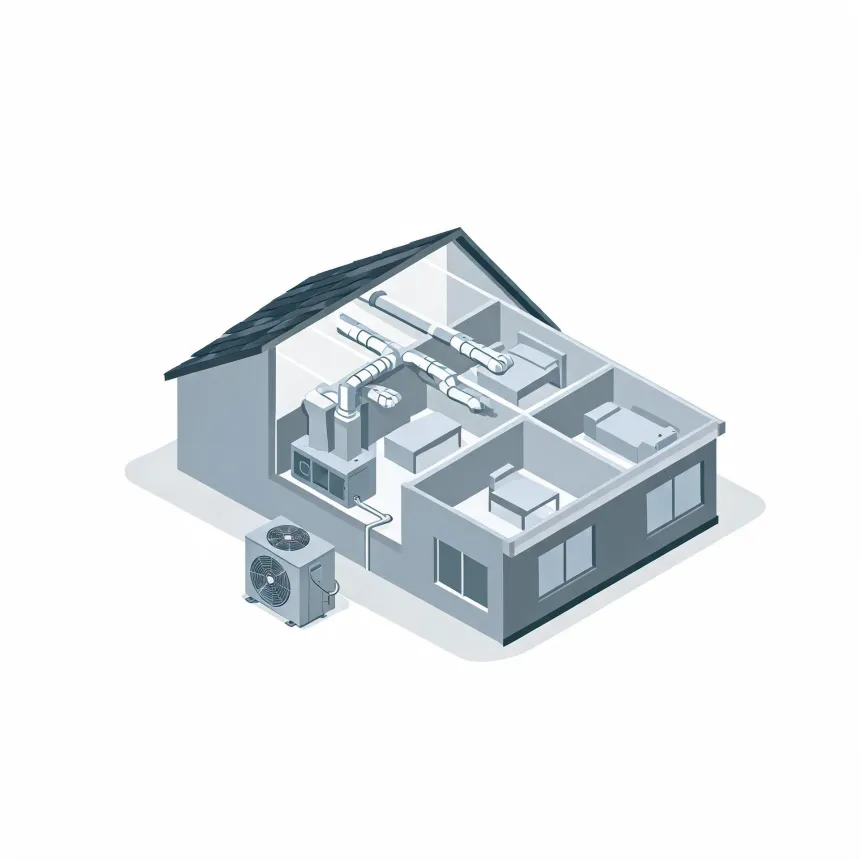
Isometric grayscale illustration of a cutaway house showing interior rooms, ceiling ductwork connected to an indoor air handler, and an outdoor condenser unit beside the exterior wall.
Your system heats November through March and cools May through September.

NOAA nClimDiv, 1991–2020 normals

November is when the heat comes on here, after sitting idle since March.

A weak part that made it through summer often fails the first cold week it has to push heat instead of pull it.

Half the homes here were built in 1999 or later, and a system that age still has plenty of life left

Half the homes here were built by 1999
Power here costs 14.29 cents per kilowatt-hour
Climate zone 3A
Nothing Here Pushes This Machine Past NormalNewton County sees its share of storms and outages, but none of it is what's causing your heat pump trouble.

If your heat pump came with the house, get the model number off the outdoor unit before the tech shows up. It tells them what they're working with and whether parts are still easy to get. A system from a newer build is usually worth repairing outright, no second-guessing. The tech's job is to find what actually failed, whether that's a part worn out from normal use or something that was never right from the install. Either way, fixing it is the right call, not replacing it.

Get the usual fix

Nothing about this area is especially hard on it. It's most likely the usual problem with the usual fix.

Find a contractor
A man in a cap, dark long-sleeve shirt and tan work pants walks up wooden porch steps toward an orange front door, carrying a canvas tool tote; an orange planter with ornamental grass stands to the right.
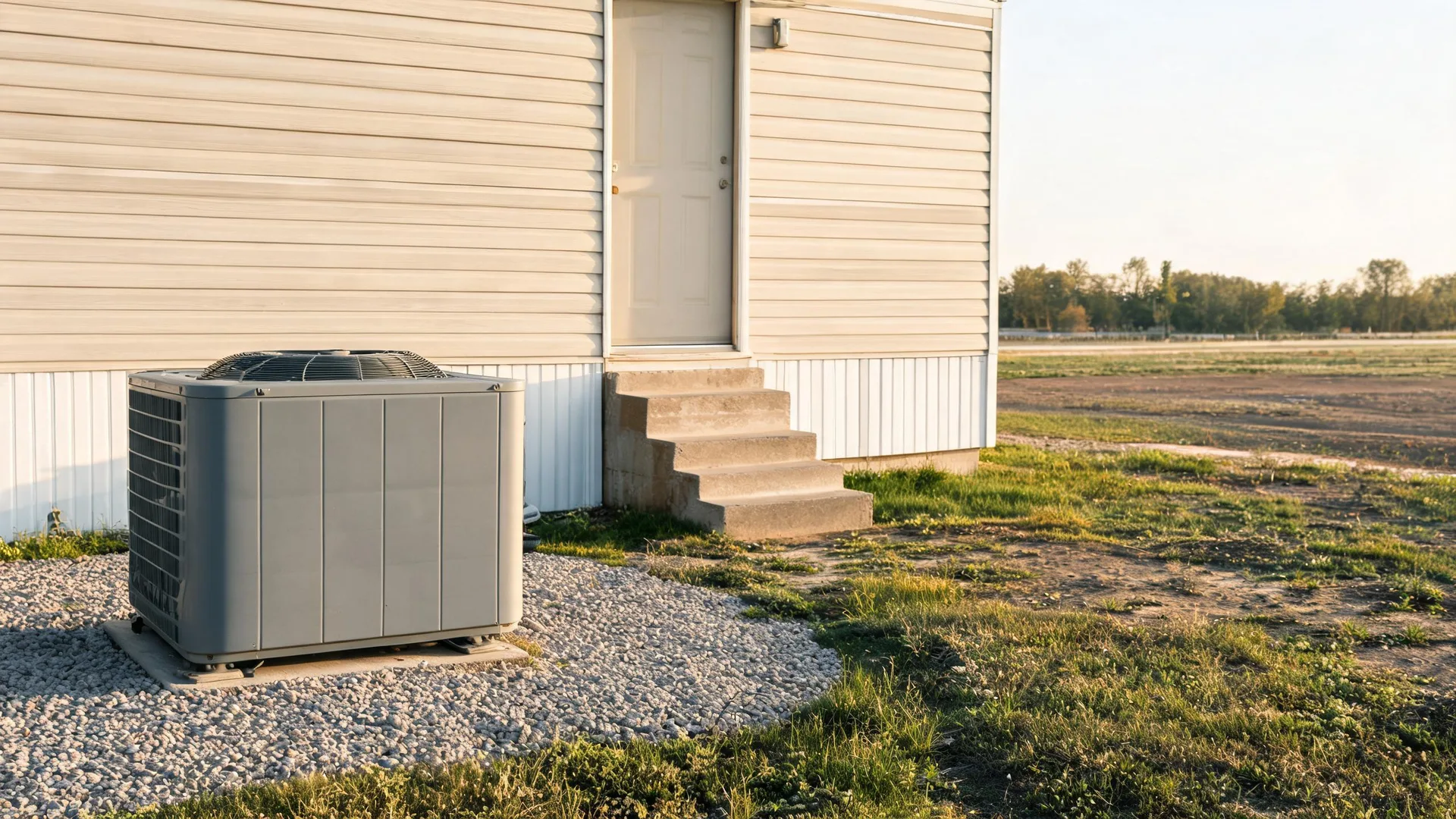
A gray heat pump condenser unit mounted on a concrete pad against the gray lap-siding exterior wall of a house.

Built to Run All Year, and It Shows Wear That Way

A heat pump runs every day of the year, not just in the hardest months of summer or winter. It switches direction to heat and cool, so the reversing valve, the compressor and the outdoor fan all see steady use across every season. That kind of running is exactly what the equipment is built for. Wear still happens. Contacts in the contactor pit and burn. A capacitor loses its charge over years of starting and stopping the compressor. Refrigerant seeps out slowly through fittings that were never quite tight enough. None of that means something went wrong. It means a part reached the end of its working life, and the fix is to replace that part, not the system.

Most Failures Are Electrical, Not Mechanical

Open up a heat pump that's not working and the problem is usually small: a contactor with pitted contacts, a capacitor that's lost its charge, a control board relay that's failed. These parts take a beating every time the compressor or fan starts and stops, and that happens constantly. None of it means the unit is on its way out. It means one part reached the end of its life while everything around it is still fine.
Refrigerant Problems Point to a Leak, Not a Top-Off

A heat pump that's low on refrigerant didn't use it up. Refrigerant doesn't get consumed, it only leaves through a leak, usually at a fitting, a coil, or a joint that's worked loose over time. Adding refrigerant without finding that leak just means doing it again later. A tech who checks the charge and finds it low should be looking for where it's getting out, not just refilling it and moving on.

A few things are worth checking before a tech comes out. Look at the thermostat first. Make sure it's set to heat or cool as you intend, and that the batteries aren't dead if it uses them. Check the outdoor unit for anything blocking it, leaves, a fallen branch, ice built up on the coil. Go to the breaker panel and see if the breaker for the heat pump or the air handler has tripped. Check the air filter too. A filter clogged with dust chokes off airflow and can make the whole system struggle even when nothing else is wrong. None of this fixes a bad capacitor or a refrigerant leak, but it rules out the simple stuff fast, and it's the first thing a tech will ask about anyway.

A diagnostic visit starts with the complaint, not the equipment. A tech wants to know what the system is actually doing: running constantly, short cycling, blowing air that feels wrong, tripping a breaker. That narrows things down before any panel comes off. From there it's gauges and a meter. Checking the refrigerant charge, testing the capacitor, watching how the contactor engages, checking that the reversing valve actually shifts when it's told to. Each test rules something in or out. A tech who finds the failed part stops there and explains what it was and why it failed, rather than replacing things that were already working fine.