





White two-story houses with wraparound porches and Spanish moss-draped oak trees photographed along a residential street at night.

Heat Pump Repair in Dallas, GA

Tell us about the job

Takes about a minute. No obligation.

RepairHeat PumpPaulding County, GA
Step 1 of 2

What ZIP code is the job in?

Paulding County saw 143 severe weather events between 2015 and 2024, and most of it was wind. Wind drives debris into the outdoor unit's coil and fan, and hail dents the housing and bends the fins even when the heat pump keeps running. A unit that still starts up and blows air can be running on a damaged coil or a fan pulling against something bent out of place. If a storm came through with wind or hail, that's reason enough to have the outdoor unit looked at, whether or not you've noticed a problem yet.

7 months
October through April, your system heats
5 months
May through September, it cools
34°F
the average winter night it heats against
88°F
the average summer afternoon it cools against
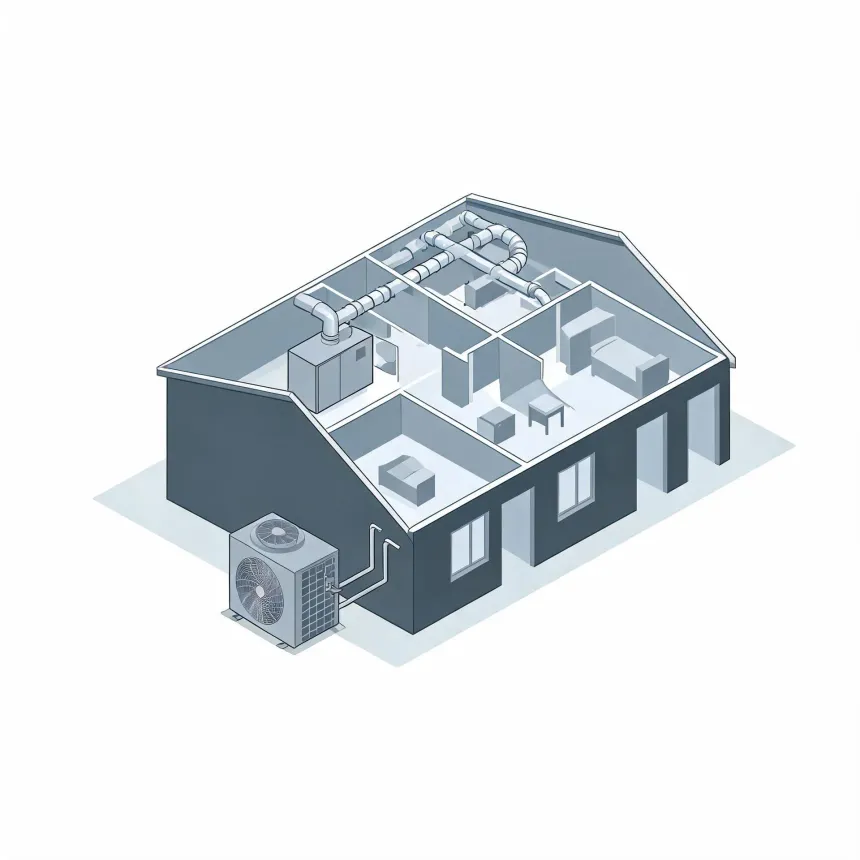
Isometric cutaway illustration of a single-story house showing interior rooms, attic ductwork and an air handler, with an outdoor condenser unit connected by lines along the exterior wall.
Your system heats October through April and cools May through September.

NOAA nClimDiv, 1991–2020 normals

Heat pumps in Dallas run heat from October through April.

A weak spot from storm damage usually gives out in the first cold snap, not before.

Half the homes here were built in 2002 or later

Half the homes here were built by 2002
Climate zone 3A
Power costs 14.08 cents a kWh statewide

A heat pump this age is worth repairing

If your heat pump came with the house, it's likely still within its working life. That's reason enough to have a storm-damaged coil or a bent fan fixed rather than replaced.

Find a contractor
A man in a cap, gray long-sleeve shirt and brown pants carries a worn canvas tote bag up porch steps toward an orange front door beside a potted olive tree.
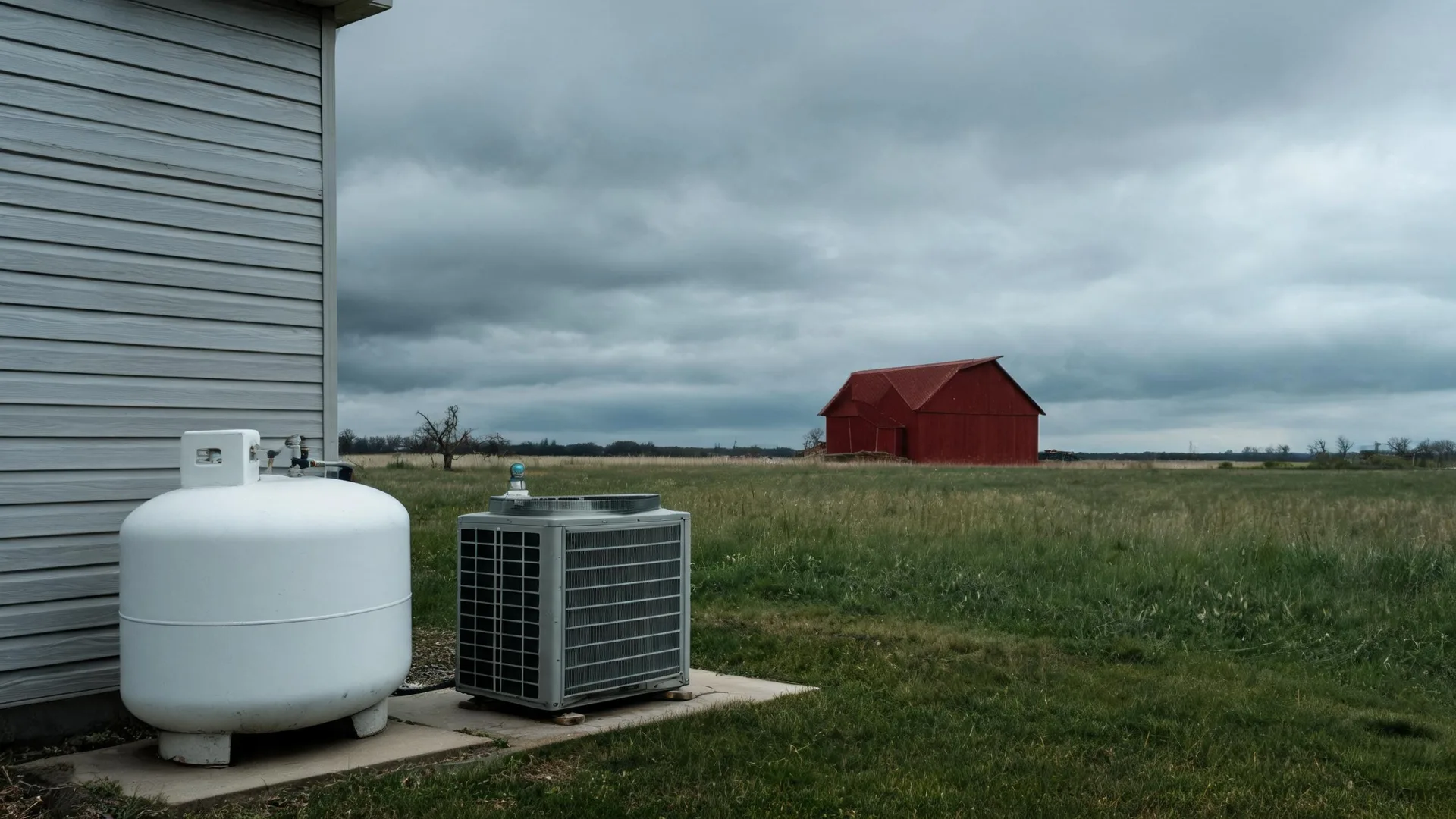
A residential heat pump outdoor unit mounted on a concrete pad next to a house with gray vinyl siding.

What wears out first

A heat pump works the reversing valve every time it switches between heat and defrost, and that valve is usually the first thing to wear out. Expect it to stick or fail before the compressor does. The outdoor fan motor runs anytime the unit is heating or cooling, so its bearings wear all year instead of just in summer. Defrost cycles are the other weak point. The board that controls defrost timing, and the sensor that tells it when ice has built up on the coil, both run every single day of the cold months. If either one fails, the outdoor coil stays iced over and the system loses its heat. A capacitor that's starting to go usually shows up first as a slow start or a hum before the fan kicks in.

What you can check yourself

Look at the outdoor unit. If the fan isn't spinning, or it's spinning slow and straining, that's worth noting before anyone comes out. Check the air filter and swap it if it's gray or clogged, a blocked filter can starve the system enough to look like a bigger problem than it is. Walk around the outdoor unit and clear any leaves, pine straw or debris packed against the coil or sides. Inside, check that every vent is open and nothing is blocking it. If the thermostat screen is blank, that's electrical, not the heat pump itself.
What to leave alone

Don't pull the outdoor unit's panels off or reach into the fan housing. Don't try to straighten bent fins yourself, pressing on them usually closes off more airflow than it opens up. If you smell burning or hear grinding metal, shut the system off at the thermostat or breaker and wait for a tech, running it longer can turn a repair into a replacement. A heat pump that's frosted over or iced on the outside is doing something electrical or mechanical wrong, not something a hose or a space heater fixes.

A heat pump that's struggling still has to move heat, so it leans harder on whatever is already weak. A reversing valve that's starting to stick gets forced through that same motion every cycle, and it goes from sticking to stuck. A fan motor with worn bearings keeps spinning anyway, and the wobble that follows can let the blade touch the housing. Ice on the coil makes its own problem worse. Once it builds, the system loses heat transfer and runs longer to make up for it, and that pulls more cold air across the coil and grows the ice further. None of that reverses itself by leaving the thermostat alone. The longer a weak part is asked to keep doing its job, the more of the system it tends to take down with it.

A single failed part is almost always worth fixing. A bad capacitor, a stuck reversing valve, a failed defrost sensor, each one is its own problem, and replacing that one part brings back a working system. What changes the picture is when a failing part gets left alone and starts taking other parts down with it. A fan motor that seized and let the blade hit the housing is a bigger repair than a fan motor that's just gotten loud. A coil that's iced over again and again can corrode faster than one that never had the chance. The question worth asking isn't just what stopped working, it's what else that failure was allowed to damage on its way down. A tech can look at the actual damage and tell you whether this is still a one-part fix or something that's spread.