






Night view of illuminated white Southern-style houses with wraparound porches beneath Spanish moss-draped oak trees.

Heat Pump Repair in Kingsland, GA

Tell us about the job

Takes about a minute. No obligation.

RepairHeat PumpCamden County, GA
Step 1 of 2

What ZIP code is the job in?

A technician starts outside at the outdoor unit, checking refrigerant pressures and looking at the compressor and the reversing valve. That valve is what switches the system between heating and cooling, so if your heat pump blows cold air when it should blow warm, that's one of the first things checked. Inside, they'll look at the air handler, the blower motor, and the thermostat settings and wiring. They're also checking the defrost cycle, since a heat pump that ices up outside and can't clear it will struggle to heat the house at all. Most of this gets diagnosed by testing electrical components with a meter and reading pressures on the refrigerant lines, not by guesswork. Once they find the failed part, whether it's a capacitor, a contactor, or the reversing valve itself, they can tell you what it takes to fix it.

5 months
November through March, your system heats
7 months
April through October, it cools
43°F
the average winter night it heats against
91°F
the average summer afternoon it cools against
Isometric line illustration of a cutaway house showing interior rooms with furniture, ceiling ductwork under a dark shingled roof, and an outdoor condenser unit connected by lines on the right.
Your system heats November through March and cools April through October.

NOAA nClimDiv, 1991–2020 normals

Check the outdoor unit for ice covering the coil or the fan.

A frozen coil blocks airflow and the system can't move heat either direction until it clears.

Half the homes in Camden County were built in 1995 or later, so a lot of heat pumps here still have years of work left in them

Half the homes here were built by 1995
Power costs 14.08 cents a kWh statewide
Climate zone 2A

November is when heat pumps here switch over to heating, which makes October worth paying attention to. A system that ran all seven months of cooling on a weak part usually doesn't fail during the easy stretch. It fails the first time it has to reverse and push warm air against a real chill. The same thing happens in reverse come spring, since cooling starts in April and March is when whatever heating left behind tends to surface. Catching it before that first cold snap or first hot stretch is the difference between a quick fix and a system down when you need it most.

A newer system is worth repairing

If your heat pump came with a newer house, repair is usually the right move. Have it looked at and fixed rather than planning around a replacement.

Find a contractor
A man in a dark shirt and brown pants, seen from behind, carries a waxed canvas tote bag up wooden porch steps toward an orange front door, with a potted shrub beside the entry.
A gray heat pump outdoor unit mounted on a concrete pad next to a residential house with lap siding and stone accents.

Running both directions wears different parts than running one

A heat pump runs in both directions, and that shows up in what tends to fail. The reversing valve only exists because the system switches between heating and cooling, and its seals and coil are usually the first thing to go after years of that back and forth. The outdoor unit takes the harder life too, since it sits through heat, cold, and rain, and the compressor and fan motor often show their age before anything inside the house does. None of this means a system is on its way out. Most of these parts can be replaced on their own without touching the compressor or the rest of the system, and a heat pump that's otherwise sound is worth keeping running.

A failing compressor pulls harder the longer it runs

A compressor that's struggling, low on charge or starting on a weak capacitor, draws more current trying to do its job. That extra heat and strain breaks things down faster than if it had been shut off and looked at. What starts as a part that's merely weak can burn out windings or seize up entirely if you let it keep cycling.
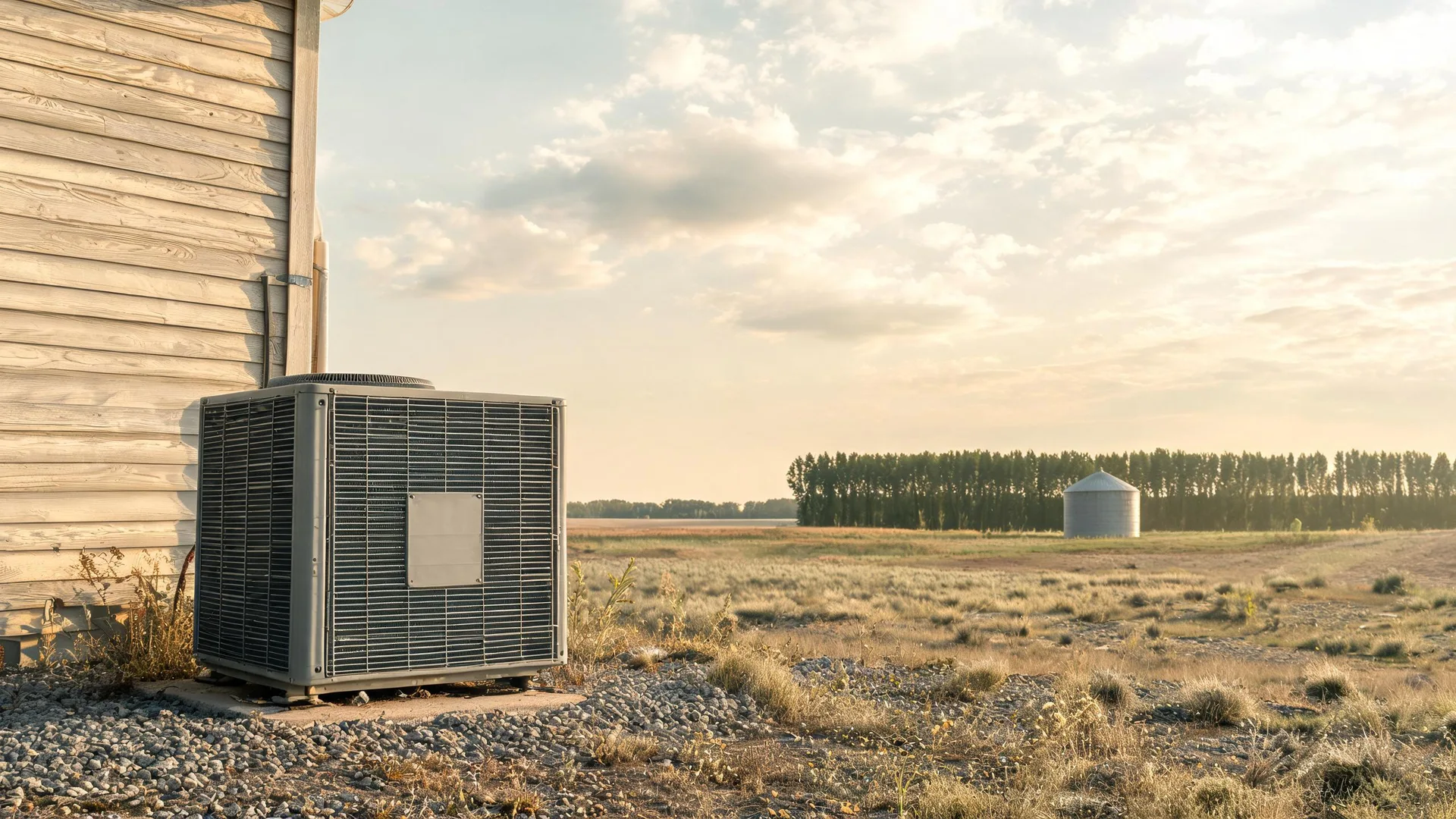
Ice left alone spreads past the coil

A coil that's icing up because of a bad defrost cycle doesn't stay a small patch of frost. Airflow keeps dropping as the ice builds, so the system works harder to move the same amount of heat, which makes the coil colder and the ice thicker. Left running, that cycle can push ice onto the fan blade itself, and a fan trying to turn against ice is a fan motor on its way out.

A repair makes sense when the failure is one part doing its job badly, a capacitor that's weak, a contactor with pitted contacts, a sensor giving bad readings. Swap the part and the system runs the way it did before. Replacement starts to make more sense when the compressor itself is the problem. It's the most expensive part in the system and the most labor to get at, so a failing compressor often isn't worth fixing on its own. Age matters less than what's actually broken. An older system with a bad capacitor is a quick fix. A newer system with a seized compressor is a harder call, since that kind of failure sometimes points to a problem elsewhere that will just take out the replacement too. Ask what failed and why before asking how old the unit is.