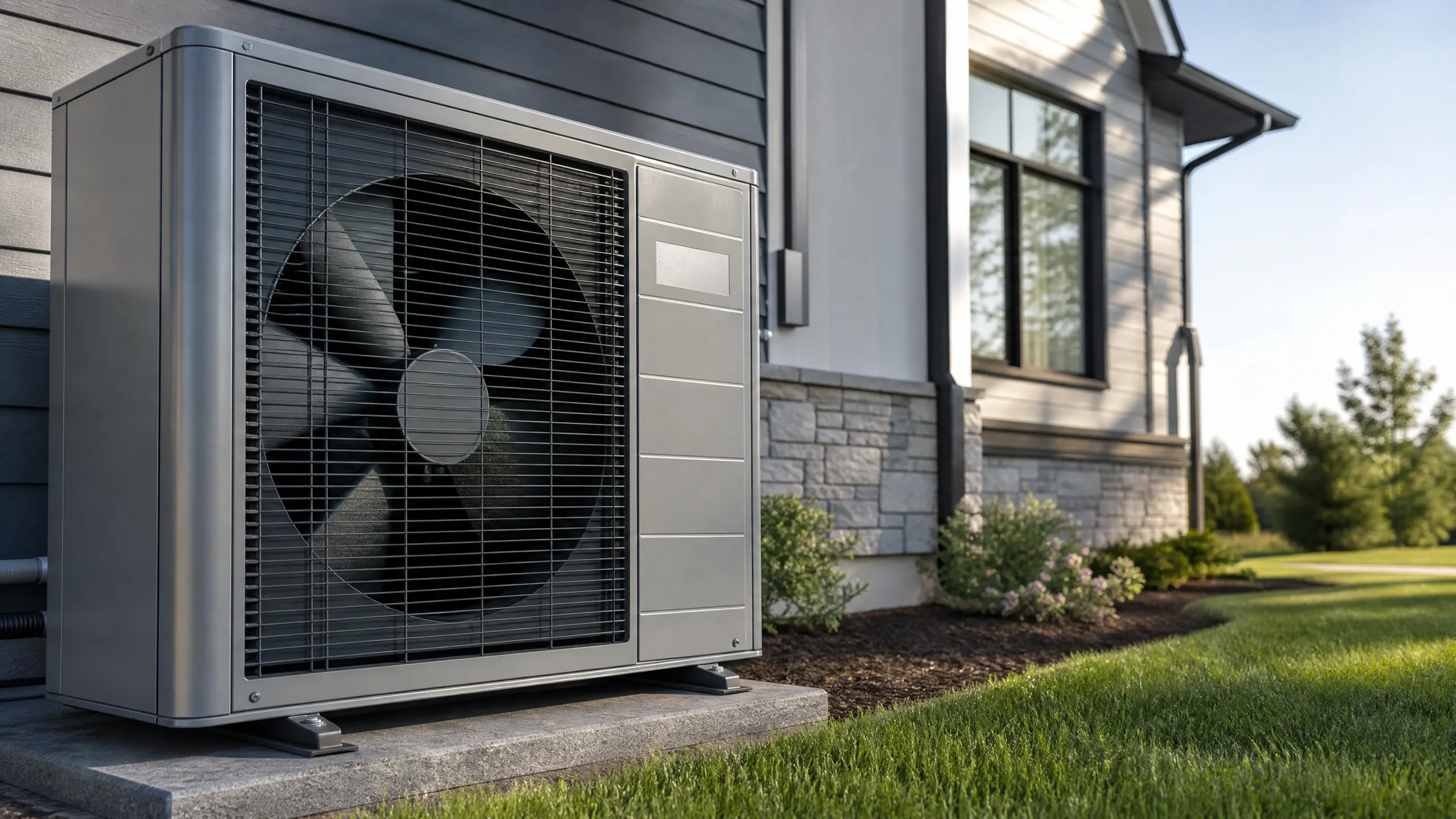





A grey heat pump outdoor unit mounted on a concrete pad against the exterior wall of a house with grey siding and stone veneer.

Heat Pump Repair in LaFayette, GA

Tell us about the job

Takes about a minute. No obligation.

RepairHeat PumpWalker County, GA
Step 1 of 2

What ZIP code is the job in?

A heat pump in Walker County works about seven months a year, October through April, with a switch over to cooling from May through September. That's most of the year on one system, and the weeks right after each switch are when trouble shows up. September is the month to get a heat pump looked at before it leans on heat again, the same way April matters before cooling starts. If yours is struggling now, the cause is usually something that was already weak and just met its first real demand of the season. Finding that part and fixing it is worth more than waiting to see if it clears up on its own.

7 months
October through April, your system heats
5 months
May through September, it cools
33°F
the average winter night it heats against
87°F
the average summer afternoon it cools against
Isometric grayscale illustration of a cutaway two-story house showing interior ductwork, an indoor air handler unit, and an outdoor condenser unit on a pad beside the building.
Your system heats October through April and cools May through September.

NOAA nClimDiv, 1991–2020 normals

Winters here stay mild and short, so a heat pump in Walker County isn't working against extreme cold.

Less strain over the years means a repair is usually the right call, not a sign the whole system is done.

Walker County weather is not what wears out a heat pump here

73 severe weather events from 2015 to 2024
31% of homes statewide lost power a day or more in 2024
58 damaging wind events from 2015 to 2024

Half the homes in Walker County were built in 1978 or earlier, and half in 1978 or later. That split does not tell you the age of the heat pump, since most get replaced at least once over that span. If the system came with the house, or close to it, a repair now might be the second or third one it has needed. Mobile homes make up 13.8 percent of the housing here, and a heat pump serving one works the same as any other, with the same parts and the same failures. What matters is what is actually wrong with the unit, not what kind of house it sits beside.

Fix it, don't replace it

A repair now is worth doing. The unit has not been fighting hard winters or long stretches of extreme heat, so a working part usually stays working for years once it's fixed. Get the actual cause found before anyone talks about replacement.

Find a contractor
A residential heat pump outdoor unit mounted on a concrete pad next to a house with gray vinyl siding.

What to check before the truck shows up

Before anyone comes out, look at the thermostat first. Set it to heat or cool, whichever side is acting up, and bump the setpoint hard in that direction. If nothing changes at the vents in a few minutes, that tells you the call is for the unit, not a setting someone bumped by accident. Check the air filter next and hold it up to a light. If you can't see through it, swap it, because a clogged filter starves the whole system of airflow and can make a working unit act like a broken one. Walk outside and look at the outdoor unit. Clear away leaves, grass clippings or anything stacked against it, and make sure the fan isn't iced over solid, a little frost is normal but a thick coating is not. Inside, check that every supply vent and return is open and nothing is sitting in front of it. Last, go to the breaker panel and see if anything's tripped. If it has, reset it once. If it trips again, stop there and leave it for someone licensed to look at, since a breaker that won't hold is telling you something electrical is wrong, not something you want to force.

The reversing valve is often the first thing to go

The reversing valve is what switches a heat pump between heat and cooling, and it only earns its keep when it's asked to move. A valve that's stuck will leave the system blowing cold air when it should be heating, or running heat when it should be cooling. Once that valve fails, it usually has to be replaced, not cleaned or adjusted.
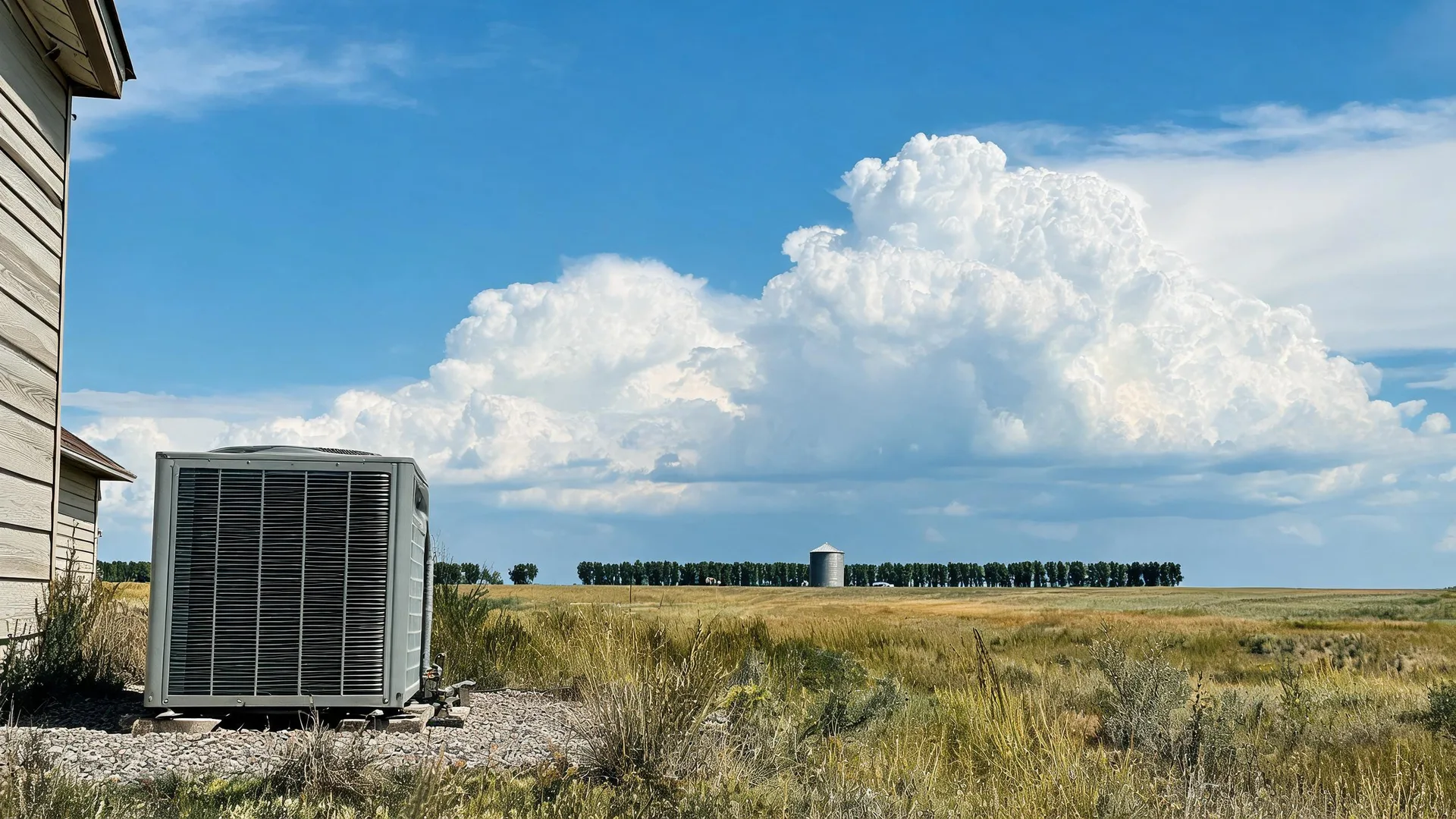
Most other failures are simpler than the reversing valve

A capacitor that's gone weak will make the outdoor fan or compressor struggle to start, or not start at all. A low refrigerant charge, usually from a slow leak, shows up as weak heat or weak cooling that never quite catches up to the thermostat. A failed defrost control will let frost build up on the outdoor coil until it chokes off airflow. Each of these gets fixed by replacing the failed part, not the whole unit.

Short cycling is one of the clearest signs something's wrong. The unit kicks on, runs for a short burst, then shuts off before the house gets close to the set temperature. Warm air mixed with cold air from the same vents is another, since a heat pump that can't hold its mode is usually struggling with the reversing valve. Listen for the outdoor unit too. A hard clunk at startup, a hum with no fan movement, or a grinding sound all point to a motor or capacitor giving out. If the system runs constantly without ever catching up to the thermostat, or the air at the vents feels barely warm or barely cool, that's weak output, not a settings problem. Any of these is worth a call before the part fails completely and takes the system down with it.

A diagnostic visit starts outside, at the unit itself, not with a clipboard. A tech will check refrigerant pressures on both the high and low side, since that number tells them right away whether the charge is correct or something's leaking out slowly. They'll check voltage and amp draw on the compressor and fan motors, because a motor pulling too many amps is wearing out even if it still runs. The reversing valve gets tested directly, usually by forcing the system into each mode and watching whether it actually switches. Defrost controls get checked too, especially if there's been any frost buildup on the outdoor coil. None of this takes guessing. Each test points at one part, confirms it's good or bad, and rules it out so the next test means something.