

Three white clapboard houses with wraparound porches glow with warm interior and landscape lighting beneath Spanish moss-draped oak trees at dusk.

Heat Pump Repair in LaGrange, GA

Tell us about the job

Takes about a minute. No obligation.

RepairHeat PumpTroup County, GA
Step 1 of 2

What ZIP code is the job in?

Troup County saw 154 severe weather events between 2015 and 2024, and damaging wind caused most of them. Hail showed up too. A heat pump's outdoor unit sits outside through all of it, with nowhere to hide from either one. Wind drives debris into the coil and the fan. Hail dents the housing and can bend the fins enough to choke airflow. The unit can keep running after that and still be worse off than it was. If yours took a hit from a storm, even one it seemed to shake off, it's worth having someone look before the damage turns into a bigger repair.

5 months
November through March, your system heats
5 months
May through September, it cools
35°F
the average winter night it heats against
89°F
the average summer afternoon it cools against
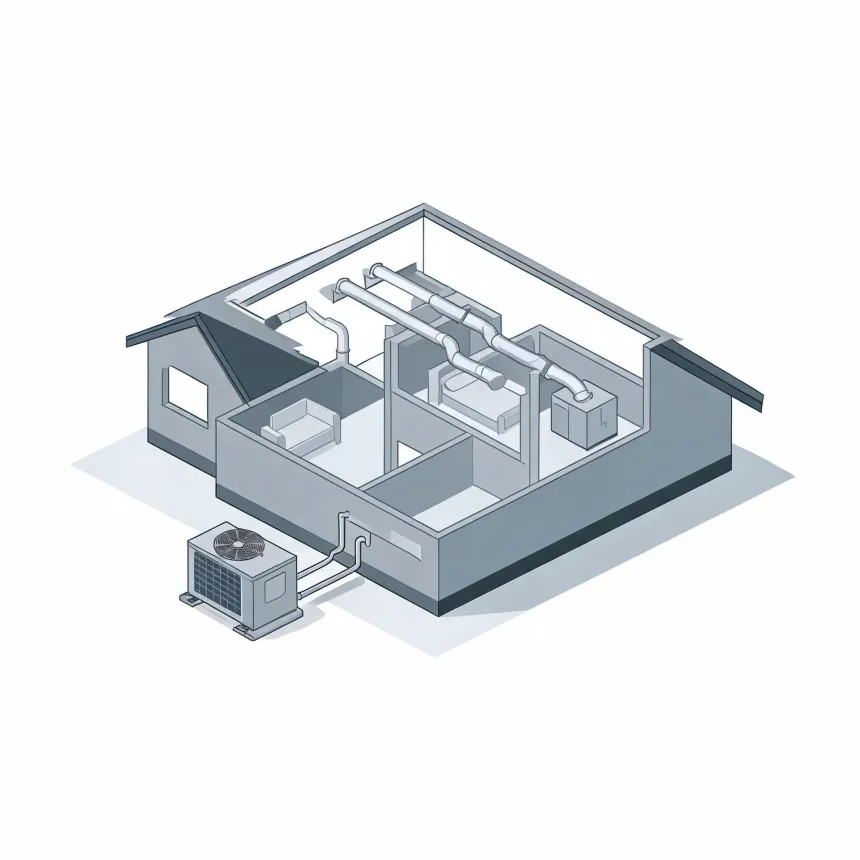
Isometric grayscale illustration of a cutaway house showing interior rooms, ceiling ductwork and an air handler, connected by lines to an outdoor condenser unit on a pad outside.
Your system heats November through March and cools May through September.

NOAA nClimDiv, 1991–2020 normals

Heat pumps in LaGrange go back to work in November.

A weak part that made it through last winter is the one that fails in the first cold snap.

A newer system is worth fixing

Half the homes in Troup County were built in 1986 or later. If yours is one of them, your heat pump likely still has good years in it. A repair now is a normal part of owning a newer system, not a sign it's done.

Find a contractor
A gray heat pump outdoor unit mounted on a concrete pad next to the stone-accented exterior wall of a house.

What you can check yourself

Before anyone comes out, look at the outdoor unit first. Walk around it and check for anything pressed up against the coil, leaves, grass clippings, a branch that came down in the last storm. Clear it by hand, don't hose it down under pressure. Look at the fins for dents or crushed spots, especially if there's been hail or high wind. Inside, check the air filter. A filter clogged with dust chokes airflow over the coil, and the system reacts the same way it would to a mechanical fault, so it's worth ruling out before anything gets taken apart. Check the thermostat batteries if it uses them, and make sure it's set to heat, not auto in a way that's confusing it. Look at the breaker box too. A heat pump that won't start at all sometimes just lost power to a tripped breaker, not a failed part. None of this fixes a bad compressor or a refrigerant leak, but it rules out the simple things first, and it tells the tech something useful when they do arrive.

A refrigerant leak only gets smaller

A heat pump low on refrigerant will keep trying to hit the set temperature, and the compressor keeps working harder to do it. Run it long enough in that state and the compressor can take damage that a simple recharge won't fix. What started as a leak turns into a compressor replacement.
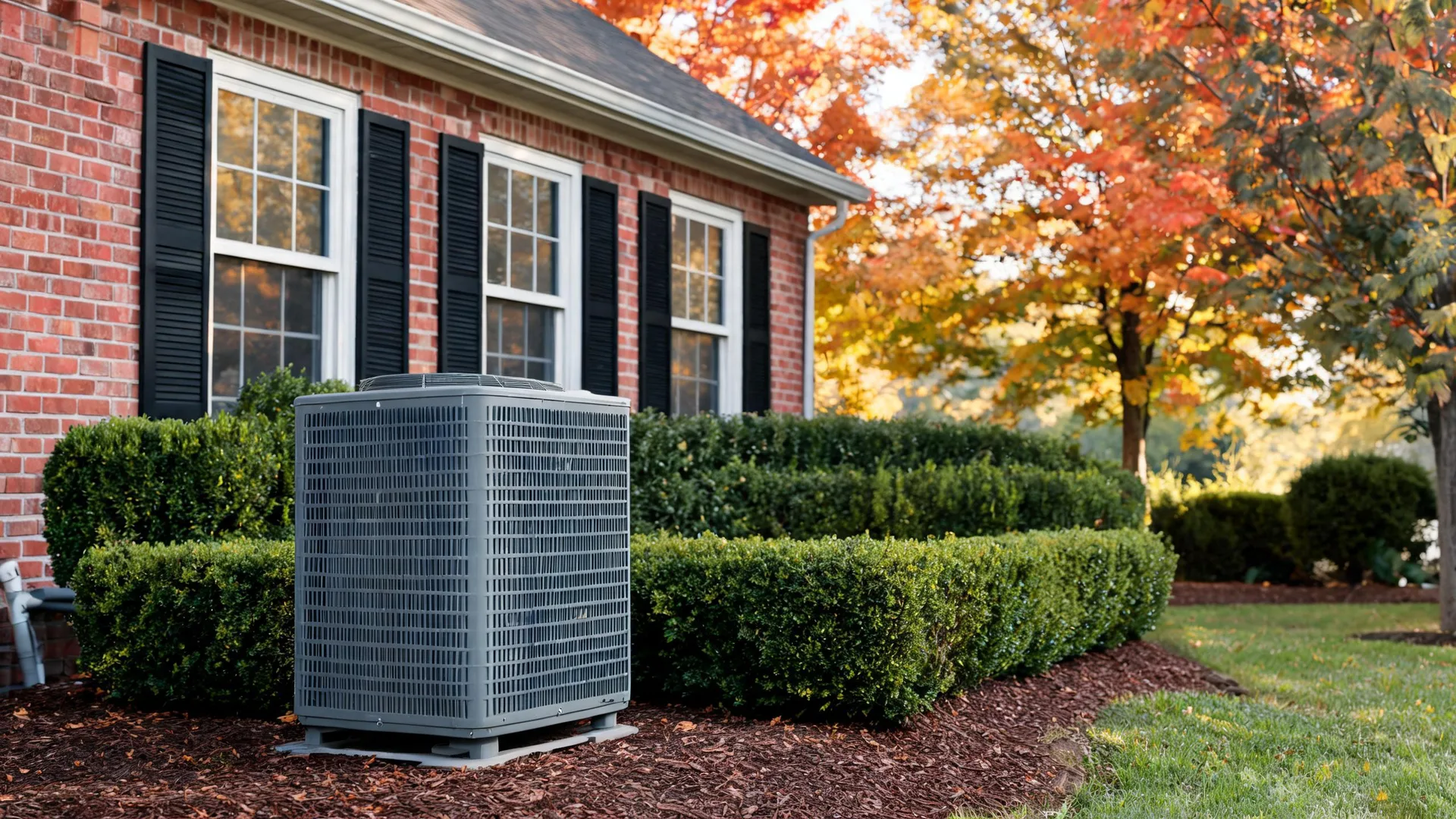
Weak airflow strains the whole system

A coil losing airflow, whether from a dirty filter, a blocked outdoor unit, or bent fins, makes the system work outside the range it was built for. The compressor and the fan motor both run under more load than they should. Left alone, that strain is what turns a minor fix into a failed part.

Most heat pump failures trace back to a handful of usual suspects. The capacitor that gives the compressor or fan motor its starting jolt weakens with age and heat cycling, and when it goes, the motor hums but won't turn, or won't start at all. Contactors wear from the constant making and breaking of current, and their contacts pit until they stop conducting reliably. The reversing valve, the part that lets a heat pump switch between heating and cooling, can stick in one position, so the system blows the wrong temperature air or won't switch modes at all. Fan motors fail from bearing wear after years of spinning in the weather. And refrigerant leaks, usually at a fitting or a coil joint, show up slowly, with the system running longer and longer to hit the set temperature before it finally can't get there at all. None of these happen suddenly. They build for months before the day the system won't run.

A diagnostic visit starts outside, at the unit itself. The tech checks the readings, pressures on the refrigerant lines, amp draw on the compressor and fan motor, and compares what they see against what the system should be doing at that outdoor temperature. Inside, they check the air handler, the airflow across the indoor coil, and whether the reversing valve is actually switching when it's told to. A lot of this is process of elimination. If the compressor is drawing too much current, that points toward a failing start capacitor or a compressor under strain, not a random guess. If the pressures are off, that points toward a leak or a restriction, and they'll trace it rather than just top off the charge. The visit ends with a part named and a reason for it, not a guess dressed up as one.