A nighttime street scene featuring a row of lit white colonial-style houses with wrap-around porches, flanked by oak trees draped in Spanish moss.

Heat Pump Repair in Mableton, GA

Tell us about the job

Takes about a minute. No obligation.

RepairHeat PumpCobb County, GA
Step 1 of 2

What ZIP code is the job in?

The reversing valve sticks

A heat pump switches between heating and cooling with a reversing valve, and that valve is the part most likely to give trouble. When it sticks, the system can get stuck in one mode or blow air that feels wrong for what was asked of it. Sometimes the valve itself has failed, sometimes it's just the solenoid that moves it.


The outdoor coil and fan take the abuse

The outdoor unit sits outside year round, so the coil and fan motor see the most wear. A dirty coil makes the whole system work harder and can lead to a frozen coil or a compressor that runs hot. A failing fan motor keeps the coil from shedding heat properly. These failures tend to show up as weak heating or cooling rather than the system stopping outright.

6 months
November through April, your system heats
5 months
May through September, it cools
34°F
the average winter night it heats against
88°F
the average summer afternoon it cools against
Isometric cutaway illustration of a single-story house showing interior rooms with furniture, an attic duct system connected to an indoor air handler, and an outdoor condenser unit linked by lines along the exterior wall.
Your system heats November through April and cools May through September.

NOAA nClimDiv, 1991–2020 normals

Heat pumps in Mableton run from November through April for heat, May through September for cooling.

October and April are when a weak reversing valve or a dirty coil finally gets found out.

Half the homes in Cobb County were built in 1990 or later, so a lot of heat pumps here are still within their working life

Half the homes here were built by 1990
70 damaging wind events from 2015 to 2024
22 hail events from 2015 to 2024
An easier climate on the systemMild winters here mean a Mableton heat pump isn't fighting hard to keep up.

A diagnostic visit starts outside at the unit itself. A tech checks refrigerant pressures and looks at the coil for dirt or frost. They listen to the compressor and fan for sounds that don't belong. Inside, they run the thermostat through both modes to see if the reversing valve actually switches when it's told to. Then come the electrical readings, the capacitor, the contactor, the wiring at the disconnect. Most of this gets done with gauges and a multimeter rather than guesswork. A tech can usually point to the failed part before anything gets opened up or replaced.

A newer system is usually worth repairing

If your heat pump came with a newer house here, it hasn't put in that many years yet. A stuck reversing valve or a dirty coil is a repair, not a reason to replace it.

Find a contractor
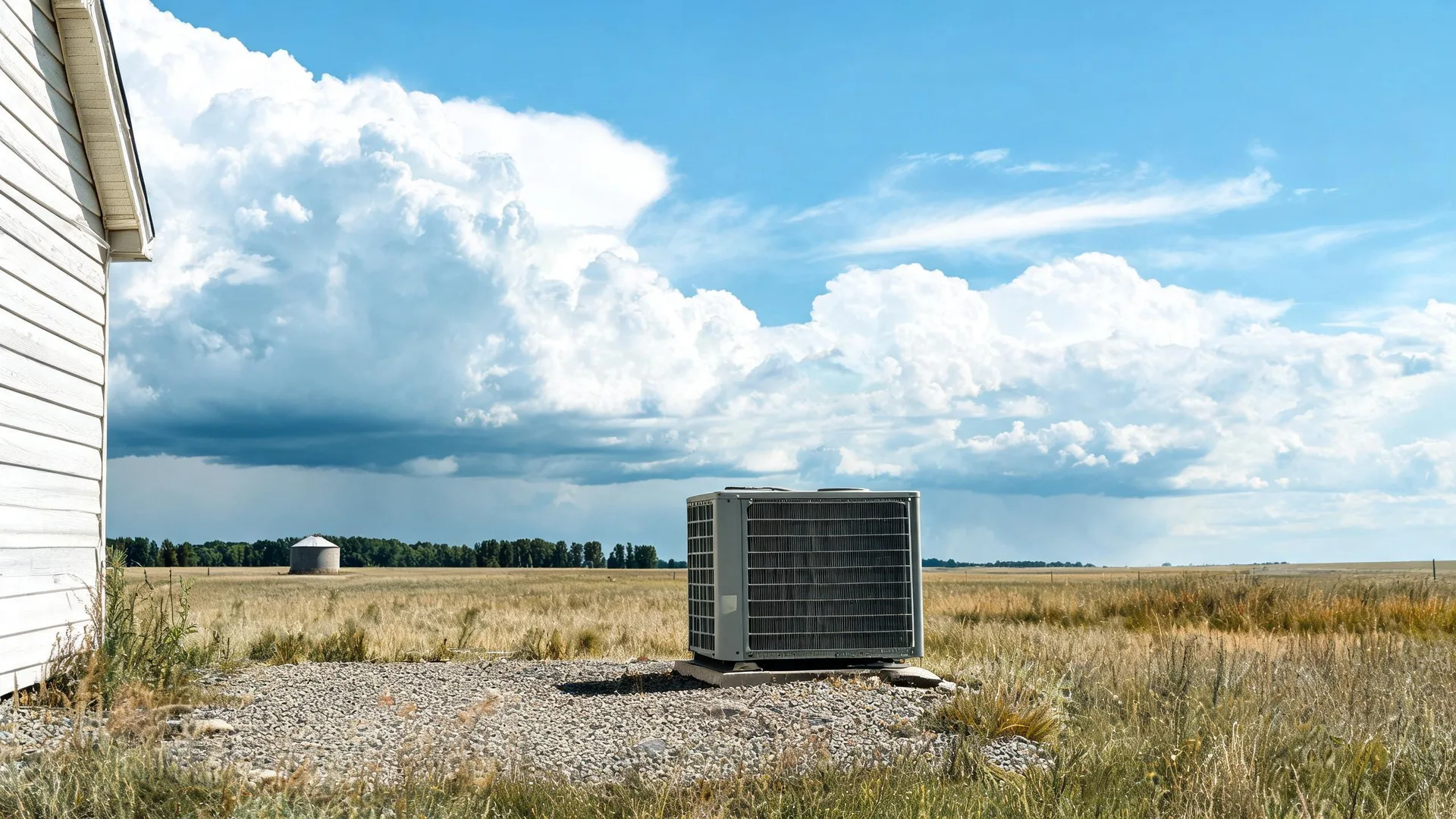
A gray outdoor HVAC unit mounted on a concrete pad beside a house with gray lap siding and a stone foundation.

The system tells you before it quits

A heat pump rarely just quits. It tells you something is wrong first, usually by running without keeping up. The air coming out of the vents feels lukewarm instead of warm, or barely cool instead of cold. The system might run long stretches without hitting the temperature on the thermostat. You may hear it cycle on and off more than it used to, short runs that stop before the room catches up. Outside, listen for a fan that hums without spinning, or a compressor that makes a strain sound it never made before. Ice on the outdoor coil when it shouldn't be there is worth noting too. None of these mean the unit is done. They mean a part behind the scenes, the valve, the coil, the motor, is already struggling, and it's easier to fix now than after it takes something bigger down with it.

What you can check outside

Look at the outdoor unit. If the coil fins are packed with dirt, grass clippings or leaves, clear what you can reach by hand and make sure nothing is pressed up against the cabinet blocking airflow. Check that the fan on top spins freely and isn't making a grinding or clicking sound. If there's ice built up on the coil, turn the system off at the thermostat and let it thaw before anyone works on it. Don't chip at the ice or run it in heat mode hoping it clears itself.

What you can check inside

Pull the air filter and hold it up to a light. If you can't see light through it, replace it before you do anything else, since a clogged filter can mimic a failing reversing valve by starving the system of airflow. Check that the thermostat has power and is actually set to call for heat or cooling rather than sitting in fan-only mode. Walk around and make sure no supply vents are closed or blocked by furniture. If the system is blowing air that feels wrong for the mode it's in after all that, it's the valve or something electrical, and that's a job for a tech with gauges and a meter.

A dirty coil makes the compressor push harder to move heat across it, and that heat shortens the compressor's life the longer the system keeps running that way. A frozen coil is worse to leave alone. Keep calling for heat or cooling while the coil is iced over and the system is starved for airflow, and liquid refrigerant can come back into the compressor instead of vapor, which a compressor isn't built to handle. A reversing valve stuck halfway means the system can end up fighting itself, heating and cooling at the same time, and nothing about that is good for the parts doing the work. None of these show up as the system stopping outright. They show up as weak heating or cooling that a homeowner can live with for a while, which is exactly why they get worse. A small problem caught early stays small. Left running, it tends to take the compressor down with it, and that's the one part in a heat pump that isn't a small job to replace.

A compressor is the most expensive part in a heat pump, and the reversing valve, the coil and the fan all exist to protect it. That changes how to think about a repair. Fixing a stuck valve or cleaning a dirty coil now is cheap insurance for the compressor behind it. The question worth asking isn't just what's broken, but whether the compressor itself is still sound. If gauges show good pressures and the compressor runs quiet once the valve or coil problem is fixed, the system has years left in it. If the compressor is already damaged, no amount of work on the other parts will fix that, and that's the one failure that tips the decision toward replacing the unit instead of repairing it.