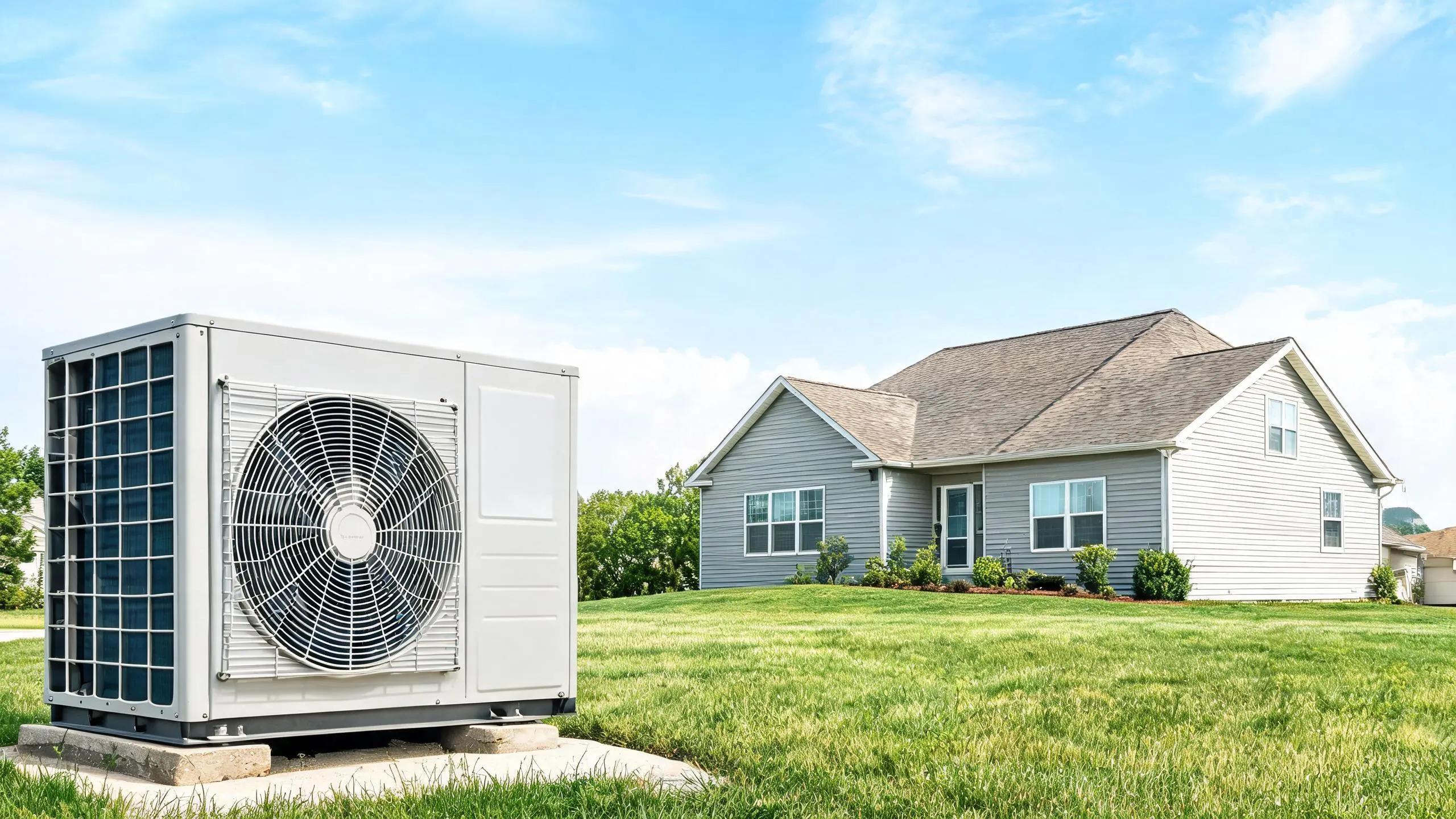







An outdoor HVAC condenser unit on a concrete pad in front of a single-story house with gray siding and a shingle roof.

Heat Pump Repair in Monroe, GA

Tell us about the job

Takes about a minute. No obligation.

RepairHeat PumpWalton County, GA
Step 1 of 2

What ZIP code is the job in?

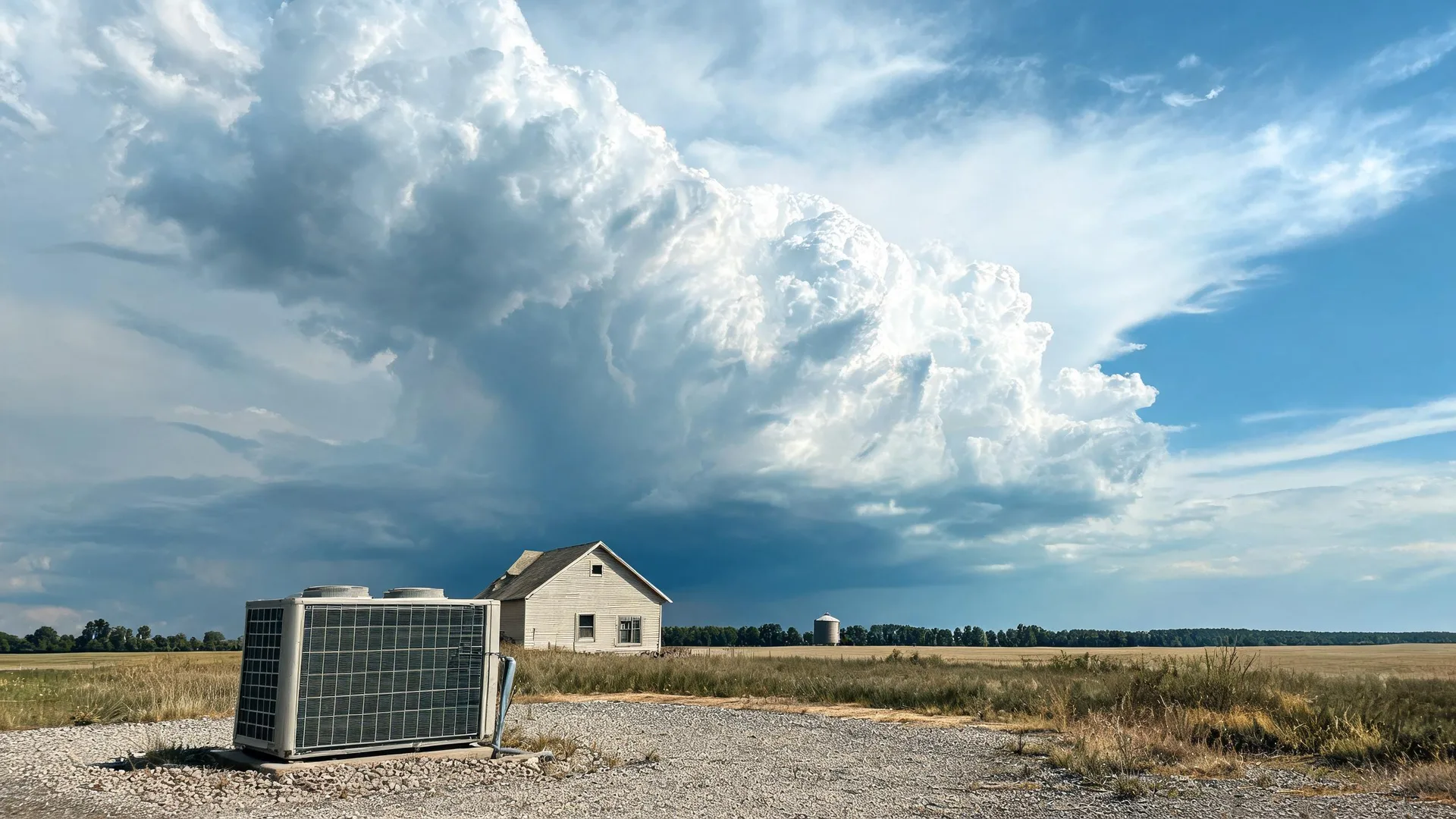
Walton County saw 191 severe weather events between 2015 and 2024. Most of that was damaging wind, with 176 events in that span, along with a handful of tornadoes, a few hail events, and tropical storms blowing through from the coast. The outdoor unit sits outside taking all of it. Wind-driven debris can bend the fins on the coil or crack a fan blade, and it won't always stop the unit from running. If a storm has come through and the heat pump still turns on, that doesn't mean it came through clean. Worth having someone look at it before the damage turns into a bigger repair.

6 months
November through April, your system heats
5 months
May through September, it cools
35°F
the average winter night it heats against
89°F
the average summer afternoon it cools against
Isometric cutaway illustration of a gray house showing interior rooms, a central air handler with ducts in the attic, and refrigerant lines running to an outdoor condenser unit beside the building.
Your system heats November through April and cools May through September.

NOAA nClimDiv, 1991–2020 normals

Half the homes in Walton County were built in 1997 or later.

A heat pump installed with a newer house has usually got plenty of working life left in it, worth repairing instead of replacing.

Six months of heat, five of cooling, and the failures show up right at the start of each

Cooling runs May through September
Heat runs November through April
176 damaging wind events from 2015 to 2024
This Heat Pump Runs Most of the YearWalton County summers hold a 67°F dew point from June through August, and that kind of air load doesn't let up

A heat pump that's struggling doesn't fail all at once. It keeps trying, and that's the problem. If airflow is choked by a dirty coil, the compressor still runs, working harder to move heat it can't move efficiently, and that extra strain shortens its life. A refrigerant leak behaves the same way. The system keeps calling for the compressor to run even though there's not enough charge to do the job right, and running a compressor low on charge wears it out faster than the leak alone would. A failing capacitor can let a motor try to start without quite getting there, and that half-start heats the motor windings every time it happens. None of these show up as the system shutting off. They show up as the system running longer, working harder, and costing you the part that's already in trouble. Shutting it down and getting it looked at stops that wear right where it is.

Had a Storm Come Through? Get the Outdoor Unit Checked

If a storm has come through recently, that's reason enough to have the outdoor unit checked, even if it's still running fine. A tech can look at the fins and the fan blade and tell you whether anything needs straightening or replacing before it turns into a bigger problem.

Find a contractor
A man in a dark long-sleeve shirt and tan work pants, seen from behind, carries a canvas tool bag up wooden steps toward an orange front door with a potted plant beside it.
A gray heat pump outdoor unit mounted on a concrete pad next to the stone-accented exterior wall of a house.

Worked Hard, Year After Year

A heat pump here does not get much time off. Long stretches of cooling load from the summer humidity, then straight into winter heating with no real break between. A part that is starting to go, a contactor, a capacitor, a sensor, tends to show it under that kind of use rather than sit quiet. If something is acting up now, there is a real reason behind it, not just bad luck. Worth having someone diagnose it properly rather than guess at a fix, since the actual cause is what decides whether the repair holds.

Most Failures Start Outside

The outdoor unit takes the brunt of wear on a heat pump. The fan motor runs constantly to move air across the coil, and that motor's bearings wear out over time. The coil itself collects dirt and debris between the fins, and once airflow through it drops, the system has to work harder to move the same heat. A capacitor that's weakening will make the compressor or fan struggle to start, and a contactor with pitted contacts can stop sending power to the outdoor unit altogether even though the thermostat calls for it.
Reversing Valve Trouble Shows Up as Comfort Trouble

A heat pump depends on a reversing valve to switch between heating and cooling, and when that valve sticks, the system keeps running but stops doing what it's set to do. A unit stuck in cooling mode will blow cold air when you've called for heat, and one stuck the other way won't cool at all. Low refrigerant charge causes a similar kind of confusion, since the system can run and still fail to move enough heat either direction. Either way, the fix is diagnosis first, not a guess at parts.

There are a few things worth checking before you pick up the phone. Look at the thermostat first. Make sure it's set to heat or cool as you intend, and that the setting is actually calling for what you want, since a setting bumped by accident looks exactly like a broken system. Check the breaker box next. A heat pump runs off more than one breaker, and if one of them tripped, the unit can act dead or run only halfway, like the outdoor fan not turning while the indoor blower still works. Go outside and look at the unit itself. If it's covered in leaves or debris, or something is pressed up against it, clearing that away sometimes brings it right back. Check the air filter too. A filter clogged with dust chokes off airflow, and that alone can cause the system to run constantly without keeping up, or to ice over on the outdoor coil. If you've done all that and it's still not working right, that's the point to call someone rather than keep guessing.

Repair versus replacement comes down to what actually broke, not how the unit looks or how old it feels. A failed capacitor, a bad contactor, a stuck reversing valve, these are normal wear items, and replacing one brings the system back to full working order. None of that is a reason to replace the whole unit. The compressor is the one part that changes the math. It's the most expensive part in the system, and if it's failed outright, the repair can start to rival putting in a new unit, especially on an older system where other parts are likely to follow. Even then, a compressor can sometimes be replaced on its own rather than the whole outdoor unit. The right call depends on what's actually failed, not on a feeling that the system is getting old, so get a clear diagnosis before deciding which way to go.