






A white Southern-style house with a wraparound porch photographed at night, surrounded by Spanish moss-draped oak trees lit by landscape lights.

Heat Pump Repair in Peachtree City, GA

Tell us about the job

Takes about a minute. No obligation.

RepairHeat PumpFayette County, GA
Step 1 of 2

What ZIP code is the job in?

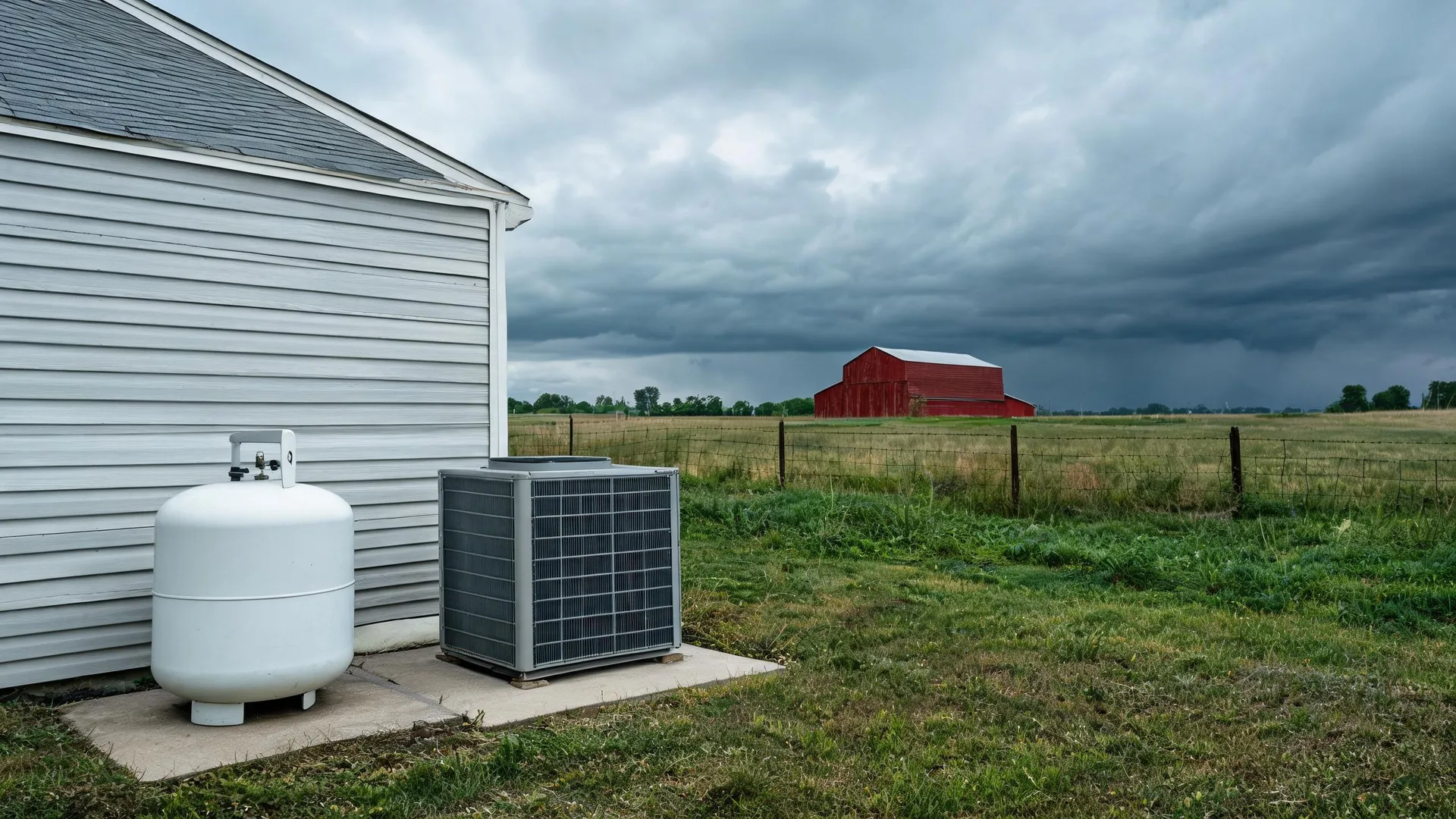
Fayette County saw 87 severe weather events between 2015 and 2024. Most of that was wind, 72 events, with 7 hail events, 3 tornadoes, and a couple of tropical storms mixed in. Your heat pump's outdoor unit sits right in the path of all of it, exposed to whatever blows through. Wind-driven debris can bend the fins or crack the fan blade without stopping the unit from running. Hail dents the cabinet and can mark up the coil even when the system still kicks on like normal. A unit that survived the storm and still runs isn't the same as one that came through fine.

5 months
November through March, your system heats
5 months
May through September, it cools
35°F
the average winter night it heats against
89°F
the average summer afternoon it cools against
Isometric cutaway illustration of a house showing interior ductwork, an indoor air handler, and beds, with an outdoor condenser unit connected by lines outside the wall.
Your system heats November through March and cools May through September.

NOAA nClimDiv, 1991–2020 normals

A heat pump runs cooling and heating through the same outdoor unit, all year, with no break.

That means the parts wear on both ends, the compressor, the reversing valve, the fan motor, instead of resting half the year like a furnace does.

Half the homes here were built in 1993 or later, and that equipment still has years in it

Half the homes here were built by 1993
Climate zone 3A
Power here costs 14.47 cents per kilowatt-hour
The First Cold Snap Finds the Weak PartHeat starts running here in November. A part that was already weak often gives out in those first cold weeks.

If your heat pump came in with a newer build here, get the repair done rather than planning around a replacement. A system installed when the house went up in 1993 or later still has working life left in it, and a storm-related fix doesn't change that math. Check your paperwork or the unit's data plate for the install date before you decide anything. A cracked fan blade or a dented coil is a repair on a system with years ahead of it, not a reason to start over.

If the Last Storm Touched Your Unit, Get It Looked At

If your outdoor unit took wind, hail or debris in the last storm, a check now catches what a dented coil or a bent fan blade doesn't show yet. It still running is not the same as it being fine.

Find a contractor
A white mini-split heat pump outdoor unit mounted on a concrete pad beside a gray-sided house, surrounded by gravel and green shrubs.

Running Through a Problem Doesn't Fix It

A heat pump that's struggling doesn't fix itself by staying on. If the charge is low, the compressor keeps trying to pump refrigerant it doesn't have enough of, and that runs it hotter than it's built for. A failing capacitor makes the compressor or fan motor draw harder on startup each time it cycles, and every hard start wears the windings a little more. A dirty coil makes the system work harder to move the same heat, so the compressor runs longer to hit the same temperature. None of that shows up as the unit shutting off. It shows up as the unit running anyway, just worse, until the part it was straining finally quits. Catching the noise, the ice, or the short cycle early is what keeps a bad capacitor from taking the compressor down with it.

Sounds the Compressor Makes Before It Fails

A heat pump that starts grinding, rattling or banging on startup is telling you something inside has worn loose, a mount, a valve, or the compressor itself. A hissing sound points to refrigerant escaping where it shouldn't. None of these noises go away on their own, and running the unit while you wait only lets the loose part wear against whatever it's hitting.
What to Check Before the Tech Arrives

Ice on the outdoor unit in anything but the coldest stretch of a defrost cycle means airflow or refrigerant trouble, not normal operation. Warm air coming out of the vents when it's set to heat often means the reversing valve isn't switching. Short cycling, where the system shuts off and restarts within a few minutes, points to a safety switch tripping before the problem gets worse. Knowing which one you're seeing tells the tech where to start.

Before you call, check the thermostat is set to heat or cool as you mean it to run, with the temperature actually past room level, not just sitting where it is. Look at the outdoor unit and clear away leaves, mulch or anything piled against it, since blocked airflow around the coil makes the system work harder without you ever seeing why. Check the indoor filter and swap it if it's gray or clogged. A breaker that's tripped or a switch near the indoor unit that's been bumped off will stop the system cold with no other sign, so check those before assuming the worst. None of this fixes a bad capacitor or a low charge, but it rules out the simple stuff fast, and it tells the tech more than 'it's not working' when they get there.

A heat pump nearing the end of its life tends to fail more than once in a season, not just the one time that gets your attention. If a contractor has already replaced the capacitor or the fan motor once and now something else has gone, that pattern matters more than the single failure in front of you. Age alone isn't the deciding factor, since a well-kept unit can outlast one that was never serviced. What matters more is whether the compressor is the part failing. A compressor replacement costs enough, and carries enough risk of further trouble in an old unit, that most of the time it makes more sense to put that money toward a new system instead. A failed capacitor, a bad fan motor, a cracked contactor, those are worth fixing on almost any unit still running otherwise. The compressor going is the one failure that should make you stop and ask what else is close behind it.