





Low-angle view across a lawn with pine straw in the foreground toward a single-story brick house with a dark shingled roof and covered porch, beside a large moss-draped oak and pine trees under an overcast sky.

Heat Pump Repair in Rome, GA

Tell us about the job

Takes about a minute. No obligation.

RepairHeat PumpFloyd County, GA
Step 1 of 2

What ZIP code is the job in?

Before you call anyone, check the thermostat first. Make sure it's set to heat or cool as needed and the batteries aren't dying. Next, go look at the outdoor unit. If ice is covering the coil or the whole cabinet, don't chip at it. Turn the system off at the thermostat and let it thaw on its own, since running it iced up can damage the compressor. While you're out there, check that nothing is blocking airflow around the unit, no leaves, no snow piled against the side. Back inside, pull the air filter and hold it up to a light. If you can't see through it, swap it out, since a clogged filter chokes airflow and makes the whole system work harder than it should. Last, check your breaker panel. A tripped breaker can shut the whole system down and reset it yourself if you find one, but if it trips again right away, stop and call for help instead of resetting it over and over.

7 months
October through April, your system heats
5 months
May through September, it cools
34°F
the average winter night it heats against
89°F
the average summer afternoon it cools against
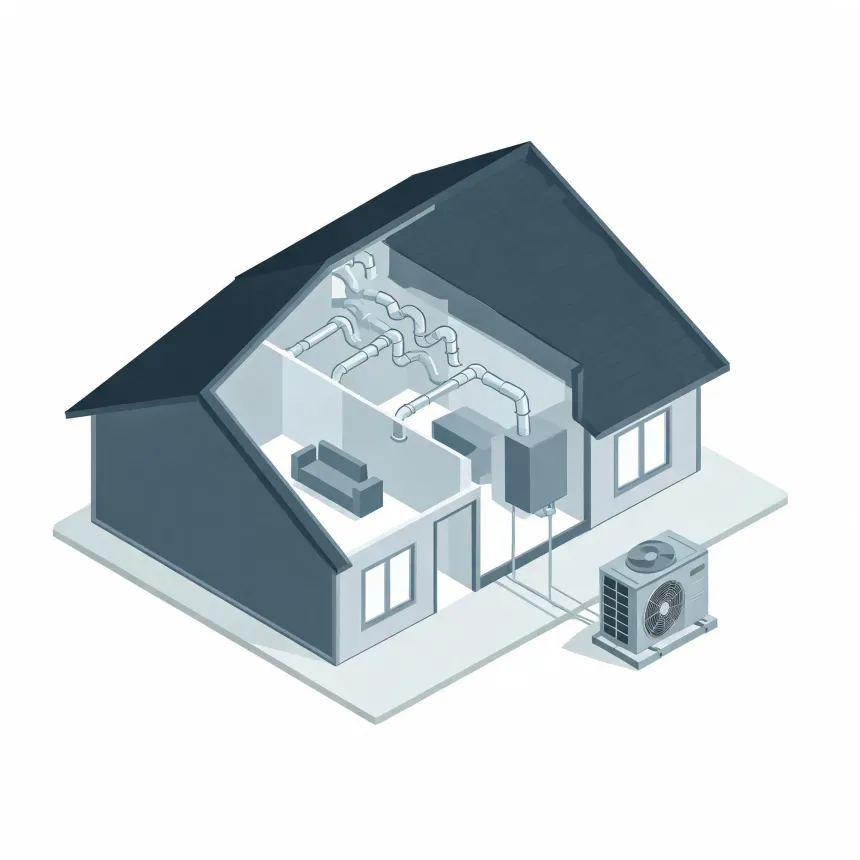
Isometric cutaway illustration of a house showing interior ductwork, an indoor air handler unit, and an outdoor condenser unit beside the building.
Your system heats October through April and cools May through September.

NOAA nClimDiv, 1991–2020 normals

An older heat pump needing a major part like the compressor or reversing valve often costs more to fix than to replace.

A newer unit or a minor repair, like a capacitor or a contactor, is usually worth fixing.

Floyd County sees enough wind and hail that the unit outside your house has taken a hit at some point

115 severe weather events from 2015 to 2024
31% of homes statewide lost power a day or more in 2024
95 damaging wind events from 2015 to 2024
Your Heat Pump Runs Seven Months HereHeat here runs October through April, and most of that load lands in a Rome winter.

A heat pump that's struggling shows itself in a few ways. It might run constantly without the house ever feeling warm or cool enough, cycling on and on but never catching up. You might notice it blowing air that isn't warm in the winter, just air movement with no real heat behind it. A hissing or bubbling sound near the outdoor unit can mean a refrigerant leak, and that's not something to leave alone since it affects the compressor over time. Grinding, screeching or loud clicking from either the indoor or outdoor unit usually means a motor or relay is on its way out. If the system short cycles, turning on and off every few minutes instead of running a normal length cycle, that points to a problem with the compressor or the control board. Any of these is worth having a tech look at before it turns into a bigger repair.

Get it checked after a storm

Storms hit hard here. If the outdoor unit took hail or debris, have it checked even if it still runs.

Find a contractor
A white mini-split heat pump outdoor unit mounted on a concrete pad beside a gray-sided house, surrounded by gravel and green shrubs.

Running Two Jobs Wears Different Parts

A heat pump runs longer over a year than a straight air conditioner, because it carries both the heating and the cooling instead of handing winter off to a furnace. All that switching between modes is hard on the reversing valve, and that's usually the first part to show its age, sticking or failing to shift the system from heat to cool. The outdoor unit takes the worst of it, since it sits outside year round and has to shed frost in winter through regular defrost cycles. If the defrost board or sensor fails, frost builds up on the coil and blocks airflow until the system can't pull heat from the air anymore. The compressor is what wears hardest over time, since it runs any time the system calls for heat or cool, and a compressor on its way out often shows up as warm air in winter or weak cooling in summer before it quits outright. Capacitors and contactors wear faster just from the sheer number of start and stop cycles a heat pump racks up compared to a system that only runs half the year.

Outages hit heat and hot water both

Close to a third of Georgia households lost power for a day or more in 2024. A heat pump can't heat without power, and most water heaters need it too. If an outage runs long in cold weather, that's worth planning for before it happens, not during.
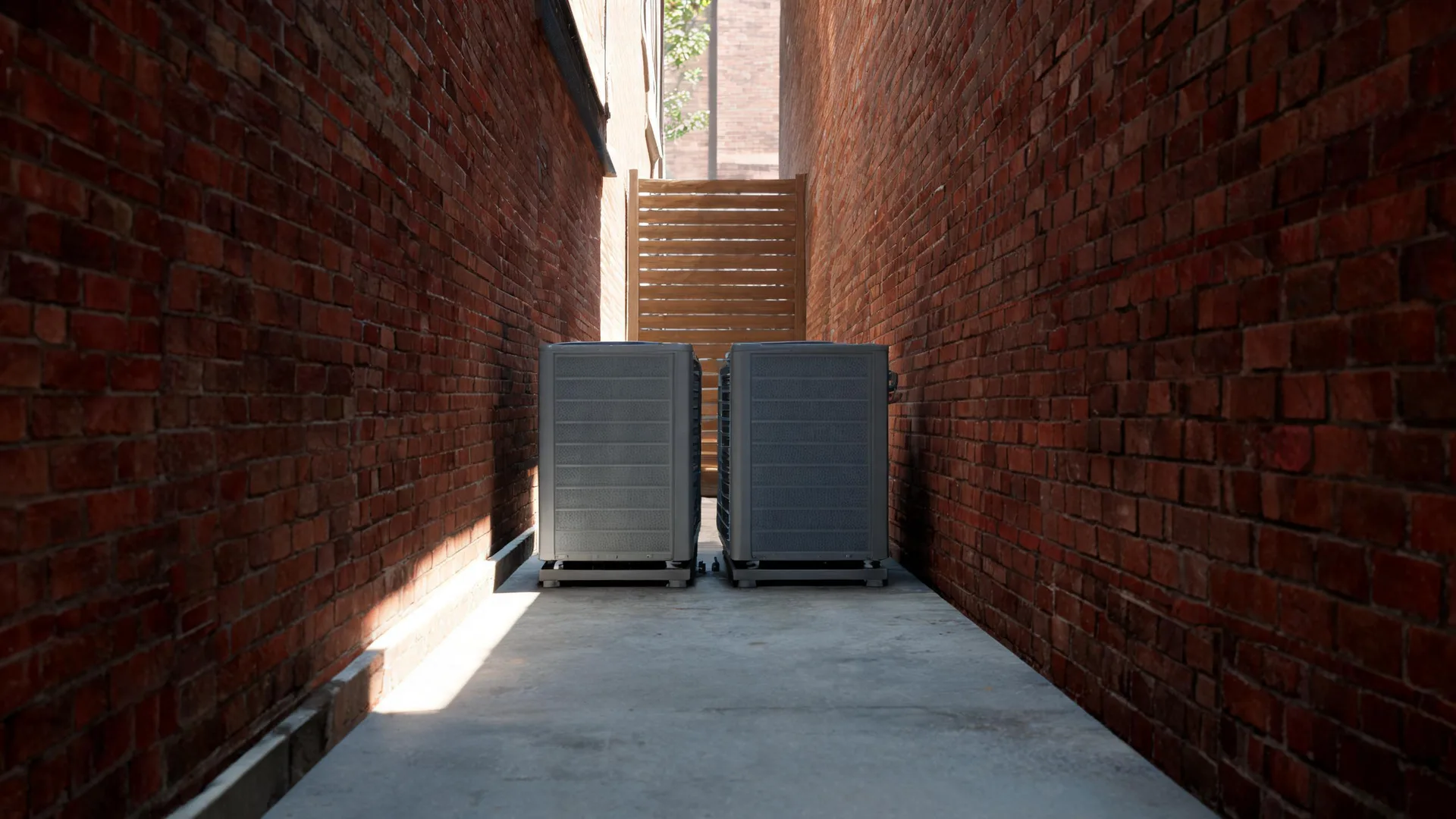
A hit doesn't always show up right away

Hail or flying debris can dent a coil or bend a fan blade without stopping the unit that day. It might run fine for weeks and then start losing capacity or tripping a breaker. Having it looked at after a storm catches that early, before a small dent turns into a refrigerant leak or a dead motor.

Running a heat pump through a problem almost always costs more than shutting it down and calling for a repair. A refrigerant leak is the clearest case. Low refrigerant makes the compressor work harder to move the same amount of heat, and a compressor that overheats from running low can fail outright, turning a leak repair into a full compressor replacement. A failing capacitor behaves the same way. It makes the motor it feeds strain on every start, and a motor that strains long enough burns out its windings. Ice on the outdoor coil is another one. A normal defrost cycle clears light frost, but if something's stopped that cycle from working and the coil keeps icing over, running the system blocks airflow across the coil entirely and that backs pressure up into the compressor. None of these get better on their own. They get more expensive the longer the system keeps running against them.

A diagnostic visit starts outside at the unit itself. The tech checks refrigerant pressure, looks at the coil for frost or damage, and watches the fan motor run. From there it's the electrical side: the capacitor, the contactor, the wiring at the disconnect box. Inside, they'll check the air handler, the blower motor, and the refrigerant lines running between the two. A gauge set tells them where pressure sits against what the system is supposed to run, and that number points straight at whether it's low on charge, struggling to move air, or dealing with a part that's failing electrically. Most of the time, the diagnosis comes down to one or two things once the readings are in hand, not a long list of maybes.