Two illuminated white Southern-style houses with wraparound porches and staircases, framed by a Spanish moss-draped tree on a quiet street at night.

Heat Pump Repair in Stockbridge, GA

Tell us about the job

Takes about a minute. No obligation.

RepairHeat PumpHenry County, GA
Step 1 of 2

What ZIP code is the job in?

April and October are when trouble shows up

A heat pump in Henry County switches over to cooling in May and back to heat in November. The first real cold snap or the first hot stretch is what finds a weak part, not the months of steady running after.

Don't wait once it's struggling

If the system is already short on cooling in late April or short on heat in October, the job is to find out why now. A unit that can't keep up at the start of the season usually can't keep up once it's running five months straight.

5 months
November through March, your system heats
5 months
May through September, it cools
35°F
the average winter night it heats against
89°F
the average summer afternoon it cools against
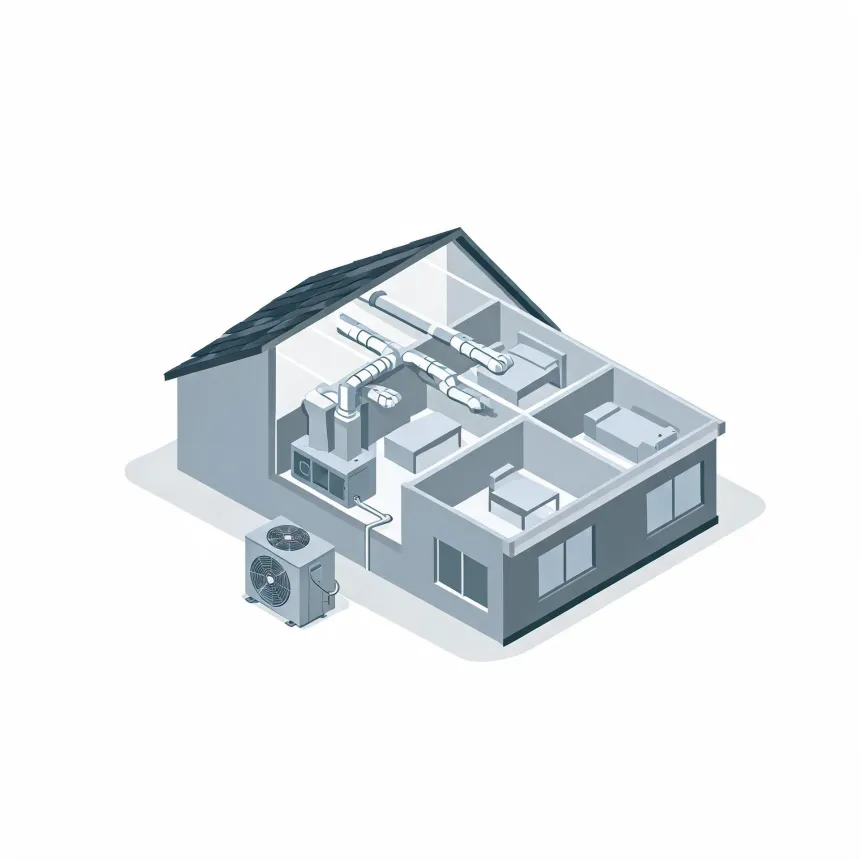
Isometric grayscale illustration of a cutaway house showing interior rooms, ceiling ductwork connected to an indoor air handler, and an outdoor condenser unit beside the exterior wall.
Your system heats November through March and cools May through September.

NOAA nClimDiv, 1991–2020 normals

Summer dew points in Henry County average 67°F, the range that makes the air feel heavy.

A heat pump low on charge or short on airflow won't pull that moisture out, even if the thermostat shows the right temperature.

Half the homes here were built in 2001 or later, and the systems in them usually have years left to give

Half the homes here were built by 2001
Power here costs 14.33 cents per kilowatt-hour
Climate zone 3A
Nothing Here Breaks a Heat Pump FasterHenry County sees its share of storms and power blips, but that's not what's wrong with yours.

Most heat pump failures trace back to a handful of parts, and they fail for ordinary reasons. The capacitor that kicks the compressor and fan motors into motion weakens with age and heat, until one day it can't deliver the jolt they need to start. Contactors pit and burn from opening and closing thousands of times, so the connection gets weaker instead of failing all at once. Refrigerant doesn't get used up, so a system that's low has a leak somewhere in the lines or coils, and the leak doesn't fix itself. The reversing valve, which is what lets the same unit heat and cool, can stick from corrosion or a failed solenoid and leave the system stuck in one mode. Motors wear at the bearings until they run loud, hot, or not at all. None of this is about one bad unit. It's what happens to a compressor, a valve, and a set of motors over years of cycling on and off.

Get it looked at early

Problems tend to show up in the first weeks of the season, when the load hits a part that was already weak.

Find a contractor
A man in a dark cap and shirt carries a worn leather tool bag up wooden porch steps toward an orange front door, with a potted shrub in a terracotta planter to the right.
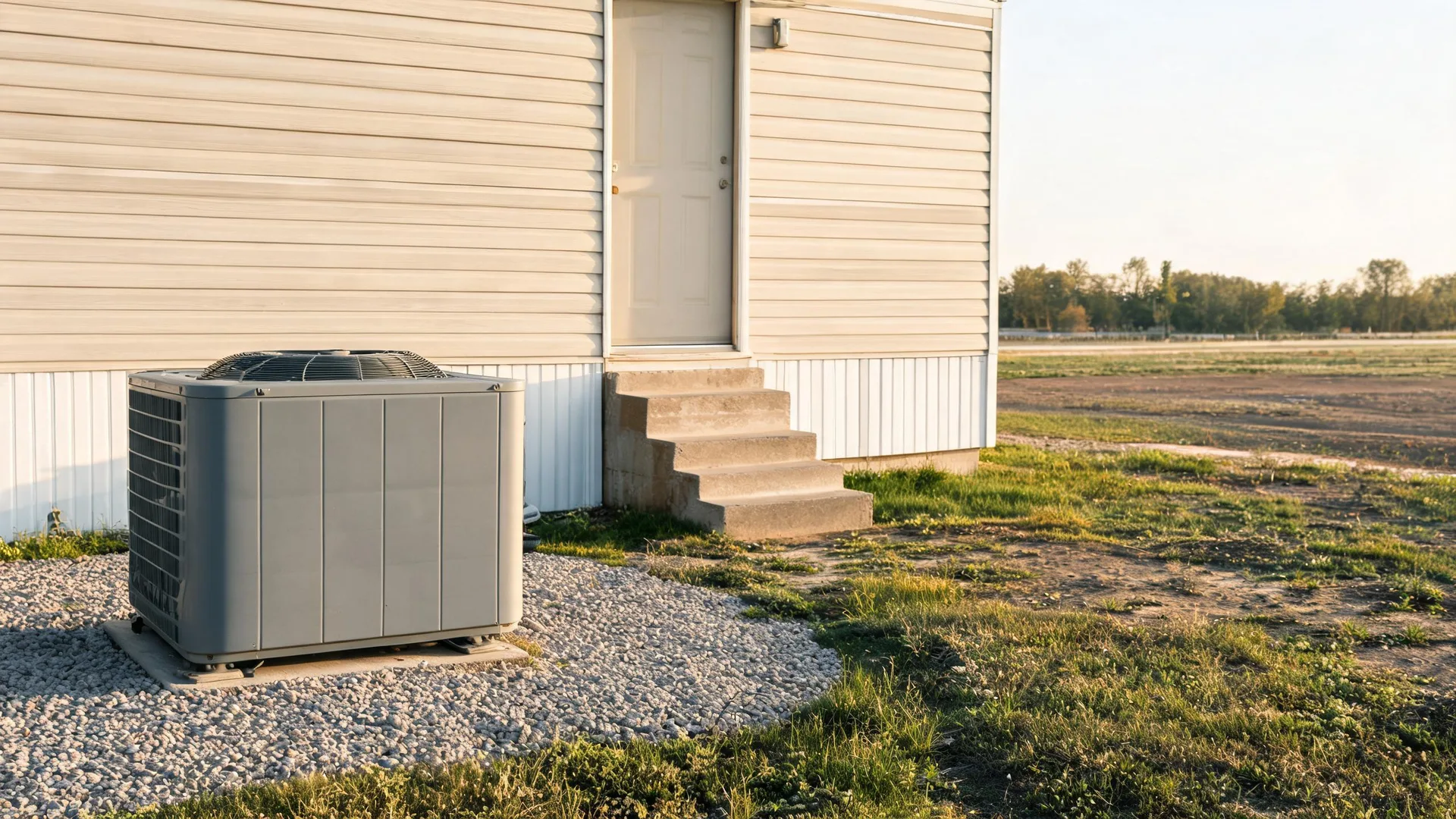
A gray heat pump condenser unit mounted on a concrete pad against the gray lap-siding exterior wall of a house.

What a Failing Heat Pump Sounds and Feels Like

A heat pump running in heat mode sounds different than one running in cooling. If it's blowing air that feels cool to the touch when it should be warm, that's worth noting before the tech arrives, it helps narrow down whether the reversing valve is stuck or something else is going on. Short cycling is another one: the unit kicks on, runs a few minutes, shuts off, then starts again a short while later. That's hard on the compressor and usually points to a refrigerant problem, a bad sensor, or airflow that's too restricted. Ice on the outdoor unit during a heating cycle is normal for a few minutes while it defrosts. Ice that stays, or builds up on the indoor coil, means something isn't cycling the way it should. Listen for anything new: a hum before it starts, a clank when it shuts off, a hiss that wasn't there before. None of these mean the unit is done. They mean a part is failing and the sooner it gets looked at, the less chance it takes something else down with it.

What's safe to check yourself

Look at the outdoor unit and clear away leaves, mulch or anything blocking the sides. Check the air filter and swap it if it's gray with dust. Walk through the house and feel whether every room gets air flow at the vents. Check the thermostat batteries if the display is dim or blank. These take a few minutes and rule out the simplest causes before anyone opens a panel.

What to leave alone

Don't take the cabinet off the outdoor or indoor unit. Don't touch the refrigerant lines or add anything to them. Don't reset the breaker more than once if it trips again right away, that's the system telling you something is wrong downstream. A tech needs to see the fault as it happened, not after it's been reset and cleared.

A heat pump that's struggling doesn't fix itself by staying on. If airflow is restricted, the indoor coil can ice over, and once that happens the system is cooling or heating even less while working just as hard. A compressor running low on refrigerant wears faster than one with a proper charge, because it's working harder to move the same heat. Short cycling adds up the same way, every start is a jolt the motor and compressor weren't designed to take over and over. A part that's failing but still limping along usually takes less to repair than one that's seized or burned out from being pushed past that point. Shutting the system off and calling for a look doesn't make the problem worse. Leaving it running on a part that's already struggling usually does.

A diagnostic visit starts with the complaint, not the equipment. The tech wants to know what the system is doing, when it started, and what it sounds or feels like when it acts up, because that narrows down where to look before any panel comes off. From there it's gauges on the refrigerant lines, a check of the electrical readings at the compressor and condenser fan, and a look at airflow across both coils. Static pressure in the ducts tells its own story, a system straining against too much resistance wears different parts than one that's low on charge. The reversing valve gets tested directly, since a valve stuck in one position can look like a dozen other problems until someone checks it. None of this is guesswork. Every reading either points at a failed part or rules one out, and a tech follows that chain until it ends somewhere specific.