Check the thermostat first
Make sure it's set to heat and the setting is above room temperature. A battery running low can blank the display or make it stop responding, and a schedule set wrong will hold the system back from doing anything at all.
Takes about a minute. No obligation.
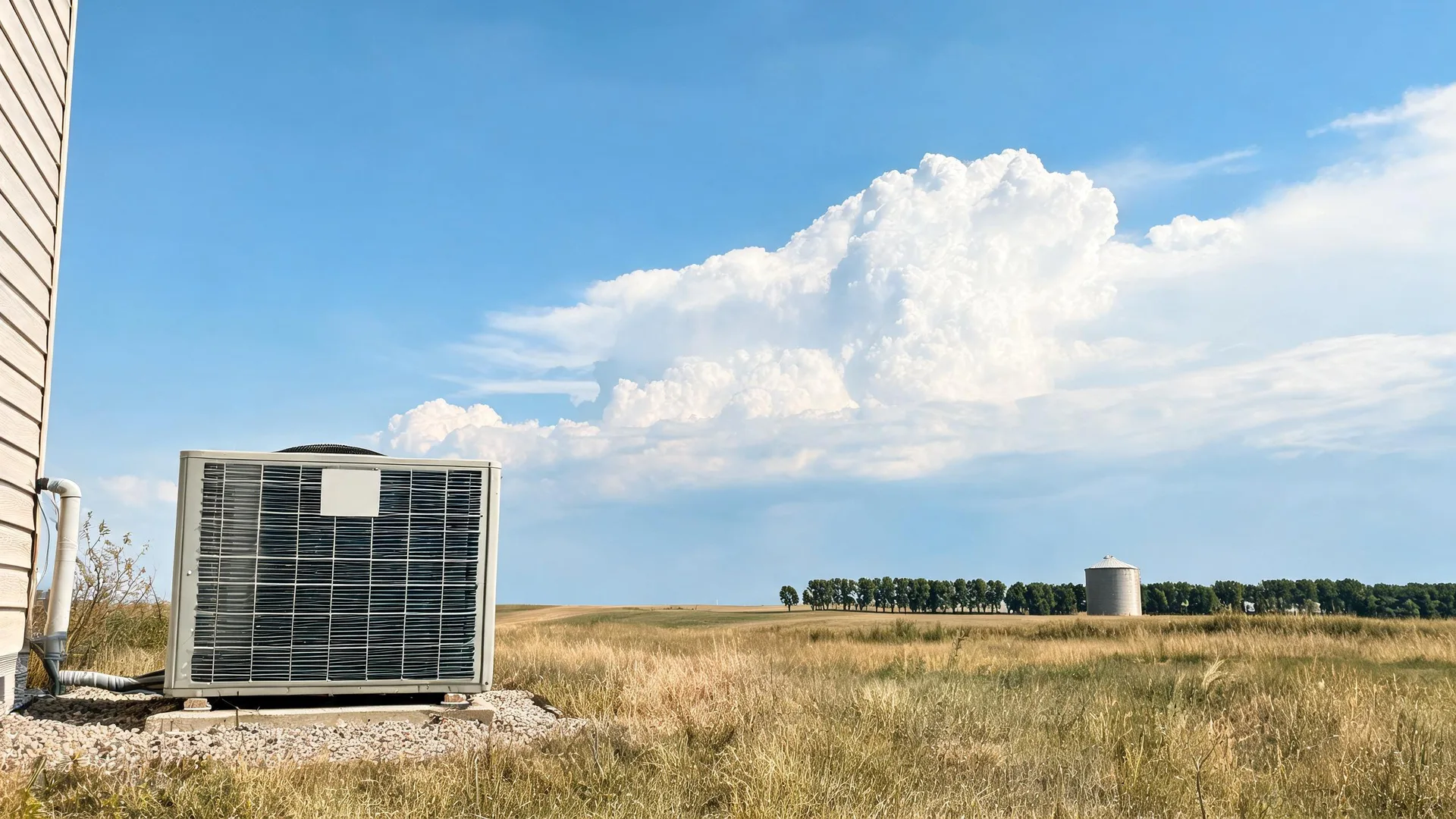
Lowndes County saw 299 severe weather events between 2015 and 2024, and damaging wind caused most of them. A heat pump's outdoor unit sits outside through all of it, exposed to wind-blown branches and whatever gets picked up in a storm. Hail hit the county too, and hail dents coils and bends fins even when the unit keeps running afterward. A system that still turns on isn't proof that nothing happened to the coil or the fan blades. If yours has weathered a storm recently, have it looked at, not just listened to.

NOAA nClimDiv, 1991–2020 normals
Wind damaged something in Lowndes County 269 times between 2015 and 2024.
Your outdoor unit has sat outside through all of that, so wear is the likely reason it's struggling now.




A bent fin or a dented coil won't always show up as a noise or a shutdown. The unit can keep running for months with the airflow just a little worse than it should be, and there's no way to tell from inside the house. That's the part worth asking a contractor to check directly, not guess at from how the system sounds or whether the air feels warm enough. If a tech is already out for a repair, have them look at the coil and the fan blades while they're there.
Wind has hit this county 269 times between 2015 and 2024. Whatever is wrong with your heat pump now, have a contractor check the outdoor unit itself before they write it off as something else.
Find a contractorIf the house is newer, the heat pump probably is too, and that changes the math on a repair call. A unit with a lot of working life left is worth fixing when something goes wrong with it. Check the age of the system before deciding anything, either from paperwork if the house came with it or by asking the contractor to check the nameplate on the outdoor unit. That number matters more than how the system sounds or how old the problem feels.
Make sure it's set to heat and the setting is above room temperature. A battery running low can blank the display or make it stop responding, and a schedule set wrong will hold the system back from doing anything at all.
Walk outside and check that nothing is blocking the outdoor unit, no leaves packed against the coil, no ice built up over the fan. Inside, pull the filter and hold it up to light. If you can't see light through it, that's choking airflow and worth ruling out before anything else.
A heat pump that's struggling usually tells you before it quits outright. Short cycling is one of the clearest signs, where the system kicks on, runs a few minutes, and shuts off again instead of completing a normal cycle. Ice on the outdoor coil in weather that isn't near freezing points to a refrigerant or airflow problem, not a normal defrost. Air coming out of the vents that feels barely warm, or warm for a while and then cool, often means the system can't keep up with the heat it's being asked to move. A hissing or bubbling sound near the outdoor unit can mean a refrigerant leak, and that's not something to wait out. If the system runs constantly without ever seeming to catch up, don't assume it just needs more time.
Age isn't the only thing that decides repair versus replacement. What broke matters just as much. A failed capacitor or a bad contactor is a small, contained fix, the kind of part that wears out on its own regardless of how good the rest of the system is. A compressor failure or a leak inside the coil is a different conversation, because those point to the core of the system rather than a part bolted onto it. Homeowners with the same age heat pump can get different advice, because one has a blown fan motor and the other has a compressor on its way out. Ask the contractor what actually failed, not just what it'll cost to fix it, before deciding which category your repair falls into.