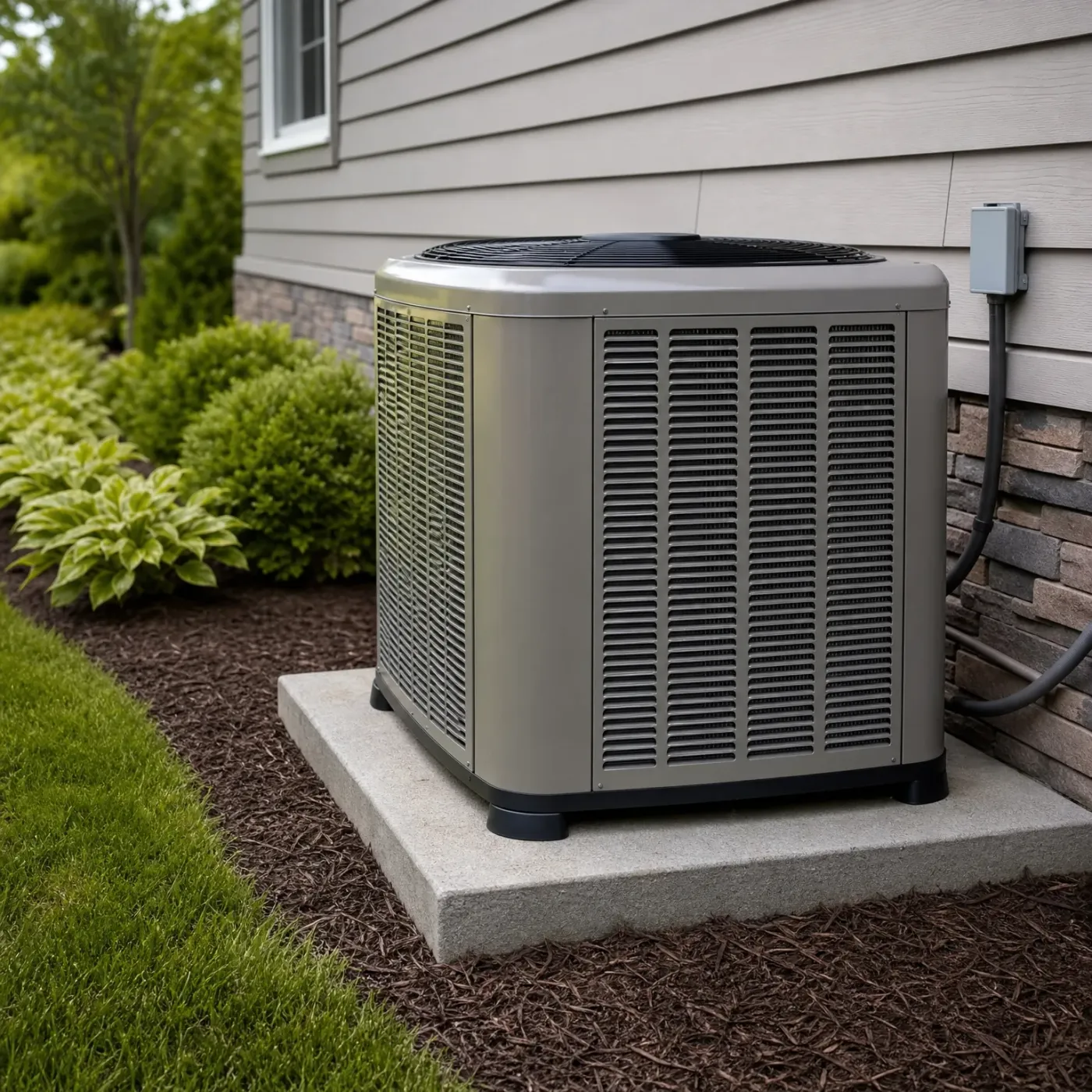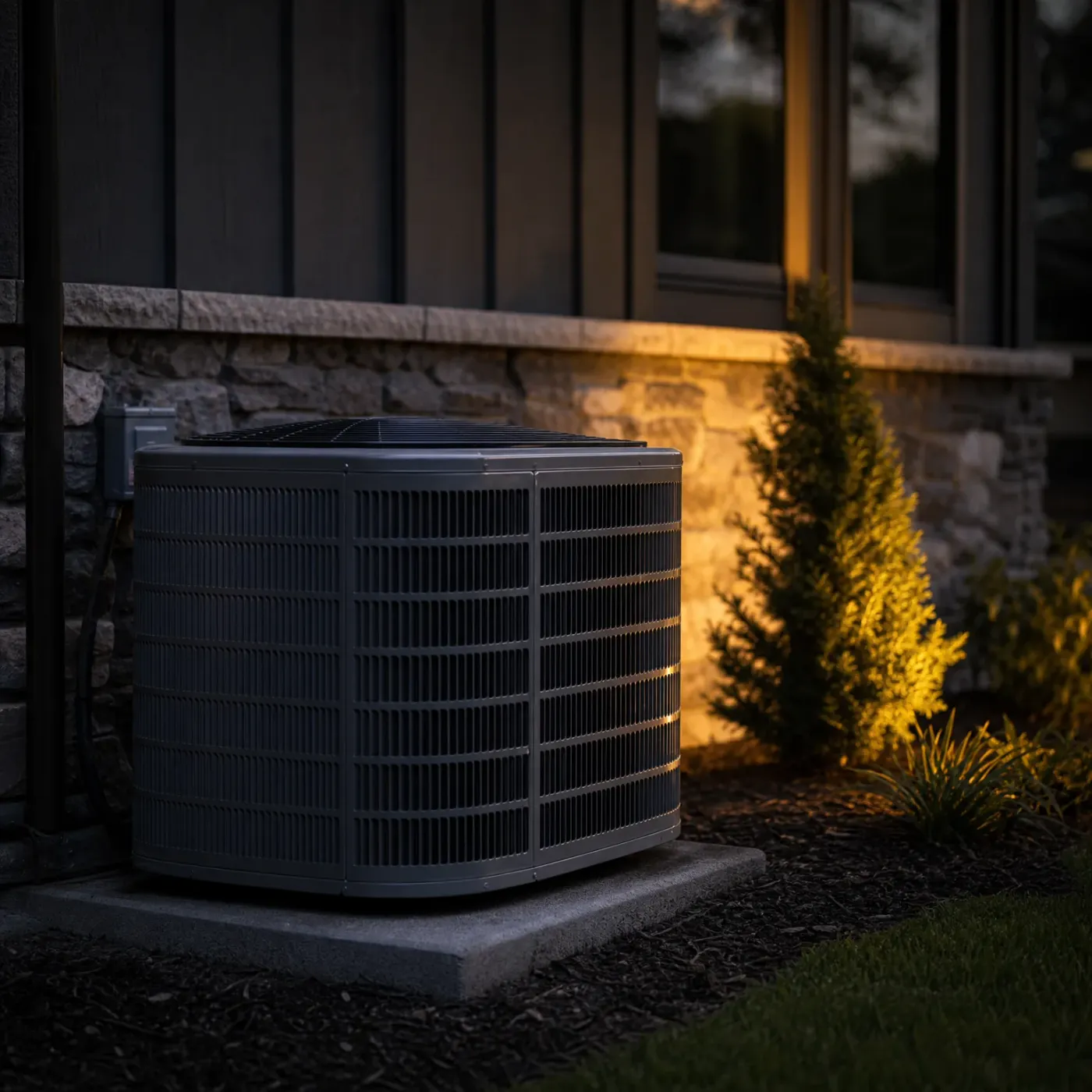






An outdoor air conditioning condenser unit on a concrete pad beside a house with stone veneer and vertical board siding, with a small shrub and mulch bed lit by a ground light at dusk.

An air conditioner pro near you

Why your AC smells musty in muggy Georgia summers

That musty smell means moisture is sitting somewhere in your system, usually the evaporator coil or the drain line, and Georgia's humidity keeps feeding it all summer. This page gets into what's causing it and what it means for your AC. Answer that, and you can skip the usual runaround of calling shops and repeating yourself. A contractor who handles this gets matched to you and reaches out directly.

Get matched

That musty smell usually means mold or mildew growing on the evaporator coil, inside the drain pan, or along the ductwork near the air handler. Your AC pulls moisture out of the air as it cools, and that water is supposed to drip down the drain line and out of the house. When the coil stays wet between cycles, or the drain line is partly clogged, or the ducts stay damp because the system is oversized and shuts off before it finishes dehumidifying, that moisture sits still instead of draining away. Georgia summers keep the air outside heavy with humidity, so the system runs long hours and never really gets a dry stretch to let things air out. A smell alone isn't an emergency, but it usually means something is wrong with drainage or airflow, and left alone it tends to get worse, not better, as the mold spreads across the coil and into the ducts that carry air through your house.

A gray outdoor air conditioner condenser unit on a concrete pad beside a house with horizontal lap siding, with a flowering shrub at left and a disconnect box with conduit on the wall at right.
A clean coil drains as it should, so the condensate runs out through the line instead of sitting and feeding mold.
An outdoor air conditioner condenser unit on a concrete pad beside a house with light horizontal vinyl siding, surrounded by bare dirt, gravel and dry leaves, with refrigerant lines and conduit running along the wall.
A dirty, neglected unit lets algae clog the drain line or pan, and that standing water is what you're smelling indoors.

How the Smell Actually Starts

  • Warm, humid air moves across the evaporator coil, and the coil pulls the moisture out as it cools the air.
  • That water should drip into the condensate pan and run out through the drain line to the outside.
  • A coil coated in dust holds water against its surface longer, which gives mold and algae a place to grow.
  • If the drain line clogs, water backs up into the pan and sits there instead of draining away.
  • Some air handlers sit inside a closet or closed-up space, so the smell from the coil area gets pulled straight into the air you breathe.
  • A musty smell that only shows up when the AC first kicks on usually points to the coil itself rather than the ductwork.

Your air conditioner's job is to pull moisture out of the air, not just cool it. Humid Georgia air moves across the evaporator coil, the coil drops the air's temperature, and the moisture that was riding in that air gives up and turns to water on the coil's surface. From there it's supposed to run down into the condensate pan below the coil and out through the drain line, usually ending up outside near your condenser or dripping into a floor drain. That's the whole system working as designed. Where it goes wrong is dust. A coil that's coated in dust holds water against its surface longer instead of letting it drain clean, and that wet film is exactly what mold and algae need to take hold. Once that growth starts, it doesn't stay put. The drain line itself can clog with the same algae, and when it does, water backs up into the pan and sits there instead of draining away. In a lot of homes the air handler is tucked into a closet or some other closed-up space, so whatever's growing on that coil or sitting in that pan doesn't stay contained. The air handler pulls return air right past it and pushes that smell through the vents into the rooms where you're living. If the smell hits strongest the moment the AC kicks on, that's usually the coil talking, not the ducts.

A woman in a mustard knit sweater sits on a light-colored sofa indoors, looking toward a bright window, with a potted fiddle-leaf fig plant behind her.
A woman with long brown hair in a cream knit turtleneck sweater sits on a light sofa indoors, looking off to the side, with a shelf of plants and pottery blurred behind her.
A woman with long brown hair in a dark red knit sweater sits on a gray couch with cushions, smiling and looking off to the side, with a window and indoor plant behind her.
A woman with long dark hair in a cream knit sweater sits on a sofa indoors, smiling and looking off to the side, with a blurred room, hanging light bulb and window behind her.

Why the smell gets worse in summer

Georgia summers push the air conditioner to run long stretches most days, and every one of those hours pulls more water out of the air and across the coil. A unit up north might cycle a few times a day. Yours is working for most of the day during July and August. That's more condensate moving through the drain line, more chances for it to slow down, and more time for mold to grow on anything damp inside the cabinet before the system ever shuts off long enough to dry out.


Why it doesn't just go away

Once mold or algae gets a foothold on the coil or in the drain line, it doesn't rinse off on its own. The coil stays wet every time the system runs, so the growth keeps feeding instead of drying out between cycles. A clogged drain line can back up water into the pan or even trip the system's safety switch and shut the AC off. The smell is a sign something inside needs to be cleaned or cleared, not something that clears up with time or a new air freshener.

An older woman in a cream knit sweater smiles while looking off-camera in a warmly lit kitchen, with a round loaf of bread on a wooden board in the foreground and a dark window behind her.
A woman and a child wrapped together in a thick knitted beige blanket on a sofa, both with eyes closed, beside a lit table lamp in a dim room.
An outdoor air conditioning condenser unit on a concrete pad beside a house with horizontal siding and stone veneer, with a gray electrical disconnect box and conduit on the wall and shrubs and mulch nearby.

A local pro for your air conditioner repair

Describe what your air conditioner is doing once, in one form.

Tell a local repair pro what your air conditioner is doing.

Fill out one form

No charge to send it. You decide if you hire them.

Clear It Yourself or Call for a Look

Clean the coil yourself

  • A soft brush and a coil cleaner made for AC units can clear light dust and film off the coil fins if you can reach them.
  • You can pour a cup of distilled vinegar down the drain line access port every few months to slow algae growth.
  • A wet-dry vacuum at the outside drain line opening can pull a clog free if the blockage sits near the end.
  • This works if the coil is only lightly dirty and the drain line clog is new, not years of buildup.
  • Doing it yourself tells you nothing about mold already growing inside the ductwork or the drain pan itself.
  • Georgia's humidity means whatever you clear can build back up again by next summer if nothing else changes.

Have a contractor look

  • A contractor can pull the coil panel and see how much buildup is actually on the coil, not just guess from the smell.
  • They can run a line to clear the drain fully, including sections you can't reach from the outside port.
  • If the smell is coming from inside the ductwork, that's not something a bottle of cleaner or a shop vac reaches.
  • A contractor can tell you whether the drain pan has standing water sitting in it right now.
  • They can check whether the clog or the mold is a symptom of something else, like a coil that never drains properly.
  • You skip the back and forth of trying one fix, waiting to see if the smell returns, then trying another.
A gray outdoor air conditioner condenser unit on a concrete pad beside a house with dark horizontal siding and a stone base, surrounded by gravel, with a flowering shrub at left and a concrete walkway in front.

System running clean

A coil like this drains the way it should, with water running straight out the line instead of pooling. No film on the fins, no grime around the base. Air moves through it without picking up any smell on the way into your ducts.

An outdoor air conditioner condenser unit sits on a concrete pad beside a stucco wall, with refrigerant lines and conduit running to the wall and a shrub to the left.

Coil caked with grime

Years of dirt and buildup on the fins hold water against the coil long after the system shuts off. That standing moisture is what breeds the smell, and a unit left like this usually needs more than a rinse to put right.

An outdoor air conditioner condenser unit sits on a gray pad beside a light vinyl-sided wall, on a concrete slab next to a gravel bed.
Before you get your air conditioner repair
A gray outdoor air conditioner condenser unit on a concrete pad beside a house with horizontal lap siding, with a wall-mounted disconnect box and conduit, mulch bed, shrub, and lawn nearby.
After you get your air conditioner repair

Power costs 14.74 cents per kilowatt-hour statewide

At 14.74 cents per kilowatt-hour, running your AC to fight humidity already shows up on your bill every summer. A clogged coil or drain line makes the system work harder and run longer to pull the same moisture out of the air, so the musty smell isn't the only cost sitting there.

EIA-861 2025 statewide residential average

  1. Warm, humid air from your home passes over the evaporator coil.

  2. The coil chills the air and condenses moisture out of it.

  3. Water drips off the coil into the condensate pan below.

  4. The drain line carries that water out of the house.

A smiling man in an olive T-shirt and jeans stands in an open front doorway holding the door, facing a person in a navy polo and cap seen from behind in the foreground, with horizontal wood-look siding and a potted white flowering plant nearby.

A musty smell is your AC telling you where the water's going

The smell is moisture sitting where it shouldn't, on the coil, in the pan, or along the drain line, and Georgia's air keeps it fed all summer long. That part doesn't change. What changes is how far along it is and what it'll take to clear it out, and that's not something to guess at from the smell alone.

Getting a straight answer means someone looking at your actual unit, not another search. That's the part you can hand off: instead of calling around Georgia for an HVAC contractor, explaining the smell over and over, and sorting through quotes, you can get matched with a contractor who knows this problem and let them reach out to you directly.

Interior corner of a living room with a sheer-curtained window, a light wood console table holding a vase of greenery and a shallow bowl, a woven basket on the lower shelf, and a blurred upholstered sofa and dark wood table in the foreground.
An outdoor air conditioning condenser unit on a concrete pad beside a dark stucco wall, with gravel bedding, shrubs, an ornamental grass clump, and a lawn in the foreground.

Get the right pro for your air conditioner

Answer a few questions instead of calling shop after shop.

RepairCentral ACGeorgia
Step 1 of 2

What ZIP code is the job in?