







An outdoor central air conditioning unit mounted on a concrete pad beside a blue-sided house at sunset.

AC Maintenance in Carrollton, GA

Tell us about the job

Takes about a minute. No obligation.

Tune-up, service, or cleaningCentral ACCarroll County, GA
Step 1 of 2

What ZIP code is the job in?

Carroll County recorded 102 severe weather events between 2015 and 2024. Most of that was wind, 87 events, with hail, tornadoes and tropical storms mixed in. Your outdoor unit sits right in the path of all of it, exposed to whatever blows through the yard. A storm can bend the fins on the coil or drive debris into the fan without leaving a mark you'd notice from the porch. Statewide, close to a third of households lost power for a full day or more last year. A unit that's already running clean has a better shot at starting back up without issue once the power does.

5 months
May through September, your air conditioner is on duty
88°F
the average summer afternoon it cools against
7 hail events
in ten years, and hail bends the fins on outdoor coils
87 wind events
in ten years, and wind drives debris into outdoor units
Isometric cutaway illustration of a small home interior with furniture and ducting, showing an indoor air handler connected by lines to an outdoor condenser unit on a pad.
Your air conditioner works hardest from June through September.

NOAA nClimDiv, 1991–2020 normals

Cooling starts in May here, and it starts hard.

Book the tune-up in April, before the first hot stretch puts load on a system no one's checked since last year.

Power here runs 14.78 cents a kilowatt-hour, and a dirty system burns more of it

Power here costs 14.78 cents per kilowatt-hour
Cooling runs May through September
Summer afternoons average 88°F
Most Systems Here Are Still YoungHalf the homes in Carroll County were built in 1991 or later.

Five months of cooling here is real work for a system, not a quick stretch in July. Afternoons sit near 88 degrees through June, July and August, and the air carries a heaviness that makes the system run longer to pull the same moisture out. That kind of steady load wears on parts faster than people expect. A capacitor or a contactor that's been running hard all summer tends to weaken before one that only kicks on now and then. Caught early, that wear is something small a contractor can fix. Found mid-summer, it's the reason the house stops cooling.

Get the outdoor unit checked before the next storm rolls through

Have the outdoor unit checked for bent fins and debris before storm season gets going. A contractor can clear out what's built up and confirm the fan and coil came through clean, so the system is ready to run the moment power comes back on.

Find a contractor
A man in a cap, dark shirt and tan work pants walks up concrete steps toward a red front door, carrying a canvas tool bag with tools in its side pocket.
An outdoor air conditioning condenser unit mounted on a concrete pad beside a house, with electrical conduit running to a wall-mounted disconnect box.

A Young System Still Needs A Yearly Look

A system installed when the house was built still has years ahead of it. That's worth protecting with a yearly check rather than waiting for it to fail. A tune-up now catches the small stuff, a weak capacitor, a coil that's starting to clog, while it's still cheap to fix. Skip a few years of checks and a young system ages like an old one.

What a tune-up actually checks

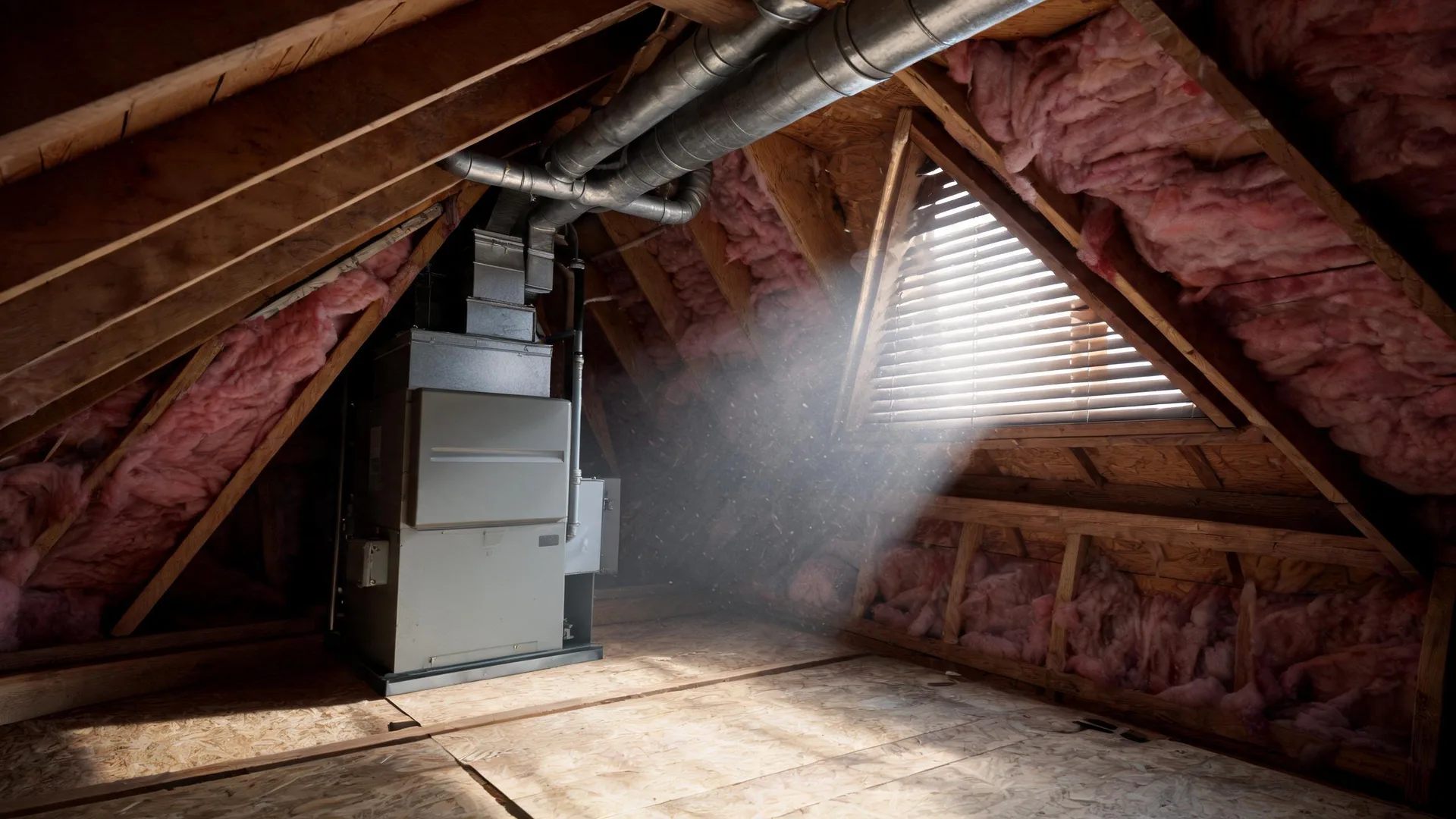
A technician measures the refrigerant charge, checks the suction line temperature, and tests the capacitor and contactor under load. These are the parts that fail first and the ones a visual look from the yard won't tell you anything about. The coil gets inspected for dirt buildup, the blower wheel for dust caking on the blades, and the drain line for algae starting to block it. None of this shows up as a symptom until the system either stops cooling or trips a breaker trying to.

The signs you can catch yourself

Warm air out of a vent that used to blow cold, ice forming on the copper line running to the outdoor unit, or the system cycling on and off in short bursts instead of running a steady stretch all point to the same kind of problem: something restricting airflow or refrigerant flow that a tune-up would have caught earlier. A burning smell or a breaker that trips when the unit starts isn't a wait-and-see sign. That's a motor or electrical fault that gets worse, not better, the longer it runs.

An outdoor air conditioning condenser unit installed beside the exterior wall of a blue vinyl-sided house at sunset.

Book your AC tune-up in April, before homes here start needing cooling in May.

  1. Jan
  2. Feb
  3. Mar
  4. Apr
  5. May
  6. Jun
  7. Jul
  8. Aug
  9. Sep
  10. Oct
  11. Nov
  12. Dec

A tune-up checks the refrigerant charge, cleans the coils, tests the capacitor and tightens the electrical connections.

A tune-up starts with the filter and the coil, because dirt in either one makes the whole system work harder to move the same air. The technician checks refrigerant charge against what the system calls for, since too little or too much both wear on the compressor over time. Electrical connections get tightened, because a loose connection heats up, and heat breaks down the wire and the terminal it's attached to. The condensate drain gets cleared too, so water has somewhere to go instead of backing up into the pan or the ceiling below it. None of this is glamorous work. It's the same handful of checks every time, done well, so the parts that fail first get caught before they do.