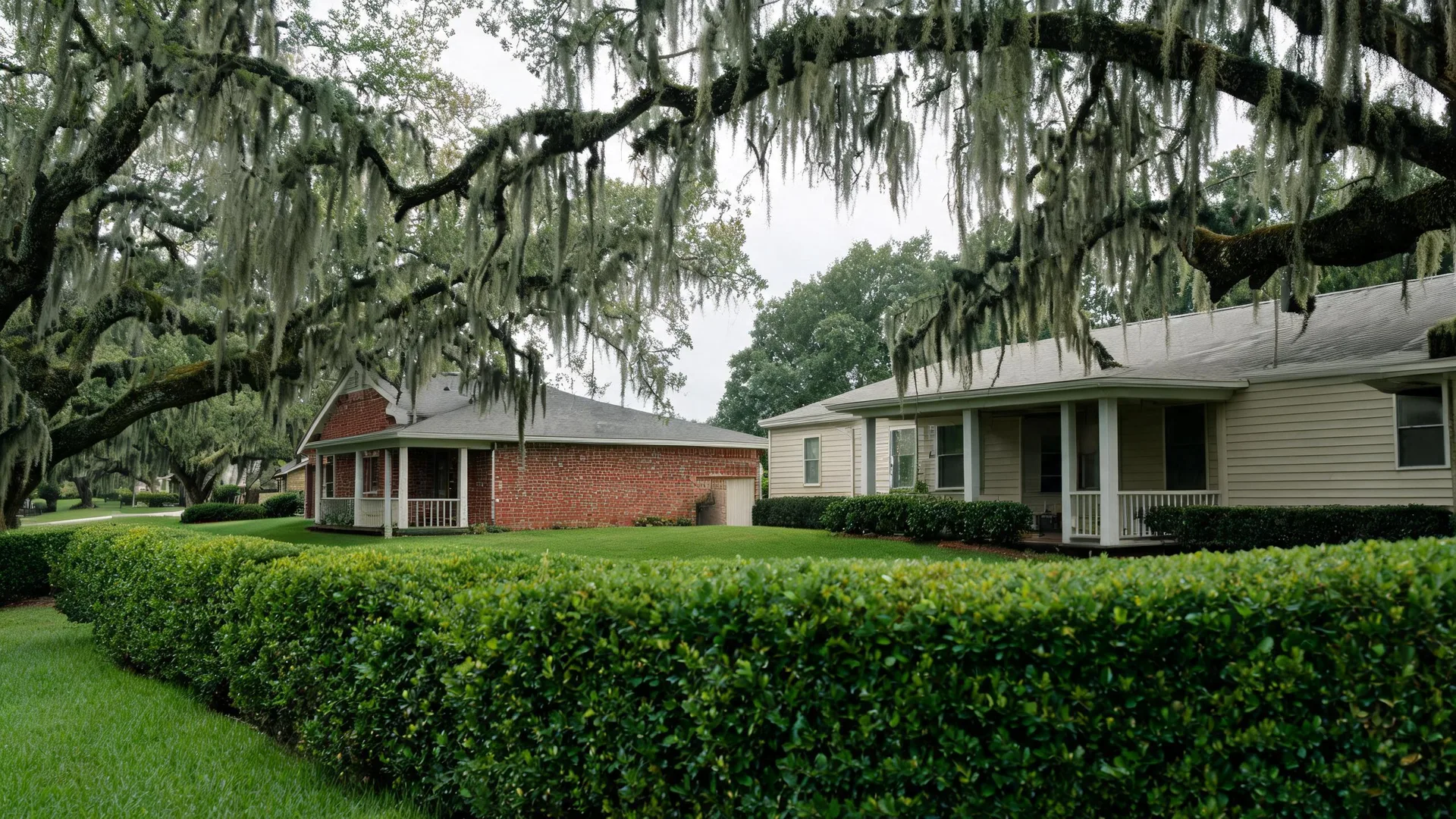






Two single-story houses, one brick with a covered porch and one with pale siding, seen across a mown lawn and a trimmed hedge, beneath large oak branches draped with Spanish moss.

AC Maintenance in Covington, GA

Tell us about the job

Takes about a minute. No obligation.

Tune-up, service, or cleaningCentral ACNewton County, GA
Step 1 of 2

What ZIP code is the job in?

Electricity in Newton County runs 14.29 cents per kilowatt-hour. A dirty coil or a low charge makes the compressor work harder to move the same amount of cool air through the house, and that shows up on the meter. None of that costs you anything if the system is tuned to run the way it was built to. Skip the tune-up and you're paying the going rate to fight a problem that didn't need to exist.

5 months
May through September, your air conditioner is on duty
89°F
the average summer afternoon it cools against
6 hail events
in ten years, and hail bends the fins on outdoor coils
39 wind events
in ten years, and wind drives debris into outdoor units
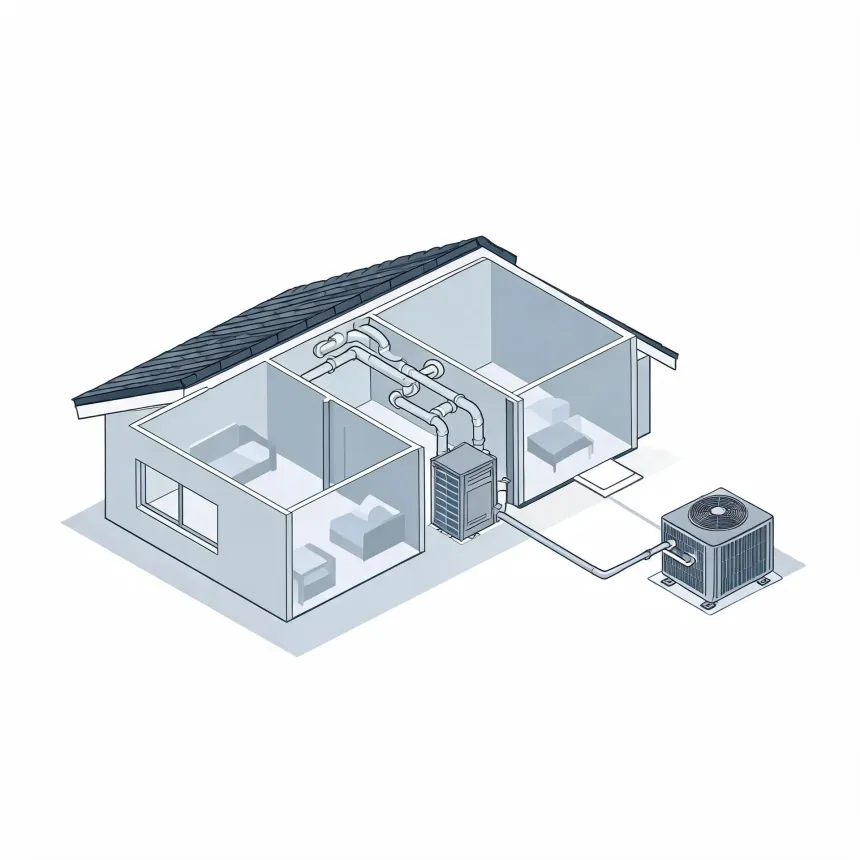
Isometric line illustration of a cutaway single-story house showing interior rooms, ductwork, an indoor air handler or furnace, and a refrigerant line running to an outdoor condenser unit on a pad.
Your air conditioner works hardest from June through September.

NOAA nClimDiv, 1991–2020 normals

May is the first full month of cooling here.

April is when the tune-up needs to happen, before the system is working that hard.

Half the homes here were built in 1999 or later, with years left on these systems

Half the homes here were built by 1999
Cooling runs May through September
Summer afternoons average 89°F
The Weather Doesn't Let This System RestFive months of cooling a year, with afternoon highs near 89°F, wears parts faster than most places see.

If your system came with a newer build here, it's probably got real years left in it. A yearly tune-up is what keeps those years intact. The parts that fail first, the capacitor, the contactor, the fan motor bearings, wear at a predictable rate, and catching one early is a different repair than catching it after it takes something else down with it. An AC that's never been checked still runs, but it's aging faster than it has to. One visit a year is enough to keep a newer system on schedule instead of falling behind it.

A Tuned System Is the Cheaper One to Run

A clean coil and the right charge keep the compressor from working harder than it has to. That difference shows up on the meter all summer, not just once.

Find a contractor
A man in a gray long-sleeve shirt and work pants carries a canvas tool bag as he climbs porch steps toward an orange front door of a gray clapboard house, with a potted shrub to the right.
An outdoor air conditioning condenser unit mounted on a concrete pad beside a house, with electrical conduit running to a wall-mounted disconnect box.

Check It Before It's Running Five Months Straight

Get the tune-up done before May and worn parts get found on a mild day instead of a hot one. A technician can catch a weak capacitor or a bearing starting to go while the system is running easy. Wait until July and that same part fails under full load, afternoon highs near 89°F, the system running flat out for hours at a stretch. One is a scheduled visit. The other is the system down on the worst day to be without it.

The Filter Decides How Hard Everything Else Works

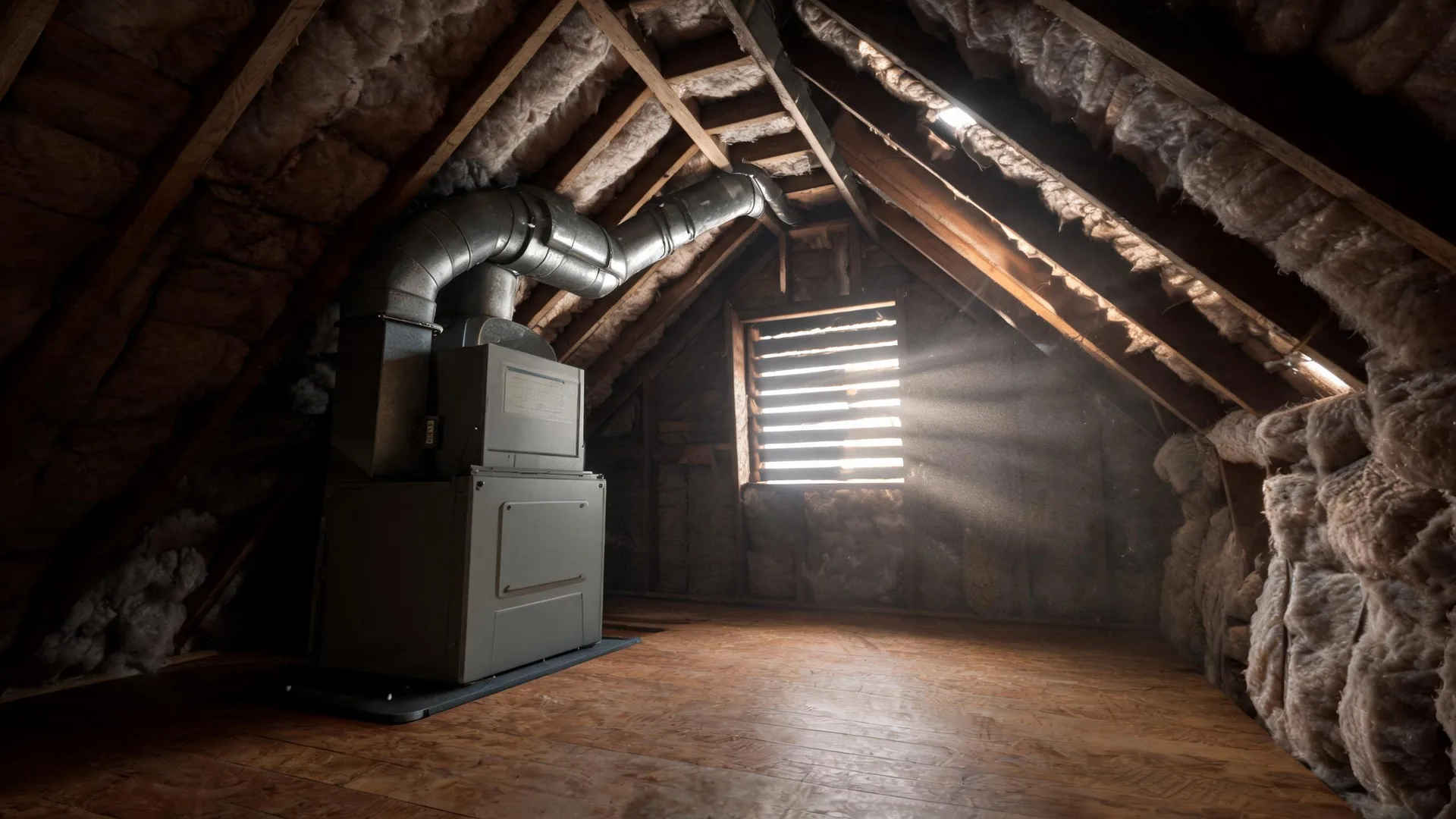
A clogged filter chokes the air moving across the evaporator coil. Starve that coil of airflow and it can get cold enough to ice over, and once ice forms on the coil the system cools worse, not better. The compressor keeps running, pulling the same power for less cooling, and a filter is the easiest part of this whole system to check and swap.

The Coil and the Drain Fail Quietly

A dirty condenser coil outside can't shed heat the way it's supposed to, so the compressor runs longer to get the same result. Inside, the drain line carries off the water the evaporator pulls out of the air, and when that line clogs, the water backs up and finds somewhere else to go, usually the ceiling or floor below the unit. Both get caught in a tune-up before either one turns into a bigger repair.

An outdoor central air conditioning unit mounted on a concrete pad beside a blue-sided house at sunset.

Book your AC tune-up in April, before homes here start needing cooling in May.

  1. Jan
  2. Feb
  3. Mar
  4. Apr
  5. May
  6. Jun
  7. Jul
  8. Aug
  9. Sep
  10. Oct
  11. Nov
  12. Dec

A tune-up checks the refrigerant charge, cleans the coils, tests the capacitor and tightens the electrical connections.

A tune-up is a specific list, not a glance at the unit. The technician checks refrigerant charge against what the system calls for, since too little or too much makes the compressor work harder either way. The capacitor gets tested under load, not just looked at, because a capacitor can read fine sitting still and still fail to start the compressor on a hot afternoon. Electrical connections get checked for corrosion and tightened, since a loose connection is where heat builds and a wire eventually burns through. The condenser coil gets cleaned so it can shed heat the way it was built to, and the blower wheel gets checked for the dust and debris that throw it out of balance. A technician also checks the contactor, the part that switches the compressor on and off, since a pitted contactor can start sticking and shorten the life of everything downstream of it.