






A row of single-story houses, the nearest of red brick with a covered porch and others with light siding, set behind a mowed lawn and a tall trimmed hedge, with large oak trees draped in Spanish moss overhead.

AC Maintenance in Jefferson, GA

Tell us about the job

Takes about a minute. No obligation.

Tune-up, service, or cleaningCentral ACJackson County, GA
Step 1 of 2

What ZIP code is the job in?

A dirty filter is where most AC trouble starts. Air has to pass through it before it ever reaches the coil, and when it's clogged, the system has to work harder to pull air through at all. That strain shows up elsewhere, usually as the evaporator coil icing over or the compressor running longer than it should. The coil itself has to stay clean too, since a thin layer of dust on those fins acts like insulation and keeps the system from pulling heat out of the air the way it's supposed to. Then there's the condensate drain, the part people forget about entirely. It's just a small tube carrying off the water the coil pulls out of the air, but when it clogs with algae or debris, that water backs up and finds the nearest place to go, which is usually your ceiling or a pan on the floor.

5 months
May through September, your air conditioner is on duty
88°F
the average summer afternoon it cools against
9 hail events
in ten years, and hail bends the fins on outdoor coils
46 wind events
in ten years, and wind drives debris into outdoor units
Isometric cutaway illustration of a single-story house showing interior rooms with furniture, overhead ductwork, an indoor air handler unit, and an outdoor condenser unit connected by lines at the side of the building.
Your air conditioner works hardest from June through September.

NOAA nClimDiv, 1991–2020 normals

AC runs in Jackson County from May through September.

Get it checked in April, before the system has to carry the summer load.

Half the homes in Jackson County are young enough that regular care still pays off

Half the homes here were built by 2002
Cooling runs May through September
Summer afternoons average 88°F

AC here runs May through September, with afternoon highs averaging 88°F through June, July and August. That's five months of steady work for one system. One visit a year, done before that stretch starts, is enough to catch a weak capacitor or a dirty coil before summer puts real load on it. Nothing about Jackson County asks more of an AC system than those five months already do. There's no case for checking it more than once. Done at the right time, that's enough.

One visit, before summer starts, is enough

One visit a year, done before summer, is enough to catch a weak capacitor or a dirty coil before the heat sets in. Georgia homes paid 14.08 cents per kilowatthour in 2024, and a system working clean stays cheaper to run than one working dirty all summer.

Find a contractor
A man in a cap, dark long-sleeved shirt and brown work pants carries a worn leather duffel bag up porch steps toward an orange front door, with a potted shrub in a terracotta planter to the right.
An outdoor air conditioning condenser unit mounted on a concrete pad beside a house, with electrical conduit running to a wall-mounted disconnect box.

The difference shows up in what gets tested, not what gets glanced at

A quick visit looks at what's easy to reach. Someone glances at the filter, checks that the system kicks on and blows cold, and moves on. A thorough one puts a gauge on the lines and a meter on the compressor's run current, because those numbers catch a system drifting toward failure long before the house feels it. It means pulling the blower wheel to check for dust buildup on the blades, not just the coil in front of it. It means checking the suction line temperature against the pressure reading, since that comparison is what actually confirms the refrigerant charge is right, not just close. A quick tune-up ends when the system turns on. A thorough one ends when every part that strains under summer load has been tested while it's working, not just looked at while it's idle.

Short cycles are a sign, not just an annoyance

An AC that shuts off a few minutes after starting, then kicks back on soon after, isn't resetting itself the way it should. Short cycling like that is often the compressor struggling against low refrigerant or a failing capacitor, and it wears the compressor down faster than normal operation would.

A warm room with a cool vent means something's wrong upstream

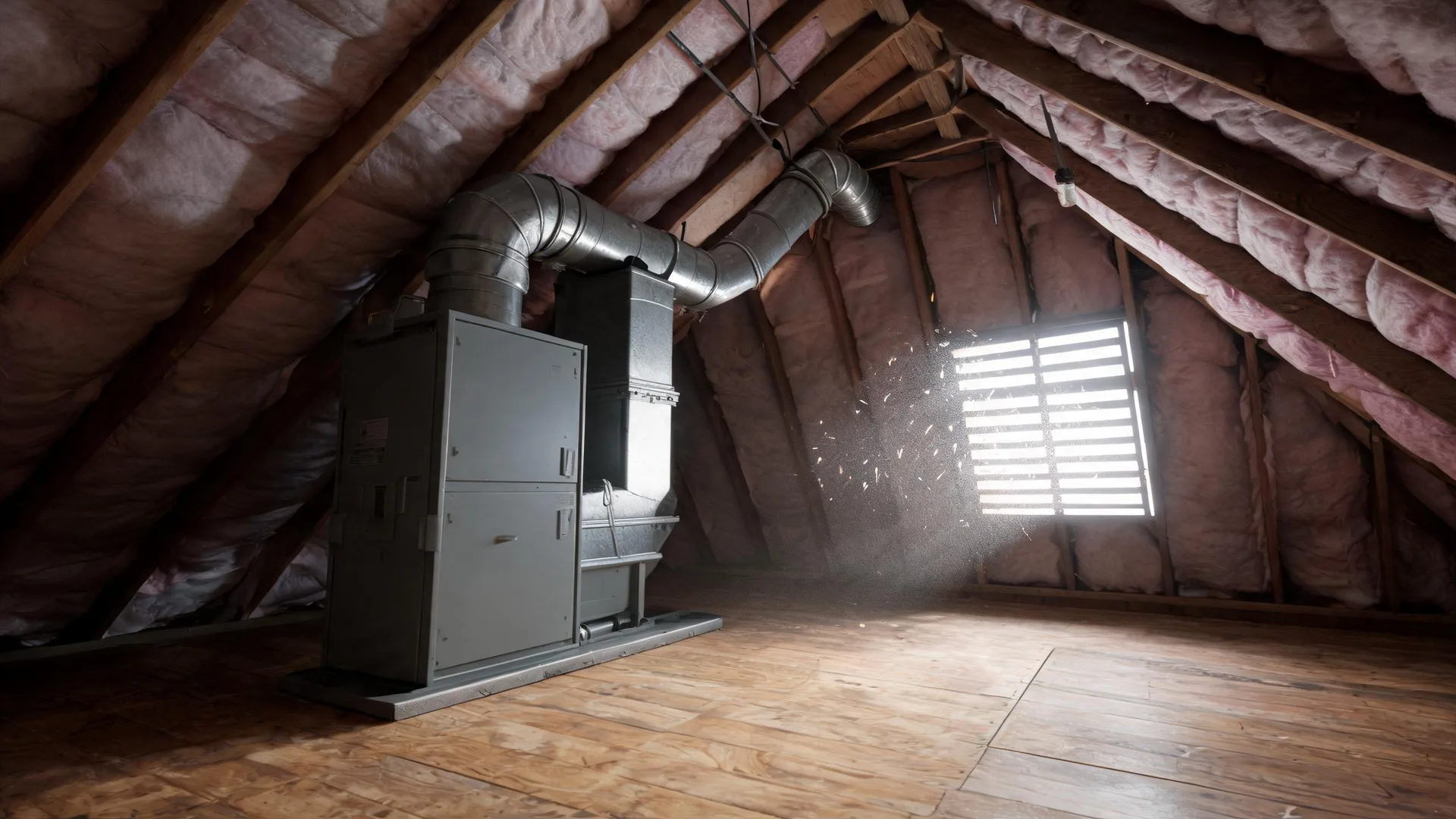
If air coming out of the vents feels right but one room still won't cool down, the problem usually isn't the thermostat or the vent itself. It points to something further back, like a coil that's lost its ability to pull heat out of the air, or ductwork losing cool air before it gets there.

Aerial view of a gray outdoor air conditioning condenser unit mounted on a concrete pad next to a house with vinyl siding.

Book your AC tune-up in April, before homes here start needing cooling in May.

  1. Jan
  2. Feb
  3. Mar
  4. Apr
  5. May
  6. Jun
  7. Jul
  8. Aug
  9. Sep
  10. Oct
  11. Nov
  12. Dec

A tune-up checks the refrigerant charge, cleans the coils, tests the capacitor and tightens the electrical connections.

A real tune-up starts outside, at the condenser. The fins on that outdoor unit need to be straight and clear, because bent or clogged fins block the airflow the system depends on to release heat. From there it's a check of refrigerant pressure, since too little means a leak somewhere in the lines, and too much points to a charging problem or restricted airflow. The contactor and capacitor get tested under load, not just looked at, because a capacitor can sit there looking fine and still fail to start the compressor when it's asked to. Electrical connections get checked too, since a loose connection at the contactor builds heat over time and that heat is what eventually burns through it. Last comes the condensate drain, cleared so the water the coil pulls out of the air has somewhere to go besides a pan on the floor. Skip any one of these and the system can still run. It just won't run the way it's supposed to.