






An outdoor air conditioning condenser unit positioned on a concrete pad next to a blue-sided house, surrounded by green shrubs and flowering hydrangeas at sunset.

AC Maintenance in Monroe, GA

Tell us about the job

Takes about a minute. No obligation.

Tune-up, service, or cleaningCentral ACWalton County, GA
Step 1 of 2

What ZIP code is the job in?

Walton County saw 191 severe weather events between 2015 and 2024, and most of that was damaging wind, 176 times in the same stretch. Add in 3 tornadoes, 4 hail events, and 6 tropical storms or hurricanes passing through, and that's a lot of chances for debris to hit an outdoor unit sitting in the yard. A branch, a chunk of hail, or just grit blown into the coil can all affect how the unit runs. A tune-up gives a tech the chance to look the unit over for that kind of damage and clear out anything that built up before the next storm comes through.

5 months
May through September, your air conditioner is on duty
89°F
the average summer afternoon it cools against
4 hail events
in ten years, and hail bends the fins on outdoor coils
176 wind events
in ten years, and wind drives debris into outdoor units
Isometric cutaway illustration of a single-story house showing interior rooms, ductwork and an air handler in the attic space, and an outdoor condenser unit connected by lines at the exterior wall.
Your air conditioner works hardest from June through September.

NOAA nClimDiv, 1991–2020 normals

A dirty coil or a weak capacitor makes the compressor work harder to do the same job.

At 13.96 cents a kilowatt-hour, a unit working harder than it needs to shows up on the bill all summer.

Half the homes here were built by 1997, young enough that a yearly check is what keeps the system reliable instead of chasing problems

Half the homes here were built by 1997
Climate zone 3A
Power here costs 13.96 cents per kilowatt-hour

Cooling runs about five months here, May through September, with afternoon highs averaging 89°F in June, July and August. That dew point of 67°F means the air stays heavy on top of the heat, so the system is pulling out moisture as hard as it's pulling down temperature. A unit doing that most days for five months wears parts a lot faster than one that only kicks on now and then. A weak capacitor or a dirty coil that could limp along somewhere milder tends to show itself here first, usually right when the heat is at its worst and a tech is hardest to get fast. A tune-up before the season gets going catches that kind of wear while there's still time to deal with it.

Get the outdoor unit checked before the next storm, not after

The outdoor unit sits outside all year, through whatever wind and hail come through the county. A tune-up gets it checked for that kind of damage and cleared of any debris before the next storm rolls in, so the unit isn't trying to run with a bent fin or a coil packed with grit.

Find a contractor
A man in a dark jacket and brown work pants, seen from behind, climbs wooden porch steps toward an orange door while carrying a canvas tool bag, with a potted shrub in a terracotta urn to the right.
A gray residential air conditioner condenser unit mounted on a concrete pad in an open grass field.

April is the month to call, before May asks anything of it

May is when it starts, and it starts hard. The unit goes from sitting idle to running every day, all day, with no easing into it. A tune-up in April catches a weak part before that first real month puts load on it. Wait until May and the tech is booking around calls from units that didn't make it through that first stretch.

The filter is the cheapest part to check and the easiest to ignore

A clogged filter starves the system of airflow, and the evaporator coil behind it can ice over when that happens. Once ice builds on the coil, the unit cools worse, not better, no matter how long it runs. A tech checks the filter on every tune-up because it changes how hard everything downstream has to work.

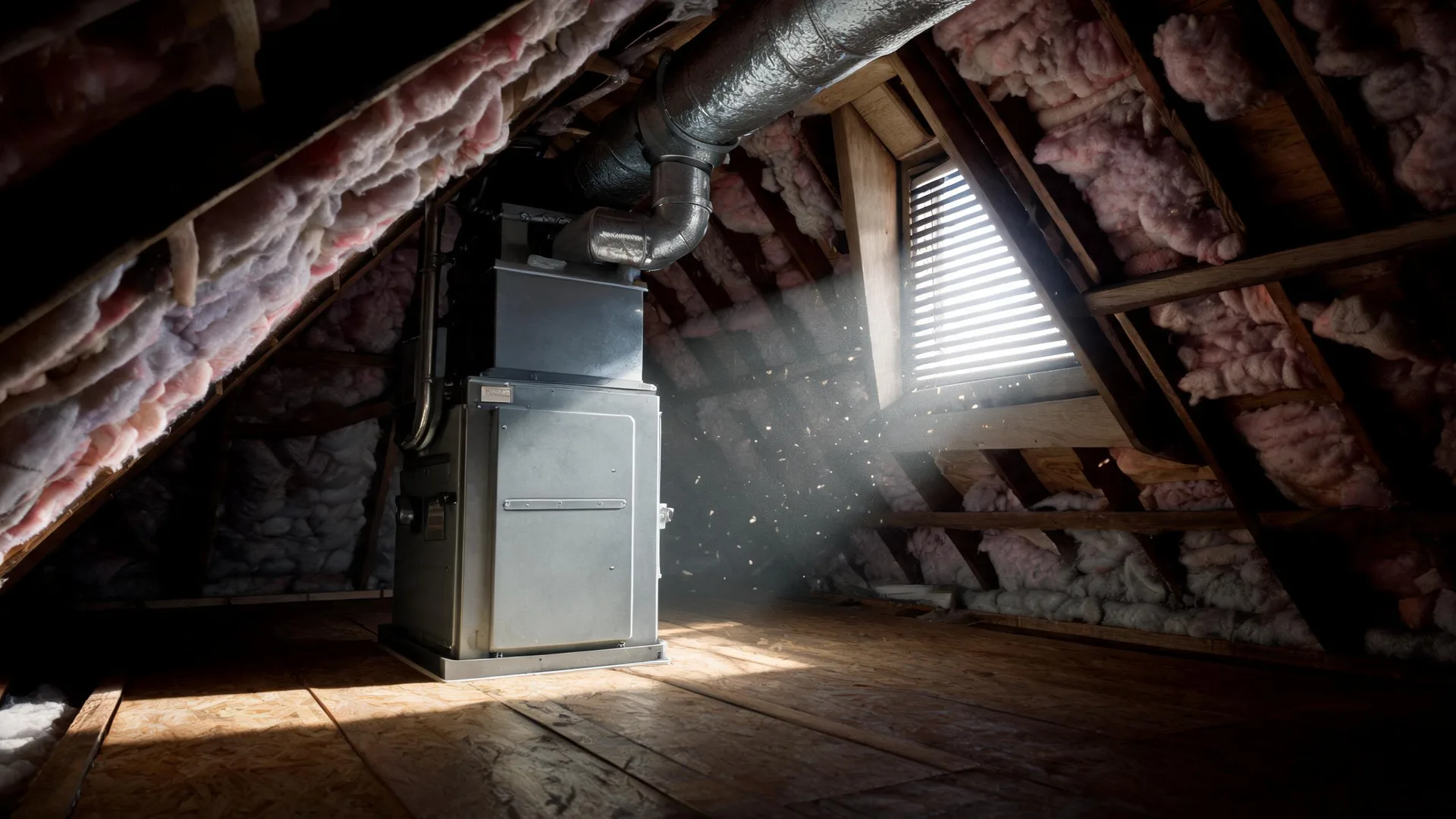
The drain line decides whether a clog stays small or becomes water damage

Condensate has to go somewhere, and the drain line carries it out through a small channel that can clog with algae and dust. Once that line backs up, the pan overflows, and a float switch may shut the whole system down to stop it. Clearing that line before it clogs is part of what a tune-up checks.

Overhead view of an outdoor AC condenser unit on a concrete pad next to a house with a dark shingle roof.

Book your AC tune-up in April, before homes here start needing cooling in May.

  1. Jan
  2. Feb
  3. Mar
  4. Apr
  5. May
  6. Jun
  7. Jul
  8. Aug
  9. Sep
  10. Oct
  11. Nov
  12. Dec

A tune-up checks the refrigerant charge, cleans the coils, tests the capacitor and tightens the electrical connections.

A proper tune-up starts with power to the unit off, then the tech pulls the panel and looks at what's actually there. The capacitor gets tested under load, not just eyeballed, because a weak one can still look fine sitting still. Refrigerant charge gets checked against what the system calls for, since too little or too much both make the compressor strain. The coil gets cleaned if it's dirty, the fan blade gets checked for wobble, and electrical connections get tightened since a loose one heats up and fails before anything else does. The contactor gets looked at too, because the pitting that kills it is slow and invisible until the switch stops making contact. None of this is guesswork. Each part gets measured against a number the manufacturer set for it, and the tech writes down what's close to that number and what's drifting away from it.