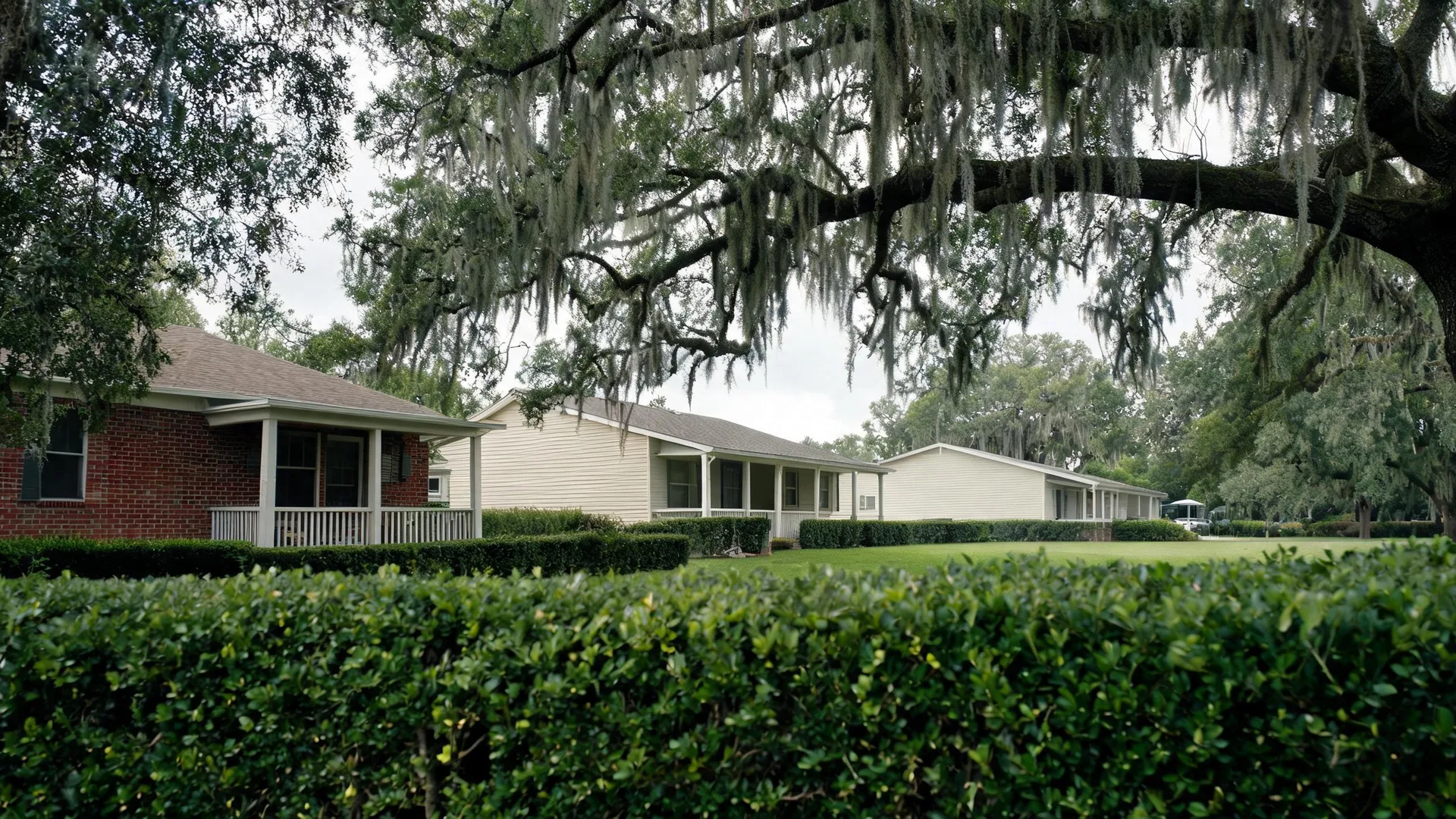
Single-story buildings with pale siding and one brick section with a covered porch stand behind a trimmed hedge and lawn, under a large moss-draped oak branch.

AC Maintenance in Rome, GA

Tell us about the job

Takes about a minute. No obligation.

Tune-up, service, or cleaningCentral ACFloyd County, GA
Step 1 of 2

What ZIP code is the job in?

Electricity here runs 15.50 cents a kilowatt-hour

That's what homes in Floyd County paid on average in 2025. A dirty coil or a low charge makes the compressor work harder to cool the same house, and every one of those extra watts gets billed at that rate.

A tune-up catches that before the bill does

A technician checking the refrigerant charge, the coil and the airflow finds the things that make a unit strain. Fixing them now means the system reaches the temperature you set without working past what it needs to.

5 months
May through September, your air conditioner is on duty
89°F
the average summer afternoon it cools against
6 hail events
in ten years, and hail bends the fins on outdoor coils
95 wind events
in ten years, and wind drives debris into outdoor units
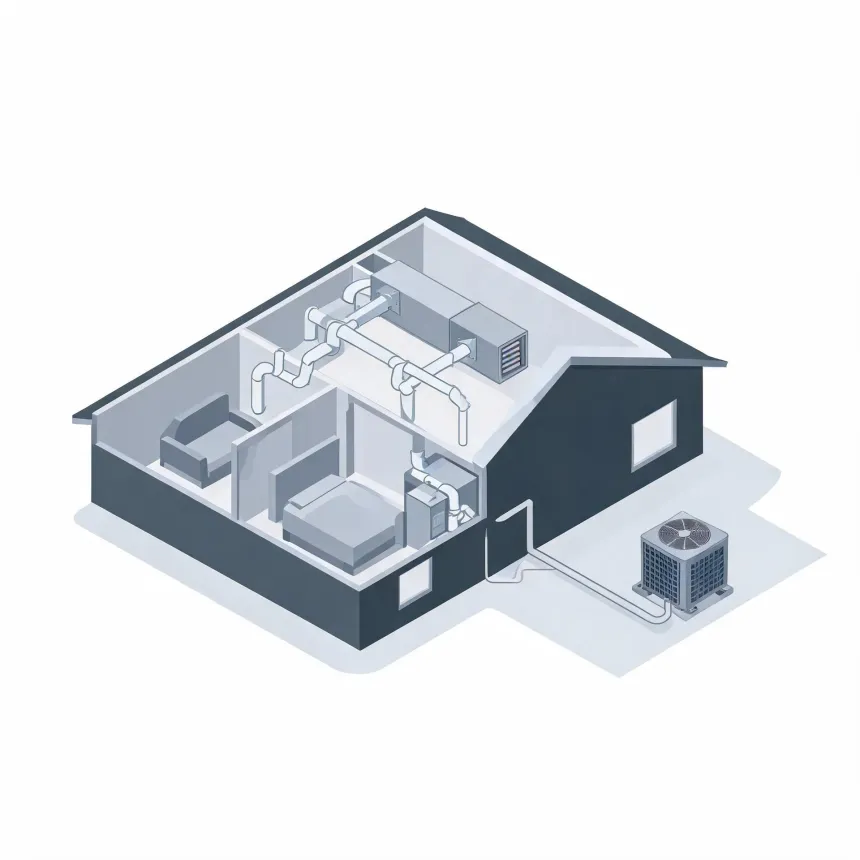
Isometric cutaway illustration of a house showing interior ductwork, an air handler and furnace unit, and an outdoor condenser connected by lines outside the wall.
Your air conditioner works hardest from June through September.

NOAA nClimDiv, 1991–2020 normals

Floyd County logged 115 severe weather events between 2015 and 2024, including 95 damaging wind events and 3 tornadoes.

An outdoor unit sits through all of that, and bent fins or a cracked fan blade can go unnoticed until the system is asked to work.

Five months of 89 degree afternoons wear this system down fast

Cooling runs May through September
Summer afternoons average 89°F
95 damaging wind events from 2015 to 2024
Get it checked in April, before it has to workCooling starts here in May.

That outdoor unit has already sat through this year's storms by the time anyone thinks to look at it. A technician can check it before the next one comes through: fins straightened, the fan blade spun by hand to check for a wobble, leaves and grass clippings pulled out of the cabinet. None of that shows from the kitchen window. A unit that looks fine from ten feet away can still be pulling air through a clogged coil or turning on a blade that's a little bent, and either one makes it run longer to do the same job.

Get it running efficiently before summer runs up the bill

A system that has to strain gets billed for every extra watt it pulls. A tune-up finds the low charge or dirty coil now, so it reaches the temperature you set without working past what it needs to.

Find a contractor
A man in a dark shirt, cap and tan pants, seen from behind, steps onto a porch toward a red door while carrying a canvas tool bag, with a potted shrub to the right.
An outdoor residential air conditioning condenser unit mounted on a concrete pad, surrounded by gravel with a blue sky in the background.

Five months of runtime starts in May

May through September, this unit runs about five months straight. Once it starts, it doesn't get a break until fall. A part that's been wearing all that time shows it early in the season, not late, because the system never gets to ease into the heat. Have it looked at before May and whatever's already worn gets caught while it's still a small fix.

Keep the filter clean

A dirty filter is the one thing worth checking yourself. Pull it out, hold it to the light, and if you can't see through it, replace it. A clogged filter starves the coil of airflow, and the system has to run longer to move the same amount of cool air through the house.

Leave the rest alone

Do not open the cabinet on the outdoor unit or touch the refrigerant lines. Checking the charge, clearing a drain line that's backing up, or spinning the fan blade to check the bearing takes a gauge set and training most homeowners don't have. Rinsing leaves off the outside of the cabinet with a hose is fine. Anything past that waits for a technician.

An overhead view of a residential air conditioning condenser unit mounted on a concrete pad next to a house with vinyl siding.

Book your AC tune-up in April, before homes here start needing cooling in May.

  1. Jan
  2. Feb
  3. Mar
  4. Apr
  5. May
  6. Jun
  7. Jul
  8. Aug
  9. Sep
  10. Oct
  11. Nov
  12. Dec

A tune-up checks the refrigerant charge, cleans the coils, tests the capacitor and tightens the electrical connections.

A tune-up starts with the coils, not the thermostat. The indoor coil picks up a film of dust over time, and the outdoor coil collects whatever blows against it, and either one cuts how well the system sheds heat. A technician cleans both and checks the refrigerant charge against what the system calls for, because too little and the compressor works harder, too much and it wears the same way. The condensate drain gets checked too, since a clogged one backs up and shuts the system down on its own. Electrical connections get tightened, because a loose one heats up and fails under load before anything else does. The contactor and capacitor get tested, since a weak capacitor makes the compressor strain to start every time it cycles on. None of this is guesswork. It is the same handful of checks, done the same way, on every unit that gets one.