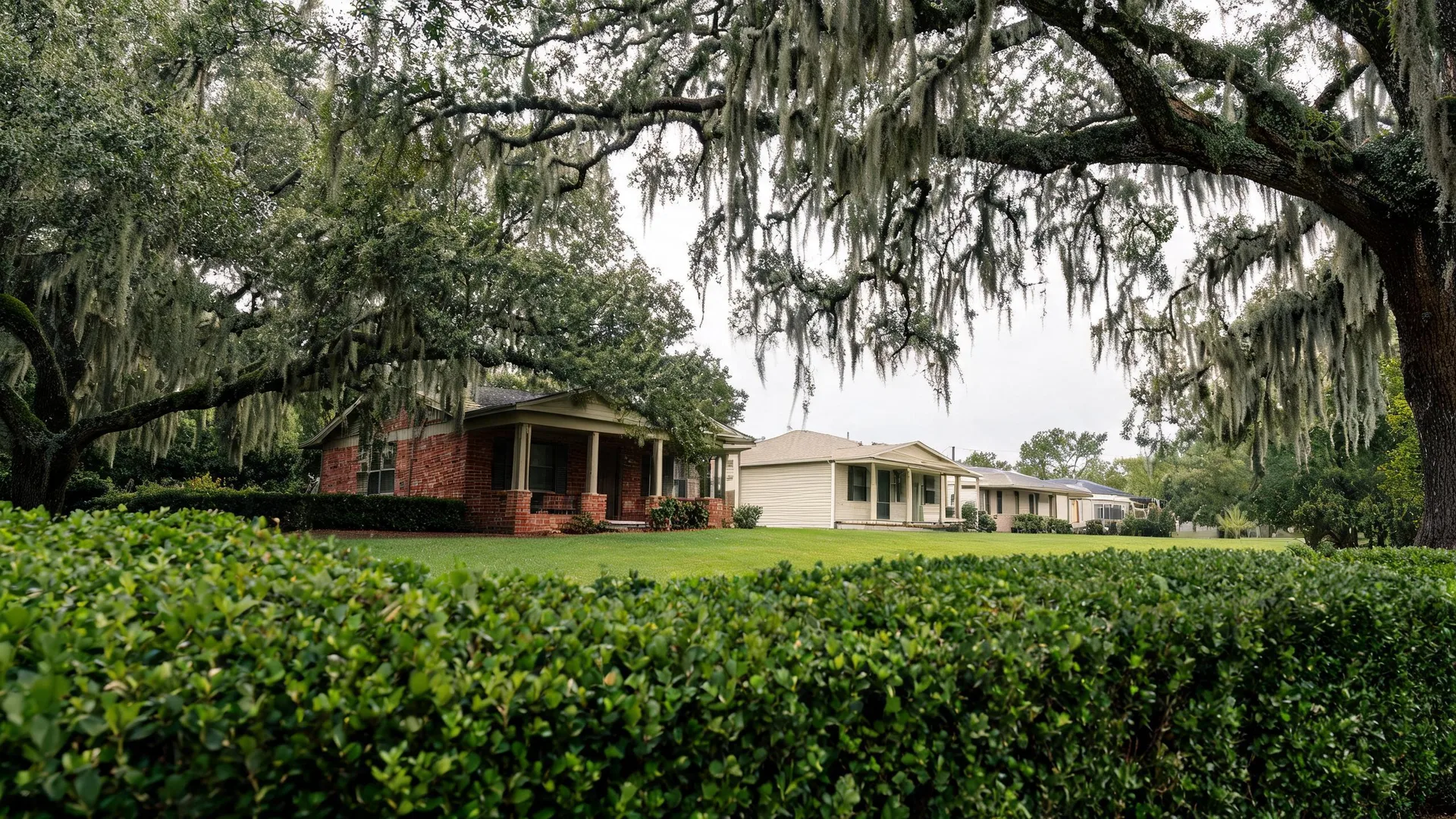






A single-story brick house with a covered porch sits on a mown lawn behind a long trimmed hedge, framed by large oak branches draped with hanging moss, with additional light-colored houses in the background under an overcast sky.

AC Maintenance in Savannah, GA

Tell us about the job

Takes about a minute. No obligation.

Tune-up, service, or cleaningCentral ACChatham County, GA
Step 1 of 2

What ZIP code is the job in?

Chatham County logged 343 severe weather events between 2015 and 2024, and most of it was wind and hail. Your outdoor unit sits through all of that, exposed to whatever gets thrown at the coil and the cabinet. A technician checking it before storm season can catch bent fins, a loose panel, or debris caught inside before it turns into a breakdown. Power matters too. Close to a third of Georgia households went at least a day without power last year, and when it comes back on, the unit needs to be in shape to start up on its own.

6 months
May through October, your air conditioner is on duty
91°F
the average summer afternoon it cools against
32 hail events
in ten years, and hail bends the fins on outdoor coils
246 wind events
in ten years, and wind drives debris into outdoor units
Isometric cutaway illustration of a single-story house with a dark shingled roof, showing interior rooms with ductwork and an indoor air handler connected to an outdoor condenser unit beside the building.
Your air conditioner works hardest from May through September.

NOAA nClimDiv, 1991–2020 normals

A dirty coil or a weak capacitor makes the compressor work harder for the same cooling.

Georgia electricity ran 14.08 cents per kilowatt-hour in 2024, so that extra strain shows up on every bill until it's fixed.

Storms here hit the unit sitting outside your house. Get it looked at before the season starts.

343 severe weather events from 2015 to 2024
31% of homes statewide lost power a day or more in 2024
246 damaging wind events from 2015 to 2024

May is when cooling starts in Chatham County, and April is when to get the unit checked. Once the heat sets in, this system runs for six months straight through October. A tune-up after it's already working hard just confirms what's going wrong. Done in April, it catches a weak capacitor or a dirty coil while the unit is still sitting idle, before the first real demand hits it.

Six months of 91 degree afternoons start in May

Cooling runs May through October here, with afternoon highs averaging 91°F through June, July and August. That is six straight months of the compressor working to keep up. Whatever is already weak in the system will not get a break once that starts.

Find a contractor
A man in a dark shirt and brown pants, seen from behind, carries a waxed canvas tote bag up wooden porch steps toward an orange front door, with a potted shrub beside the entry.
A gray residential air conditioning condenser unit mounted on a concrete pad outdoors, surrounded by green grass under a partly cloudy blue sky.

Six months is a long time to run on a weak part

Six months of running leaves no slack in the schedule once the heat sets in. A technician can check the unit now, while it is idle, instead of after it is already working to keep up with 91 degree afternoons. Wind and storms have hit this county hundreds of times over the past ten years, so the outside unit has likely taken some of that already. A check now catches what the season would otherwise find for you.

A dirty filter starves the whole system

When nobody changes the filter, airflow across the evaporator coil drops. The coil can ice over even on a hot day, and the compressor keeps running while less and less cold air actually makes it into the house.

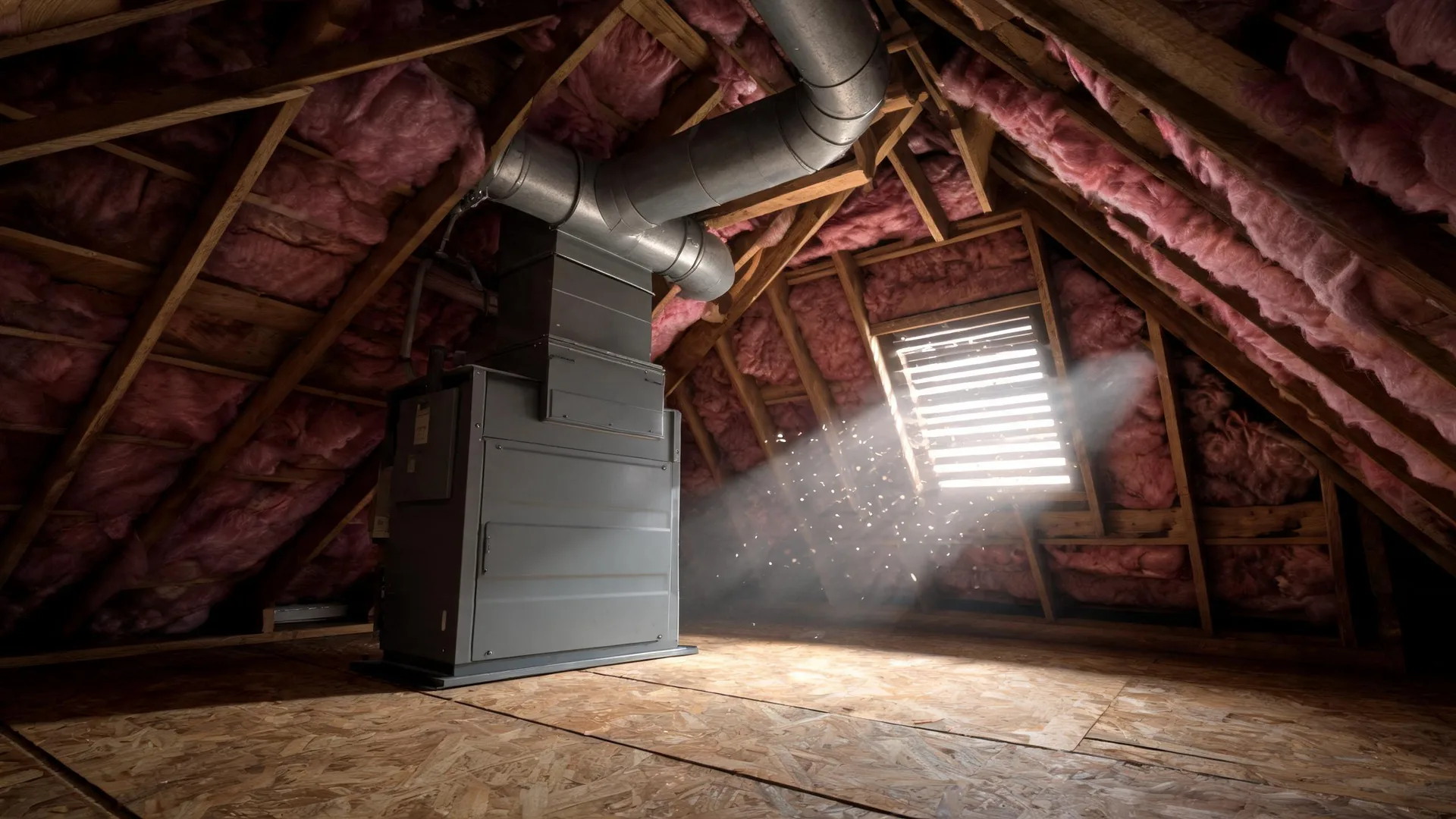
Small problems don't stay small

A refrigerant leak too small to notice this month will still be leaking next month. By the time the compressor struggles to keep up, it has usually been working harder than it should for a while, and that wear doesn't reverse itself.

Overhead view of a gray residential air conditioning condenser unit mounted on a concrete pad beside a house with asphalt shingle roofing.

Book your AC tune-up in April, before homes here start needing cooling in May.

  1. Jan
  2. Feb
  3. Mar
  4. Apr
  5. May
  6. Jun
  7. Jul
  8. Aug
  9. Sep
  10. Oct
  11. Nov
  12. Dec

A tune-up checks the refrigerant charge, cleans the coils, tests the capacitor and tightens the electrical connections.

A real tune-up starts with the filter and the coil, since airflow is what everything else depends on. The technician checks refrigerant charge against what the system calls for, not just whether there's some in there. The capacitor gets tested under load, because a capacitor can read fine sitting still and still fail the moment the compressor tries to start. Electrical connections get checked for corrosion and looseness, since a loose connection generates heat right at the lug. The condensate drain gets cleared too, since a clogged drain backs up and the system shuts itself down to protect against water damage. None of this takes long when the unit is idle, before it has to run.