A low-angle view along a red brick wall with shrubs at its base, facing a mown grass lawn with a single-story light-colored house and pine trees under an overcast sky.

AC Maintenance in Thomasville, GA

Tell us about the job

Takes about a minute. No obligation.

Tune-up, service, or cleaningCentral ACThomas County, GA
Step 1 of 2

What ZIP code is the job in?

The warning signs are quiet at first

A system losing its charge or struggling to pull humidity out of the air doesn't usually quit outright. It runs longer than it used to. The air coming out of the vents feels less cold than it should. The condenser outside cycles on and off more than it used to. None of that stops the house from cooling, so it's easy to miss until the compressor is working harder than it was built for.

A check catches what you can't see

The coils, the refrigerant charge, the electrical connections inside the unit, none of that is visible from the thermostat. A tech can check the charge against what the system calls for, look at the coils for buildup, and test the capacitor before it fails outright. Catching a weak part on a bench is a different job than catching it on the hottest day of the year.

6 months
May through October, your air conditioner is on duty
91°F
the average summer afternoon it cools against
10 hail events
in ten years, and hail bends the fins on outdoor coils
104 wind events
in ten years, and wind drives debris into outdoor units
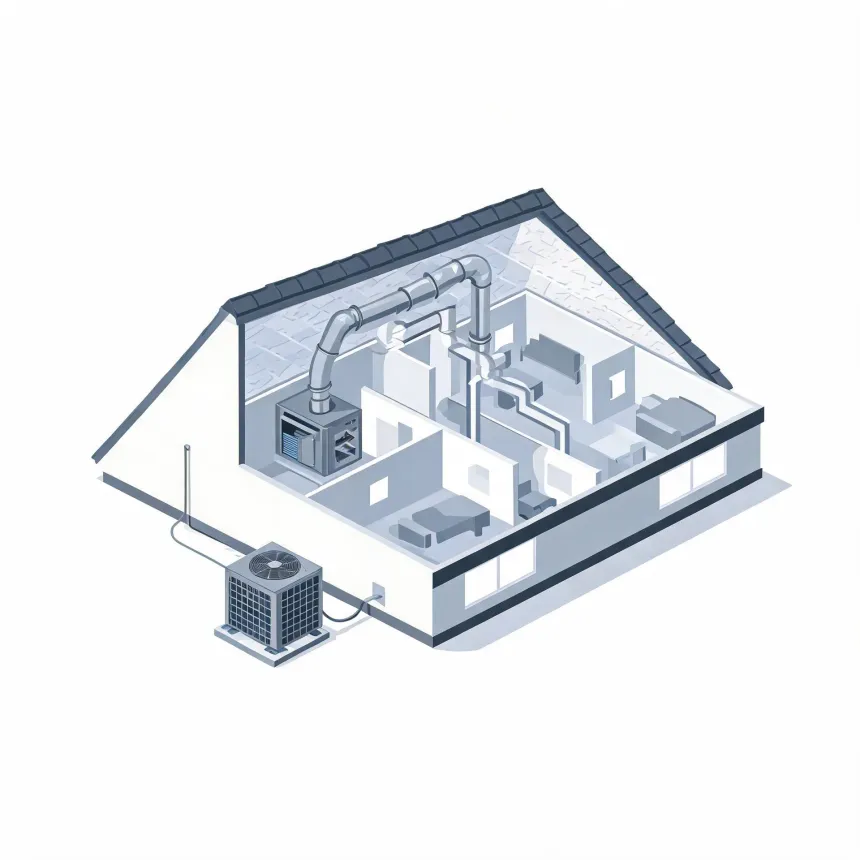
Isometric illustration of a cutaway house showing interior rooms, an attic furnace with large ducts, and an outdoor condenser unit connected by a line set, on a white background.
Your air conditioner works hardest from May through September.

NOAA nClimDiv, 1991–2020 normals

Cooling runs May through October in Thomas County.

April is when to get the system checked, before it has to work.

Six months of 91 degree afternoons wears a system down fast

Cooling runs May through October
Summer afternoons average 91°F
Power costs 14.08 cents a kWh statewide

Georgia homes paid 14.08 cents per kilowatthour in 2024, more than homes in most states pay. A system that's lost some charge or has dirty coils doesn't stop running, it just uses more power to do the same job. That extra draw shows up on the bill as long as the unit keeps working that hard. A tune-up checks the charge and cleans the coils before the unit has to lean on extra power to keep up. Fixing a weak capacitor on a bench costs less than letting a struggling system run that way all season.

Book it before the season

It starts running hard in the first month of the season here. Book the check the month before.

Find a contractor
A gray metal air conditioning condenser unit mounted on a concrete pad in a flat grassy field under a partly cloudy sky.

A newer system still needs the yearly check

Half the homes in Thomas County were built in 1987 or later. If yours is one of them, the system running it may well still be within its working life. That's not a reason to skip the yearly check, it's the reason to start it now. The capacitor, the contactor, the coils all wear at the same rate whether the system is new or old. A check catches that wear while it's still small, and that's what keeps a newer system newer longer.

Dirt is what shortens a compressor's life

A dirty filter or clogged outdoor coil makes the system pull harder to move the same air. The compressor runs hotter and longer than it was built to. That extra strain is what ends a compressor early, more than age does.

A refrigerant leak doesn't heal itself

Refrigerant doesn't get used up, it leaks out. A system running low keeps drawing it down over time, and the compressor runs harder to make up for it. Left alone, that's what turns a small leak into a compressor replacement.

An outdoor air conditioning condenser unit installed beside the exterior wall of a blue vinyl-sided house at sunset.

Book your AC tune-up in April, before homes here start needing cooling in May.

  1. Jan
  2. Feb
  3. Mar
  4. Apr
  5. May
  6. Jun
  7. Jul
  8. Aug
  9. Sep
  10. Oct
  11. Nov
  12. Dec

A tune-up checks the refrigerant charge, cleans the coils, tests the capacitor and tightens the electrical connections.

A tune-up is more than a filter swap. A tech checks refrigerant charge against what the system calls for, not just whether it has some. Low charge gets noted and the system gets checked for where it's escaping. The condenser coil and evaporator coil get cleaned, since dirt on either one makes the system work harder to move heat. The capacitor gets tested under load, because a capacitor can measure fine sitting still and still fail once it has to start the compressor on a hot afternoon. Electrical connections get checked for corrosion, and the contactor gets looked at for pitting, since a pitted contactor is what causes a system to stop responding to the thermostat. The condensate drain gets cleared too, since a clogged one backs up and shuts the system down on its own.