

Can a mini split cool a whole Georgia home

A local installer who puts in mini splits gets your project.

Match me with a pro

Can a mini split cool my whole house in Georgia?

Georgia summers get muggy, and if you already have a mini split, or you're sizing one up, you want to know if it can actually handle the whole house instead of just the one room with the indoor unit. That matters most when it's August and the rest of the house is still warm while one room is cold.

Only if it's sized and placed to reach every room

A single mini split head cools the space it's aimed at, not the house around it. One indoor unit in the living room will struggle to pull down a bedroom down the hall, especially once Georgia humidity sets in. A multi-zone system, with an outdoor unit feeding several indoor heads, one per room or area, is what gets whole-house coverage. That takes the right number of zones for the home's layout and enough capacity on the outdoor unit to run them all on the hottest days. Since most homes here already heat with electric, a mini split sized for the whole house can also cover winter, so it's worth planning for both seasons rather than just the cooling load.

A white wall-mounted mini-split indoor unit high on a beige interior wall, with a potted olive-like tree at right and an armchair and window visible through a doorway at left.

One zone, cooling well

A single-zone mini split can hold a room at temperature through a muggy Georgia summer without strain. The wall unit cycles on and off instead of running flat out, and the room it serves stays even and dry. Problems start the moment you expect it to reach the far end of the house.

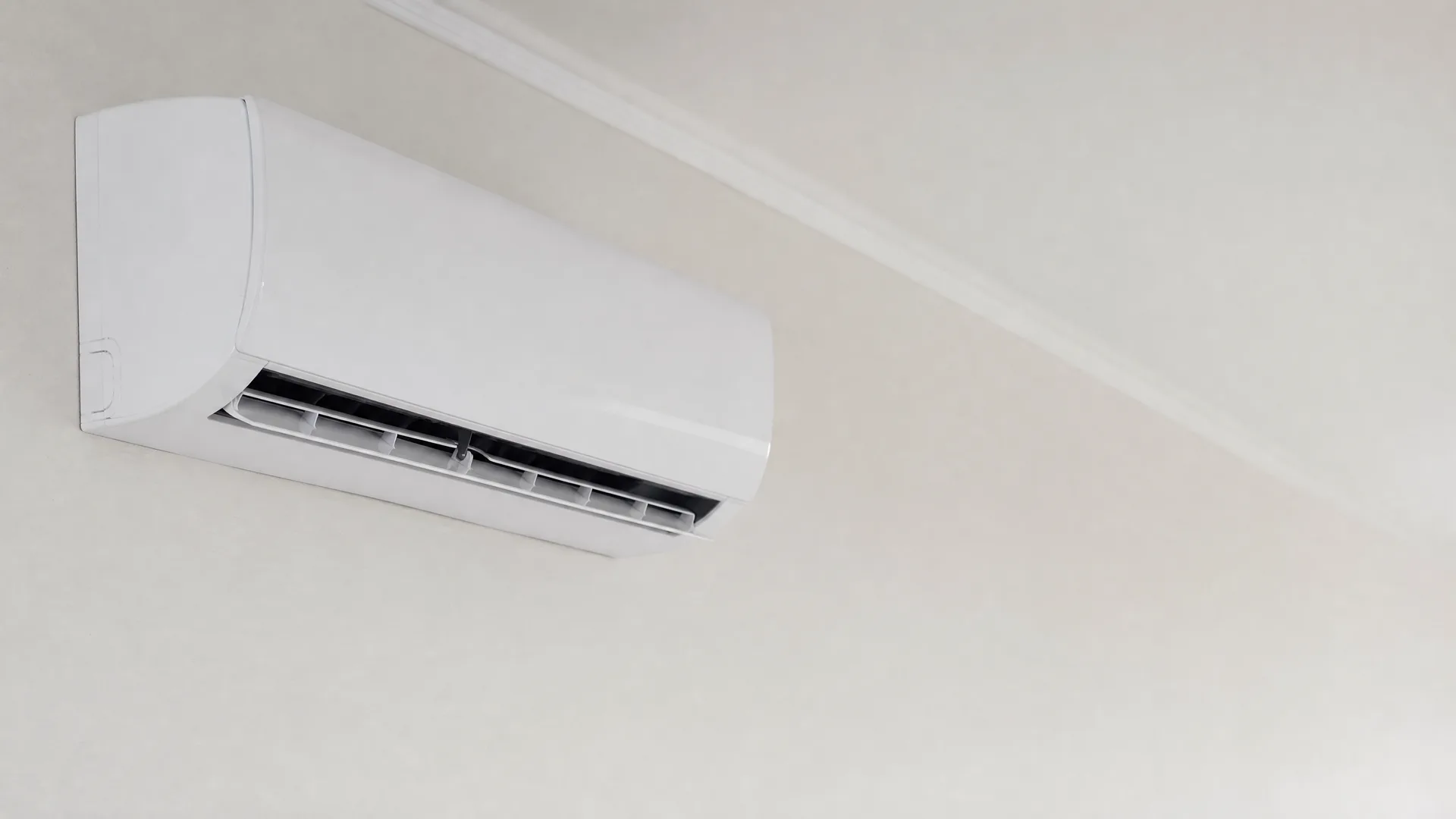
A wall-mounted mini-split air conditioner indoor unit with visible dust and staining, installed on a beige interior wall below white crown molding.

Asked to cover too much

Push one indoor unit to carry rooms down the hall and dust is the least of it. The coil and vents cake up fighting a load they were never sized for, airflow drops, and the far rooms stay warm while this one runs constantly trying to compensate.

Multi-Zone or Ducted: Which Fits Your House

Multi-zone system

  • A multi-zone setup runs one outdoor unit to several indoor heads, one per room or zone, each with its own thermostat.
  • Georgia humidity drops fastest in the rooms with a head running, so bedrooms and the living room can each hold their own temperature and moisture level.
  • Installation means running refrigerant line sets to every zone, plus a mounting spot for each indoor head, so the layout of your house matters.
  • A hallway, bathroom or stairwell without its own head still depends on doors open and air finding its way there on its own.
  • Outdoor unit capacity has to be split across every zone running at once, so a Georgia heat wave testing all zones together asks more of the system than any one zone alone.
  • Ductless multi-zone skips ductwork entirely, which matters if your house was never built with ducts or has rooms added on since.

Central ducted system

  • A ducted mini split or central system pushes cooled air through ducts to every room off one air handler, so there's no per-room head to mount or see.
  • One thermostat sets the temperature for the whole house, trading room-by-room control for one setting everyone shares.
  • If your house already has ductwork, tying into it can mean less new equipment mounted on walls room by room.
  • Duct runs through an attic in Georgia pick up heat before the air ever reaches the room, so a well-sealed, insulated duct run matters more here than in a drier, milder climate.
  • A leak or gap anywhere in the duct run loses cooled air to the attic or crawlspace instead of the room it was meant for.
  • Houses that heat with electric resistance often already have ducted air handlers in place, so a central system can sometimes use ductwork that's already there.
A white wall-mounted mini-split air conditioner indoor unit installed near the ceiling on a plain beige wall.

Sizing is a room by room count

Whoever designs the system has to add up the square footage, the window exposure, and the ceiling height of every room a head will serve, then match that load to the right size of outdoor unit and the right number of indoor heads. Skip that math and one of two things happens. Undersize it and the system runs constantly without catching up. Oversize it and it cools fast but leaves the air damp, since it shuts off before it pulls enough moisture out.

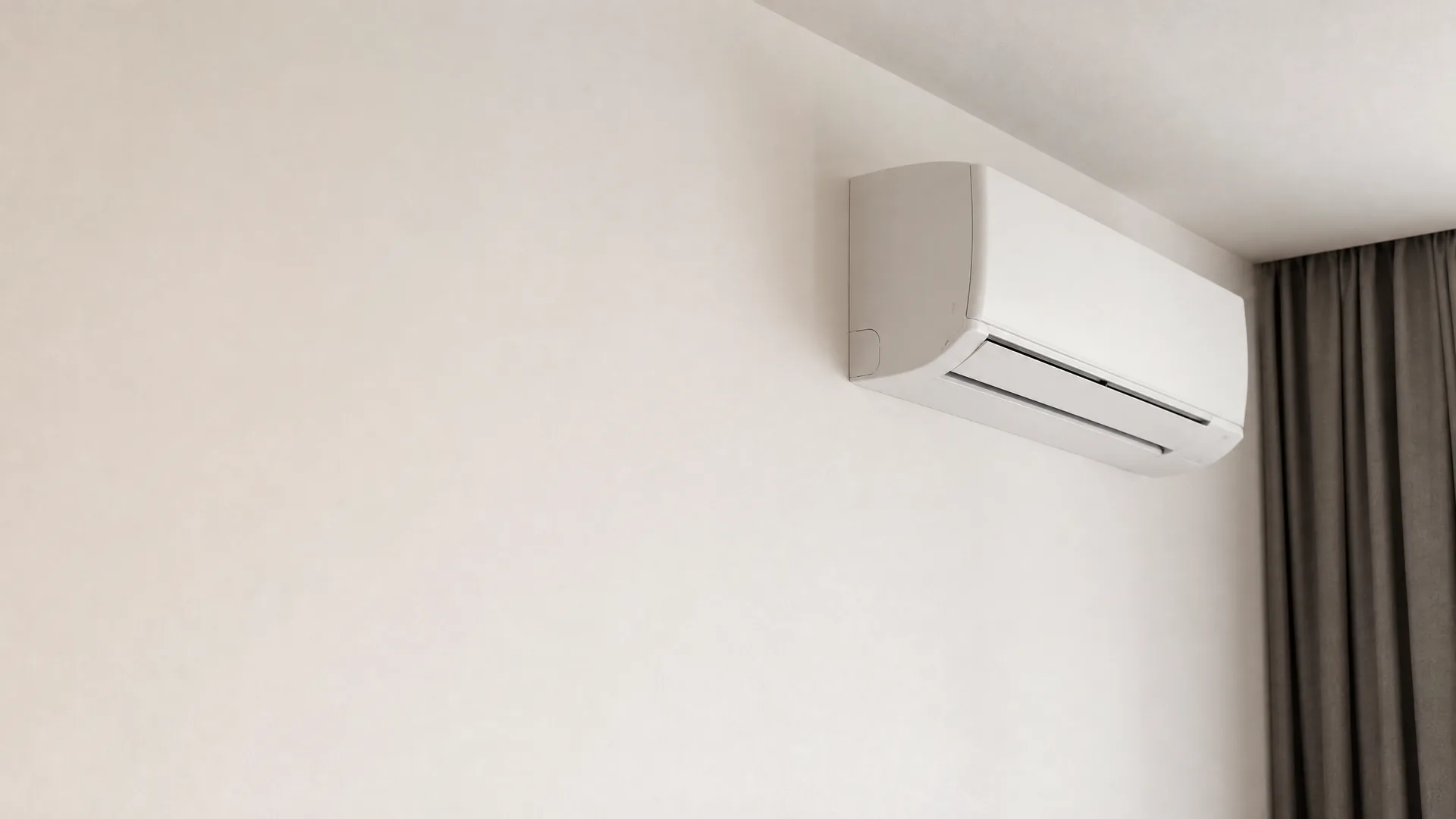
A white wall-mounted mini-split air conditioner on a plain off-white interior wall, with a gray curtain at the right edge.

Closed doors change the math

A mini split head cools the room it sits in. Close that door and the air it moved stops reaching the hallway or the next bedroom, no matter how strong the unit is. Whole-home coverage depends on doors staying open or on having enough heads that no room depends on another room's air. Central systems push air through ducts to every vent regardless of doors. A multi-zone mini split only reaches where it has a head.

Power costs 14.74 cents per kilowatt-hour statewide

That rate applies no matter how many heads the system runs. A multi-zone setup pulling double or triple the power of one wall unit still costs what the thermostat and the square footage say, not more per kilowatt-hour for covering the whole house.

EIA-861 2025 statewide residential average

The one room you don't cover

Try to stretch one wall unit past the room it was sized for and the far end of the house tells on it first. Doors stay shut to keep the cool air in with the mini split, and whatever room is farthest from it runs warmer and sits damp through July and August. If that's a bedroom, you feel it at night. A single zone can't push air down a hallway into rooms it was never connected to, no matter how long it runs.

What a whole house setup covers

A system sized for the house puts a head in every room that needs one, so the bedroom that used to run warm gets its own thermostat and its own airflow. You're not shutting doors to hold cool air in one spot anymore. Each room holds its temperature on its own schedule, which matters if someone's asleep in one room while another is still in use. Getting there means a contractor has to work out how many zones your specific house needs and where.

An older woman with gray hair in a cream knit sweater sits under a blanket on a sofa by a window, looking outside toward yellow-leaved trees, with a lamp, shelves and an armchair in the room behind her.
A gray-haired woman in a chunky knit sweater sits in an armchair with a blanket, looking out a window at yellow autumn foliage, with bookshelves and a potted plant behind her.
A gray-haired woman in a navy sweater sits in an armchair with a knit blanket beside a window, looking out at yellow autumn foliage, with a dining table and houseplant in the room behind her.
A gray-haired woman in a gray cowl-neck sweater sits in an armchair with a blanket, looking out a dark-framed window toward yellow autumn trees.
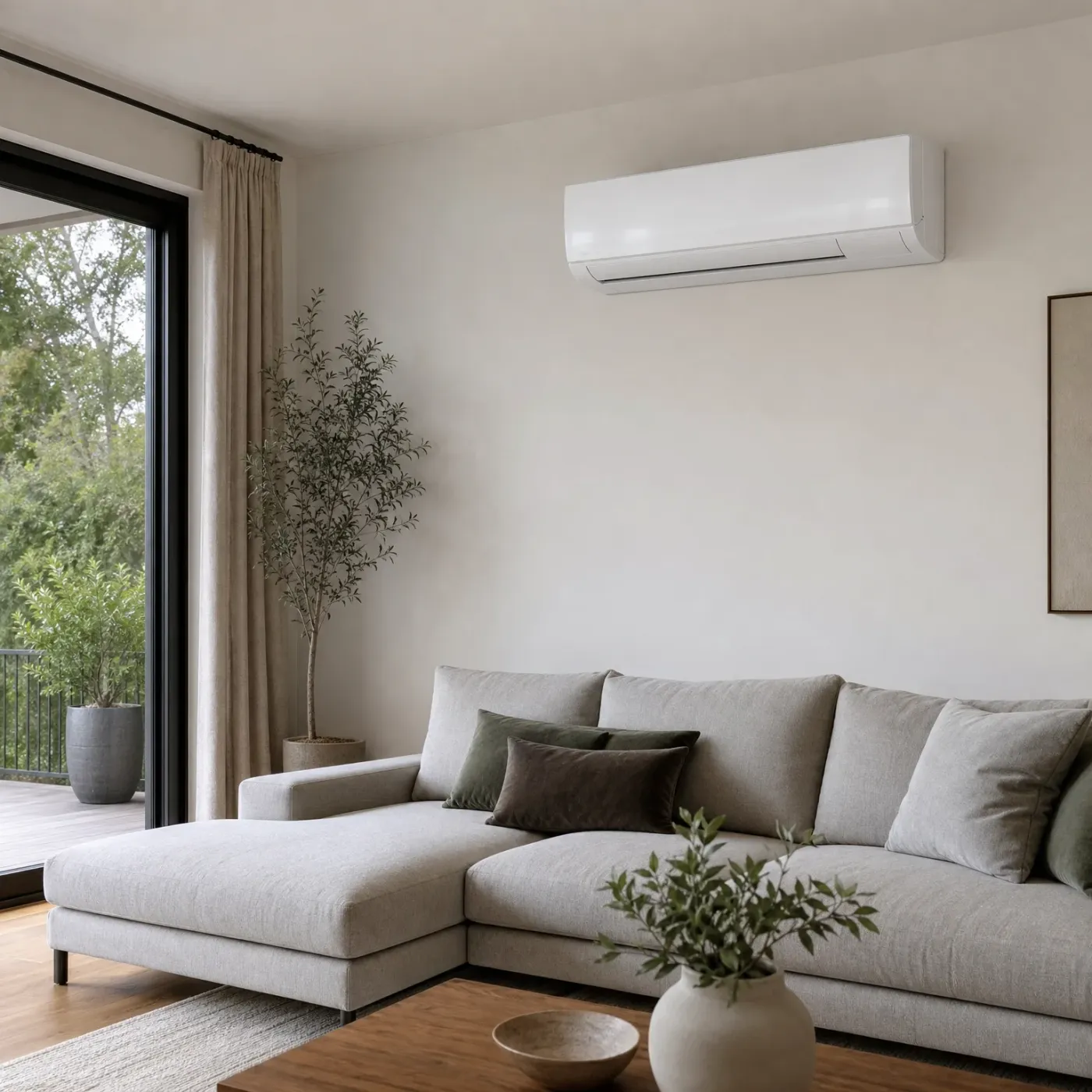
Living room with a grey sectional sofa, wall-mounted white mini-split air conditioner above it, a potted tree beside sliding glass doors with beige curtains, and a wooden coffee table with a vase of foliage in the foreground.

Get the right pro for your mini split

Describe the project once instead of to every installer.

Get in touch with a local installer about a new mini split.

Skip calling around

No fee to send it, and nothing to sign.

A white wall-mounted mini-split air conditioner unit installed high on a beige interior wall below white crown molding, with a window and woven shade at the left edge showing green foliage outside.
A mini split sized for the house holds every room at temperature without the system straining to keep up, even when the air outside is thick with humidity.
A dusty, stained white wall-mounted mini-split air conditioner indoor unit installed high on a plain off-white interior wall near the ceiling.
A mini split asked to cover more than it was built for runs constantly and still leaves rooms warm, and dust like this buildup only cuts its output further.

Is one room staying cool while the rest of the house doesn't?

Walk through your house in August and check it room by room. The space with the indoor head holds steady, but the bedrooms down the hall or the room over the garage run warmer, and the air in them feels heavier even with the vents or doors open. You might be running the mini split longer than it used to, or keeping doors shut to hold the cool air where the head is. If the system was only ever sized for that one room, pushing it to cover more means it runs constantly without catching up, and the parts of the house it can't reach stay muggy enough that mold and mildew get a foothold in closets and corners that don't get airflow.

A single-story red brick ranch house with white-trimmed windows and shutters, set behind a mown lawn and a wide asphalt driveway, with deciduous trees behind it and sun flare in the foreground.

Georgia's summer air averages a dew point of 68°F across June, July and August, a figure that comes from NOAA climate records. That's the kind of mugginess where the air feels heavy even in the shade. A mini split sized for the whole house has to wring that moisture out of every room it serves, not just the one with a head mounted on the wall. A system sized short of that struggles most in the rooms farthest from an indoor unit, where the air stays damp and sticky even if the temperature reads close to the thermostat setting.

NASA POWER T2MDEW county cells weighted by homes

A white wall-mounted mini-split air conditioner indoor unit with dark louvered vents, installed near the ceiling on a beige wall below white crown molding.
Before you get your mini split installation
A white wall-mounted mini-split air conditioner on a beige interior wall, with a window at left showing trees and a wooden fence, and dark wood flooring below.
After you get your mini split installation

Whole-house cooling comes down to design

  • A mini split cools the whole house only when the design accounts for every room, not just the one with a head.
  • One wall unit holds its own room steady but leaves the rest of the house to the heat and the dew point.
  • A multi-zone system matched to your home's room count and layout can carry the whole house through a Georgia summer.
  • Sizing runs on square footage, window exposure, and ceiling height for each room, not a single number for the house.
  • Electricity in Georgia is priced the same whether one head runs or five, so covering more rooms doesn't raise the rate.
  • A system sized short shows itself fastest in the room farthest from the outdoor unit.

A mini split can cool your whole Georgia home, but only the kind built for that job. One wall unit, the kind that holds a single room steady through a muggy summer, was never meant to carry the rest of the house with it. Ask it to, and the room farthest from the outdoor unit shows the gap first, running warmer and holding more moisture in the air than the room next to the head. What covers a whole house is a system planned for it from the start, a multi-zone setup with one indoor head per room, sized against that room's square footage, its window exposure, its ceiling height. Add those numbers up across every room and you get the load the outdoor unit has to match, along with how many indoor heads it needs to carry. Skip that step and size for one room instead, and the rest of the house is left to whatever heat and humidity finds its way there. Get it right, and the cost of running it doesn't change with how many rooms it covers. Electricity in Georgia is priced the same whether one head is running or five, so a system sized for the whole house costs what the thermostat and the square footage say, not a rate that climbs with every zone added. Whether a mini split can cool your whole house isn't a question about the equipment. It's a question about whether someone counted every room before the system went in.

A woman in a cream knit sweater sits in an armchair with her eyes closed and head tilted back, beside an open window showing orange and yellow foliage, with a mug on a small round table and a bookshelf behind her.
An older man with gray hair and a beard, wearing a dark blue fleece zip jacket, leans back in an upholstered chair with his eyes closed in sunlight near large windows, with a potted green plant and bare trees behind him.

Mini Split Installation

A pro who works on mini splits

Skip collecting and comparing quotes for the new mini split.

A black-framed smartphone standing upright against a plain light gray background, its screen filled with solid green.
New system or replacementMini-splitGeorgia
Step 1 of 2

What ZIP code is the job in?