A white wall-mounted mini-split indoor unit on a gray interior wall above a beige sofa, with a framed picture, a floor lamp, wood slat wall trim, and a window showing green foliage.

Send one request and you're done looking

Is a mini split worth it in a Georgia home

A mini split has to earn its keep against Georgia summers and an electric heating bill all winter. This page gets into what that actually looks like: how the system handles the humidity and what it does to your power use. When you're ready to get a straight answer for your house, send the form and let someone else chase down the right contractor for you.

Hand it off

A mini split is worth it in most Georgia homes, because it does two jobs other systems split between them. It cools and it pulls humidity out of the air at the same time, and Georgia summers are humid enough that this matters more than the temperature on the thermostat. A mini split keeps pulling moisture out even once the room hits the temperature you set, so a room can feel dry and comfortable where a window unit or an old central system leaves it cold and damp. Most homes here heat with electricity, and a mini split moves heat instead of generating it, so it uses less power to do the same job as electric resistance heat through the winter. Where it earns its keep most is a room your main system never quite reaches, an addition, a garage turned into a den, an upstairs bedroom that runs hot in July and cold in January.

A wall-mounted mini-split air conditioner indoor unit with visible dust and staining, installed on a beige interior wall below white crown molding.
Before you get your mini split installation
A white wall-mounted mini-split indoor unit high on a beige interior wall, with a potted olive-like tree at right and an armchair and window visible through a doorway at left.
After you get your mini split installation

Most AC units cool in bursts, full blast then off. A mini split's compressor just slows down instead of shutting off, so the indoor coil stays cold for longer stretches. That matters in Georgia, because a coil that stays cold pulls more water out of the air than one that cycles on and off. You end up with a room that feels dry at 74 instead of clammy at 72.

Each indoor head only answers for its own room. If nobody's in the guest room that night, the system isn't spending power keeping it cold. The outdoor unit is sized to match the heads it's running, so it moves only as much refrigerant as those rooms are asking for.

Winter works the same compressor in reverse, pulling heat from outside air instead of generating it from resistance coils, which is why it can carry the full heating load instead of just taking the edge off.

None of that holds if airflow gets blocked. A dirty filter or a crowded outdoor unit makes the compressor push harder for the same result, and that cost shows up before the comfort loss does.

How a mini split actually works

  • A mini split uses an inverter compressor that changes speed instead of switching fully on and off like a standard AC unit.
  • Running at a lower, steady speed lets the indoor coil stay cold longer, which pulls more moisture out of the air than short, hard cooling cycles do.
  • Each indoor head cools only the room or zone it's mounted in, so you're not paying to condition rooms nobody is using that evening.
  • The outdoor unit and each indoor head are matched to each other, so the system only moves as much refrigerant as that zone actually needs.
  • In winter, the same compressor reverses and pulls heat from the outside air, which is why it can replace electric resistance heat instead of just supplementing it.
  • A clogged indoor filter or blocked outdoor unit makes the compressor work harder to hit the same temperature, which shows up on your power bill before you notice the comfort change.
A smiling man in a dark navy sweater sits on a light sofa in a living room, with a glass bowl of popcorn on a wooden coffee table and bookshelves behind him.
A smiling man in a dark green sweater sits on a tan leather sofa in a dimly lit living room, with a bowl of popcorn in the foreground and a kitchen area blurred behind him.
A smiling middle-aged man in a dark shirt sits on a gray sofa in a living room, with a bowl of popcorn on a side table and shelves, a window and kitchen area behind him.
A smiling bearded man in a dark gray t-shirt sits on a gray couch in a living room, with a large glass bowl of popcorn on a wooden table in the foreground.

What the thermostat doesn't tell you

A mini split cools a room to the set temperature faster than a central system because the indoor unit sits right there, blowing conditioned air directly into the space instead of pushing it through ductwork first. In a house where one or two rooms run hot, that matters more than the number on the thermostat. The system reads the air in the room it's mounted in, not the hallway or a return vent somewhere else in the house. That's also why a mini split can hold a room a few degrees cooler than the rest of the house without the rest of the house working harder to get there.

What it means for the electric bill

Georgia homes that heat with electricity already carry that load from November through February or so. A mini split handles heating the same way it handles cooling, by moving heat rather than generating it, which is why it draws less power per degree than baseboard or resistance heat strips doing the same job. That difference shows up most in the shoulder months, when the heat strips in a central system would otherwise be doing the work. It won't erase a winter electric bill. It changes what's driving the number on it, and for a lot of Georgia homes that's the difference worth having.

Power costs 14.74 cents per kilowatt-hour statewide

At 14.74 cents per kilowatt-hour, a mini split earns its cost back through how little it asks for, not through a cheap rate. Since your home likely heats with electricity, a system that moves heat instead of generating it keeps that per-kilowatt cost from adding up the way baseboard or resistance heat does.

EIA-861 2025 statewide residential average

What you'd notice day to day

A mini split keeps a room from feeling swampy the way a window unit or a weak central system can. You'd feel the air come out steady and cool instead of in blasts, and the room would stop feeling sticky even when the temperature on the thermostat looks fine. In winter it would heat that same room without the dry, stale air a resistance heater puts out. You'd also notice the indoor unit running more hours at a lower speed rather than cycling on and off, which is normal for how it works and not a sign of trouble.


What's at risk if you skip it

Leave a room to a system that can't keep up with Georgia humidity and you're looking at musty smells, damp spots, and mold given enough time, since a system that only chases temperature can hit the number on the thermostat while the air still feels wet. On the electric bill, a system that works harder to get the same result costs you more every month it runs, all summer and through a winter of electric heat. A room that stays a few degrees warmer than the rest of the house usually stays that way until something changes what's cooling it.

A woman with dark hair in a bun reclines on a sofa with her eyes closed, wrapped in a cream fleece blanket, a closed blue hardcover book resting in front of her, with a lit lamp and a vase of dried flowers in the background.
A smiling bearded man in a navy sweater sits at a candlelit dinner table with a glass of red wine, a bowl of salad, and plates of food in the foreground.

Finding a pro stops being your job

Skip collecting and comparing quotes for the new mini split.

No fee to send it, and nothing to sign.

How the system actually runs

  • The outdoor compressor and indoor head talk through a refrigerant line set, not ductwork, so nothing cools off on the way there.
  • A built-in sensor in the indoor unit reads the room's actual temperature and adjusts compressor speed to hold it, rather than just running until a thermostat on a wall clicks off.
  • The indoor coil has a condensate pan and drain line that carries pulled moisture outside, which is how the unit dehumidifies while it cools.
  • Multi-zone systems split one outdoor compressor's output across several indoor heads, each running its own fan speed and refrigerant flow.
  • The reversing valve that lets a mini split heat in winter is the same part that lets it cool in summer, just running the refrigerant cycle backward.
  • Defrost cycles in winter briefly reverse the system again to melt frost off the outdoor coil, which is normal and not a sign of trouble.

The line set connecting the outdoor unit to the indoor head is just copper carrying refrigerant, not a duct, so the air doesn't pick up attic heat or lose its chill before it reaches the room. That's a different path than a central system takes, and it's part of why the air coming out feels different. Inside, the unit isn't working off a thermostat reading the hallway. It has its own sensor reading the room it's actually in, and it adjusts the compressor speed up or down to hold that temperature instead of just cycling on and off. While it's doing that, the coil stays cold enough to keep condensing moisture out of the air, and that water runs down into a pan and out through a drain line to the outside. That drain line is doing real work all summer, not just handling the occasional drip. If you've got more than one indoor head on the same outdoor unit, each one is pulling its own fan speed and refrigerant flow, so a bedroom that needs less cooling than the living room gets less, without the others being affected. Come winter, the same system runs the refrigerant cycle backward through a reversing valve to pull heat in from outside instead of pushing it out. You might notice the outdoor unit pause and seem to run backward for a few minutes on a cold day. That's a defrost cycle clearing frost off the outdoor coil, and it's the system working correctly, not a sign something's wrong.

A white wall-mounted mini-split air conditioner unit installed high on a beige interior wall below white crown molding, with a window and woven shade at the left edge showing green foliage outside.
A clean mini split like this one moves steady, cool air with no dust clinging to the coil or the louvers.
A dusty, stained white wall-mounted mini-split air conditioner indoor unit installed high on a plain off-white interior wall near the ceiling.
A mini split this dusty is working harder than it should, and that buildup is part of what you'd call a contractor about.

Mini Split or Central System

Mini split

  • Pulls moisture out of the air while it cools, so a room stops feeling sticky even before the temperature drops much.
  • Moves heat to warm the house in winter instead of generating it, which keeps a kilowatt doing more work on your bill.
  • The indoor head sits in the room itself, so it reacts to that room's actual temperature instead of a hallway thermostat.
  • Runs at a steady, lower speed most of the time rather than cycling hard on and off.
  • Needs a spot on an exterior wall for the line set and a place outside for the compressor.

Central system

  • Cools and heats the whole house through one thermostat instead of unit by unit.
  • Already has ductwork in place if your home was built with it, so there's no new line set to run.
  • Cycles fully on and off, which can leave a room feeling cool but still damp in Georgia's humidity.
  • Heats with electric resistance in most Georgia homes, which costs more per kilowatt than moving heat does.
  • One thermostat means a room far from the return vent can lag behind the rest of the house.
A single-story red brick house with a shingled hip roof, three windows and a central storm door, fronted by a mowed lawn and an asphalt driveway, with dense green trees behind it and sun flare in the foreground.

Georgia summers average a dew point of 68°F across June, July and August, according to NOAA climate data. That's the kind of air where a plain temperature reading doesn't tell you much. At 68, the air holds enough moisture that your skin stays damp even sitting still indoors. A mini split pulls that moisture out as it cools, so the room you're sitting in doesn't carry that heavy, wet feel once it's done its work. You'd notice it most walking in from outside: the air changes fast, not just in temperature but in how it feels against your skin.

NASA POWER T2MDEW county cells weighted by homes

A closed laptop and a cream mug of coffee on a coaster sit on a dark wooden table, with a potted plant at left and a kitchen counter, tiled backsplash and shelf of ceramics in the background.

Where that leaves you

A mini split is worth it in a Georgia home. It handles the humidity that makes summer feel worse than the thermostat says, and it moves heat instead of generating it, which matters when your winter bill runs on electricity. That's the answer, and the facts above are what back it up.

What's left is getting it installed, and that's its own job if you're doing it alone: finding a licensed contractor, calling a few, explaining the same thing about your home each time, then sitting with quotes to see which one actually matches. Send the form and that part is off your plate. You'll still decide who does the work. You just won't be the one tracking them down.

A living room corner with a light beige sofa holding a textured taupe cushion, a large ceramic vase of olive branches by a window, a framed neutral artwork on the wall, and a dark bowl with stacked books in the foreground.
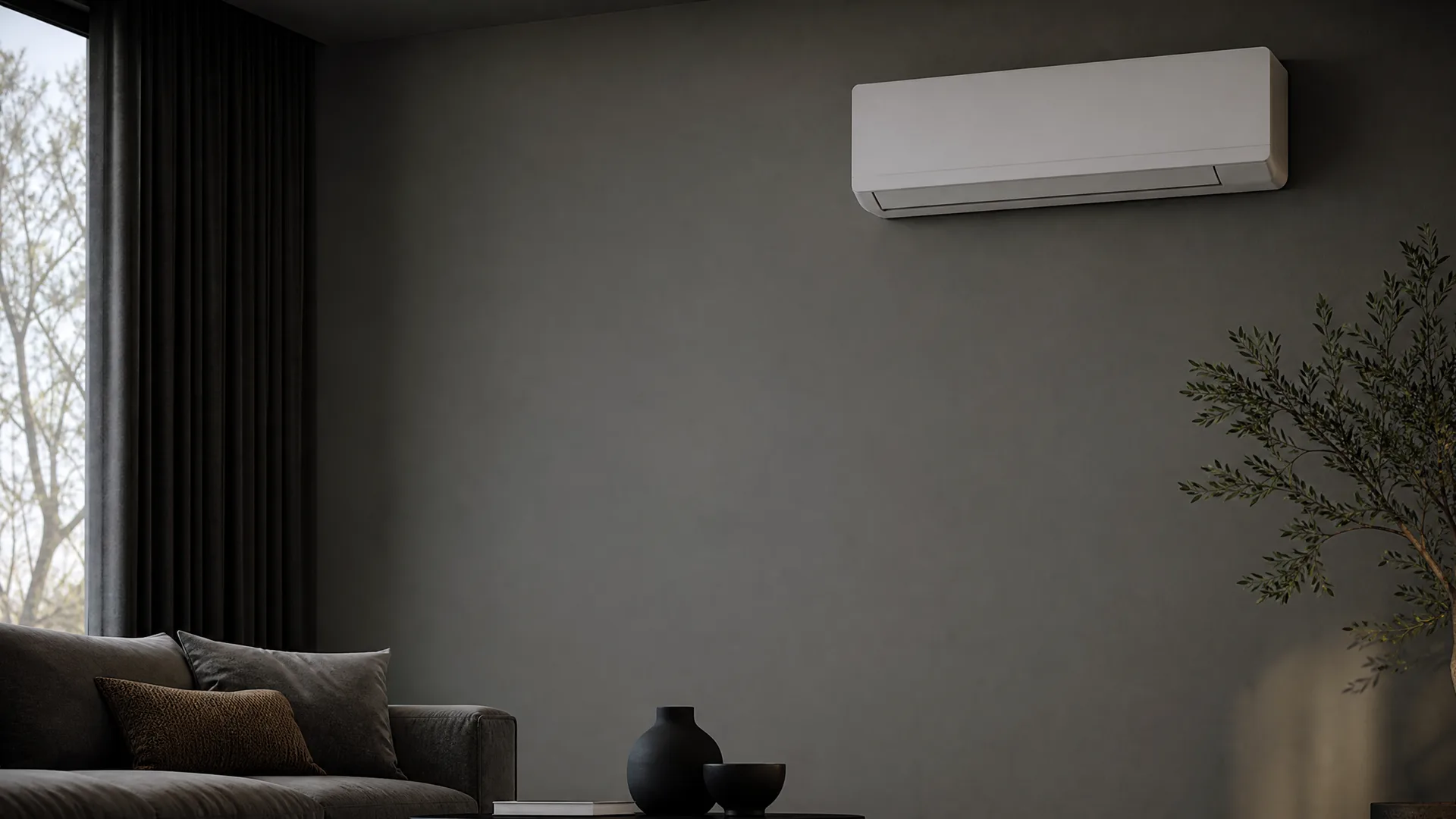
A white wall-mounted mini-split air conditioner on a dark gray interior wall above a gray sofa, with a window and curtain at left, a potted olive-like plant at right, and a black vase and bowl on a table in the foreground.

Let someone else find the pro

One form replaces the calls you'd make to find a mini split pro.

New system or replacementMini-splitGeorgia
Step 1 of 2

What ZIP code is the job in?