Is a mini split worth it in Stonecrest, GA

New system or replacementMini-splitDeKalb County, GA
Step 1 of 2

What ZIP code is the job in?

A mini split is worth it in Stonecrest if you're using it to cool or heat a room your main system doesn't reach well, like a converted garage, a sunroom, or a bonus room over the garage. Summers here run long and stay sticky into September, and a mini split handles that room without forcing the central system to work harder for one spot. Most homes in the area heat with gas, so a mini split in a single room usually works alongside that furnace rather than replacing it, giving you a way to heat or cool that space without running ductwork to it. Because it has its own outdoor unit and indoor head, it keeps that room comfortable on its own schedule. Where it doesn't make sense is replacing a central system that already covers the whole house evenly. Where it does is the room that never feels right no matter what the thermostat says.

A white wall-mounted mini-split air conditioner unit installed high on a light gray interior wall below crown molding, with a bamboo-shaded window at the lower left.

Running the way it should

A mini split working right keeps a steady temperature in the room without the unit doing extra work for it. The wall plate stays clean, the louvers open and close on their own, and the air coming off it feels even, not damp or weak.


A wall-mounted mini-split air conditioner indoor unit with a dusty, discolored cover, installed near the ceiling on a plain light-colored wall.

Signs it's falling behind

Dust and discoloration on the casing usually mean the filter behind it hasn't been cleaned in a while. A dirty filter makes the unit pull harder to move the same amount of air, and a room that used to cool fast starts taking longer.

How much does running a mini split actually cost you here?

  • Cooling runs May through September

    Five months of cooling, May through September, is the stretch your mini split carries the load instead of your main system.

  • Heat runs November through April

    Six months of heat, November through April, is a long run for a mini split to help with if it's covering a room your furnace misses.

  • Power here costs 15.79 cents per kilowatt-hour

    At 15.79 cents per kilowatt-hour, what a mini split uses to heat or cool one room shows up on the bill either way.

NOAA nClimDiv 1991-2020 · EIA-861 2025

A white wall-mounted mini-split air conditioner installed high on a beige interior wall below crown molding, with a window and light curtain on a black rod at right.

Working as it should

A mini split mounted like this one holds the room at whatever temperature you set and cycles quietly to keep it there. The casing stays clean, the louvers move freely, and the air coming off it feels even. No musty smell, no drip marks on the wall below it.

A wall-mounted mini-split air conditioner indoor unit with a dusty off-white casing and dark lower vent, installed high on a plain light-colored wall below a ceiling molding.

Signs it needs attention

Dust and discoloration on the casing usually mean the filter behind it hasn't been cleaned in a while. A dirty filter makes the unit work harder to move the same amount of air, and over a long Stonecrest summer that shows up as a room that never quite cools and a bill that climbs.

Is your mini split actually keeping up this summer?

You'd notice it in the room the mini split is supposed to handle. It runs most of the day and the space still feels warm, or it cools fine but never quite catches up once the sun's been on that side of the house a few hours. Maybe the air coming off it feels damp instead of dry and cool. Maybe you hear it cycling on and off more than it used to, or it's gotten loud where it used to be quiet. Left alone through a Stonecrest summer, a unit working that hard tends to keep working harder, and the room it's supposed to cover is the one that stays uncomfortable while the rest of the house is fine.

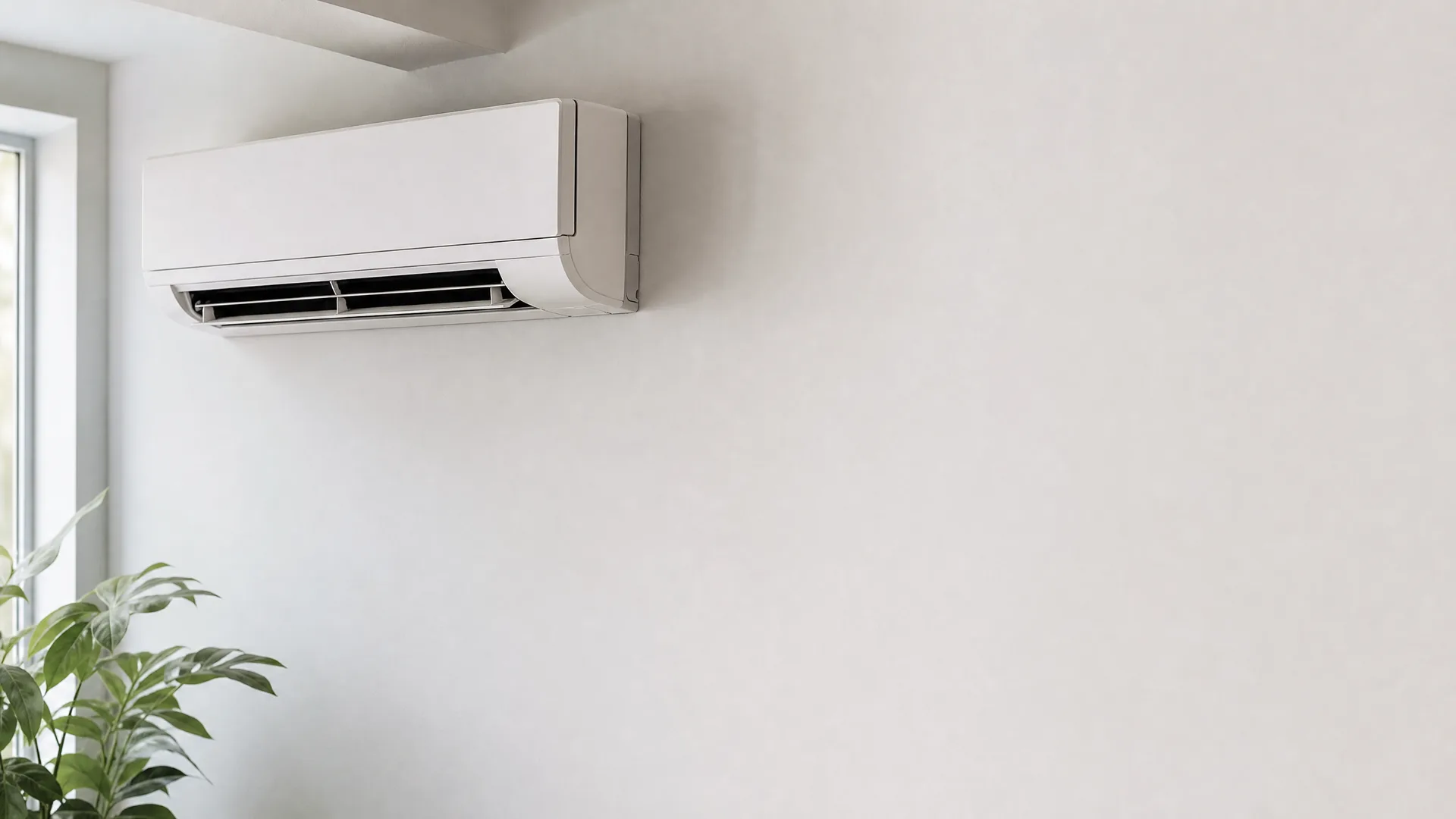
A white wall-mounted mini-split air conditioner on a plain light-colored interior wall, with a window at left and a green leafy plant in the lower left corner.

Why a bonus room runs hot

A bonus room over the garage sits under the roof deck, so it picks up heat all afternoon with no basement or shaded wall to pull it down. The main system wasn't sized for that room, and the duct run out to it loses pressure by the time the air gets there. A mini split skips the ductwork problem because it feeds the room directly from the wall unit.

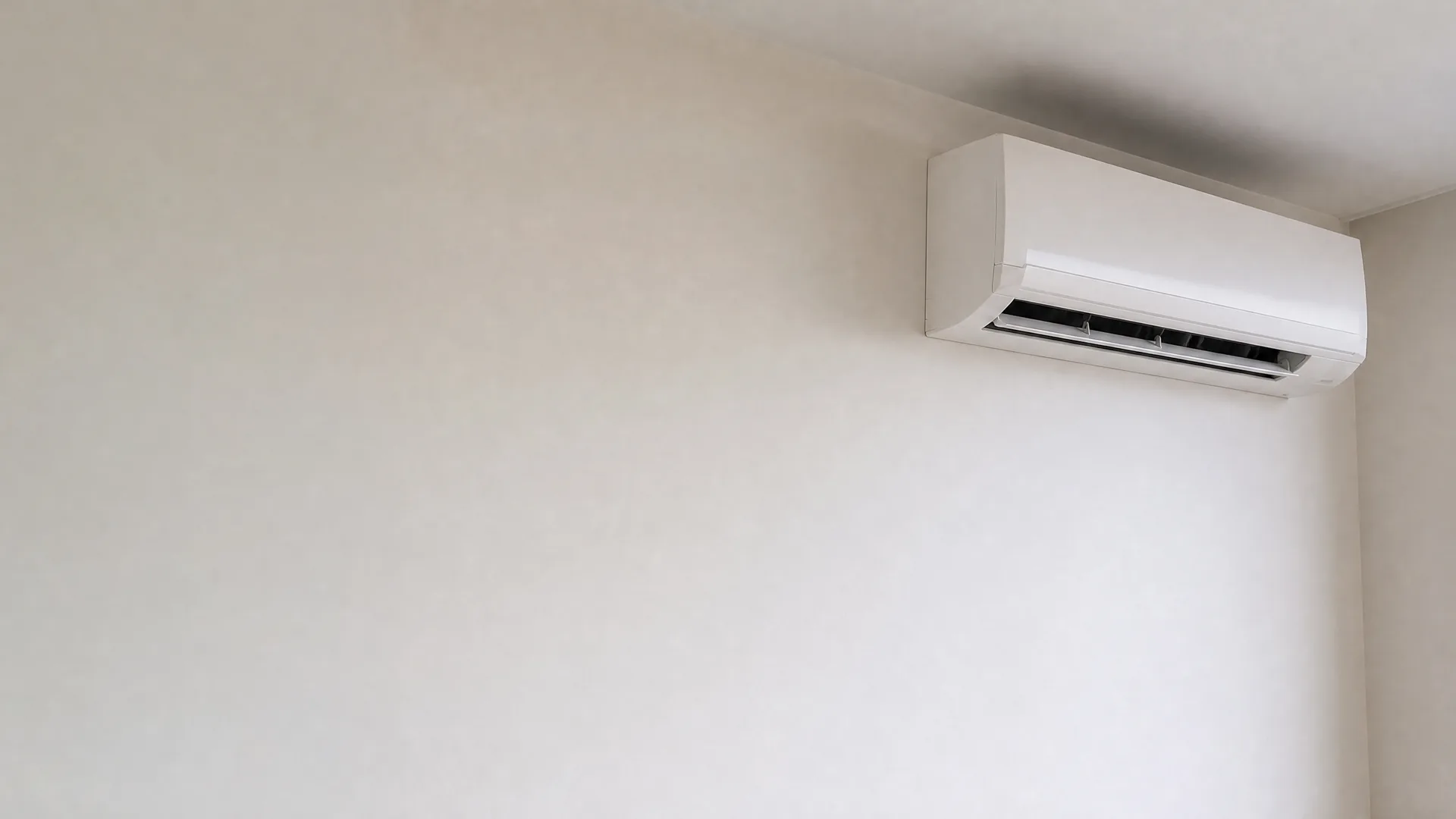
A white wall-mounted mini-split air conditioner installed near the ceiling on a plain beige interior wall, with empty wall space to the left.

Sizing it to the room

A mini split is rated in BTUs, and the number needs to match the room, not the house. A unit sized for a 300 square foot bonus room won't do much for a converted garage twice that size, and an oversized unit cycles on and off too fast to pull moisture out of the air. That's why a contractor measures the actual room before quoting a unit, rather than going by a rule of thumb.

Cooling runs May through September

Five months of cooling is a long stretch for one room to carry on its own. If your mini split is covering a sunroom or bonus room, it's working close to all summer, May straight through September. That's the stretch to listen for short cycling or a unit that runs constantly without the room catching up.

NOAA nClimDiv 1991-2020

Buy a mini split for one room that runs hot or cold, not for the whole house. It will carry a sunroom or a bonus room over the garage well. It will not replace a gas furnace across a home built for central heat.

Most homes in Stonecrest heat with gas, and that system already reaches every room it was built for. A mini split added on top of it earns its keep in the one room the ductwork never served well.

An older man with gray hair and a beard, wearing a dark snow-dusted jacket and scarf, stands smiling in a warmly lit interior hallway with a lit table lamp, a vase of dried branches, and a framed picture in the background.
An older man in a dark snow-flecked overcoat and scarf stands smiling in a warmly lit home entryway, with a glass-paned door showing darkness outside and a lamp-lit room visible through a doorway behind him.
An older man with grey hair and a beard, wearing a dark coat dusted with snow, stands in a dimly lit entryway with a ceiling lamp, a side table with two shaded lamps, and a lit fireplace visible in a room beyond.
An older man with gray hair and a beard, wearing a dark coat dusted with snow, stands smiling in a doorway of a warmly lit home with a sofa, lamp and window visible behind him.

Get matched with a mini split pro in DeKalb County

One request ends the search for a mini split installer.

Asking costs nothing, and the choice to hire stays yours.

A single-story red brick ranch house with a shingled roof and white-framed windows, fronted by a large paved driveway with sun glare, surrounded by green deciduous trees under a bright hazy sky.

A dew point averaging 67°F across June, July and August in DeKalb County is what makes the air feel heavy even when the temperature itself isn't that high. For a mini split, that moisture is extra work on top of cooling. The unit has to pull more water out of the air to make the room feel right, not just drop the number on the thermostat. If yours is sized for the room and running clean, you'll feel it: cool air, not clammy air. If it's undersized or the coil's dirty, the room cools some but still feels damp, and that's the dew point showing up as a problem you can feel on your skin before you see it on any gauge.

NASA POWER T2MDEW

Mini Split: Right Fit or Not

Mini split makes sense

  • The room it's covering, a sunroom, converted garage, or bonus room over the garage, has no other good way to get conditioned air.
  • Running it May through September handles the stretch where that one room would otherwise sit warm and sticky while the rest of the house is fine.
  • It can also carry that room in winter, taking the load off a gas furnace that was never sized to reach it well.
  • Installing one there costs less than extending ductwork to a room the original system doesn't serve.
  • The thermostat in that room is separate, so the unit only runs when that space actually needs it, not on the main system's schedule.

It's not the right fit

  • Your main system already reaches every room and holds a steady temperature without help.
  • You're hoping one unit will heat or cool the whole house instead of the one room it's sized for.
  • Most homes in Stonecrest heat with gas already, and a mini split won't replace that furnace across a home built for central heat.
  • The room it would cover doesn't run noticeably hotter or colder than the rest of the house.
  • You want central air's even distribution through ductwork rather than a wall-mounted unit blowing into one space.
A white wall-mounted mini-split air conditioner installed high on a beige interior wall near the ceiling, with a white-framed window at the left edge.
Set the temperature and it holds, in the room it was put there to cover.
A dusty, stained wall-mounted mini-split air conditioner indoor unit near the ceiling on a plain beige wall, with visible lint buildup at its intake grille.
Once dust and grime build up on the coil and filter like this, it can't pull moisture out of the air the way it should.

How does a mini split actually cool a room?

You've got a mini split cooling that bonus room or sunroom, and you've probably watched the wall unit run without really knowing what's happening behind the plastic cover. There's no ductwork, no big unit outside doing all the work alone, so it's fair to wonder what's actually pulling the heat out of that room and where it goes once it's gone.

It moves heat out of the room, it doesn't make cold air

The indoor unit pulls warm air from the room across a cold coil. Refrigerant inside that coil absorbs the heat and carries it, through the line set running out to the condenser, to the outdoor unit. Out there, a fan blows across a second coil and pushes that heat into the outside air. The refrigerant cools back down and heads inside to do it again. That cycle runs on a loop, speeding up or slowing down to hold the room at whatever temperature you set. The moisture that coil pulls out of the air drains off outside, which is why the room feels dry even on a sticky August afternoon in Stonecrest.

A white wall-mounted mini-split air conditioner indoor unit installed near a textured ceiling on a plain beige wall, with visible dust and discoloration on its casing and vent.
Before you get your mini split installation
A white wall-mounted mini-split air conditioner indoor unit on a light gray wall above a white baseboard and wood-look floor.
After you get your mini split installation

Worth it, for the right room

  • A mini split in Stonecrest earns its keep in the one room your main system can't reach, not as a stand-in for the whole house.
  • May through September is when it works hardest, pulling moisture out of air that averages a 67°F dew point all summer.
  • Six months of winter heat is a long stretch for a mini split to carry alone if that room sits far from the furnace.
  • A unit holding steady temperature with clean louvers and even airflow is doing its job; short cycling or a musty smell means it isn't.
  • Most homes here still lean on gas for the bulk of the house, so the mini split's job stays limited to the space it was sized for.
  • Once you know what to check, getting someone out to look at it is the only step left, and that part moves fast once you ask.

So a mini split in Stonecrest is worth it when it's covering a room your gas furnace and central air never handled well. A sunroom, a converted garage, a bonus room over the garage, these spaces sit outside the main system's reach, and that's exactly where a mini split earns its place. It's not there to replace the furnace that heats the rest of the house, and it won't be asked to. From May through September it carries real work, pulling moisture out of air that sits heavy most of the summer, and a unit sized right for that room will keep up without straining. Winter asks more of it. Six months is a long run for one room, and if that room sits far from the furnace, the mini split may be doing most of the heating there on its own. How it's running tells you most of what you need to know. Steady temperature, clean louvers, even air coming off it, that's a unit doing what it was installed to do. Short cycling, a musty smell, a room that never quite catches up, that's a unit falling behind. If yours fits that second description, the next step isn't figuring out the problem yourself. It's getting someone out to look at the unit directly, and once you ask, that part moves fast.

Corner of a house with cream horizontal lap siding and tree shadows, beside a covered porch with a square column, wooden deck, steps, white balusters, and a shrub at right.
Corner of a white clapboard house with a multi-pane wood window in warm low-angle sunlight, with hydrangea shrubs and other green foliage growing along the base and dark trees behind.
A wooden front door with divided-light glass panes set under an arched entry on a white shingled house, with a black wall lantern, a tall gray planter, flowering shrubs, and a flagstone walkway.
Exterior corner of a house with cream horizontal siding, a dark-framed three-section window, and a stone veneer foundation, with white hydrangeas and clipped shrubs along a paved walkway and tree branches overhead.
Corner of a white-clad house with a dark-framed grid window, dark downspout and eaves, surrounded by trimmed hedges, shrubs, white hydrangeas and a leafy tree in sunlight.

Find a mini split installation pro in DeKalb County

Send the form and the search for an installer is over.

Hand it off

No fee to send it, and nothing to sign.