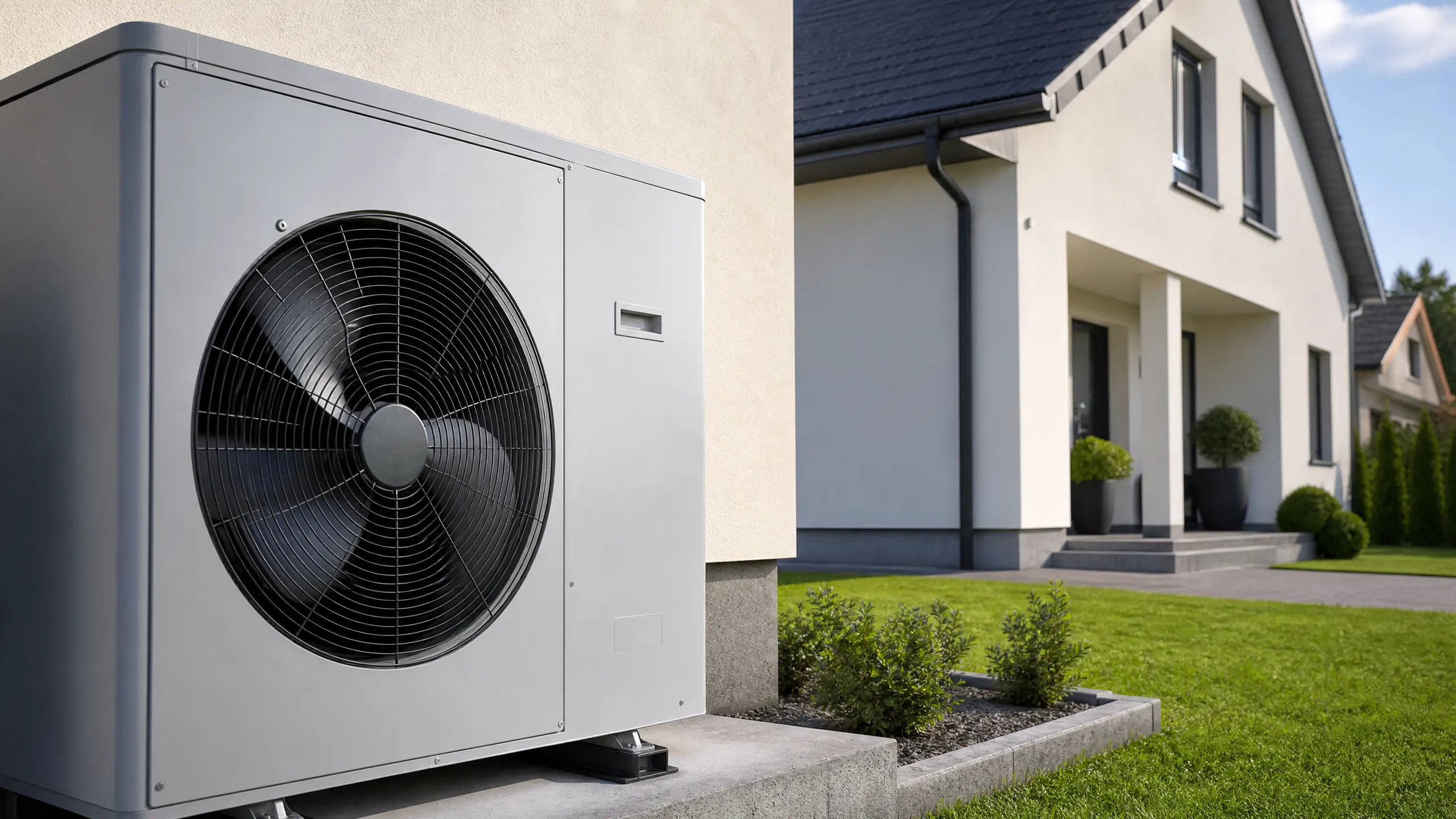
A grey air-source heat pump outdoor unit mounted on a concrete pad next to a modern white-rendered residential house.

Heat Pump Repair in Columbus, GA

Tell us about the job

Takes about a minute. No obligation.

RepairHeat PumpMuscogee County, GA
Step 1 of 2

What ZIP code is the job in?

The air here holds onto heat

Summer dew points in Muscogee County average 69 degrees through June, July and August, higher than most of the country sees. A heat pump pulls moisture out of that air on top of cooling it, so the system runs longer hours just to keep a home comfortable.


That load adds up on the parts

A heat pump running long hours wears its parts sooner than one that gets to rest. The compressor, the fan motor, the coils all take more cycles over a summer here than they would somewhere drier. When something goes wrong, it's usually that steady workload catching up with one part first.

5 months
November through March, your system heats
5 months
May through September, it cools
37°F
the average winter night it heats against
90°F
the average summer afternoon it cools against
Isometric cutaway illustration of a single-story house with a dark gabled roof, showing interior rooms with ductwork leading to an indoor air handler and an outdoor condenser unit connected by lines on the ground outside.
Your system heats November through March and cools May through September.

NOAA nClimDiv, 1991–2020 normals

A weak component forces the ones around it to pick up the slack.

Leave a struggling heat pump running and that strain spreads to parts that were fine.

Storms here put the outdoor unit through a lot

74 severe weather events from 2015 to 2024
31% of homes statewide lost power a day or more in 2024
51 damaging wind events from 2015 to 2024
The first cold snap finds the weak partHeat here starts up in November, right after the system has sat through five months of summer load.

After a storm, it's worth walking outside and looking at the outdoor unit before you assume it's fine. Hail dents the fins across the coil, and bent fins block airflow the system needs to work right. Wind-blown branches and debris do the same thing, or worse, they can nick a fan blade or get drawn into the cabinet. A unit can keep running with damage like this for weeks before it shows up as a bigger failure or a jump in the power bill. If you know a storm came through recently, that's reason enough to have someone look at it even if the heat pump seems to be keeping up.

Find the part that gave out before it takes others with it

A heat pump that runs this many hours all summer doesn't fail at random. One part takes the load first, and the rest keep going until it can't. Getting it diagnosed means finding that part now, instead of waiting for it to take others down with it.

Find a contractor
A man in a dark shirt, cap and tan pants, seen from behind, steps onto a porch toward a red door while carrying a canvas tool bag, with a potted shrub to the right.
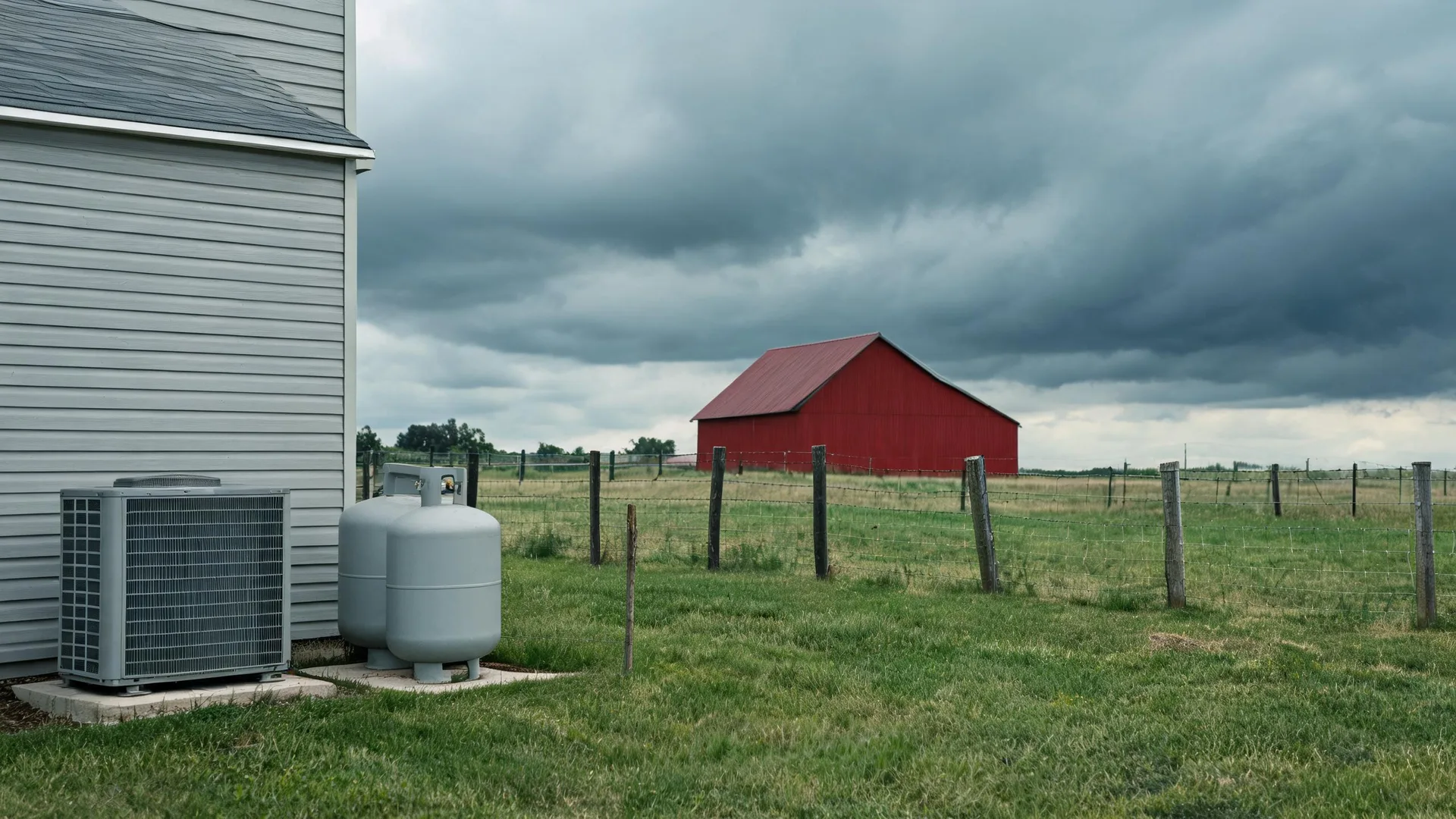
A residential heat pump outdoor unit mounted on a concrete pad next to a house with gray vinyl siding.

What a failing heat pump sounds and feels like before it quits

Short cycles are usually the first thing an owner notices, the system kicking on and off every few minutes instead of running a steady stretch. Warm air coming out of the vents when it should be cold, or cool air in the winter when it should be warm, points to the reversing valve not switching like it should. A hissing or bubbling sound near the indoor coil usually means refrigerant escaping somewhere in the line. Ice on the outdoor unit when it shouldn't be there, especially if it builds up instead of melting off during a defrost cycle, means the defrost board or a sensor isn't doing its job. If the outdoor fan isn't spinning but the unit is making noise, that's often the fan motor or the capacitor that starts it. None of these fix themselves, and running the system while one part is failing just pulls the parts around it into the same wear.

What's worth checking yourself

Start at the thermostat. Make sure it's set to heat or cool as needed and the batteries aren't dead, since a blank or frozen display can look like a dead system. Check the circuit breaker for the unit and the furnace or air handler switch, which looks like a light switch and is easy to bump off by accident. Look at the air filter and swap it if it's gray or clogged, since a blocked filter starves the system of airflow and can trip it into a protective shutdown. Walk outside and check that the outdoor unit isn't buried in leaves, pollen, or grass clippings, and clear anything pressed against the cabinet.

When to stop and call it in

If the breaker trips again after you reset it, stop resetting it and get it looked at, since that usually means a short or a part pulling too much current. Ice on the lines or the outdoor unit, water pooling near the indoor unit, or a burning smell all mean it's time to shut the system off rather than keep running it. A system that's short cycling or blowing the wrong temperature air isn't something a filter change or a breaker reset will fix. Checking these things first just saves a wasted trip for something simple, it doesn't replace getting the actual problem diagnosed.

Most heat pump failures trace back to one of a handful of parts, and they tend to go in predictable ways. The capacitor that kicks the compressor or fan motor into motion weakens slowly, so starts get harder before they stop altogether. Refrigerant doesn't get used up, so a low charge almost always means a leak somewhere in the line set or coil, not normal wear. The reversing valve, which switches the system between heat and cool, can stick from a buildup of debris inside it or just fail after enough cycles. Contactors pit and burn from the arcing that happens every time they close, until they stop making contact at all. A dirty outdoor coil makes every one of these work harder, since restricted airflow raises pressures and heat across the whole system.

A repair makes sense when the rest of the system is still in good shape and one part failed on its own, the kind of thing that happens to a single component regardless of age. Replacement starts to make more sense once a unit has needed a few repairs in a short stretch, because that pattern usually means other parts are close behind the one that just failed. Age matters too, since older units run on refrigerant or parts that get harder to source, and a repair on a unit near the end of its working life can end up being money spent twice. The compressor is the one part that changes the math by itself. It's the most expensive component in the system, and a failed compressor on an older unit is usually the point where replacing the whole system costs less than saving that one part. Ask whatever contractor looks at it how old the unit is and whether the part that failed is likely to have company soon. That answer tells you more than the repair estimate alone does.